🔄 Updated 21 Jun 2026
This trip is built for driving yourself, because Roi Et's sights are scattered in different directions. The city sits in the middle, Phra Maha Chedi Chai Mongkol and Bueng Kluea lake are to the northeast (Selaphum–Nong Phok districts), and Thung Kula Ronghai is to the south (Suwannaphum–Kaset Wisai districts). So we keep day one in town to recover from the journey, run the northern route to the lake and the great pagoda on day two, and head south to Thung Kula and Prang Ku before leaving on day three. If you arrive in Roi Et by bus or plane, renting a car to drive yourself is the way to go, since public transport to the out-of-town spots is sparse and inflexible.
Before you set off
The most comfortable time to visit Roi Et is late rainy season into early cool season (November–February): cooler air and green rice fields before harvest. Hot season (March–May) gets very hot and Thung Kula dries out. · Roi Et has a small airport with only a few flights a day from Bangkok, so book ahead for better fares. · Driving from Bangkok takes around 7–8 hours, which is why many people fly in and then rent a car at the airport or in town.
Day 1 — Roi Et city: Bueng Phlan Chai, Ho Wood 101, the Great Buddha
Day one stays mostly in town, with the sights either within walking distance or a few minutes' drive apart. Start at Bueng Phlan Chai lake in the city center, go up the Ho Wood 101 tower for a view over town, pay respects to the Great Buddha at Wat Burapha Phiram, then finish with street food at the evening market. If you arrive around midday, just start with lunch.
Roi Et city
A few honest notes
The view from Ho Wood 101 is genuinely good, but the afternoon sun on the skywalk is strong and hot. For nicer light and less heat, go in the late afternoon near sunset and watch the city lights flicker on. · The zipline runs in set sessions (roughly 09:30–17:30); if you're interested, check the schedule on the day, since it's sometimes closed for maintenance.
Book the activities in your Roi Et trip ahead
Booking online ahead on Klook or GetYourGuide is usually cheaper than the gate and skips the queue. Pick only the experiences you actually want — prices and availability are shown live on each site.
Day 2 — northern route: Bueng Kluea, the sea of Isan + Phra Maha Chedi Chai Mongkol
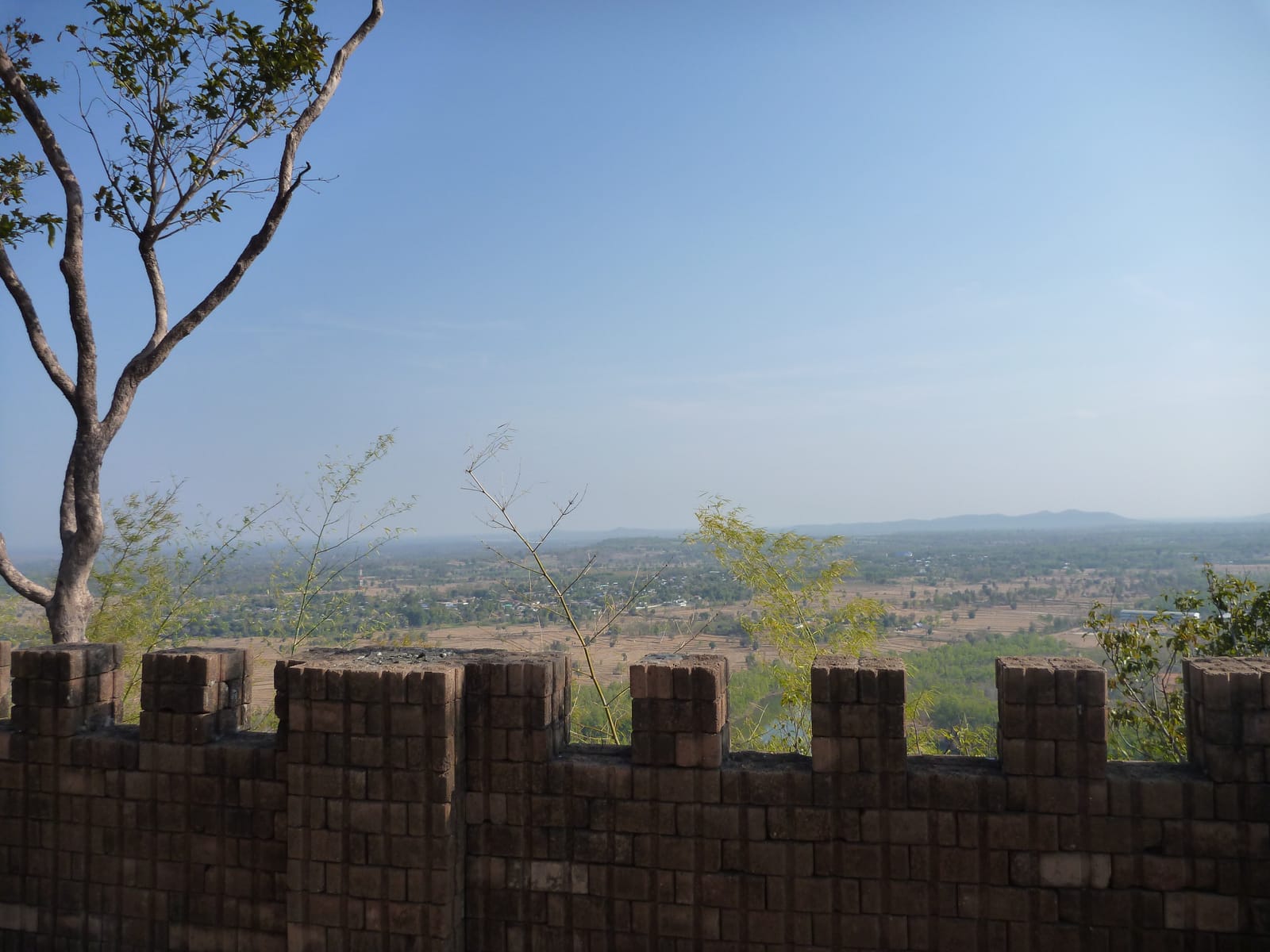
Today runs northeast. Leave town toward Selaphum district and stop at Bueng Kluea, a wide freshwater lake locals call the sea of Isan, then drive on up to Nong Phok district for the hilltop Phra Maha Chedi Chai Mongkol. The two spots are in the same direction and doable in one day, but the total distance isn't short (the pagoda is about 80 km from town), so set off a bit early.
Bueng Kluea + the great pagoda
If you love nature and swimming
Give Bueng Kluea more time — swim, paddle a boat, linger at a lakeside spot, then head up to the great pagoda in the late afternoon.
If you're here for the temples
Go up the great pagoda in the late morning for nicer light and fewer people, then stop by Bueng Kluea on the way back in the afternoon.
If you're short on time
Make the great pagoda your priority, skip Bueng Kluea, and spend the leftover time on the city's cafes.
Day 3 — southern route: Thung Kula Ronghai + Prang Ku before leaving
The last day heads south to Thung Kula Ronghai, the plains once so dry that, as the story goes, even the traveling Kula merchants wept crossing them — yet today they grow the best jasmine rice in Thailand. On the way, stop at Prang Ku, an old Khmer sanctuary near the city. Tick off these two spots, then point the car home.
Thung Kula + Prang Ku
A tip about the seasons
Thung Kula Ronghai doesn't look the same all year. To see green rice fields, come in the rainy season into early cool season (August–December). In dry season (March–May) the plain is bare, dry and very hot — you can still visit, but the scene looks very different from what you see in reviews. · If you come at harvest time, some areas hold merit festivals and new-rice markets worth a stop.
Rough budget per person (3 days 2 nights)
- 2 nights' lodging — a hotel in Roi Et city runs about 1,000–2,500 THB per night depending on standard (split it if you're traveling with others)
- Food — local dishes at 50–150 THB a plate, around 900–1,300 THB for the whole trip
- Entry fees — Ho Wood 101 around 50 THB · Bueng Phlan Chai, Prang Ku, the great pagoda and Thung Kula are free (the pagoda may have a donation box)
- Fuel — driving around the province across all three days (city–Selaphum–Nong Phok–Suwannaphum) is about 800–1,200 THB per car
- Total estimate — traveling as a couple or small group, roughly 2,500–4,000 THB per person (not including getting to Roi Et or the car rental)
Can you visit Roi Et without your own car?
Within Roi Et city you can get around without a car: Bueng Phlan Chai, Ho Wood 101 and Wat Burapha Phiram are close together, and a Grab or motorbike taxi makes it easy. But the out-of-town spots — Phra Maha Chedi Chai Mongkol, Bueng Kluea and Thung Kula Ronghai — are far away and barely served by public transport, so you really need your own vehicle. The options are renting a car to drive yourself (available in town and at the airport) or chartering a van with a driver by the day. If you'd rather not drive, hiring a vehicle day by day works out well and means you don't have to worry about the roads.
Want a well-located, good-value place to stay in Roi Et? See the ones we picked
See 10 Roi Et hotels →