🔄 Updated 21 Jun 2026
Rainy-season forest food has a short window of charm, roughly May through October. Once the rains pick up, the wild mushrooms that can't be cultivated come up on their own. Villagers head out before dawn to gather them, then rush to sell mid-morning because foraged goods don't keep long fresh. If you want the good stuff, go to the morning market — show up late and it sells out fast. We'll run through the markets worth a stop, then the mushrooms and greens you'll find, and finish with how to cook them at home.
Why rainy-season wild mushrooms are special
A lot of the wild mushrooms Isan people love — like hed rangok and hed phor — only grow in symbiosis with the roots of forest trees. They still can't be grown in bag-blocks like oyster mushrooms, so they have to be gathered from natural forest. Because they're only around in the rainy season and supply is limited, prices swing with the rain: a good rainy day means lots of mushrooms and lower prices, a lean day sends prices soaring. That's why hed phor and hed rangok cost several times more than farmed mushrooms, and why locals wait for them every year.
Forest goods mean an early start
Villagers bring fresh wild mushrooms and foraged greens to sell in the morning, and the best of it usually sells out before midday. If you're set on buying hed rangok or hed phor, aim to be at the market around 6–8 AM for the widest pick.
Want to taste deeper? Try a Roi Et food tour or cooking class
Half a day with a local who knows the lanes — or cooking a dish yourself — teaches you more than just eating. Book ahead on Klook or GetYourGuide.
Roi Et forest markets worth a stop in the rainy season
In-town markets sell forest goods mixed in with everyday produce, while the dedicated forest markets are out in the outlying districts — and the goods there are often fresher and cheaper because they're close to where it's gathered. We've ordered these from in town heading outward.
Thung Charoen Fresh Market (night market), Mueang Roi Et
The main fresh market in central Roi Et. In the rainy season you'll find forest stalls laying out hed rangok, termite mushrooms and earth mushrooms alongside foraged greens like pak wan, Siam tulip flowers and young mango shoots. Plenty of vendors buy from villagers to resell here. Good for anyone staying in town who wants easy shopping without heading out of the city — come early for fresh produce, come evening for ready-to-eat food.
Ban Non Sawang Morning Market (Nuea Mueang subdistrict)
A morning market on the north side of town, open roughly 5–10 AM, where villagers from the surrounding area bring their own garden and forest goods to sell. In the rainy season you'll find wild mushrooms, pak wan, bamboo shoots and seasonal foraged greens at villager prices because they sell direct. Good for early risers who want fresh goods straight from the hands of the people who gathered them.
Nong Muen Than Forest Market (At Samat district)
A forest market Roi Et locals mention often in the rainy season, sitting roadside in the Nong Muen Than area of At Samat district on the way out toward Maha Sarakham. It gathers forest goods from several villages — hed rangok, hed phor, termite mushrooms, bamboo shoots, foraged greens and seasonal insects — with the lineup shifting month to month. Good for anyone driving through or making a dedicated trip to hunt wild mushrooms.
Ban Thawat Din Daeng Market (Thawat Buri district)
A community market in the Thong Thani subdistrict area of Thawat Buri, where villagers bring wild mushrooms, hed daeng, hed khao and foraged greens to sell in season. It's a small, homey market, but the goods are fresh and the prices are friendly. Good for anyone exploring the Thawat Buri side or driving the route to Nong Phok who wants to stop for forest goods.
Forest stalls during the Phanom Phrai rocket festival (Phanom Phrai district)
During the Phanom Phrai Bun Bang Fai rocket festival, around May–June, the stalls ringing the event lay out heaps of mushrooms, foraged greens and seasonal Isan goods. It's a great chance to catch the rocket festival and stock up on forest goods in a single trip. This is festival-only, not an everyday thing — check the festival dates before you go.
Wild mushroom prices rise and fall with the rain
The price figures are wide ranges because foraged supply is unpredictable. On a good rainy day with lots coming in, prices drop to the low hundreds. On a lean day — early season or during a dry spell — hed phor and hed rangok can spike to 600–1,000 THB per kilo. If you spot a good price, grab it.
Rainy-season wild mushrooms you'll find in Roi Et markets
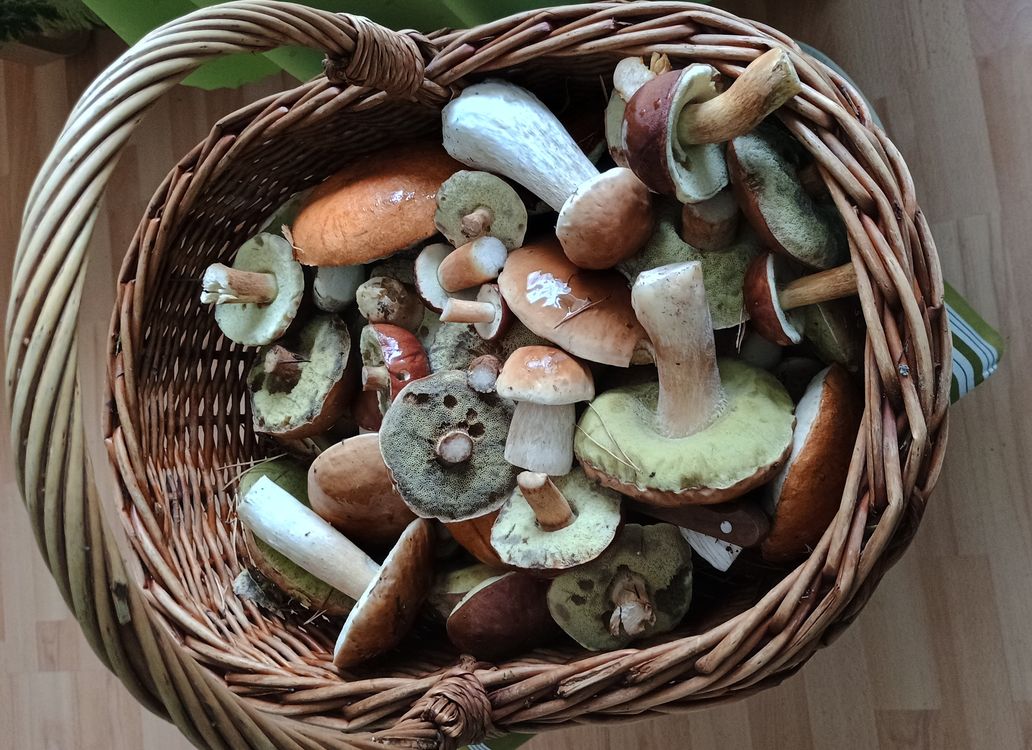
Each type of wild mushroom comes up at a different time. Early rains tend to bring hed phor, hed rangok and bolete mushrooms; once the rains get heavy, earth mushrooms and termite mushrooms follow. These are the ones you'll see most often in Roi Et's forest markets.
Hed rangok (white & yellow caesar's mushroom)
The rainy-season favorite — round, closed caps in white or yellow, soft flesh, faintly sweet. Popular in curries and soups. Around ฿300–500/kg, spiking into the thousands when supply is short.
Hed phor (earthstar mushroom)
Small round brown caps that go "phor" when you bite into them — the source of the name. Best eaten while still young. The priciest of the bunch, around ฿300–500/kg, hitting the thousands early in the season.
Termite mushroom / hed khon
Grows near termite mounds — long, pale-brown caps with firm, sweet flesh. Excellent boiled or in a curry with lemon basil. Around ฿150–300/kg.
Bolete / hed tap tao
Reddish-brown caps that grow under large trees, with soft, slippery flesh that works in curries and soups. Some stalls sell it by the plate for around ฿100.
Earth mushroom / hed nam mak
Small-capped mushrooms that come up across the dry forest floor, easy on the wallet, sold by the plate at around ฿20–50. Good boiled or stir-fried — an everyday local mushroom.
Hed khao / hed daeng
Seasonal wild mushrooms you'll find in the community markets outside town, varying in color and size. Villagers like to throw them into a mixed curry with other mushrooms.
Wild mushroom safety
Wild mushrooms include edible ones and poisonous ones that look alike — hed rangok in particular resembles the toxic death-cap-type mushroom. If you're buying at a market, pick stalls run by villagers who know how to gather and sort them. Don't forage and eat them yourself unless you're experienced, and always cook every type thoroughly before eating — never raw.
Foraged field greens that come up alongside
The rainy season isn't just about mushrooms — foraged greens from the field bunds, dry forest and stream banks send out fresh shoots and leaves at the same time. Isan people gather them to eat as dipping greens and to add to curries. These are the ones you'll see often in Roi Et markets this time of year.
- Wild pak wan — sweet, crisp young shoots, cooked in a curry with red-ant eggs or in a clear soup; a rainy-season green people wait for.
- Pak tiu & pak mek — young shoots with a sour, astringent bite, eaten raw as a side with som tam, larb and koi.
- Siam tulip flowers — pink-and-white blooms that come up across the fields in the rains, blanched and dipped in chili paste or added to curry, with a mild tingle.
- Bamboo shoots — plentiful in the rains, made into bamboo-shoot soup with yanang leaf, or a curry of bamboo shoots and mushrooms.
- Pak khayaeng (rice paddy herb) — a distinctively fragrant herb added to aom curries and bamboo-shoot soup to cut gaminess and boost aroma.
- Mushrooms with yanang leaf — yanang leaf juice is the star of Isan mushroom curries and bamboo-shoot soups, and it's sold right alongside at every stall.
What to cook with your wild mushrooms
The charm of rainy-season wild mushrooms is that even simple Isan dishes turn out delicious — you don't need to season much because the mushrooms are sweet on their own. These are the dishes Roi Et locals cook all the time.
Mushroom curry with yanang leaf
The classic rainy-season dish — several kinds of wild mushroom simmered in pressed yanang-leaf juice with ground toasted rice, rice paddy herb and a touch of pla ra, for a rich, rounded flavor. Eat it with hot sticky rice.
Mushroom soup (aom hed)
Mushrooms simmered with lemongrass, kaffir lime leaf and shallots, seasoned with a little pla ra, for a hot, homey broth to sip — perfect on a cool, rainy day.
Boiled hed phor with jaew dip
Young hed phor boiled in plain water until done, then dipped in spicy jaew — full mushroom flavor without much fuss. This is how Isan people most love to eat it.
Mushroom larb / koi
Blanched wild mushrooms tossed with toasted ground rice, chili powder, pla ra, shallots and dill, for a punchy mushroom larb to eat as a snack with drinks or with sticky rice.
Pick fresh mushrooms and clean them well
Choose mushrooms with firm, closed caps, no bruising and no sour-rotten smell. Wild mushrooms often come with dirt and leaves attached, so rinse them through several changes of water. For hed phor, scrub off all the dirt before boiling, and cook every type thoroughly before eating.
When to go and how to prepare
Roi Et's forest season runs roughly May to October, peaking mid-season when the rains are heaviest. If you're coming specifically to hunt wild mushrooms, aim for that window. Forest goods sell mainly in the morning, so getting to the market by 6–8 AM means fresh produce and plenty to choose from. Out-of-town forest markets like Nong Muen Than really need your own car since they sit roadside outside the city, while in-town Thung Charoen Market is walkable or a quick motorbike-taxi ride. Most vendors take cash only, so bring small bills. And remember forest goods are wild — some days there's plenty, some days there's none, which is part of the fun of leaving it to chance.
Plan a full Roi Et eating-and-sightseeing trip
See the Roi Et travel guide →