🔄 Updated 21 Jun 2026
Sa Kaeo split off from Prachinburi back in 1993 to become Thailand's 74th province. What stands out is its position right on the Cambodian border — there's a big trading market, Khmer temples, and a slice of the Dong Phaya Yen–Khao Yai World Heritage forest. The sights are scattered across several districts, from Aranyaprathet on the border out to Ta Phraya and Khao Chakan. We've pulled together the main spots people tend to go for, and we'll tell you straight who each one suits and when to go.
Rong Kluea Market — the biggest border market in eastern Thailand
Rong Kluea Market, also known as the Ban Khlong Luek Border Friendship Market, sits in Aranyaprathet district right by the Aranyaprathet–Poipet checkpoint. It's a wholesale-retail market long known for clothing and second-hand goods, and you can spend the whole day across its many zones — bags, shoes, graded second-hand clothes, cheap branded items, and border street food. Prices are negotiable and cheaper than in town. Through 2025 the market went very quiet because of the border situation, but in early 2026, after Thailand and Cambodia signed a ceasefire agreement, vendors started drifting back to reopen their stalls and the atmosphere is slowly recovering — though it hasn't bounced all the way back to how busy it once was.
Check before you go
Rong Kluea sits right against the border checkpoint, and the situation along the Thailand–Cambodia frontier can change from one period to the next. Before you actually head out, check the latest news and whether the checkpoint and market are open. If you're thinking of crossing into Poipet, you'll need your documents ready (passport / border pass) and you should confirm the checkpoint's opening hours first.
Want more out of Sa Kaeo? Book tours & activities
Booking online ahead on Klook or GetYourGuide is usually cheaper than the gate and skips the queue. Pick only the experiences you actually want — prices and availability are shown live on each site.
Sdok Kok Thom — the oldest Khmer temple in eastern Thailand
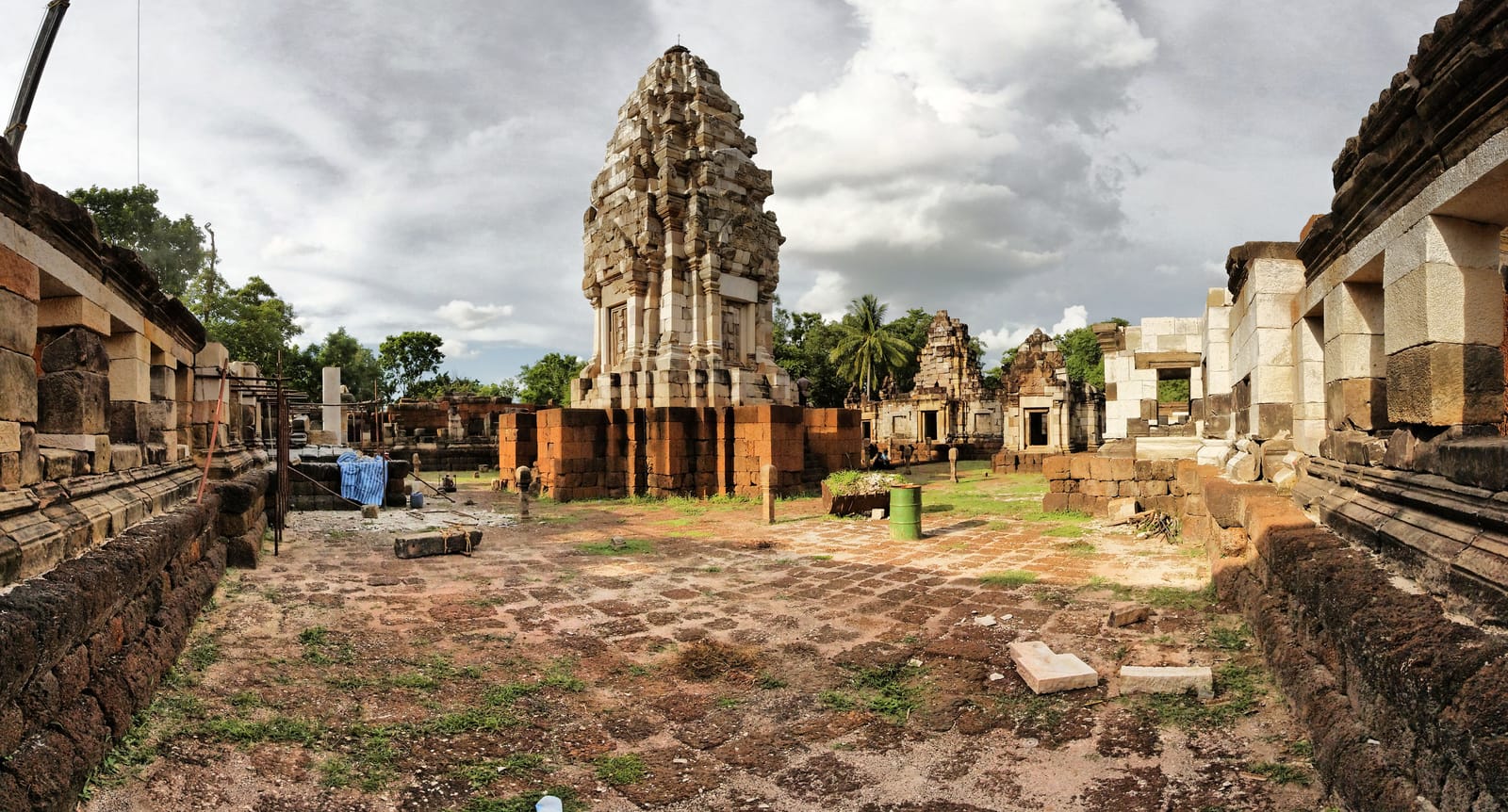
Sdok Kok Thom sits at Ban Nong Ya Kaeo in Khok Sung subdistrict, Khok Sung district, about 35 kilometres northeast of Aranyaprathet. It's a Khmer-era temple of sandstone and laterite, thought to have been built around the 9th to 11th centuries. It's the largest such temple in eastern Thailand and has been restored well enough that you can walk around and take it in. What makes it historically important is that the Sdok Kok Thom inscription was found here, recording the lineage of Khmer kings and ancient rituals. There's now a historical park information centre you can visit too. Open daily 08:30–16:30.
- Location — Khok Sung subdistrict, Khok Sung district, about 1 km from the Cambodian border; you can drive on from Aranyaprathet
- Opening hours — daily 08:30–16:30, with a historical park information centre
- Good for — history buffs, anyone into Khmer architecture, photographing stone temples; go in the morning or late afternoon when the sun isn't harsh
Khao Chakan — limestone hills, monkey troops, and the bat exodus
Khao Chakan sits in Khao Chakan district, a cluster of three limestone hills riddled with caves. At the foot there's an arboretum and Wat Tham Khao Chakan, where people go to pay respects and walk through the caves. The area is home to a large troop of monkeys, so keep an eye on your food and bags. The real highlight here is around 6 pm, when hundreds of thousands of bats stream out of the cave in a long ribbon across the sky — it's a sight people come specifically to wait for.
When to watch the bats
The bats start flying out around 6 pm, just before sunset, so get there a little early to find a spot. In the dry season with clear skies you'll see it better. During the day you can head up to pay respects and walk the caves. The Khao Chakan station is open roughly 06:00–20:00.
Pang Sida National Park — butterfly forest and waterfalls
Pang Sida National Park straddles Sa Kaeo and Prachinburi, an eastern forest that connects to the Dong Phaya Yen–Khao Yai forest complex. What it's known for is butterflies: in the early rainy season around June and July, hundreds of species gather to puddle on the ground for minerals along the trails and streams, and there's a butterfly-watching festival held every year. The peak butterfly hours are mid-morning to afternoon, around 10:00–14:00. Beyond the butterflies there's Pang Sida Waterfall, about 800 metres from the park office and an easy walk, with plenty of water in the rainy season. Park entry for Thais is about 40 THB.
- Butterfly watching — June to July, mid-morning to afternoon, along the trails and streams behind the office
- Pang Sida Waterfall — about 800 m from the office, an easy walk, full of water in the rainy season
- Staying overnight — there's a campground and park bungalows, booked through the system; reserve ahead during the butterfly festival
Lalu — the grand canyon of eastern Thailand
Lalu is at Ban Khlong Yang, Tap Rat subdistrict, Ta Phraya district, within Ta Phraya National Park. It formed where rain and wind eroded the soil over a long time into oddly shaped earth pillars and cliffs, which is why people call it the grand canyon of eastern Thailand. The area covers around 2,500 rai. To visit, you ride an e-taek (a local farm tractor-cart) run by the village club, which takes you to each of the viewpoints — 200 THB per cart, seating about six people. The service centre is open roughly 08:00–18:00. The best time to visit is from late rainy season through early hot season, around October to May, because in the heavy rains the ground gets slippery and the carts struggle to get in.
Getting ready for Lalu
Going in the morning or evening is more comfortable, since midday the sun is harsh and it gets very hot with no shade. Bring water and a hat, wear shoes you can walk on dirt in, and leave enough time for the e-taek to take you around the various viewpoints. In the rainy season, call the service centre first to check whether the carts can get in.
All the Sa Kaeo attractions, ranked
Lalu (Ta Phraya district)
Oddly shaped earth pillars and cliffs that locals call the grand canyon of eastern Thailand. Ride an e-taek cart to see it for 200 THB per cart; best from October to May.
Sdok Kok Thom (Khok Sung district)
The largest and oldest sandstone-and-laterite Khmer temple in eastern Thailand, with a historical information centre and restored grounds you can walk through.
Khao Chakan (Khao Chakan district)
Limestone hills with caves, monkey troops, and a cave temple. The highlight is hundreds of thousands of bats streaming from the cave in the evening, around 6 pm.
Pang Sida National Park
An eastern forest with hundreds of butterfly species around June–July, plus the easy-to-reach Pang Sida Waterfall.
Rong Kluea Market (Aranyaprathet district)
The biggest border market in eastern Thailand — second-hand goods, clothes, cheap branded items. Recovering in 2026 after the ceasefire; check the situation before you go.
Ta Phraya National Park
A World Heritage forest on the Phanom Dong Rak range, home to Lalu, with hiking trails and border viewpoints. Good for nature lovers.
Khao Noi Si Chomphu
A small Khmer temple on a hill in Aranyaprathet, an old monument with important inscriptions. Easy to pair with Sdok Kok Thom.
Phra Prong Reservoir
A wide reservoir in Watthana Nakhon, good for sitting in the breeze by the water, with restaurants and rest spots. An easy stop along the way.
How to plan a Sa Kaeo trip that flows
Sa Kaeo's attractions are spread fairly far apart. The eastern border zone (Rong Kluea Market, Sdok Kok Thom, Khao Noi Si Chomphu) is around Aranyaprathet–Khok Sung, while Lalu and Ta Phraya are about an hour further north. Pang Sida is on the other side, to the west near the provincial town, and Khao Chakan is on the way between them. If you want to cover it all, give yourself two days. Here's a rough plan you can actually follow.
Town–Pang Sida forest–Khao Chakan
Border–Khmer temple–Lalu
Getting around
Sa Kaeo has no airport and limited public transport within the province, and the sights are scattered across different districts far apart. The easiest way is to have your own car or rent one. If you arrive by coach or van into the town or Aranyaprathet, line up a vehicle for the day — especially for Lalu, where you then have to transfer to an e-taek to get into the site.
Want a full Sa Kaeo trip plan covering the whole province
See the Sa Kaeo travel guide →