Home › Thailand › Sakon Nakhon › Sakon Nakhon Forest-Temple Trail Wat Pa Sutthawat–Luang Pu Mun–Wat Pa Udom Somphon
🧘 Sakon Nakhon travel plan
Sakon Nakhon Forest-Temple Trail Wat Pa Sutthawat–Luang Pu Mun–Wat Pa Udom Somphon
Sakon Nakhon is the real birthplace of Isan's forest-monk tradition. Several of the meditation masters revered across Thailand once wandered and spent their rains retreats around the Phu Phan hills that ring this town. If you're drawn to the meditation lineage, or just want a quiet, settling sort of trip, Sakon offers more than you'd expect. This plan follows three main stops: Wat Pa Sutthawat in the town center, where Luang Pu Mun Bhuridatto passed away; the Luang Pu Mun museum, which keeps his relics that turned crystal-clear; and Wat Pa Udom Somphon in Phanna Nikhom district, the temple of Luang Pu Fan Ajaro with its beautiful lotus-shaped chedi. It's laid out as an unhurried 3-day trip with room to sit quietly, plus times, entry costs, distances, and real places to eat along the way.
🧘 Forest-monk trail🏛️ Master-monk museums🌸 Luang Pu Fan's lotus chedi
✍️ By Doctor Chat
🔄 Updated 21 Jun 2026
Before you set off, a little context makes the trip richer. Sakon Nakhon and the Phu Phan range are where Luang Pu Mun Bhuridatto, the founding master of the insight-meditation lineage, wandered and taught his disciples — giving rise to a forest-monk tradition that spread across Isan and the whole country. Many of his senior disciples, like Luang Pu Fan Ajaro, went on to found forest temples in this area, so this plan isn't just about paying respects — it's walking through the roots of an entire spiritual lineage. Day one covers the town center, day two heads out to Phanna Nikhom to find Luang Pu Fan, and day three climbs the Phu Phan hills to the cave temples where the forest monks once practiced.
How to get there and what to prepare
From Bangkok, a direct flight to Sakon Nakhon airport takes a little over an hour, with several flights a day, or you can take a coach from Mo Chit for around 10–11 hours. Many of the forest temples sit outside town and are scattered across different districts, so I'd suggest renting a car at roughly 800–1,200 THB a day or hiring a local driver by the day — far more convenient than public transport. As for dress, forest temples value modesty: wear sleeved tops, trousers or a skirt covering the knees, plain colors, keep your voice down, and remove your shoes before entering the halls where signs ask you to.
Day 1
Wat Pa Sutthawat + the Luang Pu Mun museum in town
09:30
Start at Wat Pa Sutthawat to pay respects to Luang Pu Mun BhuridattoA forest temple in the heart of town on Sukkasem Road, Tambon That Choeng Chum — this is where Luang Pu Mun passed away in 1949. The grounds are shaded, calm, and quiet despite being right in town, with the hall and the museum chedi in the same compound. Free entry, open roughly 08:00–17:00, with parking inside the temple.
10:00
Visit the Phra Ajahn Mun Bhuridatto museum inside the templeThe white chedi-shaped building displays a life-size meditating statue of Luang Pu Mun, his relics that turned crystal-clear like glass, and the actual requisites he used — alms bowl, monk's umbrella, shoulder bag, and robes. Walk through quietly for around 30 minutes to an hour. Free entry, and it's the spot that helps you understand the forest monks' way of practice before moving on.
11:30
Lunch — Isan or Vietnamese food in townSakon has a long-established Thai-Vietnamese community, and the Vietnamese food here is done well. Try mu yo (Vietnamese pork sausage), nem nuang (grilled pork rolls), or pho, with dishes running from a few tens to just over a hundred THB. Or there's punchy Isan food at shops all over town. Eat up, then take a short break from the heat.
13:30
Pay respects at Phra That Choeng Chum, the town's guardian stupaNear the town center, just a few minutes' walk or drive from Wat Pa Sutthawat. The square stupa blends Lan Xang and Lanna styles, white trimmed with gold, built to enclose a Buddha footprint and topped with a golden tiered finial. Open roughly 06:00–18:00, free entry — dress modestly, shoulders and knees covered.
15:00
Stroll Somdet Phra Srinagarindra Park (Sa Phang Thong) by Nong Han lakeA public park along Nong Han lake in the middle of town, with a pond of red lotuses and a fountain at its center. Locals come to catch the breeze in the evening. Free entry, open roughly 05:00–21:00 — a place to rest your mind after a day of temples. The lotuses bloom beautifully in the cool-season mornings.
17:30
Dinner in town, then rest up for an early start tomorrowGo for the famous Phon Yang Kham wagyu beef, or an Isan spot by Nong Han lake. Tomorrow you head out of town to Phanna Nikhom, so it's worth turning in a little early.
Day 2
Wat Pa Udom Somphon + the Luang Pu Fan museum, Phanna Nikhom district
08:30
Drive out of town toward Phanna Nikhom districtWat Pa Udom Somphon is in Tambon Phanna, Phanna Nikhom district, about 37 km from central Sakon. Take Highway 22 (the Sakon–Udon route) — roughly a 40–50 minute drive on good roads. Leaving early lets you catch the forest temple while it's still quiet.
09:30
Arrive at Wat Pa Udom Somphon to pay respects to Luang Pu Fan AjaroThe forest temple founded in 1940 by Luang Pu Fan Ajaro, a senior disciple of Luang Pu Mun. He was deeply revered by the people of Sakon and across Thailand, and even set up a hospital for the local community. The grounds are shaded by forest, quiet and calm, perfect for sitting in stillness. Free entry.
10:00
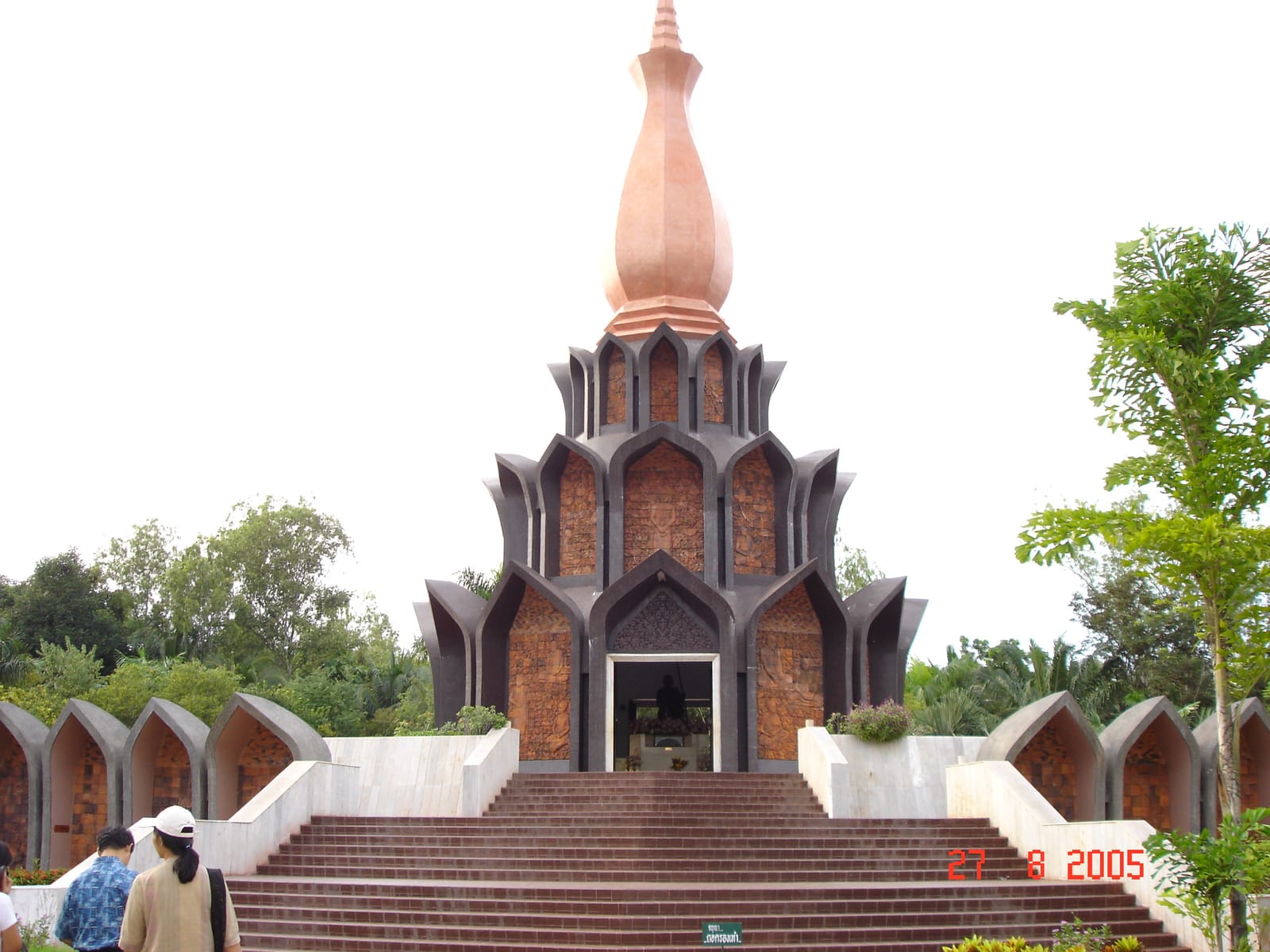
See the Ajahn Fan Ajaro museum, the lotus-shaped chediThe museum is a strikingly beautiful three-tiered white lotus-shaped chedi, around 27.9 m tall. King Rama IX, Her Majesty the Queen, and Princess Sirindhorn came to open it in 1982. Inside is a life-size statue of Luang Pu Fan seated holding his staff, along with his relics and requisites. Free entry, open roughly 08:00–17:00.
11:30
Lunch in Phanna Nikhom town or along the wayIn the district town there are made-to-order shops and local Isan eateries at modest prices, dishes running a few tens of THB. If you want a proper meal, you can save it for the drive back into town. The food around here is simple but tasty in a homestyle way.
13:30
Stop at Wat Pa Klang Non Phu on the way back (if you're interested)Not far from Wat Pa Udom Somphon, still within Phanna Nikhom. This is the temple where Luang Pu Mun stayed to recover from illness late in his life, before moving to Wat Pa Sutthawat. There's a small museum keeping his belongings, free entry — a nice way to connect the story back to day one.
15:30
Head back into town, rest, and shop for indigo cloth or souvenirsIn town there's a row of indigo-cloth shops. Indigo scarves start around 250 THB and indigo-dyed shirts from about 500 THB. Real indigo has a faint scent and a muted, un-garish blue — easy to pick up as a souvenir to take home.
18:00
Dinner and rest in townIt was a fair bit of driving today, so pick an easy-going spot in town. Tomorrow you climb the Phu Phan hills, which needs a little more walking.
Day 3
Up into the Phu Phan hills — forest cave temples + wrapping up before you head home
08:30
Drive up the Phu Phan hills south of townThe Phu Phan range is where many forest monks once wandered and practiced in caves and rock shelters. The road up is a winding paved climb, so drive carefully. The views on either side are green forest, and it's cooler than in town.
09:30
Wat Tham Kham, Luang Pu Fan's hilltop forest templeWat Tham Kham sits on the slopes of the Phu Phan hills in Phanna Nikhom. It's a meditation forest temple where Luang Pu Fan once spent his rains retreats. The atmosphere up here is utterly silent, with caves and the huts where the monks practiced, and a view over the plains below. You'll need to walk up some inclines, so sneakers make it easier. Free entry.
11:30
Stop at Wat Tham Pha Daen to see the cliff-face carvingsA temple in the Phu Phan hills with carvings of the Buddha's life story and Isan ways of life running continuously along the cliff face — contemporary craftsmanship. There's a viewpoint looking out over Sakon town and Nong Han far in the distance. It takes a fair bit of stair-climbing. Free entry — a temple that's both peaceful and good for photos.
13:00
Head down the hill for lunch — Phon Yang Kham wagyu beefClose out the trip with Phon Yang Kham wagyu beef, raised by the local cooperative. The beef is tender and marbled, with both grill and steak places, and prices are more approachable than imported beef. It's a meal most people coming to Sakon don't miss.
15:00
Buy souvenirs, pack up, and travel homePopular Sakon souvenirs include mu yo, Vietnamese nem nuang, indigo cloth, and mak mao juice from the Phu Phan hills. The airport is about 5 km from town — a quick drive — so check your evening flight time ahead. If you're taking a coach, there are overnight services that reach Bangkok by morning.
Why Sakon Nakhon is forest-monk country
The Phu Phan range around Sakon Nakhon was once dense forest, well suited to wandering and solitary meditation practice. Luang Pu Mun Bhuridatto used this area to teach his disciples, giving rise to a forest-monk tradition built on strict discipline and seated meditation. Many of his disciples founded forest temples scattered around the town, which made Sakon the starting point of this whole lineage. Following the trail gives you the history, the artistry of the museum-chedis, and a forest-and-hill setting that really is calm.
🎟️
Book the activities in your Sakon Nakhon trip ahead
Booking online ahead on Klook or GetYourGuide is usually cheaper than the gate and skips the queue. Pick only the experiences you actually want — prices and availability are shown live on each site.
Dress modestly — sleeved tops, trousers or a skirt covering the knees, avoid spaghetti straps and shorts, and plain colors that suit the forest-temple setting.
Quiet and slow — forest temples value stillness, so speak softly, silence your phone, and walk slowly in the areas where monks practice.
Remove shoes before entering the halls — watch for signs and follow the locals; museums usually ask you to take off your shoes too.
Photograph respectfully — some spots in the museums prohibit photos, so check the signs first, and don't use flash on the statues or relics.
Give as you see fit — there are donation boxes in the temples, with no obligation, and no entry fee at any of the three sites.
Rough budget per person
2 nights' accommodation — hotels in town start around 500–900 THB a night, with a step up to 1,000–1,800 THB.
Temple and museum entry — Wat Pa Sutthawat, the Luang Pu Mun museum, and Wat Pa Udom Somphon are all free, with only donations as you see fit.
Car costs — renting a car at roughly 800–1,200 THB a day works out better than hailing rides, since the temples are spread out of town, plus a little extra fuel for the Phu Phan climb.
Food for 3 days — Isan, Vietnamese, and wagyu beef, around 700–1,100 THB.
Souvenirs — indigo cloth, mu yo, nem nuang, depending on how much you buy, allow 300–800 THB.
The best time to go, and a few honest notes
Late rainy to early cool season (October–December) is the easiest time to travel: cool air, the Phu Phan hills are green, and the forest temples are nicely shaded. To be straight with you, some forest temples can get busy during the rains retreat or major merit-making events, and certain areas close off for the monks' practice, so going in the morning is quieter. On Buddhist holy days you may also find a lot of devotees coming to make merit. As for the road up Phu Phan, it can be slippery in the rainy season, so drive slowly, and if it rains hard the walkways at some cave temples get muddy.
Can you add another day if you're not ready to leave?
If you have extra time, a fourth day is good for nature and history around the Phu Phan hills. Drive to Kham Hom Waterfall, at its prettiest in late rainy season, see Phu Phan Ratchaniwet Palace (check the opening days first, as it sometimes closes for royal visits), or climb to Phra That Phu Phek, a Khmer stone sanctuary on a hilltop with a wide view over Nong Han — though it takes over 400 steps to reach. If you're into indigo, you can still visit an indigo-dyeing village and try making your own cloth. It's a way to close the trip that blends the spiritual, the natural, and the town's craft.
Want a well-located place to stay in central Sakon, easy to reach the temples? See options that real reviewers rate.
Is the Luang Pu Mun museum at Wat Pa Sutthawat free, and what are its hours?
It's free — no admission charge — open roughly 08:00–17:00, though some sources list slightly different hours, so if you're set on going, you can call the temple to check first. The chedi-shaped building displays a life-size statue of Luang Pu Mun, his relics that turned crystal-clear, and the actual requisites he used. The temple is on Sukkasem Road in central Sakon, with parking inside.
How far is Wat Pa Udom Somphon from central Sakon, and how do you get there?
It's in Tambon Phanna, Phanna Nikhom district, about 37 km from central Sakon Nakhon. Take Highway 22 (the Sakon–Udon route) — roughly a 40–50 minute drive on good roads. I'd suggest renting a car or hiring a driver, since public transport is awkward. At the temple is the very beautiful lotus-shaped chedi housing the Luang Pu Fan Ajaro museum, free to enter.
What's inside the Luang Pu Fan museum chedi at Wat Pa Udom Somphon?
It's a three-tiered white lotus-shaped chedi, around 27.9 m tall. King Rama IX, Her Majesty the Queen, and Princess Sirindhorn came to open it in 1982. Inside is a life-size statue of Luang Pu Fan seated holding his staff, along with his relics and requisites. Open roughly 08:00–17:00, free entry.
What should you wear on the Sakon Nakhon forest-temple trail?
Dress modestly: sleeved tops, trousers or a skirt covering the knees, plain colors, and avoid spaghetti straps and shorts. In the temples and museums, speak softly, silence your phone, and remove your shoes before entering the halls where signs ask. If you plan to climb the Phu Phan hills to the cave temples, wear sneakers, as you'll need to walk up some inclines.
Is 3 days enough for the Sakon forest-temple trail, and how do you plan it?
Three days is just right. Day one covers the town center — Wat Pa Sutthawat where Luang Pu Mun passed away and his museum — then Phra That Choeng Chum and the park by Nong Han. Day two heads to Phanna Nikhom for Wat Pa Udom Somphon of Luang Pu Fan, with a stop at Wat Pa Klang Non Phu. Day three climbs the Phu Phan hills to Wat Tham Kham and Wat Tham Pha Daen, closing with wagyu beef before you head home. If you want more nature, allow a fourth day.
Thailandaddict is created to review and share travel experiences. Where an image is sourced from elsewhere, we credit the source. If you are the copyright owner and prefer that your image not appear on this site, please contact us and we will gladly remove the image or correct the information.