🔄 Updated 21 Jun 2026
Before you start planning, here's the lay of the land and why a route matters. The indigo spots in Sakon fall into roughly three zones. One is in town and along Nong Han lake — places like Kramsakon and Ban Tha Wat that are easy to reach and good for day one. Two is the northern run toward Phanna Nikhom and Wanon Niwat — flagship villages like Ban Don Koi and Ban Kut Chik that need extra driving time. And three is the southern run down into the Phu Phan range — places like Bhukram around Khok Phu, which pairs nicely with nature stops. With one day, focus on the in-town zone; with two or three, spread out to the farther villages so you're not doubling back.
Who this trip is for
This plan is written for people who come to Sakon and want indigo cloth to be the main event, not just a souvenir stop in passing. If you want to see the real process from the dye vat onward, want to try dyeing a piece with your own hands, and want to bring home genuine indigo cloth bought straight from the makers, this plan covers it all. If you just want a few pretty pieces to take home and don't care about the process, the in-town day alone is plenty.
- Real craft people — you want to watch the vat being built, the dyeing, the weaving, and understand why genuine indigo costs more
- Want to dye your own — there are workshops to dye a handkerchief, scarf or shirt to take home
- Cloth shoppers — you want real indigo at village prices and want to compare several brands before choosing
- Travelling with family or older relatives — pick just the in-town zone that's easy to drive to, no need to trek far
Book the activities in your Sakon Nakhon trip ahead
Booking online ahead on Klook or GetYourGuide is usually cheaper than the gate and skips the queue. Pick only the experiences you actually want — prices and availability are shown live on each site.
The main indigo stops this plan covers
These are the indigo spots that are genuinely open and popular, ordered from closest to town outward, so you can see which ones sit in the same zone before slotting them into the day-by-day routes below. Each one notes the area, rough distance, and what you'll get there.
Kramsakon
The most complete indigo shop in town, with a showroom selling cloth and shirts, a dyeing demonstration, a cafe corner, and a DIY workshop where you can dye your own handkerchief, scarf, hat, bag or shirt. It's a brand that has refined its design far enough to get export orders to Japan, and it makes a great first stop to get the big picture before heading out to the villages.
Indigo Street (in front of Wat Phra That Choeng Chum)
A walking-street market for indigo cloth in front of Wat Phra That Choeng Chum in the centre of town, gathering booths from many communities across the province in one place. You can easily compare prices and choose from several brands, and chat with some of the makers too. Good for closing out the trip in the evening before you head home.
Ban Tha Wat, by Nong Han lake
An old indigo-dyeing community on Nong Han lake in Lao Po Daeng subdistrict, the closest to town at a 15–20 minute drive. People here dye indigo alongside fishing the lake, so in one trip you can see the dye vats, buy cloth straight from the makers, then head onto a floating raft to eat fish. Good for those short on time who still want to see the real thing.
Ban Don Koi (Don Koi Academy)
The flagship indigo village of the Phu Thai people in Sawang subdistrict, Phanna Nikhom district, famous as the 'Don Koi Model'. The community has elevated its patterns and colours to follow fashion trends, and the Don Koi Academy serves as a learning centre you can visit, showing everything from growing the indigo to weaving the finished cloth. You can buy straight from the weaving group at village prices.
Bhukram
An indigo brand from a community group in Khok Phu subdistrict in the Phu Phan range, known for simple, comfortable handwoven cotton clothing dyed with natural indigo. The minimal design has a loyal following, and it suits people who want indigo shirts they'll actually wear day to day rather than decorative cloth lengths. We'd suggest checking the shopfront or messaging the page to arrange a visit first.
Ban Non Ruea
An old indigo-dyeing community of the Phu Thai and Thai Yo people, where dozens of households still weave at home. It's a traditional indigo source where the makers have worked for generations, and the cloth has a distinctive dense weave. Good for people who want to dig into a community that still works the old way, but you should arrange a visit ahead since it's a household craft.
Ban Kut Chik Indigo Weaving Learning Centre
A learning centre in Wanon Niwat district where the community keeps the whole craft alive, from growing cotton and indigo to natural dyeing and weaving. Good for people who want to see the full production chain in a real community. It's far from town to the north, so call ahead and fold it into the province's northern route.
Pick a zone before you map the route
With one day, focus on the in-town zone — Kramsakon and Ban Tha Wat are easy to cover and simple to drive to. With two days, add the northern run to Ban Don Koi. With three days, add the southern Phu Phan run down to Bhukram. That way you won't spend the whole day driving back and forth.
Half-day plan — quick in-town indigo
Good for a short stop in Sakon, or a spare half-day before catching onward transport. Cover the in-town indigo zone enough to get the picture and bring cloth home.
A tight loop of in-town indigo
2 days, 1 night — town + the flagship village
The most popular plan. Day one warms up with indigo in town and by Nong Han lake; day two heads out to Ban Don Koi, the flagship village many people come specifically to see. It's not a long drive and well worth the trip.
In-town indigo + Ban Tha Wat by Nong Han lake
Ban Don Koi, the flagship indigo village
3 days, 2 nights — the deep route covering every zone
For real cloth people who want to cover all three zones. Add a third day on the southern Phu Phan run to Bhukram, pairing it with nature stops along the Phu Phan route in a single day. This trip lets you see indigo in many styles, from in-town shops to flagship villages to designer brands.
In-town indigo + the lakeside
Northern run: Ban Don Koi + Ban Kut Chik
Southern Phu Phan run: Bhukram + nature
Want to dye your own? Contact ahead to be sure
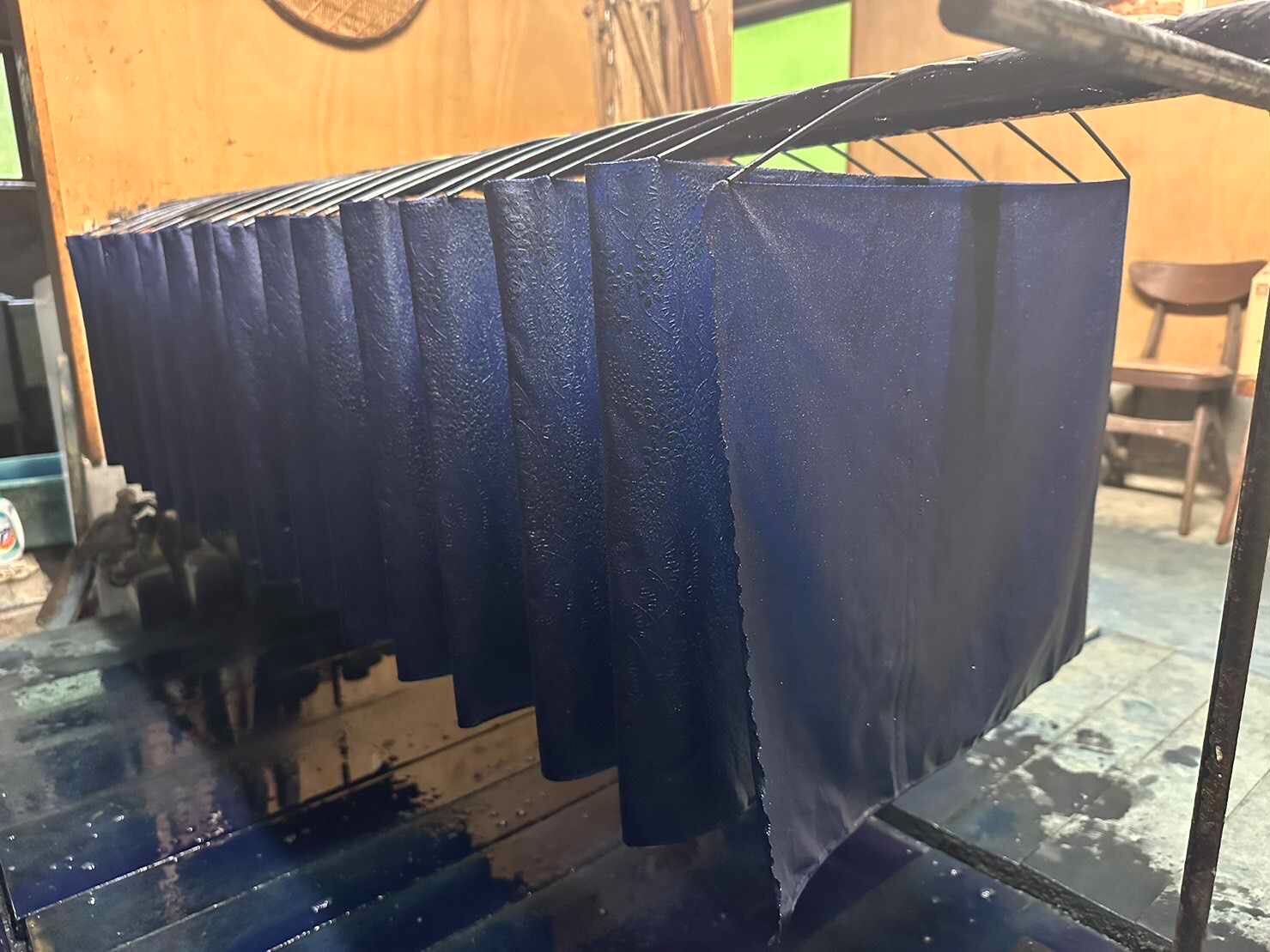
The dyeing workshop is the highlight many people come for. Most take about 2–3 hours and you get a handkerchief, scarf, hat, bag or shirt you dyed yourself to take home. Big in-town shops like Kramsakon usually have slots you can join right away, but the village groups are household crafts and aren't on show all the time. If you want to watch the vat being built or try real dyeing in the community, call or message the page to arrange 1–2 days ahead so you can see the full process.
In-town workshop (Kramsakon)
Regular slots, with a choice of handkerchief, scarf, hat, bag or shirt, taking about 2–3 hours. Good for people on a tight schedule who want to be sure a slot is available.
Village workshop
You get to tie the cloth and dip-dye in a real community, around 150–350 THB per piece including materials. The atmosphere is friendly, but it's a household craft — arrange ahead so you can see the full process.
Just want to shop, not dye
Head straight to an in-town shop or the Indigo Street in front of Wat Phra That Choeng Chum, comparing several brands in one place — no booking and no long drive. Good for people short on time.
How to buy the real indigo
Walk the indigo market and you'll find real indigo mixed in with chemical-dyed imitations. Real indigo costs several times more. Buying from the maker's own hands in the community has the edge: you can ask where it came from, which vat it was dyed in and how many rounds, and you usually get a better price than the roadside souvenir shops. Here are some rough things to look for.
- Smell — real indigo has a faint indigo and natural scent, not the harsh smell of chemical dye
- Colour — real indigo is a deep, slightly muted blue with depth and isn't perfectly even, while chemical dye is too bright and uniform to be real
- Colour bleed — real indigo cloth bleeds a little in the first few washes, which is normal for natural dye, not a defect
- Fabric — handwoven indigo cotton feels cool and breathes well, unlike factory cloth
- Ask the origin — buy from the maker and just ask if they dyed it themselves and how many days the vat took; people who actually make it can answer it all
Rough prices to compare against
Indigo-dyed handkerchiefs or small pieces start around 80–150 THB, indigo hats around 150 THB, bags around 150–250 THB, indigo scarves around 250–500 THB by fabric and pattern, and indigo-dyed shirts around 500–2,000 THB by brand and style. Detailed handwoven mudmee lengths can run from the thousands to several thousand THB per piece. Buying straight from the village is usually cheaper than in-town and roadside shops.
Getting around and what to know before you go
- Your own car or a rental is best — the indigo spots are spread across several districts and public transport doesn't reach the villages, so renting in town is easiest
- Plan your route by zone — don't mix the northern and southern zones in one day or you'll waste time driving back and forth
- Book ahead for the villages — community groups are household crafts, so message the page or call 1–2 days ahead to see the full process
- Carry cash — in-town shops take transfers, but some village groups prefer cash
- Check the Indigo Street days — the Indigo Street in front of Wat Phra That Choeng Chum buzzes on Saturday–Sunday evenings and Buddhist holy days
Being honest
The indigo villages in Sakon are communities where people genuinely live, not staged tourist villages. Show up unannounced on the wrong day and you might not catch anyone dyeing, or the vat may not be ready yet. If you mean to see the full process or want to learn the dyeing, contact ahead. If you just want to buy cloth, an in-town shop like Kramsakon or the Indigo Street is more convenient.
See the full Sakon Nakhon things-to-do and places-to-stay before planning your indigo trip
See the Sakon Nakhon guide →