🔄 Updated 21 Jun 2026
Before you pack for Sakon Nakhon, there are only a few things worth knowing — but they shape the whole trip. The sights here are spread across zones: the main temples and the chedi sit in the city center, Nong Han lake is on the southern edge, while the Phu Phan range and the indigo villages mean a drive out of town. The weather shifts clearly by season, and there's a citywide festival at the end of Buddhist Lent when crowds peak. Sort out the points below first and you'll plan it smoothly without missing the good stuff.
When is the best time to visit Sakon Nakhon?
The best window is the late-rains-into-cool-season stretch, roughly October to December: the air is pleasant, the waterfalls in Phu Phan still run nicely, and the red lotus ponds in the parks along Nong Han bloom beautifully on cool-season mornings. Early October is special because it lines up with the Wax Castle Festival at the end of Buddhist Lent, the city's biggest event. If you'd rather travel easy with thinner crowds, January and February are still cool and quieter. The hot and rainy seasons are doable too, but you'll need to plan a bit more around the weather.
- October–December — the sweet spot: cool air, pretty waterfalls, red lotus in bloom. The Wax Castle Festival falls in early October, so book your room well ahead if you come then.
- January–February — still pleasantly cool and crowds start to thin out, good for a relaxed pace without competing for spots.
- March–May — hot and dry, waterfalls run low to dry. Do outdoor sights in the morning and late afternoon, and avoid midday.
- June–September — rainy season, lush and green, waterfalls start to fill, but the mountain roads get slippery. Allow extra time and check the forecast.
Coming for the Wax Castle Festival? Here's what to prepare
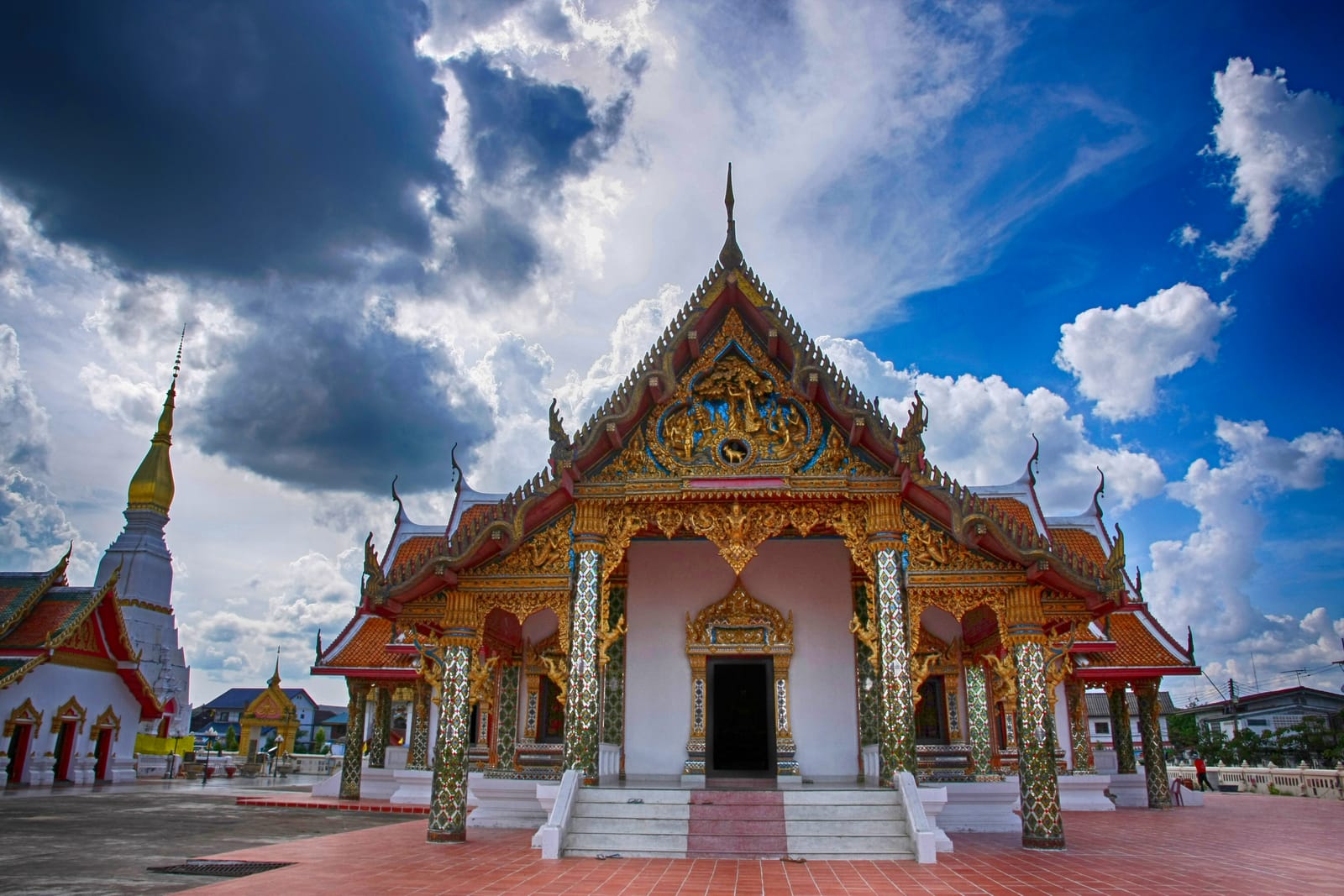
The Wax Castle Procession and Royal Trophy Long-Boat Races make up Sakon Nakhon's biggest event, held at the end of Buddhist Lent in early October every year. A wax castle is a wooden temple-shaped structure decorated with beeswax patterns that each temple community builds as a Buddhist offering, then parades together to Wat Phra That Choeng Chum in the city center. In 2025 it ran October 1–7, with the grand wax castle procession on the 6th, the long-boat races at Nong Han on the 4th–5th, and a closing alms-giving on the End of Lent day on the 7th. The dates shift each year with the lunar calendar, so confirm them before you book tickets and a room.
- Book your room weeks ahead — city hotels fill fast and prices climb around this time. The earlier you book, the better the rate.
- The highlight is October 6 — the grand wax castle procession, with crowds packed around Wat Phra That Choeng Chum. Arrive early to claim a good vantage point.
- Long-boat races October 4–5 — at the racing grounds on Nong Han lake, with a lively atmosphere. Bring a hat and water, the sun is strong there.
- Allow extra time to get around town — streets near the event close in places and traffic backs up. Parking farther out and walking in is easier.
The honest take on the Wax Castle Festival
It's fun and you get to see craftsmanship that's hard to find elsewhere, but it genuinely gets crowded and rooms cost more than usual. If you're not coming specifically for the festival, visit from late October through December instead — you'll get the same cool weather but an easier, cheaper trip.
What to prepare for hiking Phu Phan
The Phu Phan range lies south of the city and is home to Phu Phan National Park, waterfalls, viewpoints, cliffside temples, and Phu Phan Rajanivet Palace. It's cooler up on the mountain than in town, and the roads up are winding. If you're heading up, prepare the following so the trip goes smoothly and safely.
- Have your own vehicle or hire one — there's no public transport up the mountain and the sights are far apart. Car rental runs about 800–1,200 THB a day, or a motorbike 250–350 THB a day.
- Go in the morning — better visibility, fewer cars, and you catch the views before mist or cloud rolls in, especially at Wat Tham Pha Daen with its view over the city.
- Budget for the park fee — entering Phu Phan National Park costs around 20–40 THB per person. Kham Hom Waterfall and the viewpoints are at their best in the late-rains, early-cool season.
- Check the palace's open days first — Phu Phan Rajanivet Palace opens its gardens seasonally and sometimes closes for royal visits, so call ahead before you go.
- Comfortable walking shoes — the trails near the waterfalls and the cliffside temple steps are fairly steep. Wear sneakers or rubber-soled shoes with grip.
The rainy season and going up the mountain
From June to September the waterfalls are gorgeous and full, but the rocks are slick and the climbing roads are wet. If you come in the rainy season, allow extra time, drive slowly, and skip swimming in the waterfalls during heavy rain since flash floods can come fast. Check the forecast for Phu Phan district before every outing.
Do you need to book the indigo villages ahead?
Sakon Nakhon is Thailand's capital of natural indigo dyeing. The indigo here is dyed to a deep blue all its own and ships as far as Japan. The most popular indigo village is Ban Don Koi in Phanna Nikhom district, a community that takes indigo learning seriously. Beyond that, weaving groups are scattered across many villages around the province. Visit and you can watch the whole process, from starting the indigo vat to dyeing and weaving the cloth, and even try a dyeing workshop to take home.
- Call the weaving group ahead — many villages are run by locals, so if you want to try a workshop or watch a demo, book ahead through the group's page and they'll have the indigo vat ready.
- Dyeing workshops start around 150–300 THB per piece — you take home a handkerchief or scarf you dyed yourself. The price depends on the size and pattern you choose.
- Buying direct from the makers beats city prices — an indigo scarf starts around 250 THB, larger cloths run into the thousands. Real indigo has a faint scent and a muted, not garish, blue.
- The villages are out of town — Ban Don Koi is in Phanna Nikhom district, a fair drive from the city. You'll want a vehicle and to set aside half a day for the travel and the workshop.
About real indigo cloth
Naturally dyed real indigo may bleed a little in the first few washes — that's normal. Wash it separately the first two or three times and dry it in the shade, and the color sets better. If you wear it over light-colored clothes, watch for transfer early on. The faint indigo scent it carries comes from the real dyeing process, not from anything gone bad.
Sakon Nakhon's weather by season — pack accordingly
Sakon Nakhon sits in upper Isan, with three clearly distinct seasons. The cool season is genuinely cold, especially in the mornings and up on Phu Phan; the hot season is harsh and dry; and the rainy season is humid with showers that come and go. Know this ahead and you'll pack the right clothes without lugging more than you need.
- Cool season (Nov–Feb) — chilly mornings and nights, sometimes dipping below 15°C, and colder on the mountain. Pack long sleeves or a light jacket.
- Hot season (Mar–May) — strong sun and dry air. Go for breathable clothes, a hat, sunglasses, and drinking water, and do outdoor sights in the morning and evening.
- Rainy season (Jun–Sep) — rain comes in spells. Bring a folding umbrella or rain jacket, non-slip shoes, and a waterproof bag for your camera and phone.
- Sun protection in every season — the Isan sun is strong nearly year-round, so sunscreen and a hat help a lot when you're walking outdoors or rafting on Nong Han.
What to wear to stay comfortable and to enter temples
Sakon is the heartland of the forest-meditation tradition founded by Luang Pu Mun, and many temples still have practicing monks rather than just being sights. So dress neatly enough to enter a temple, while still being able to head outdoors and hike. Picking outfits that flex both ways is the most comfortable approach.
- Shoulders covered, knee-length bottoms or skirt — comfortable for entering Wat Phra That Choeng Chum and the forest temples. If you wear a sleeveless top, bring a shawl.
- Easy-off shoes — you remove them before entering the prayer halls, so slip-on sandals with a heel strap or sneakers are handier.
- Light outdoor clothes — breathable tops and comfy walking trousers, for the parks along Nong Han, the waterfalls, or walking through the indigo villages.
- Add a warm layer in the cool season — especially if you'll be on Phu Phan in the morning or at a viewpoint, where the wind is colder than in town.
- Try the local indigo cloth — buy an indigo scarf and actually use it on the trip, for sun and wind protection and as a souvenir for yourself.
Etiquette at forest temples
Beyond dressing neatly, at forest temples keep your voice low, don't make noise while taking photos, and don't disturb the monks or people who've come to meditate. Some temples have areas where women aren't allowed or photography is off-limits in certain spots. Watch for the signs and follow them so you don't accidentally cross a line.
Rough budget per person
Sakon Nakhon is an affordable place to travel: many of the main sights are free, and food and lodging cost less than in the big tourist cities. The real chunk of spending is getting to the city and the cost of a vehicle to get around the province. Here's a rough per-person estimate for a two-day, one-night trip — adjust it for however many of you are splitting the costs.
- 1 night's lodging — city hotels start around 500–900 THB, a step up runs 1,000–1,800 THB (pricier and quick to sell out during the Wax Castle Festival).
- Sight entry fees — Wat Phra That Choeng Chum, the parks along Nong Han, and the Ajahn Mun Museum are free. Phu Phan park is around 20–40 THB.
- Raft dining on Nong Han with fish — the fish and food are split among the group, so coming with several people works out to around 200–400 THB each.
- Indigo dyeing workshop — starts around 150–300 THB per piece, and you take home cloth you dyed yourself.
- Food for 2 days — Vietnamese dishes, Phon Yang Kham wagyu beef, and punchy Isan food, around 500–800 THB.
- Vehicle — car rental 800–1,200 THB a day, or a motorbike 250–350 THB a day, split among the group.
- Rough total — not counting travel to the city, a 2-day, 1-night trip works out to around 1,800–3,000 THB per person, and less if you go with a group.
Packing checklist
- A shawl or scarf — covers temple visits, sun protection, and the cool mountain wind, all in one piece.
- Sun protection — sunscreen, a hat, sunglasses, since the Isan sun is strong nearly year-round.
- A folding umbrella or rain jacket — especially in the rainy season, when Isan rain comes in short but heavy spells.
- Comfortable walking shoes + easy-off shoes — keep them separate for hiking and for temples.
- Cash on hand — local shops, markets, and many weaving groups take mostly cash.
- Personal medication and insect-bite remedies — in case you head up the mountain or hike in Phu Phan park.
Prep in a nutshell
Three easy things to remember before you set off: come October to December for the best weather, plus the Wax Castle Festival in early October; have your own vehicle or hire one since the sights are spread out with no public transport; and pack outfits that work for both temples and the outdoors, along with sun and rain gear for the season. That's all it takes to enjoy Sakon comfortably the whole trip.
All set? Check out well-located Sakon Nakhon hotels with real guest reviews
See the Top 10 Sakon Nakhon Hotels →