🔄 Updated 21 Jun 2026
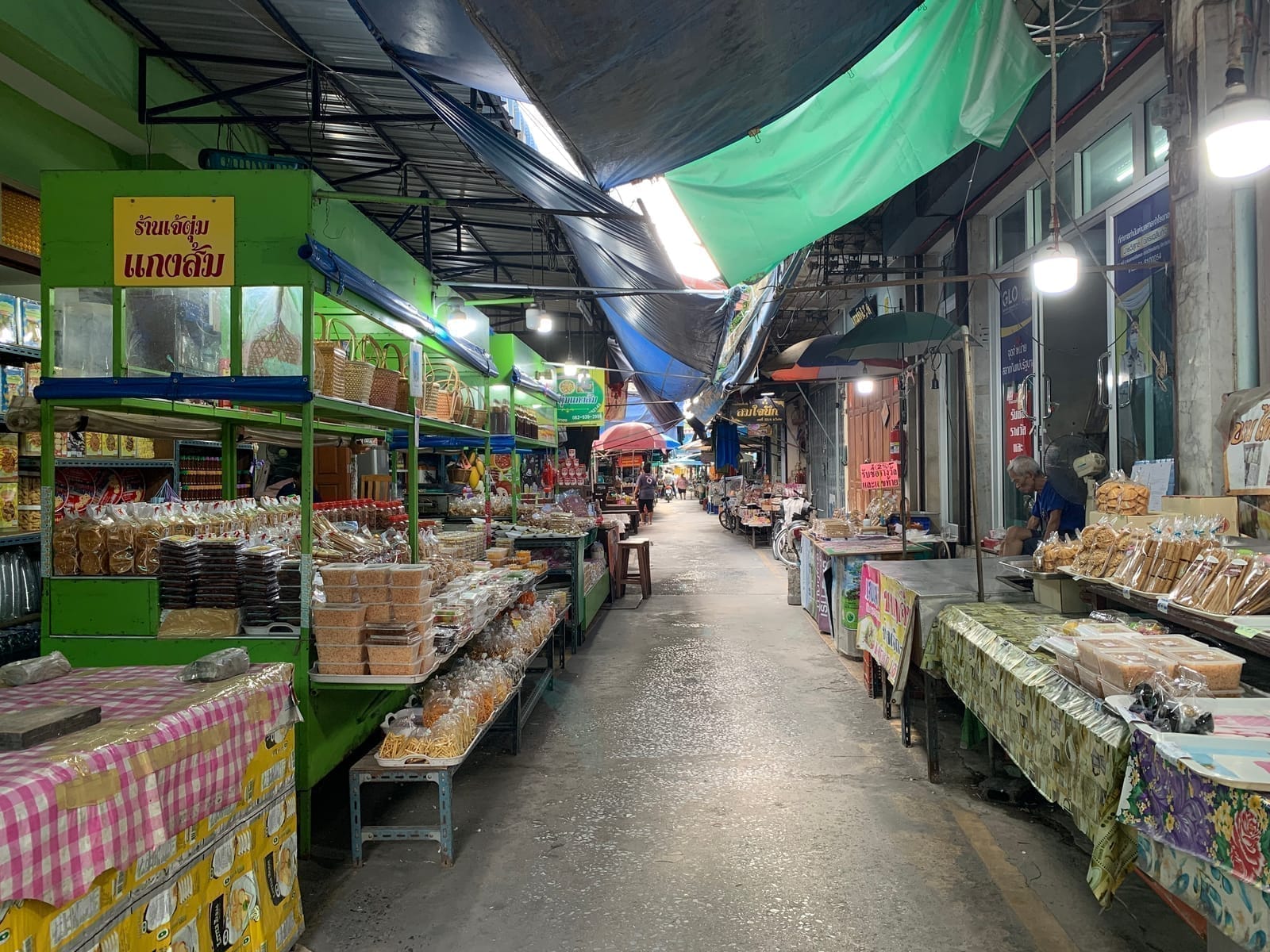
Ang Thong is a small province most people just drive through on the way to Ayutthaya or Sing Buri, but turn off into Wiset Chai Chan district and you'll find Sala Chao Rong Thong Market tucked away in the lane by Wat Nang Nai. It's a market on the Noi River where locals still come to do their real shopping, not something set up purely for tourists. The charm here is that it's a community that's still very much alive, with sweet shops passed down over several generations and old wooden shophouses that have survived both a fire and a restoration.
A century-old market born from a Thai-Chinese community
This community traces its roots back to the Ayutthaya era, originally a quarter of Chinese merchants who settled along the Noi River and built a shrine in the neighborhood. The name Sala Chao Rong Thong is said to come from an old goldsmith's shop in the market. The market suffered a major fire in 2005, but the residents rebuilt the shophouses while keeping the original layout, and the work later earned an architectural-conservation award from the Association of Siamese Architects. What you see today is a row of wooden buildings in a Thai-Chinese style that still holds on to its old atmosphere.
When it's busiest
The market is open daily from around 8am into the afternoon, but on Saturdays, Sundays and long holidays there are far more vendors out than on a regular weekday. If you want to catch the full range of sweets, come on a weekend morning, since many stalls make everything fresh and pack up once they sell out.
Want more out of Ang Thong? Book tours & activities
Booking online ahead on Klook or GetYourGuide is usually cheaper than the gate and skips the queue. Pick only the experiences you actually want — prices and availability are shown live on each site.
Old-school Thai sweets worth trying
The star of this market is its traditional Thai sweets, many of which are already hard to find in bigger cities. Most of the shops are long-running family stalls passed down over generations, the prices are easy on the wallet, and you can graze your way through the whole strip. These are the names that locals and reviews bring up most often.
Kesorn Lamchiak
The signature local sweet of Wiset Chai Chan: sticky-rice flour mixed with coconut milk, smoked over a scented candle until fragrant, and filled with young coconut and a faint hint of pandan. Ang Thong promotes it as one of its standout provincial specialties and it's hard to find elsewhere. Porn Phan has been making it for several generations and even does a live demonstration so you can watch it made fresh.
Mae Yur shrimp-topped khanom krok
An old recipe for khanom krok (coconut cups) that's been sold for over 40 years. What makes it special is the fresh shrimp topping, sprinkled with bean sprouts, egg and coriander, eaten hot off the griddle, rich and fragrant with coconut. It's the kind of stall people happily queue for.
Pa Pia baa bin
An old-style baa bin (coconut cake) shop that's been going for over 30 years, with a chewy texture, plenty of coconut fragrance, and crisp edges from being seared on the pan. It's the kind of place regulars keep recommending to friends.
Song Nimit Thai sweets
A shop that brings together many kinds of Thai sweets in one place — khanom piakpoon, khanom thua paep, and other hard-to-find traditional sweets. The owner is recognized as a keeper of old Thai sweet-making, so it's a good spot to buy a mix to take home.
Khanom khi nu / rare old sweets
The market still has plenty of older sweets that younger generations barely recognize, like khanom khi nu and khanom chak made fresh day by day. It's worth wandering and browsing the small stalls.
Traditional coffee and savory bites
Once you've grazed your way through the sweets and need to cut the sweetness, stop for some old-style coffee. The famous one in the market is a long-standing traditional coffee shop that still brews with a cloth coffee bag for a strong, bold cup, with a fun twist: it's served in a milk can with a raffia-string handle tied on so you can carry it as you stroll. It's an image a lot of people photograph and take home with them. For something savory, there are noodle shops and riverside restaurants where you can sit and rest your feet.
Traditional coffee in a milk can
A long-standing coffee shop in the market brewing a strong old-style cup, served in a milk can with a string handle so you can sip it as you walk around.
Restaurants on the Noi River
Near the market there are relaxed Thai-style riverside restaurants where you can sit down for lunch — a good break from walking the market.
Community life and things to take home
The real charm of Sala Chao Rong Thong Market isn't only the sweets — it's the atmosphere of an old community where people still actually live. You can wander past the wooden shophouses, the old shrine, and grandmother-aged vendors who still sit making sweets in front of their shops. It's a slow pace that's hard to find in a big city. Before you head off, it's easy to pick up dry sweets like kesorn lamchiak or a mix from Song Nimit to take home as gifts.
- Kesorn lamchiak — the standout provincial gift, hard to find elsewhere; it keeps for only a short time, so buy it close to your departure day
- Assorted Thai sweets from Song Nimit — pick several kinds in one shop, good for gifting to a big group
- Old-style roasted coffee — some shops sell traditional ground coffee to take home
- Strolling the shrine and old shophouses — best photos in the morning while the light is still soft
Getting there and timing your visit
The market is in the lane by Wat Nang Nai, in Sala Chao Rong Thong subdistrict, Wiset Chai Chan district, about 10–15 km from Ang Thong town. It's easy to reach by car, with parking around the temple and the market. Coming from Bangkok or Ayutthaya, it doesn't take long, and it pairs nicely with the temples and craft villages of Ang Thong in a single day. Come in the morning and you'll get both the full range of sweets and cooler weather.
Plan a half-day trip
You can walk the whole market in about 1–2 hours, so it works well to come in the morning and then carry on to Wat Pa Mok or Wat Muang (the giant Buddha) in the late morning — an easy one-day trip.
Plan a full day in Ang Thong — markets, temples and local food
See the Ang Thong travel guide →