🔄 Updated 21 Jun 2026
If you want to escape Bangkok for a day without driving, paying for fuel or tolls, Samut Sakhon is a tidy answer. The charm here is that you can do almost the whole trip on public transport: take the old Maeklong line train into Mahachai, ferry across to the Tha Chalom side — an old community with street art — then eat seafood in a market where prices are still friendly. We've written this plan from routes that real travellers have reviewed, with rough prices based on what we could find; the actual figures may drift up or down a little depending on the season.
Why Samut Sakhon is easy on the budget
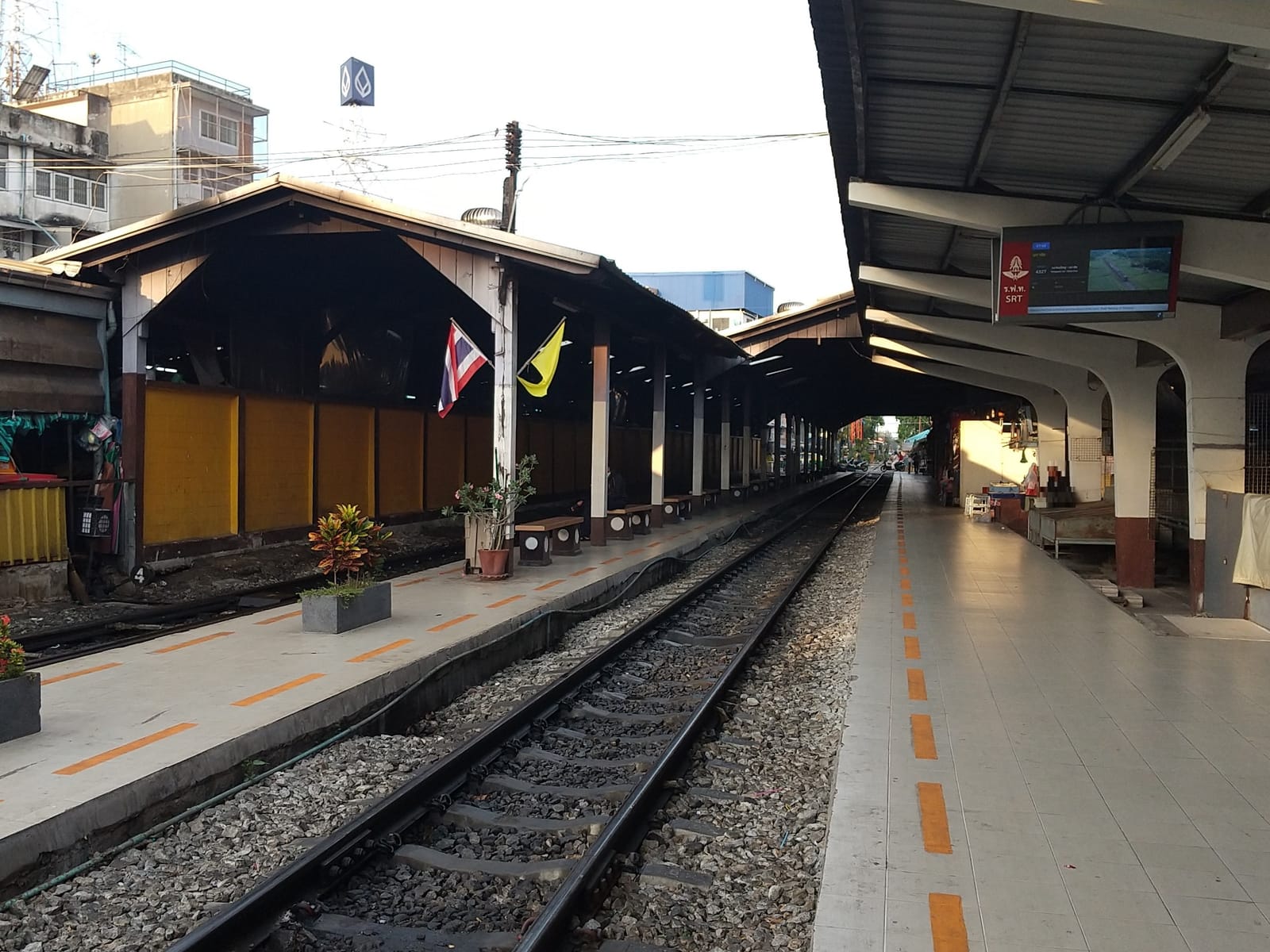
The key to keeping costs down is transport. The Wongwian Yai–Mahachai train is a third-class service costing just a few dozen baht, and it gets you there in about an hour. The ferry from Mahachai over to Tha Chalom is only a few baht per crossing. With transport this cheap, most of your budget is left for food — and since this is a fishing town, the seafood is fresher and noticeably cheaper than in Bangkok.
- Wongwian Yai → Mahachai train — third class, around 10 THB, roughly a 1-hour ride
- Mahachai ↔ Tha Chalom ferry — around 3 THB per crossing, running frequently all day
- Pedal trishaw around Tha Chalom — about 100 THB for a loop of the town (or just walk it yourself for free)
- Seafood in Mahachai market — market prices, not tourist prices
Planning your costs
For a there-and-back day trip by train and ferry, total transport usually comes in under 100 THB. Add your main meals for the day and a budget of 300–500 THB per person is plenty — it mostly depends on how heavily you order seafood.
Book the activities in your Samut Sakhon trip ahead
Booking online ahead on Klook or GetYourGuide is usually cheaper than the gate and skips the queue. Pick only the experiences you actually want — prices and availability are shown live on each site.
1-day plan — out in the morning, back by evening, by train and ferry
This plan suits anyone based in Bangkok who wants an easy outing on a single day off. It's all train and ferry — no car rental needed. The two main stops are Mahachai market on one side and the old Tha Chalom community across the Tha Chin River.
Mahachai–Tha Chalom by train and ferry
About train times
The Wongwian Yai–Mahachai line runs a limited number of services per day. Before you go, check the latest timetable on the State Railway site (railway.co.th) or ask at the station, in case the last departure doesn't match when you want to head back.
2-day, 1-night plan — add the Phan Thai Norasing and salt-field side
With two days, spend a night in Mahachai and carry on to the Phan Thai Norasing subdistrict, home to the Phan Thai Norasing shrine, Wat Khok Kham and the salt fields that are the postcard image of Samut Sakhon. This side needs a songthaew or a motorbike taxi since the train doesn't reach it — but the fares are still reasonable.
Phan Thai Norasing shrine–Wat Khok Kham–salt fields
Cheap eats you shouldn't skip
Samut Sakhon's selling point is seafood at market prices, and you can find all of this in Mahachai and Tha Chalom without spending much. We've ranked it by value and by how well-known each dish is in town.
Maeklong mackerel — steamed pla tu
Short-bodied, bent-faced mackerel with firm, rich flesh — a signature of this estuary area. You can buy it in Mahachai market both fresh and steamed, sold by the basket at a fair price. Eat it with chilli dip and rice for a cheap, filling meal.
Fish or prawn rice soup
The breakfast or late-night staple of a fishing town: hot rice soup with fresh fish or prawns, just a few dozen baht a bowl, filling but light on the stomach.
Cockles — blanched shellfish
Samut Sakhon is a source of cockles, and blanched with seafood dipping sauce they make a worthwhile sharing plate. Split a few across the group and it's cheaper still.
Fish-ball noodles
Fish balls made fresh in a fishing town are bouncy and fragrant. A bowl of noodles runs a few dozen baht — a light meal that's easy to find in the market and along the road.
Grilled prawns — Tha Chin River prawns
If you want to treat yourself a little, grilled prawns at market prices here cost less than in the big city. Order half a kilo to share and you'll get fresh seafood at a price you can live with.
Dried seafood, shrimp paste, dried shrimp
Not for eating on the spot, but great-value souvenirs: shrimp paste and dried shrimp straight from where they're made, at market prices cheaper than buying in Bangkok, and easy to carry home.
Saving on the seafood
Seafood is priced by weight, so if you're in a group, order sharing plates. Going for local items like cockles and mackerel works out better value than imports, and eating in the market or at community spots is usually cheaper than places that cater to tourists.
Where to stay if you're overnighting
If you go with the 2-day plan, lodging in central Mahachai ranges from budget guesthouses to mid-range hotels. Picking a spot near the train station or the market makes it easy to walk around and saves you extra transport costs. We've gathered the options separately on our Top 10 hotels page.
Near Mahachai train station
Walking distance to the market and the pier — ideal if you're getting around purely on public transport, with no extra fares to pay.
Along the Tha Chin River
Fishing-town atmosphere, with river views at some places — good for anyone wanting to capture the old community.
Tips for keeping to budget
- Go on a weekday if you can — fewer people, fresher market produce, and prices that aren't marked up for the crowds
- Carry cash and coins — train fares, ferry fares and most market stalls take cash, so bring small notes
- Check the train times before you leave — this line runs only a few services, and if you miss one you'll switch to a minivan, which costs a bit more
- Walk instead of hiring a trishaw — Tha Chalom is a small community, so you can walk and photograph the street art yourself and save the trishaw fare
- Order seafood to share — with a group, ordering shared dishes is better value than a plate each
Want full coverage of Samut Sakhon, area by area
See the Samut Sakhon guide →