🔄 Updated 21 Jun 2026
The mouth of the Tha Chin River and the Samut Sakhon coast are where fresh water meets salt, creating mangrove forest, mudflats, and broad salt flats that run together for miles. This kind of ecosystem is a natural larder for fish, crabs, and shellfish — and, just as importantly, a stopover for shorebirds migrating south from Siberia to escape the winter. That makes this inner stretch of the Gulf of Thailand one of the best shorebird-watching areas in the country.
The big draw here is how close it is to Bangkok — an hour's drive from the city and you're there. It suits anyone who wants to get out for some fresh air, watch the birds, photograph the salt flats, and then come back for a Mahachai seafood dinner, all in one easy trip.
Phanthai Norasing mangrove forest
The easiest place to start is the Phanthai Norasing mangrove nature trail, in Phanthai Norasing Subdistrict, Mueang Samut Sakhon District, behind Phanthai Norasing Shrine alongside the old Khok Kham canal. It's a long concrete boardwalk leading into the heart of the mangroves — an easy walk with no slogging through mud, so it works for kids and grown-ups alike.
- Nature boardwalk — a concrete path through the broad-leaved mangroves, with mudskippers, fiddler crabs, and grapsid crabs to spot the whole way
- Suspension bridge over the canal — the highlight of the trail; you can cross to the other side, and it's a lovely photo spot in the morning and evening light
- Phanthai Norasing Shrine — stop in to pay respects before or after the mangrove walk; it's right next door and held in high regard by locals
Tip
Long stretches of the boardwalk have no shade, and once the sun is up it gets very hot. Come before 9 a.m. or in the late afternoon, wear a hat, put on sunscreen, and carry water.
Want more out of Samut Sakhon? Book tours & activities
Booking online ahead on Klook or GetYourGuide is usually cheaper than the gate and skips the queue. Pick only the experiences you actually want — prices and availability are shown live on each site.
Salt flats and birdwatching at Khok Kham
Past Phanthai Norasing, heading toward the sea, is Ban Khok Kham — a mix of salt flats, aquaculture ponds, and mangroves. It's famous for its birds, with 189 species recorded, and it's one of the few places in Thailand where you have a chance of seeing the spoon-billed sandpiper, a tiny shorebird with a spoon-shaped bill that's critically endangered, with only around 150–200 left in the entire world.
The spoon-billed sandpiper is rare and very small, so you'll need a spotting scope and plenty of patience — not everyone who comes will see one. But even if you miss the star, there are dozens more shorebirds to watch: snipe, knots, plovers, and flocks of egrets feeding across the salt flats that you're all but guaranteed to see.
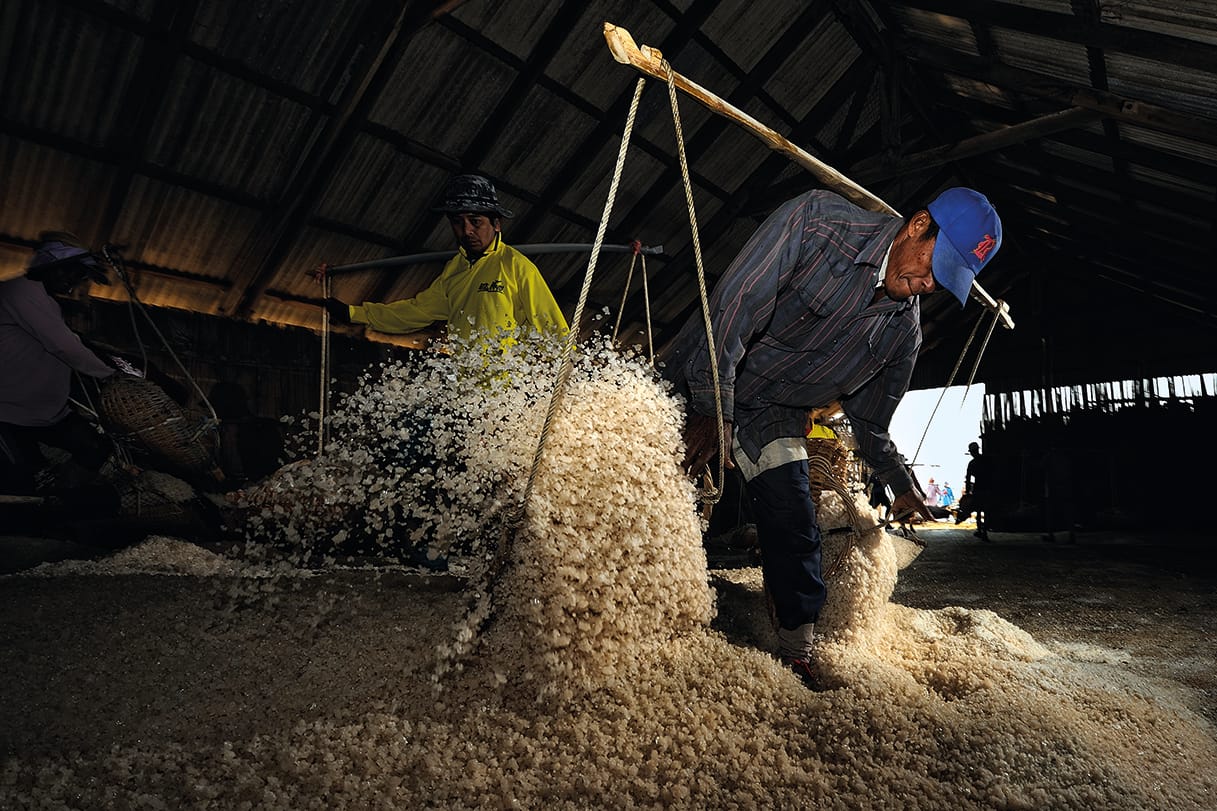
Khok Kham salt flats
Wide salt pans that mirror the sky, beautiful in the evening light — both a photo spot and a feeding ground for shorebirds.
Khok Kham Nature Conservation Group
Locals who look after the migratory-bird area, with bird information boards and shaded spots to rest. Ask them about the bird timing before you go.
Good to know
The salt flats are real working land for local people, not a public park. Stick to the embankments they've opened for visitors, don't step into the salt pans or disturb the birds, and if you want the best vantage points, getting in touch with the local birdwatching group is both safer and far more informative.
The best time of year for birdwatching
Migratory birds arrive in the cool season, trickling in from October, peaking from November to March, then starting to head back in late April. If you're coming specifically for the shorebirds, this is the golden window. In the rainy season the migrants are almost entirely gone, leaving only the resident birds.
- Time of day — early morning and low tide are when the most birds come down to feed, so checking the tide table before you go helps a lot
- Gear — a spotting scope or a long zoom lens is essential, because shorebirds are small and far off
- What to wear — muted colors rather than bright ones, move slowly, and keep quiet so the birds don't spook and fly off
The Red Bridge and dolphin-watching spot
Another spot the locals point you to is the Red Bridge in Phanthai Norasing Subdistrict — a wooden walkway reaching out over the mudflats. From November to January, when the cool-season winds blow into the Gulf, pods of dolphins come in to feed close to shore. If you're lucky, you'll catch a dolphin surfacing to breathe. And on the days the dolphins don't show, you still get the wide mudflat views and flocks of feeding birds to keep you happily occupied.
Straight talk
Dolphins are wild animals — nobody can promise which day they'll turn up, and some days you'll go and not see any at all. Ask the fishermen around there whether they've been seeing them often lately, so you set your expectations right.
About Don Hoi Lot
A lot of people assume Don Hoi Lot is in Samut Sakhon, but the razor-clam sandbar famous for clam-digging and as a Ramsar wetland is actually in the neighboring province of Samut Songkhram, about 40–50 minutes' drive from Samut Sakhon town. If you want to combine the Khok Kham salt flats and the Don Hoi Lot sandbar in one trip, you can easily plan a continuous route, since they sit along the same coastline.
Don Hoi Lot is a sandy-muddy bar that emerges at low tide, with razor clams living beneath the sand. It's a wetland with mangroves, mudflats, and salt flats just like the Samut Sakhon side, so it's another shorebird-watching site along the same route.
A one-day Samut Sakhon nature trip
Mangroves + salt flats + an evening of seafood
This trip is flexible. If you're coming as a family, you can cut the mid-morning birdwatching and focus on the mangrove walk and the seafood instead. For photographers and serious birders, come in the cool season and give yourself plenty of time.
Want a place to stay near Mahachai before an early-morning birdwatch?
See the Top 10 hotels in Samut Sakhon →