🔄 Updated 21 Jun 2026
You don't need to stay overnight in Saraburi to get a lot out of it. Leave Bangkok early, pick your zone, and you can be back before dark without feeling rushed. What makes the province interesting is how different it looks depending on when you show up — cool and misty in winter near Khao Yai's foothills, ceremonial and colorful during Buddhist Lent, or lush and waterfall-heavy through the wet season. Here's how to figure out which visit is right for you.
Best Time to Visit Saraburi
The answer depends on what you're after. Saraburi's highlights are spread across different seasons, so it's worth deciding what you want before booking anything. Here's a rough breakdown.
Cool Season — Khao Yai Foothills & Muak Lek (November–February)
The best all-round window, especially if you want cooler temperatures. The Muak Lek and Khao Yai foothill areas drop noticeably in the mornings and at night. Mountain-view cafés, the Thai-Danish dairy farm, and Chet Sao Noi waterfall are all at their best — clear water, comfortable air, great light for photos. Downside: it's busy, and accommodation fills up fast over long weekends.
Sunflower Fields — Late Rainy to Early Cool Season (November–January)
The sunflower farms around Saraburi and neighboring Lopburi bloom during this period. Fields turn a deep, solid yellow. Entry to the popular farms runs around 20 THB, and some provide free hats and umbrellas. Go before noon — the light is better and it hasn't heated up yet.
Flower Alms Ceremony — Buddhist Lent (around July)
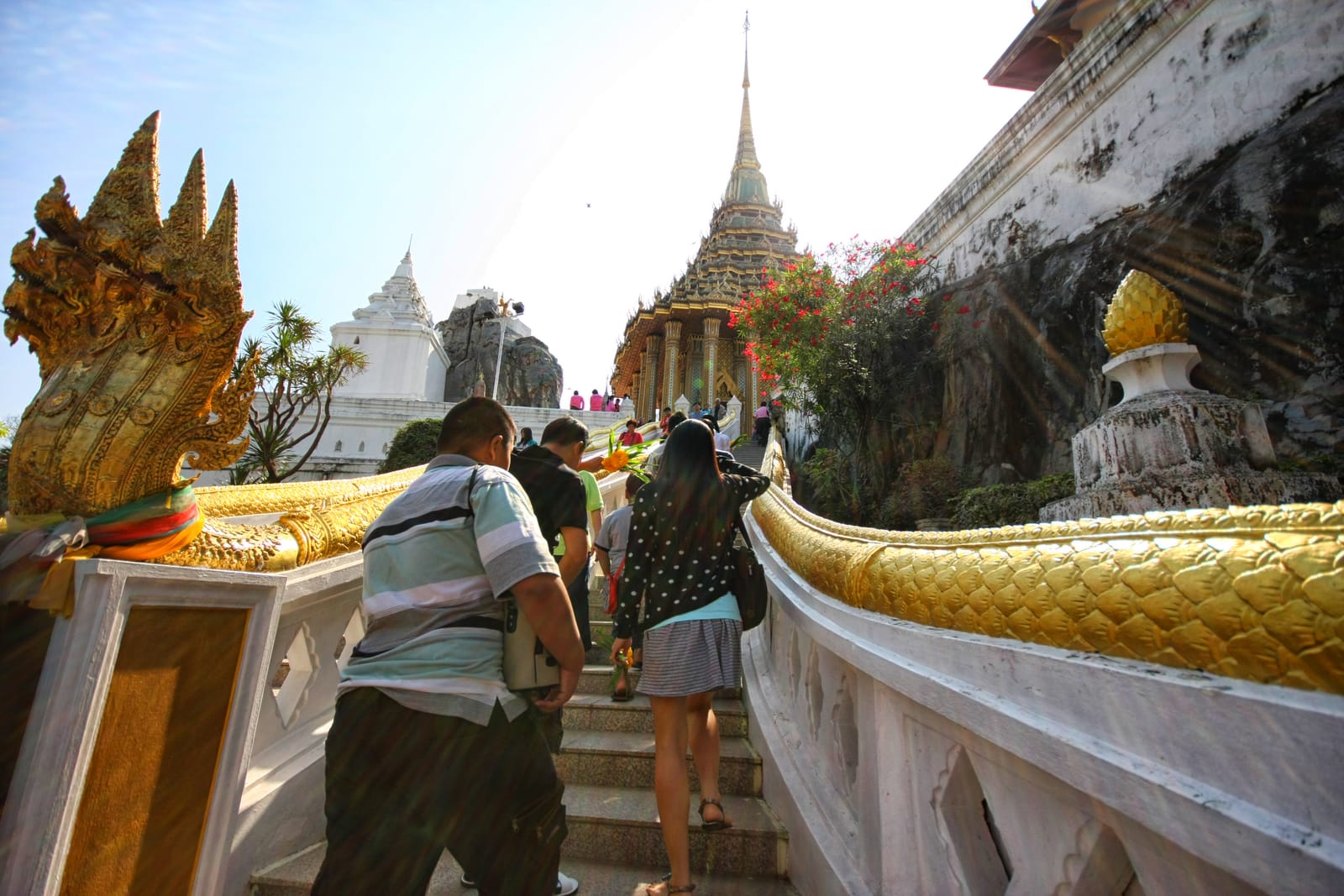
Held at Wat Phra Phutthabat Ratchaworamahawihan, this is a ceremony that exists nowhere else in Thailand. Locals gather dok khao phansa flowers — yellow, white, and purple — to offer into monks' alms bowls. The event runs over three days straddling Khao Phansa day. In 2025 it was July 9–11; the date shifts each year, so check before you plan.
Rainy Season — Waterfalls at Full Force (June–October)
The forest is deep green and the waterfalls inside Khao Yai National Park, including Haew Suwat, run at full power. The atmosphere is lush and cool. That said, Chet Sao Noi can have strong currents in the wet season — swimming there requires caution — and rain may disrupt photography plans. Best suited to travelers who like raw nature and don't mind getting wet.
One Trip, Three Highlights
If it's your first visit and you want to cover the most ground, aim for late November to December. You'll catch cool weather, clear waterfalls, and sunflower fields all in one trip. Just avoid long public holiday weekends — traffic on the way back can be brutal, and accommodation prices spike.
Day Trip from Bangkok — How to Make It Work
Saraburi is about 108 km from Bangkok along Highway 1 (Phahon Yothin) or the expressway — roughly 1.5 to 2 hours by car in light traffic. That's a comfortable same-day distance. The sights split into two zones: the city zone (Wat Phra Phutthabat, Phra Phutthajai cliff painting) and the Muak Lek–Kaeng Khoi zone (waterfalls, dairy farm, mountain cafés). Picking one zone per trip means you won't feel like you're rushing.
Nature & Muak Lek (Relaxed Pace)
Temples & Merit-Making (Buddhist Lent Season)
Driving Makes More Sense Here
Saraburi's attractions are spread out, and public transport doesn't connect the sights well — especially the waterfalls and the farm. If you're travelling with two or more people, driving or renting a car is both cheaper per person and far more flexible than relying on shared transport.
Getting to Saraburi from Bangkok
- Private car — Main routes are Highway 1 (Phahon Yothin) or the expressway. Around 108 km, taking 1.5–2 hours in normal traffic. The most flexible option if you plan to visit multiple spots.
- Minivan / coach — Departs from Mo Chit 2 terminal into central Saraburi, about 2 hours. Fares are low hundreds of THB. Good if you're sticking to the city zone.
- Train — Northeast line stops at Saraburi, Kaeng Khoi, and Muak Lek stations, departing from Krung Thep Aphiwat (Bang Sue Grand Station). Takes around 2–2.5 hours. Muak Lek station is walkable to the waterfalls. Relaxed and cheap.
- Getting around in the province — Between attractions you'll want a private or rented vehicle. Songthaews and public transport don't cover the tourist spots reliably.
Day Trip Budget for Saraburi
Saraburi is easy on the wallet. The figures below are approximate per-person costs for a one-day trip, not including accommodation. Adjust up or down based on your travel style.
Budget ~400–700 THB
Train or minivan both ways, eat at local spots, pay for the waterfall and a temple or two. Focused on nature and merit-making, nothing fancy.
Mid-range ~800–1,500 THB
Split petrol with friends, add attraction entry fees, a sit-down lunch, and one mountain-view café stop.
Relaxed ~1,800 THB+
Rent a car, visit multiple spots, eat somewhere nicer, pick up local souvenirs, budget for farm activities or sunflower field entry without counting every baht.
Admission Fees in Saraburi
Most things here are cheap or free. Sunflower fields charge around 20 THB. Temples generally accept voluntary donations. Waterfalls inside national parks charge the standard national park entrance fee. Bring cash — several sites and local stalls don't accept card or QR transfers.
Before You Go — Practical Checklist
- Confirm event dates first — The flower alms ceremony falls on Khao Phansa day, which changes every year. Check the exact dates before you commit to a plan.
- Go early, always — Sunflower fields and waterfalls both look better in morning light, and the crowds haven't arrived yet. Especially true on weekends.
- Dress for temples — Wat Phra Phutthabat is a major religious site. Cover your shoulders and avoid shorts.
- Wear non-slip shoes — Waterfall rocks are slippery, especially in the rainy season.
- Bring cash — Many local shops and entry points still don't accept bank transfers or card.
See all attractions and accommodation across Saraburi by zone
View Saraburi Guide →