🔄 Updated 21 Jun 2026
This plan starts from where most people do: arriving in Sisaket mid-morning. Day one you loop through the Khmer temples on the Uthumphon Phisai side before the sun gets brutal, then head back into town for Wat Phra That Rueang Rong and a few city check-in spots. Day two you go south to Khun Han district for the Million Bottle Temple and the chapel on the water, then pick up some souvenirs before heading home. It's spaced so you won't wear yourself out, leaving time to sit, rest and eat well too. The sights are spread across several districts, so this trip is easiest with your own car or a rental.
How to get there and get around in town
From Bangkok you can take the Lower Isan train straight to Sisaket station, or a coach from Mo Chit also gets you there. If you fly, land at Ubon airport and it's about an hour and a half by road from there. Around the province itself, the sights are scattered across several districts and public transport is limited — I'd suggest renting a car and driving yourself, or hiring a driver by the day, which is far more flexible. If you really have no car, focus mainly on the spots in town.
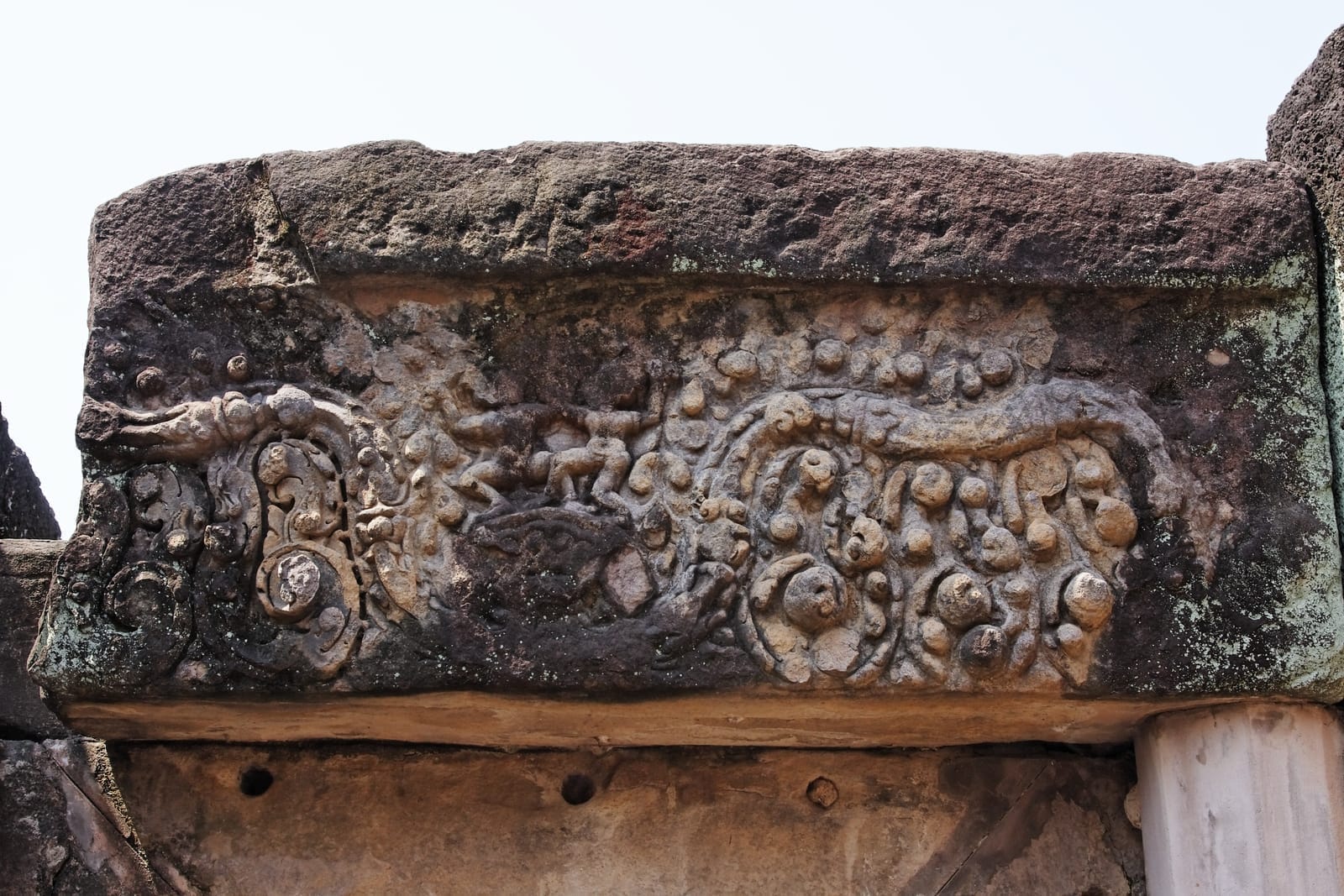
Uthumphon Phisai Khmer temples + Wat Phra That Rueang Rong in town
Khun Han — the Million Bottle Temple + souvenirs before home
Rough budget per person
- 1 night's accommodation — guesthouses in town start around 400–700 THB, mid-range hotels 800–1,500 THB
- Entry fees — almost all the Khmer temples and temples in this plan are free, with only parking or donations as you see fit
- Car — a self-drive rental runs around 1,000–1,500 THB a day, split it if there are a few of you, plus fuel
- Food for 2 days — local food and evening markets run around 400–600 THB for the whole trip
- Souvenirs — volcanic durian (in season only), jasmine rice, soil-dyed fabric, as much as you like
Book the activities in your Sisaket trip ahead
Booking online ahead on Klook or GetYourGuide is usually cheaper than the gate and skips the queue. Pick only the experiences you actually want — prices and availability are shown live on each site.
Pha Mo I Daeng–Khao Phra Wihan: why they're not in this plan
A lot of people picture Sisaket alongside Pha Mo I Daeng and the route up to Khao Phra Wihan, but this 2-day, 1-night plan deliberately leaves them out, because Pha Mo I Daeng in Khao Phra Wihan National Park was temporarily closed to tourism from 29 May 2025 due to tensions along the Thai–Cambodian border, with no firm reopening date yet — it depends on the situation along the frontier. So this plan focuses instead on the city, the Khmer temples and the temples that are in safe areas and open as usual.
If you want to add Pha Mo I Daeng
Before you plan to go, always check the latest announcements from Khao Phra Wihan National Park and the border situation every time — don't rely on old information. If it's still closed on the day you go, switch to the temple–Khmer ruins–durian route in this plan instead, and you won't waste the trip.
When is the best time to visit Sisaket
The sun in Sisaket is strong for most of the year, so visiting the open-air temples is most comfortable in the morning or late afternoon — avoid 12:00–15:00 if you can. If you want to eat volcanic durian straight from the tree, come around mid-June to August; late June usually brings the volcanic durian festival. And if you're into the full four-tribe cultural atmosphere, around 11–15 March there's the Lamduan Flower Festival at Somdet Park, where the lamduan blossoms scent the whole garden, with four-tribe performances and a local food zone.
What to eat throughout the trip
Food is the fastest way to understand Sisaket, because the four tribes give the menu here a blend of Lao, Khmer and Kuy dishes. Below are the things I tried that explain why people get hooked. Some of the older dishes need ordering ahead, or are easiest to find during traditional festivals.
Lawae Katam (rice-paddy crab om curry)
A local dish of the Kuy people, an om curry made with rice-paddy crabs pounded with the spice paste, rich and savoury from the crab and wild vegetables. The province lists it among its honoured local dishes; it nearly disappeared and was brought back.
Fried tilapia with sweet fish sauce and neem
Sisaket is known for its farmed tilapia, fried crisp and drizzled with sweet fish sauce, eaten with blanched neem leaves — a little bitter, a little sweet. Plenty of local restaurants do it well.
Bo Katat (Sisaket-style papaya salad)
A bold local-style papaya salad that's a signature of the province. The ingredients and the kind of heat differ from the usual Thai version. You can find it at local restaurants in town.
Home-style larb-koi and om
The Lao-Isan side of things, found at larb-koi places all over town. Om is offal cooked with seasonal greens like phak i-rok and phak tiu, savoury from the paste and lemon basil, eaten with hot sticky rice.
Pon pla–pla som
Humble home meals that live in every kitchen. Pon pla is a boiled-fish chilli dip eaten with fresh vegetables; pla som is fermented fish fried and eaten with sticky rice. Filling and tasty, and they go well together.
Volcanic durian (in season)
The province's standout, grown on volcanic soil around Khun Han–Kantharalak. The flesh is sweet and creamy, the smell isn't too pungent, the flesh is thick and the seeds small. You can eat it straight from the tree from Jun–Aug.
Sao Ang (khanom pad)
A legendary sweet of the local Khmer people, made from stirred flour then grilled or roasted over the fire, chewy and lightly sweet. An old-fashioned snack that many younger people still haven't tried. Find it during festivals or order it ahead.
Thung Kula jasmine rice–hang rice
Sisaket sits within the Thung Kula Ronghai plains, a source of fine jasmine rice. Hang rice is paddy that's steamed then milled, fragrant and high in nutrition — good to buy and take home.
How to track down the local dishes
Older dishes like lawae katam and sao ang aren't on every menu. The easiest time to come across them is at the Lamduan Flower Festival in March, which has a four-tribe local food zone all in one place. Outside the festival, ask local restaurants in town, or ask the older folks in the villages — many dishes need ordering ahead.
Can you do this as a day trip or stretch it to 3 days
Both work. If your time is really tight, trim it down to Prasat Sa Kamphaeng Yai + Wat Phra That Rueang Rong + the Million Bottle Temple and you'll still see all the main highlights in a day, though you'll be driving a fair bit. If you have 3 days, add the four-tribe cultural side around Prang Ku–Khukhan, the Kuy museum and the Yer community in Rasi Salai, and you'll understand the place more deeply. The 2-day, 1-night plan is about right for anyone who wants the temples, the Khmer ruins and the food without having to rush.
Want a well-located place to stay in Sisaket town? See the options real reviewers rate.
See the Top 10 Sisaket hotels →