Thailandaddict
Home › Thailand › Sisaket › Sisaket Khmer Temple Itinerary Sa Kamphaeng Yai, Ban Prasat & Temples
🏯 Sisaket Itinerary

Sisaket Khmer Temple Itinerary
Sa Kamphaeng Yai, Ban Prasat & Temples

If you love history and stone temples but don't want to fight a hundred other people for a photo angle at Phanom Rung, Sisaket is the answer a lot of travelers overlook. This province has thousand-year-old Khmer temples spread across several districts, and many of them line up along the same route, so you can drive and tick them off easily. It also has unusual temples like the Million Bottle Temple and a stupa built in four ethnic styles to add on. In this article we've laid it all out as an itinerary with a full schedule — chaining the temples on day one, then temples and food the next day — with 1-day, 2-day and 3-day versions you can grab and tailor to the time you have.

🧱 Thousand-year Khmer temples🚗 Drive them in one route🗓️ Ready-to-use schedule
Sisaket Khmer Temple Itinerary Sa Kamphaeng Yai, Ban Prasat & Temples

🔄 Updated 21 Jun 2026

Before we get into the schedule, here's the big picture on why Sisaket is fun for temple lovers. The key thing is that the temples aren't scattered far apart the way they are in some provinces. The three main Khmer temples line up along the same road around Uthumphon Phisai and Huai Thap Than districts, only about 20–40 minutes of driving apart, so it works perfectly as a one-day temple loop. Then you can spend the rest of your time on the pretty temples and the food in town.

Everything in this plan is based on temples and shrines that are actually open to visitors right now. All three main temples sit inside temple grounds, are free, and have no entry ticket. As for the Pha Mo I Daeng cliff and Khao Phra Wihan on the border, which a lot of people ask about, we've put a separate warning at the end of the article, because for now you still need to check the situation before you go.

Route overview — which temple is where

If you leave Sisaket town, drive toward Uthumphon Phisai first and then loop up to Huai Thap Than — that gives you the smoothest run. These are the three main temples worth hitting on this plan.

  • Prasat Sa Kamphaeng Noi (Uthumphon Phisai district) — a small temple right by the Sisaket–Uthumphon Phisai road, originally an arogayasala, or Khmer-era hospital. It's a quick 20–30 minute stop and a good opener since it sits at the start of the route.
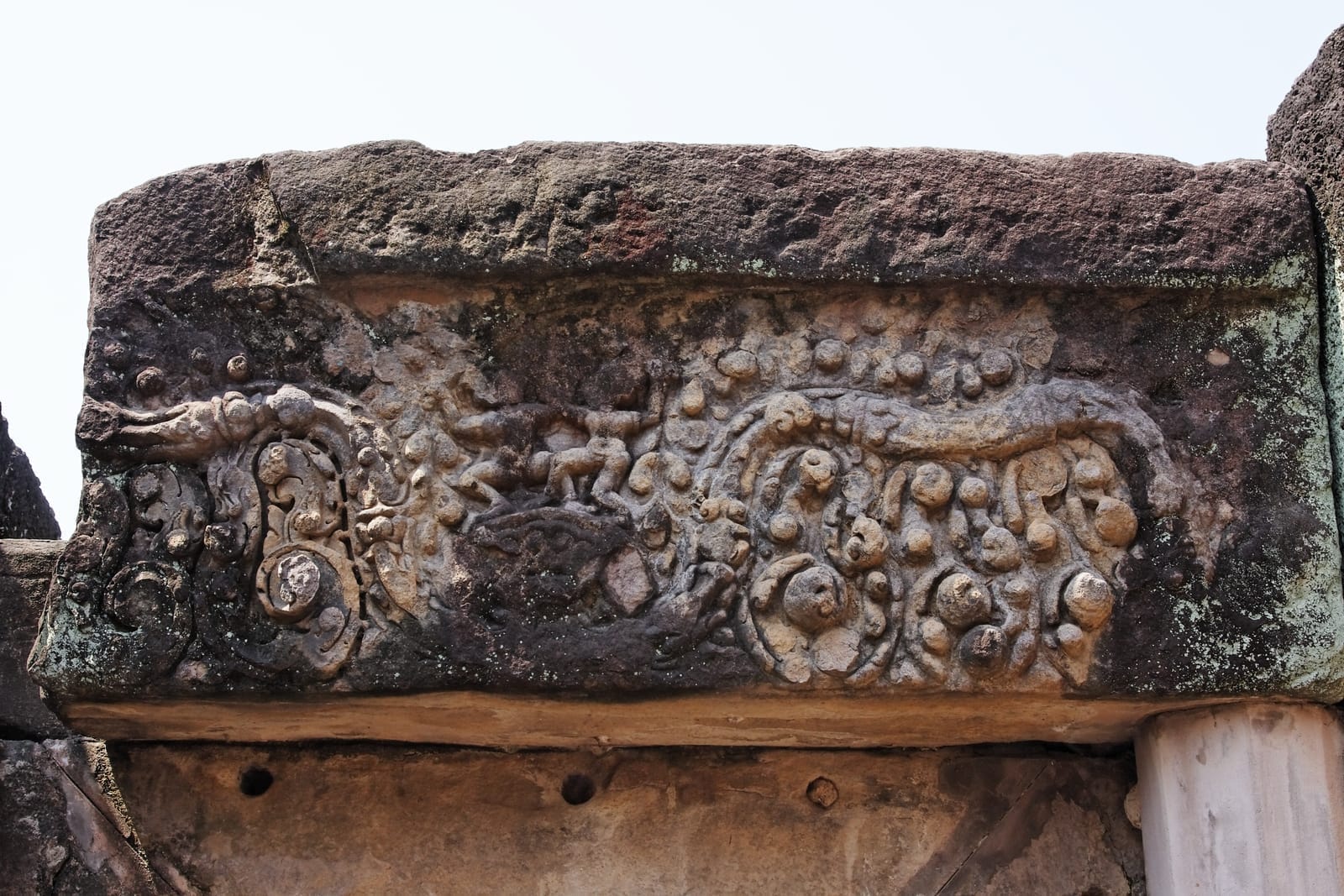
  • Prasat Sa Kamphaeng Yai (Uthumphon Phisai district) — the largest and most complete Khmer temple in the province, about 26 km from town, with several carved lintels and a temple museum. This is the highlight of the trip.
  • Prasat Ban Prasat (Huai Thap Than district) — three brick prangs in the middle of a village inside Wat Prasat Phanaram, quiet and peaceful, with the feel of a temple still woven into community life.

Order it so the drive flows

If you're using your own car, start with Sa Kamphaeng Noi since it sits right on the main road at the start of the route, then head into Sa Kamphaeng Yai in Uthumphon Phisai town, and finally loop north to Huai Thap Than for Ban Prasat. All three together, including the driving, take anywhere from half a day to a full day at an unhurried pace.

🎟️

Book the activities in your Sisaket trip ahead

Booking online ahead on Klook or GetYourGuide is usually cheaper than the gate and skips the queue. Pick only the experiences you actually want — prices and availability are shown live on each site.

🎟️ See all Sisaket tours & activities (Klook)

If you only have 1 day, make the highlights count

A lot of people pass through Sisaket or only have a single day. The one-day plan focuses on getting all three temples done from morning to early afternoon, then closes with Wat Phra That Rueang Rong in town, which is nearby — no extra long drive needed.

One Day

Three temples + a temple in town

08:30
Leave Sisaket town and drive along Highway 226 toward Uthumphon PhisaiFill up and grab water for the car first — convenience stores in the villages are limited.
09:00
Stop at Prasat Sa Kamphaeng Noi to see the arogayasala and the pond in front of the templeSmall site, about 20–30 minutes to walk around.
10:00
Arrive at Prasat Sa Kamphaeng Yai, the main highlight of the dayWalk the three prangs, the lintels of Indra on his elephant and Vishnu reclining on the ocean, and the temple museum — about an hour.
11:30
Lunch in Uthumphon Phisai townLook for an Isan spot or a rice-and-curry stall in the district market — easy on the wallet.
13:00
Drive north to Huai Thap Than and visit Prasat Ban PrasatThree brick prangs in the middle of the village, about 30 minutes to look around.
15:00
Head back into town and stop at Wat Phra That Rueang Rong — see the four-ethnicity folk museum and climb the upper floor for the viewIt's close to town, an easy stop to finish on.
17:00
Find dinner in town before heading home or checking into your hotelThe evening market and walking street have plenty of food to choose from.

2 days, 1 night — temples without rushing

With two days you can travel a lot more comfortably and not cram everything into one day. Day one is for the temples at a slow pace — really looking at the lintels and stopping at the temple museum. Day two is for the pretty temples and the food in town, plus picking up some local goods to take home.

Day 1

Chaining the Khmer temples

08:30
Leave town and drive along Highway 226 toward Uthumphon PhisaiFill up before you leave town.
09:00
Prasat Sa Kamphaeng Noi — see the arogayasala and the pondAbout 20–30 minutes.
10:00
Prasat Sa Kamphaeng Yai, the main highlight — walk the lintels and the temple museumTake your time here, allow about 1–1.5 hours.
12:00
Lunch in Uthumphon Phisai townTry the local Isan food in the district market.
13:30
Drive up to Huai Thap Than and visit Prasat Ban PrasatThree brick prangs in the middle of the village, about 30–40 minutes to look around.
15:30
Head back into Sisaket town, check in and relaxCheck the Top 10 hotels link below for accommodation options.
18:00
Dinner in town — try mu kratha (Thai BBQ) or local Isan foodThe evening market in town has plenty of food options.
Day 2

Pretty temples and food in town

08:00
A Sisaket-style breakfast — rice congee or khanom chin with nam ya curryBreakfast spots in town open early and sell out fast, so go before mid-morning.
09:30
Wat Phra That Rueang Rong — the four-ethnicity stupa and the folk museumClimb the upper floor for a view over the town.
11:00
Drive south to Khun Han district and visit the Million Bottle Temple (Wat Pa Maha Chedi Kaeo)About 1–1.5 hours from town. If you'd rather not drive that far, swap it for a café in town.
13:00
Lunch around Khun Han, then pick up local goods — shallots, garlic, jasmine riceFrom June to August there's also volcanic-soil durian to try.
15:00
Stop at a café for coffee before heading back, or wander the market in townAdjust to your energy and your departure time.

3 days, 2 nights — go deeper

If you're set on doing Sisaket properly, three days is about right. Day one covers the temples along the Uthumphon Phisai–Huai Thap Than line. Day two heads south to Khun Han for the Million Bottle Temple, nature, and seasonal durian. Day three picks up a secondary temple off the main route, like Prang Ku, plus food and local goods in town before you leave.

Day 1

The main Khmer temple line

08:30
Sa Kamphaeng Noi, then on to Sa Kamphaeng Yai in Uthumphon Phisai districtSee the lintels and the temple museum in full.
12:00
Lunch in Uthumphon PhisaiIsan food in the district market.
13:30
Prasat Ban Prasat, Huai Thap Than districtBrick prangs in the middle of a village.
16:00
Back to town, check in, and stroll the Huai Nam Kham river islandThere's also the Sisaket Aquarium to stop at — it closes in the evening, so check the hours first.
Day 2

Khun Han — Million Bottle Temple + nature

08:00
Drive south to Khun Han districtAbout 1–1.5 hours from town.
09:30
Million Bottle Temple — see the ordination hall over the water and the work made from over 1.5 million glass bottlesOpen roughly 6 a.m.–6 p.m., free entry.
11:30
Samrong Kiat Waterfall in the Banthat RangeFullest in the rainy season around September; low water in the dry season, so adjust the plan.
13:30
Visit a volcanic-soil durian orchard (season only, June–August)Out of season most orchards are closed — swap in some local-goods shopping instead.
16:00
Head back into town, relax, find dinner
Day 3

Secondary temple + souvenirs before you leave

08:30
Stop at Prang Ku in Prang Ku district, an arogayasala temple from the reign of Jayavarman VIIFor the completionist temple-hunters — check the location first.
11:00
Wat Phra That Rueang Rong in town, if you haven't stopped there yetThe four-ethnicity museum and a town view from the upper floor.
12:30
Lunch in town — try Sisaket's local food
14:00
Pick up local goods — shallots, garlic, jasmine rice — before heading homeSisaket is known for its shallots and garlic.

Quick comparison — which temple first

If you don't have time for all of them, here's our ranking by how worthwhile each one is — use it to decide what to cut.

1

Prasat Sa Kamphaeng Yai

Uthumphon Phisai district · 26 km from town · 45–60 min

The largest and most complete in the province, with several carved lintels and a temple museum. If you can only pick one, pick this.

HighlightFull set of lintelsHas a museum
Free entry
2

Prasat Ban Prasat

Huai Thap Than district · ~47 km from town · 20–40 min

Three brick prangs in the middle of a village — quiet, few crowds, with the feel of a temple still living alongside the community. Good for those who like peace.

QuietBrick prangsIn the community
Free entry
3

Prasat Sa Kamphaeng Noi

Uthumphon Phisai district · on the Sisaket–Uthumphon Phisai road · 20–30 min

A roadside arogayasala — a Khmer hospital — with a pond in front. Less surviving artwork, but a quick stop since it's right on the main road.

ArogayasalaQuick stopRoadside
Free entry
4

Prang Ku

Prang Ku district · check the location first · 20–30 min

A compact arogayasala temple from the reign of Jayavarman VII, a bit off the main route. Good for completionists ticking off temples on day 3.

For completionistsSmall site
Free entry

Temples to add after the Khmer ones

Once you're done with the Khmer temples, if you still have energy and time, several of Sisaket's temples don't look like ordinary ones, because they reflect the four ethnic cultures in the province — Lao, Khmer, Suay and Yer. These two are the easiest to reach and the most popular.

Near town · free entry

Wat Phra That Rueang Rong (Mueang district)

A stupa blending the four Tai Sisaket ethnic styles, with six floors inside. The lower floor is a folk museum, and the upper floor gives you a view over the town. It's close to town and an easy way to end the trip.

Khun Han · free entry

Million Bottle Temple / Wat Pa Maha Chedi Kaeo (Khun Han district)

The whole temple is decorated with more than 1.5 million colored glass bottles. The highlight is the four-gabled ordination hall over the water. Open roughly 6 a.m.–6 p.m. It's in the south of the province, a bit more driving, but worth it if you like the unusual.

Make the temples more fun

Try reading up briefly on Khmer art before you go, then look at the lintels and work out what story they're telling — it's more fun than just standing there taking photos. And go in the morning or late afternoon when the sun is at an angle; you'll see the depth of the carvings far better than under flat midday light.

Get ready before you set out

  • Transport — your own car or a rental is by far the easiest. The temples are spread across outlying districts and public transport is limited. If you arrive in town by train or bus, renting a car or hiring a driver for the day is the way to go.
  • Best time — the cool season (November–February) has the nicest weather, so walking the open-air temples isn't punishing. In the rainy season the temples are lush and green but slippery.
  • What to wear — comfortable walking shoes and a sun hat, since the temples are out in the open with little shade.
  • Etiquette — the temples sit in temple grounds and are sacred to locals, so dress modestly and don't climb on the ancient structures.
  • Cost — all the main temples are free, so your main expenses are fuel and food, which makes this a very light-budget history trip.

The border situation to check before you go

If you're planning to extend the trip to Pha Mo I Daeng or Khao Phra Wihan National Park in Kantharalak district, we'll be straight with you: always check the situation first. This area sits right on the Thai–Cambodian border, and there have been clashes along the border in the recent past. That led the park to temporarily close the Pha Mo I Daeng site from late May 2025, with no firm reopening date yet.

Check before you travel

Before heading to the Kantharalak–Khao Phra Wihan side, always check the Khao Phra Wihan National Park announcements and the latest border news first. If it's still closed or the situation isn't safe, give it a miss for now and switch to something else instead. The Khmer temple plan along the Uthumphon Phisai–Huai Thap Than line in this article sits well inland, away from the border, and is fine to visit as normal.

Plan a full Sisaket trip — see more places to stay and eat

See the Sisaket travel guide →

FAQ

How many days do you need for the Sisaket Khmer temple itinerary?

If you only do the three main temples (Sa Kamphaeng Yai, Sa Kamphaeng Noi, Ban Prasat) plus a temple in town, one day is enough. But if you want the temples, the Million Bottle Temple, nature and food, 2 days and 1 night is ideal. And if you're set on doing it all, adding Prang Ku and Khun Han, 3 days and 2 nights is the most relaxed.

Are Sisaket's Khmer temples free, and what are the opening hours?

Prasat Sa Kamphaeng Yai, Sa Kamphaeng Noi and Ban Prasat are all free, with no entry ticket, since they sit inside temple grounds. They're open during normal daytime hours with no set closing gate. We'd suggest going from morning to evening, and going when the sun is at an angle so you can see the lintels and carvings more clearly than at midday.

Which Sisaket temple is most worth it if you only have time for one?

Prasat Sa Kamphaeng Yai in Uthumphon Phisai district, because it's the largest and most complete in the province, with three prangs, several lintels including Indra on his elephant and Vishnu reclining on the ocean, and a temple museum displaying excavated finds. It's about 26 kilometers from town.

Do you need your own car to visit Sisaket's temples?

Pretty much. The temples are spread across outlying districts like Uthumphon Phisai and Huai Thap Than, and public transport is limited. If you arrive in Sisaket town by train or bus, renting a car or hiring a driver for the day is the smoothest way to get around.

Can you extend the temple trip to Pha Mo I Daeng or Khao Phra Wihan?

Always check the situation first. Pha Mo I Daeng and Khao Phra Wihan National Park sit right on the Thai–Cambodian border in Kantharalak district. There have been clashes along the border recently, which led the park to temporarily close Pha Mo I Daeng from late May 2025, with no firm reopening date yet. Before you go, always check the park's announcements and the latest border news. The temple route around Uthumphon Phisai–Huai Thap Than sits well inland and is fine to visit as normal.

Copyright & Image Takedown Policy

Thailandaddict is created to review and share travel experiences. Where an image is sourced from elsewhere, we credit the source. If you are the copyright owner and prefer that your image not appear on this site, please contact us and we will gladly remove the image or correct the information.

Display


Saved Near me
ไทย English

Search

View my trip →