🔄 Updated 21 Jun 2026
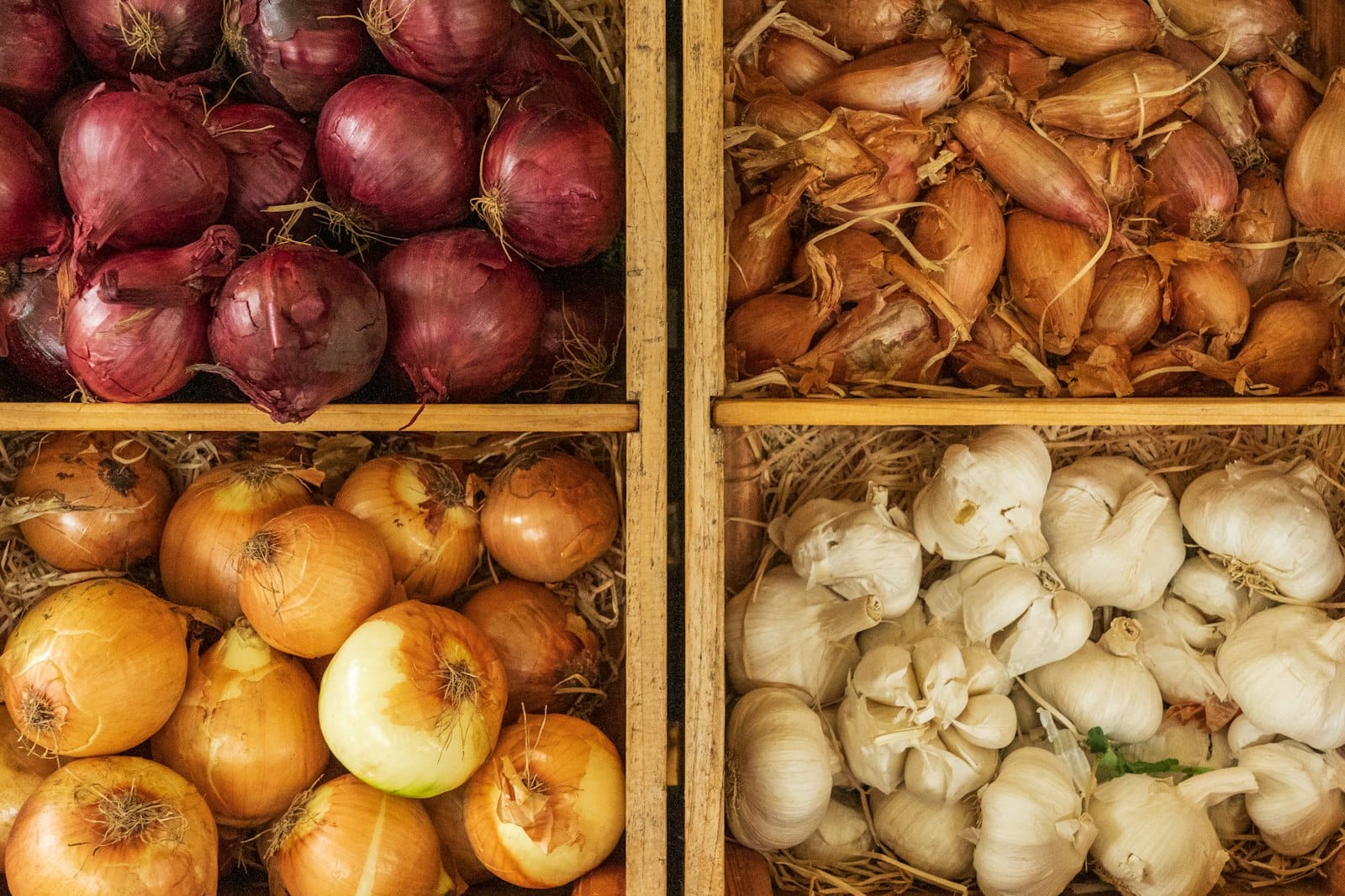
Sisaket shallots have been famous for decades, grown densely around Yang Chum Noi, Rasi Salai, Uthumphon Phisai, and the districts ringing the city. Sandy loam and dry weather after the rice harvest give these shallots firm, deep-red bulbs with a sharp aroma that keep well — shallot traders across the country know them. Garlic grows alongside them in the same season: small cloves, but stronger and more pungent than Chinese garlic, and clearly better for frying or pickling.
Why Sisaket shallots are so well known
The first reason is volume — Sisaket is the country's biggest shallot-growing area, with most of the planting concentrated in this single province. Vendors from Talat Thai and other big markets across Thailand come here to source directly. The second reason is quality: Sisaket bundled mat-juk shallots are GI-registered, and the listed traits are large bulbs, dry flesh, red color, a rich taste, and a small neck. A small neck means they keep longer and don't rot easily, and when you cook or fry them, you get more aroma and a deeper flavor than ordinary shallots.
- Large, firm bulbs — plenty of flesh once peeled, not shriveled
- Deep red color — handsome red skin, clearly not imported stock
- Sharp aroma, rich taste — fragrant when fried, full flavor in chili dips
- Small neck, long-keeping — hang the bundles and they last for a month
- GI produce — Sisaket bundled shallots have a clearly registered origin
Want to taste deeper? Try a Sisaket food tour or cooking class
Half a day with a local who knows the lanes — or cooking a dish yourself — teaches you more than just eating. Book ahead on Klook or GetYourGuide.
Where to buy shallots and garlic
If you want fresh shallots and garlic by the sack or as bundles to give away, locals head to the wholesale markets and the old souvenir shops in town. If you're after processed versions like fried shallots, fried garlic, or pickled garlic, there are both souvenir shops and local brands making them. Below are the places people actually go. Prices are rough ranges and depend on the season and grade — right after harvest, prices run lower.
Tha Ruea Shallot Market (shallot & garlic wholesale market)
Sisaket's wholesale market for shallots and garlic, where the vendors themselves come to source. The stock is fresh and the prices are the lowest because you're buying straight from the source. Best if you want a lot — sacks or bundles to give away. It gets very busy during harvest season.
Kit Tiang shop
An old souvenir shop running for over 60 years, near Sisaket train station. They make and pack their own — fried shallots, fried garlic, pickled garlic, and other local souvenirs. Great if you've just stepped off the train and want to grab gifts on the spot, picking up several things in one stop.
Mae Sri Mart (Mae Sri roundabout)
A souvenir shop gathering the best of Sisaket's four ethnic Thai groups, near the Mae Sri roundabout in the city center. It carries processed shallot and garlic goods, local sweets, and woven crafts. Good if you want several kinds of souvenir in one shop — easy to find with convenient parking.
Kilo Thong / Kamlai Thong brand (Yang Chum Noi)
Local-brand fried shallots and garlic from Yang Chum Noi district, fried in palm oil then baked to drive off the excess oil, with no preservatives — so they stay crisp longer and aren't greasy. They carry GMP / FDA / Halal standards. Good if you want quality processed goods to give as gifts without any embarrassment.
Roadside shallot & garlic stalls on the main routes
During harvest season, farmers set up stalls selling shallots and garlic along the main roads around the province. The stock is fresh from their own plots, prices are negotiable, and you're supporting growers directly. But it's seasonal — not available year-round.
Sisaket Municipal Fresh Market
An in-town fresh market with stalls selling shallots and garlic, both loose and bundled, plus pickled garlic and bagged fried shallots sold retail. Good if you only want a little rather than a lot — for your own kitchen or gifts for a house or two.
Je Meow Shallots (Tha Ruea market)
A shallot and garlic shop in the Tha Ruea market area, selling both retail and wholesale and sourcing from growing areas within the province. Good if you want a medium quantity — not a whole sack, but a better price than buying retail at the fresh market.
Community enterprise shops / provincial OTOP
Processed shallot and garlic goods made by farmer groups in the province, ranging from fried shallots and fried garlic to pickled solo garlic and even shallot cookies. Find them at provincial fairs and OTOP shops. Good if you want something unusual you won't find elsewhere.
Which option suits whom
Want it cheap and in bulk to share out — go to the wholesale market · Want to grab processed goods and hop straight on the train — stop at Kit Tiang · Want a polished, branded, certified gift — pick Kilo Thong fried shallots · Want just a little for yourself — swing by the municipal fresh market.
Fried shallots & garlic — why Sisaket's are different
Fried shallots and garlic are easier to carry home than fresh bulbs — no worrying about mold — and you can sprinkle them straight onto noodles, rice porridge, congee, or salad. What makes Sisaket's different starts with good raw material: firm, strong-smelling shallots and garlic that come out more fragrant once fried. The shops that take it seriously fry in palm oil then bake off the excess oil with no preservatives, so the result stays crisp for a month or even a year and isn't greasy when you eat it.
How to pick fried shallots & garlic
Shake the bag and check there's no oil pooling at the bottom · color should be an even golden yellow, not burnt dark · it should smell fragrant, with no rancid odor · packed in a glass jar keeps it crisp even longer · check the production date and look for an FDA number if you're buying a lot to give away.
Beyond fresh bulbs — what other processed goods are there
Sisaket shallots and garlic aren't sold only as fresh bulbs — locals process them several ways so they keep longer and travel more easily. If you want a souvenir that isn't just a bag of fresh shallots, look for these.
- Fried shallots / fried garlic — crisp, ready to sprinkle on food, easy to store and the easiest to carry
- Pickled solo garlic / pickled garlic — sold by the jar, eaten as a side or with chicken rice, around 200–300 THB per jar
- GI bundled shallots — fresh shallots tied into neat bundles, great as a thoughtful gift
- Shallot cookies / baked shallot goods — an unusual item the community groups make, worth a taste
- Solo garlic — round single-clove bulbs with a strong aroma, bought for pickling or eating raw
Which season is best for quality and price
Shallots and garlic are post-rice crops, planted from the cool season into the dry season, so the stock is most plentiful and freshest around January to March. That's when the wholesale markets buzz, prices are lowest, and the bulbs look their best. Buy outside that window and there's still stock, but it's been stored, and prices creep up as supply tightens. Processed goods like fried shallots and pickled garlic are sold all year because they keep — no need to wait for the season.
How to carry fresh bulbs home without spoiling them
Fresh shallots and garlic like dry, well-ventilated spots. Don't seal them in a plastic bag and leave them in a hot car — they'll go stuffy and moldy. If you buy bundles, hang them somewhere airy, and keep hanging them once you're home — they'll last a month.
Can you buy online if you can't get there?
If you can't make it to Sisaket yourself but want the real thing, many local farmer groups and shops now sell online — on Shopee, Lazada, and their own Facebook pages — from GI bundled shallots and peeled garlic cloves to fried shallots and garlic in jars. Pick a seller that states the growing area clearly, has reviews, and lists the production date, and you'll get something close to buying on the spot. But going yourself is still worth it, since you can hand-pick the bulbs and the market price is lower.
Plan a full eat-and-explore trip across Sisaket
See the Sisaket travel guide →