🔄 Updated 21 Jun 2026
Getting ready for Sisaket isn't complicated, but there are a couple of things that, if you know them in advance, will help you plan a lot better. The first is timing, because Isan weather is a completely different story between the cool and hot seasons, and volcanic durian only shows up for a short window. The second is the border situation around Pha Mo I Daeng and Khao Phra Wihan National Park, which this year you still need to check clearly before putting it on your itinerary. We'll go through each one in full.
When is the best time to visit Sisaket
If you're asking which season is the most comfortable for sightseeing, the answer is November to February — cool air, gentle sun, and you can walk around open-air Khmer temples all day without suffering. It's also when photos come out best, with clear skies. But if your goal is volcanic durian, you'll have to trade that for hot, humid weather, because the fruit is only out from June to July. These two windows give you completely different experiences, so pick based on what matters most to you.
- November–February (cool season) — the best time for temple-walking and photography. Cool, comfortable air, and the province's high season. Book popular stays and restaurants ahead.
- June–July (durian season) — the season for volcanic durian and volcanic-soil fruit like rambutan and mangosteen. The harvest peaks from mid to late June. Hot, humid, and rainy.
- March–May (hot season) — proper Isan heat. Walking temples midday is exhausting, so if you come now, sightsee in the early morning and late afternoon and avoid the noon sun.
- August–October (late rainy season) — lush greenery, beautiful waterfalls along the Phanom Dong Rak range, and fewer crowds, but you'll need to plan around rain and slippery mountain roads.
Volcanic durian season, June-July
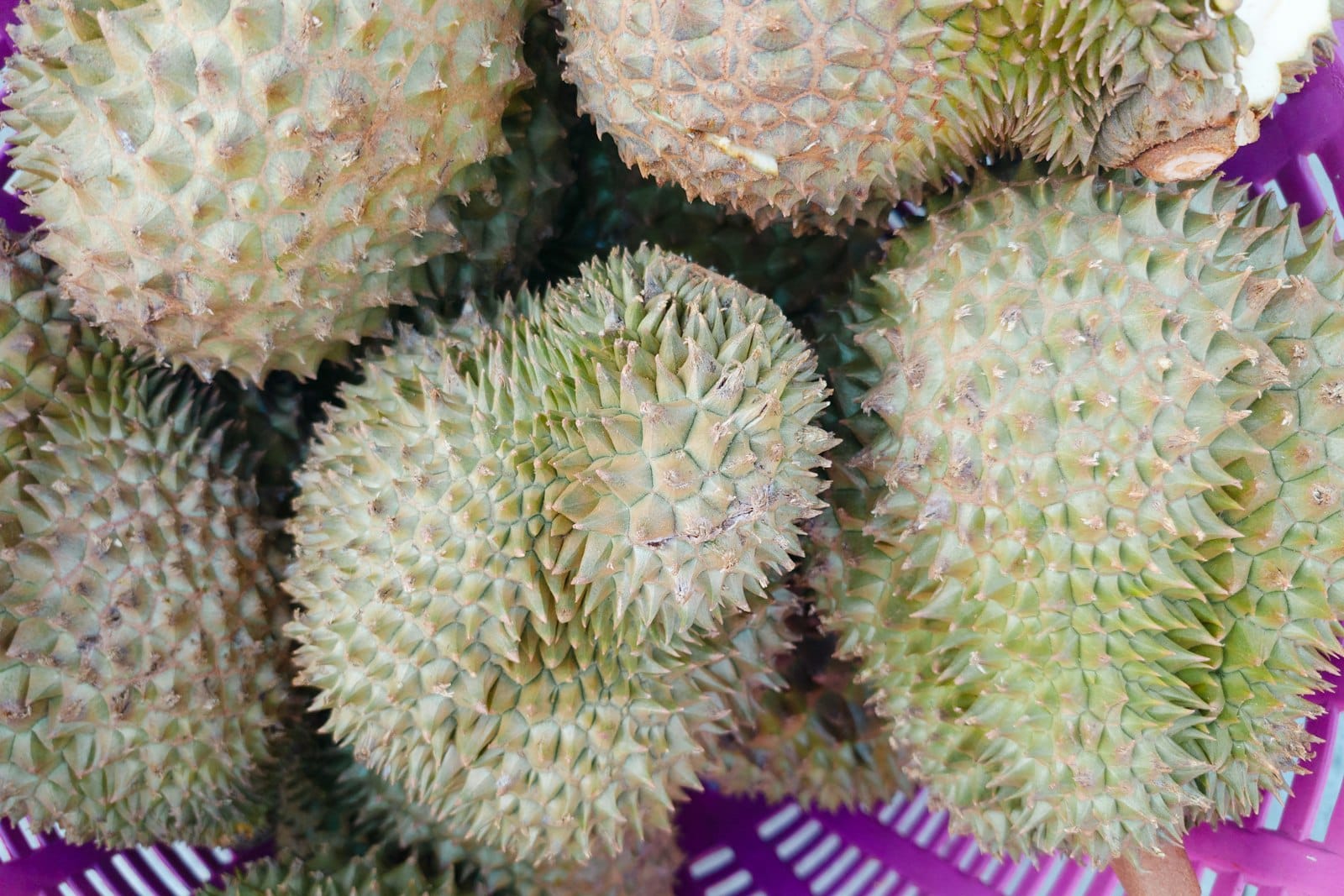
Volcanic durian is Sisaket's most famous product, grown on old volcanic soil around Kantharalak, Khun Han, and Si Rattana. The flesh is dry, sweet and rich without being cloying, with a lighter smell than ordinary durian — so much so that it earned its own GI registration. The main season runs roughly late May to early July, with the heaviest harvest and the most orchards open in mid to late June. If you're set on tasting it straight from the orchard, aim for this window first, then call the orchards to confirm, since the timing shifts each year with the rains.
If you don't want to drive around hunting orchard by orchard, the province holds the Sisaket Volcanic Durian Festival every year on the field in front of the provincial hall. In 2026 it runs from 25–29 June 2026, gathering orchards from across the area in one place. There's premium-grade durian, rambutan, mangosteen, and local products, so a single visit lets you taste from many orchards without driving far. (Festival dates in future years shift with the season, so check ahead.)
Book your stay ahead during the festival
During durian-festival time and the long mid-year holidays, in-town accommodation fills up fast and prices climb. If you plan to come during this period, book several weeks ahead. And if you're buying durian to take home, always taste before you buy and choose a seller who can tell you which orchard it's from.
The Khao Phra Wihan-Pha Mo I Daeng border situation (important)
We have to be straight with you on this one. Pha Mo I Daeng and Khao Phra Wihan National Park sit right on the Thai-Cambodian border, and there have been clashes along the frontier. As a result, Pha Mo I Daeng has been closed periodically and the area has taken damage from the fighting. Even though the situation later calmed down, it remains liable to change at any time — open some periods, closed or restricted in others. So don't plan a trip to Pha Mo I Daeng or the Khao Phra Wihan side assuming it will definitely be open.
- Check every single time — before putting Pha Mo I Daeng on your plan, call Khao Phra Wihan National Park or check the Department of National Parks' announcements for the day you're going. Don't trust old information that says it's always open.
- Always have a backup plan — if it's closed that day, the province still has Khmer temples, the Million-Bottle Temple, and waterfalls around Kantharalak-Khun Han to visit instead. Don't pin your whole trip on one spot.
- Listen to local officials — if you arrive and there's a no-entry sign or staff tell you it's closed, respect the order and don't push into restricted zones, since this is a security area and there may still be dangerous leftover ordnance.
- Follow the news before a long trip — if you're planning months ahead, check border news again closer to departure so you can adjust your plan in time.
Sisaket is fine to visit — just avoid the points right on the border
The town of Sisaket and most attractions — Khmer temples, the Million-Bottle Temple, durian orchards — are well away from the frontier and are perfectly fine to visit. The only places to be careful about are the spots right on the border line, namely Pha Mo I Daeng and the Khao Phra Wihan side. There's no need to cancel the whole trip.
What's the weather like each season
Sisaket is in southern Isan, with three clear seasons. The cool season is pleasant, especially mornings in the mountains; the hot season is fiercely hot with strong sun; and the rainy season is humid with rain in spells. Knowing the weather lets you pack the right clothes and gear.
Cool season (Nov–Feb)
Pleasantly warm sun by day, cool at night and before dawn, especially around the Phanom Dong Rak range where temperatures drop below those in town. Pack a light jacket for the mornings.
Hot season (Mar–May)
Fiercely hot with strong sun. Walking open-air temples at midday is tiring, so sightsee morning and evening, and bring a hat, sunglasses, and water.
Rainy season (Jun–Oct)
Humid with rain in spells. The scenery is green and waterfalls look great, but mountain roads get slippery — bring an umbrella or rain jacket and allow extra time on mountain routes.
A rough budget per person
Sisaket is a province you can travel on a modest budget. Local food is wallet-friendly and entry fees are cheap. The real big-ticket costs are getting there and back and transport within the province, since the sights are spread across several districts and public transport is limited. Here are rough numbers for a 3-day, 2-night trip.
- Round trip from Bangkok — trains in various classes run about ฿200–800 each way (sleepers cost more than seats), or fly into Ubon round trip for about ฿1,500–3,000 depending on the period and airline.
- Transport in the province — renting a car runs about ฿900–1,500 a day plus fuel, or hire a local driver for the whole day if you don't drive — better value than catching taxis spot to spot.
- One night's stay — in-town hotels start around ฿500–1,200 a night; prices climb during festivals and high season.
- Food — about ฿40–150 a meal at local Isan eateries that are cheap and delicious; café drinks around ฿50–90.
- Entry fees / souvenirs — temple entry is about ฿20, most temples are free, and volcanic durian runs around ฿180–250 a kilo. Set your souvenir budget for shallots, garlic, and jasmine rice however you like.
Carry enough cash
Local shops, fruit orchards, and many temple entry points take mainly cash. Some orchards accept transfers, but don't count on every place having it. Carrying small bills makes things easier when buying roadside or at markets.
What to wear and what to pack
Sisaket is mostly about temples, shrines, and orchards. Clothes should be comfortable for lots of walking and modest enough for temple visits. The season decides what extra to pack. Here's what to keep in your bag.
- Comfortable walking shoes — Khmer temples and Pha Mo I Daeng involve walking on stone and uneven surfaces, so sneakers or hiking shoes beat slippery flip-flops.
- Modest clothing for temples — the Million-Bottle Temple and Wat Phra That Rueang Rong are sacred sites, so avoid spaghetti straps and very short shorts, and a shawl is handy to bring.
- Hat, sunglasses, sunscreen — especially in the hot season, since temples are open and fully exposed to the sun.
- A light jacket — if you come in the cool season, early mornings in the mountains are cooler than in town.
- Umbrella / rain jacket — for the rainy season; Isan rain comes and goes fast, so it's reassuring to have one.
- Personal meds + insect repellent — orchards and nature mean mosquitoes, so bring repellent, plus your own meds since pharmacies in outlying districts can be hard to find.
- Cash + a charger — for places that take only cash, and in case driving with maps all day drains your battery.
A step-by-step prep plan
If you don't know where to start, try working through this from before the trip up to departure day, so you don't forget anything important.
Decide on timing + book the essentials
Check the situation + sort transport
Final check
A quick recap before you go
Pick the season to match your goal — the cool season for easy temple-walking, June-July for volcanic durian. Most important of all, always check the Pha Mo I Daeng-Khao Phra Wihan border situation first and keep a backup plan. Carry cash, dress for comfortable walking and modestly enough for temples, and having your own car or a rental lets you get around most easily. Do that and the trip goes smoothly.
Plan a full Sisaket trip — see where to stay, eat, and go
See the Sisaket travel guide →