🔄 Updated 21 Jun 2026
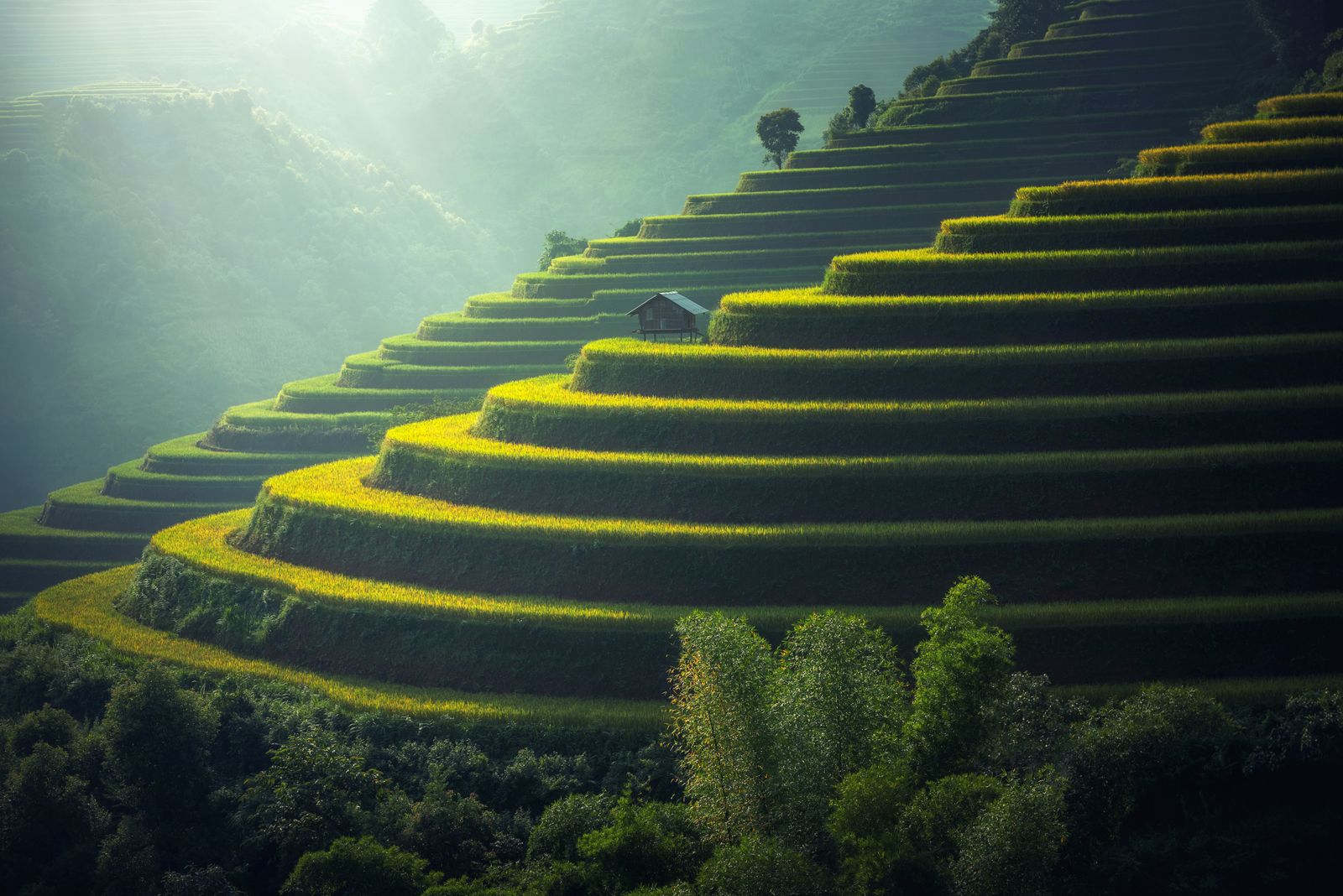
Thung Kula Ronghai isn't a park with a gate and an entry fee. It's a huge rice plain spread across five provinces — Roi Et, Maha Sarakham, Yasothon, Sisaket, and Surin — covering around 2.1 million rai in total. The part inside Roi Et alone is close to a million rai, scattered across Kaset Wisai, Suwannaphum, Pathum Rat, Phon Sai, and Nong Hi districts. So visiting here means driving through the fields and pulling over to shoot photos wherever catches your eye, rather than strolling a single fenced garden.
The name "Thung Kula Ronghai" — the Weeping Kula Plain — comes from a legend about travelling "Kula" merchants who walked across selling their goods. No matter how far they walked, they couldn't reach the edge of the plain, until they were so exhausted they broke down and wept. The area used to be dry and so salty that rice barely grew, but after soil-development and irrigation projects, the plain that once made people weep became the jasmine rice fields that put Roi Et on the map nationwide.
Why the rice here is so well known
Thung Kula Ronghai jasmine rice earned its Geographical Indication (GI) registration back in 2006, meaning it has to be Khao Dawk Mali 105 or RD15 grown within the Thung Kula zone. The magic comes from soil that was once salty but is rich in minerals, plus the late-rainy-to-early-cool-season weather of hot days and cool nights, which helps the grains develop their fragrance. Plenty of people who eat Thung Kula jasmine rice say it smells fragrant before you even lift the lid off the pot.
- Rice varieties — Khao Dawk Mali 105 and RD15, grown once a year on the wet-season rice cycle
- Growing season — transplanting starts in the rains around June–August, harvest comes late November–December
- What to bring home — GI jasmine rice in pretty bags, sold at co-ops and souvenir shops in Kaset Wisai and in town
Want more out of Roi Et? Book tours & activities
Booking online ahead on Klook or GetYourGuide is usually cheaper than the gate and skips the queue. Pick only the experiences you actually want — prices and availability are shown live on each site.
When it looks best
Thung Kula changes colour with the seasons. If you want photos that turn out well and comfortable weather, these two windows are the ones to aim for.
- Late rains to early winter (October–early December) — the rice is a deep, bright green across the whole plain, with patches starting to turn golden as the grains form. The air is cool, there's light morning mist, and the green fields stretching to the horizon look their best all year.
- Harvest season (late November–December) — the plain turns gold, and you can watch farmers cutting the rice and stacking sheaves in the fields. It's a slice of rural life you rarely get to see.
- After harvest (January–February) — stubble and golden straw left in the fields under clear skies, good for minimalist shots and sunsets.
- Peak dry season (March–May) — the plain is bare and dry, the sun is harsh, and if you avoid the soft morning and evening light it gets very hot. Photos tend to look parched this time of year.
Golden hour for photos
Go early in the morning, around 6:30 to 8:00, or in the late afternoon before sunset, when the light is soft and it isn't hot. On open plains like this the midday light is harsh and there's no shade at all.
Check-in spots and places around Thung Kula
Because Thung Kula is so vast, most people pick a landmark or temple to aim for and shoot the surrounding fields along the way. These are the spots people like to stop at.
Ku Phra Kona (Suwannaphum District)
An ancient Khmer stone sanctuary out in the middle of Thung Kula, about 6 km from the Suwannaphum district office. It's the classic landmark people stop at when they come to the plain — you get the ruins and the rice-field views all in one.
Bo Phan Khan (Nong Hi District)
A wide red sandstone flat out in the fields, with a sacred well that legend says never runs dry no matter how much you draw. Wat Bo Phan Khan Rattanasophon sits nearby, and the province has been pushing it as a newer attraction.
Kaset Wisai large-scale rice fields
Right in the heart of the Thung Kula jasmine rice area, with a learning centre and viewpoints over the plotted-out fields. Good for shooting the green fields and buying rice straight from the farmer groups.
Fieldside road, Suwannaphum–Pathum Rat
A route running with rice fields on both sides for a long stretch — good for pulling over to shoot the road cutting through the plain. A favourite angle for people doing their own road trip.
Honestly though
Thung Kula isn't a spot with full facilities. There's no row of field-view cafes like some places have — the charm is in the quiet and the genuinely wide-open fields. If you're expecting fancy cafes you may be disappointed, but if you like real rural atmosphere, this place delivers it fully.
The rural Isan life you'll see
The charm of Thung Kula is in the scenes of farming life that are still done the old way. Driving through, you'll see buffalo walking in the fields, villagers resting under field huts, and during harvest, neighbours pitching in together. Some villages still make rock salt (sin thao) from the salty soil of Thung Kula, an old local craft of the area. If your timing's good, you might catch a cultural market near Bo Phan Khan selling rice, fish, salt, and other local goods.
- Say hello to villagers before photographing people or stepping into the fields — many plots are genuinely owned by local farmers.
- Harvest season is the best time for shots of everyday life, but be careful not to trample rice that hasn't been cut yet.
- Try supporting local goods like rice, rock salt, or local snacks straight from the villagers.
How to get to Thung Kula
The Roi Et side of Thung Kula that people like to visit is around Suwannaphum and Kaset Wisai districts, about 60–70 km from Roi Et town, roughly an hour and a bit by car. The highways are good and the drive is easy. The most convenient way is to drive yourself or rent a car, since the spots are spread out and there's no public transport that reaches the fields directly.
- Private car / rental — the most convenient. From town take the route toward Suwannaphum–Kaset Wisai and stop for photos as you please.
- Van / bus — there are lines into Suwannaphum and Kaset Wisai districts, but once you get off you'll need to arrange local transport yourself. Best if someone you know can pick you up.
- Motorbike — good for those who like the adventure, with the freedom to ride along the fields, but the sun is harsh and there's no shade, so come prepared for it.
Prep before you go
Fill up on fuel and stock up on drinking water in the district town, because shops are sparse out among the fields. Bring a hat, sunglasses, and sunscreen, because there's almost nowhere to escape the sun.
Plan a Roi Et trip with Thung Kula, temples, and Isan food all in one go.
See the Roi Et travel guide →