🔄 Last checked 26 Jun 2026 · details and hours can change — check the venue before you go
📍 All restaurants on the map
Tap a pin for the spot + nearby stays
Chai Nat is a small province on the Chao Phraya plain, roughly two and a half hours north of Bangkok. Its charm lies in the variety packed into a short distance — you can do nature, temple history, and riverside chilling all in the same trip. Start the morning at Chai Nat Bird Park on the slopes of Khao Tha Phra while the air is still cool and the birds are active, then head into town to pay respects at Wat Thammamun perched above the Chao Phraya. In the afternoon swing by Wat Pak Khlong Makham Thao — home of the revered Luang Pu Suk — then finish at Chao Phraya Dam for a cool breeze and a sunset. If the weekend happens to fall on the first Saturday or Sunday of the month, there's also the Sapphaya Old Police Station Market, a retro riverside night market to walk through. Chai Nat trips work equally well for families, photography enthusiasts, and anyone needing to escape the city for a day.
Many places on this list are genuine provincial landmarks. The standout is Chai Nat Bird Park — a 26-rai open-air walk-through aviary claimed to be the largest in Asia, housing over 100 bird species alongside a water park, egg museum, and Chao Phraya freshwater fish display hall. Wat Pak Khlong Makham Thao is the temple of Luang Pu Suk Kesaro, one of Thailand's most celebrated monk-masters, whose student Prince Chumphon personally painted murals inside the ubosot that are still visible today. Chao Phraya Dam is Thailand's very first irrigation dam, with a long bridge you can walk or cycle across. The old city of Sankhaburi holds square-based stupas in U-Thong–Lopburi style and star-shaped prangs that will delight anyone who loves ancient architecture. Tick them all off and you'll understand why this quiet riverside province keeps drawing people back.
Chai Nat Bird Park
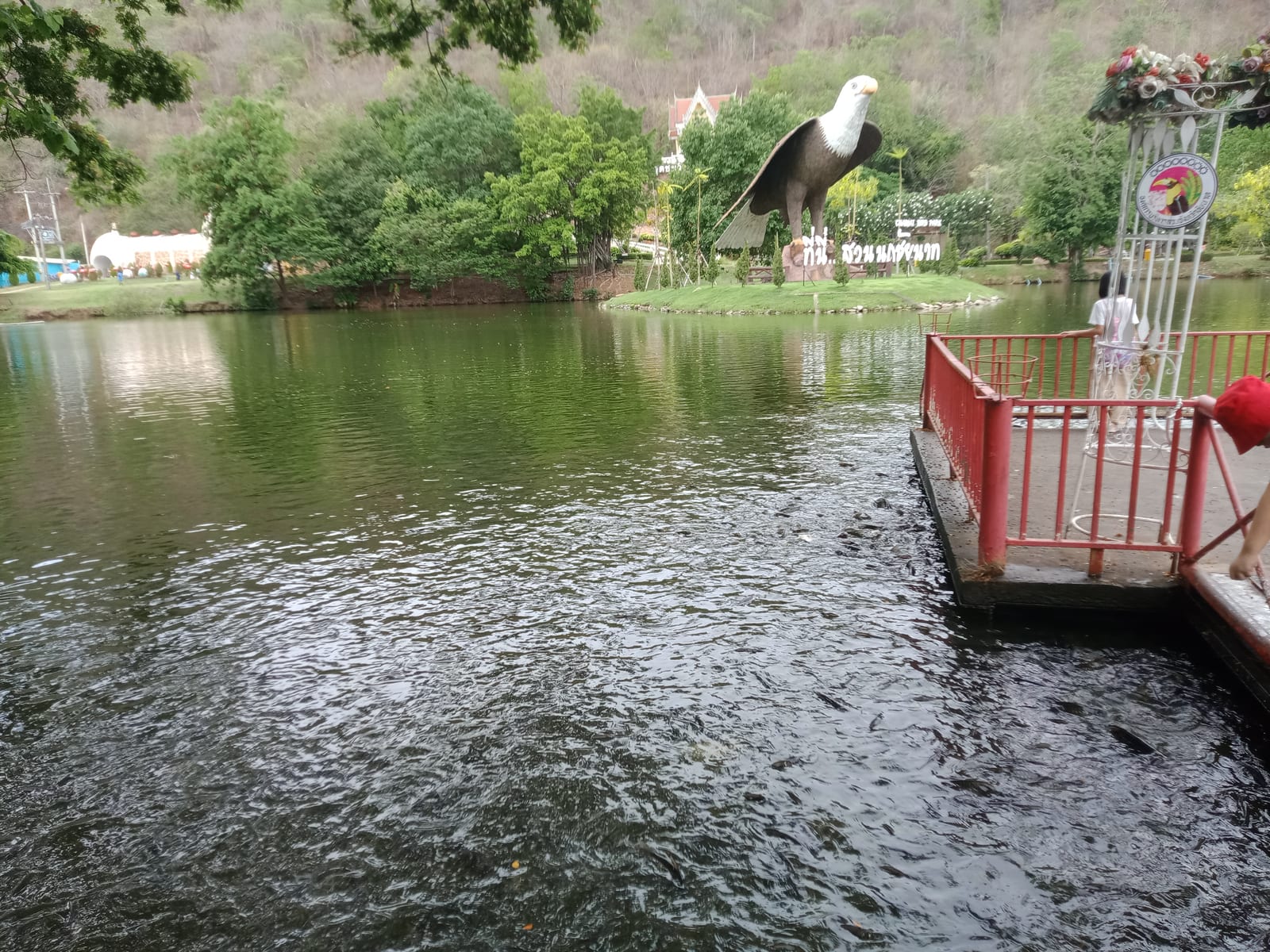
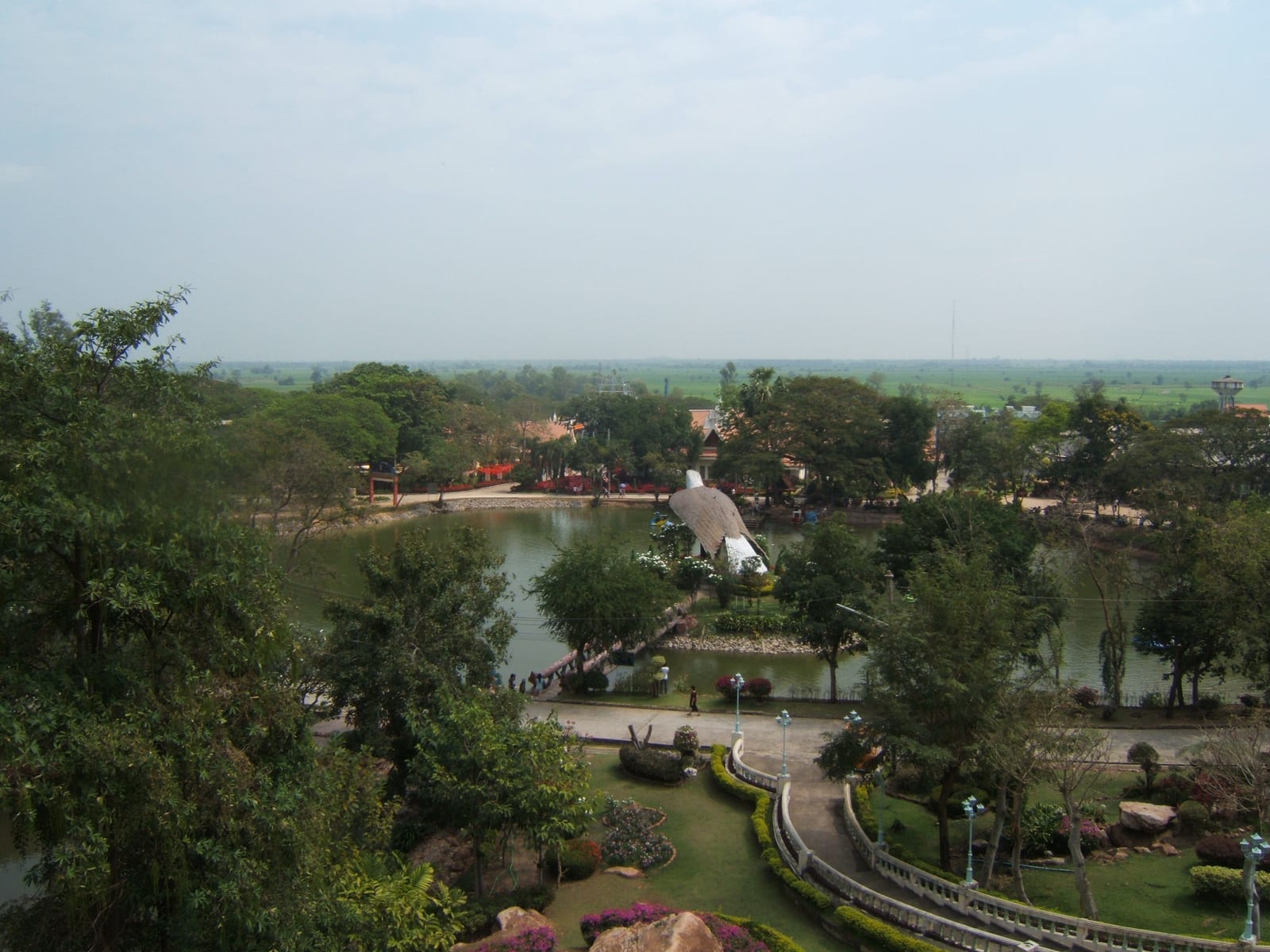
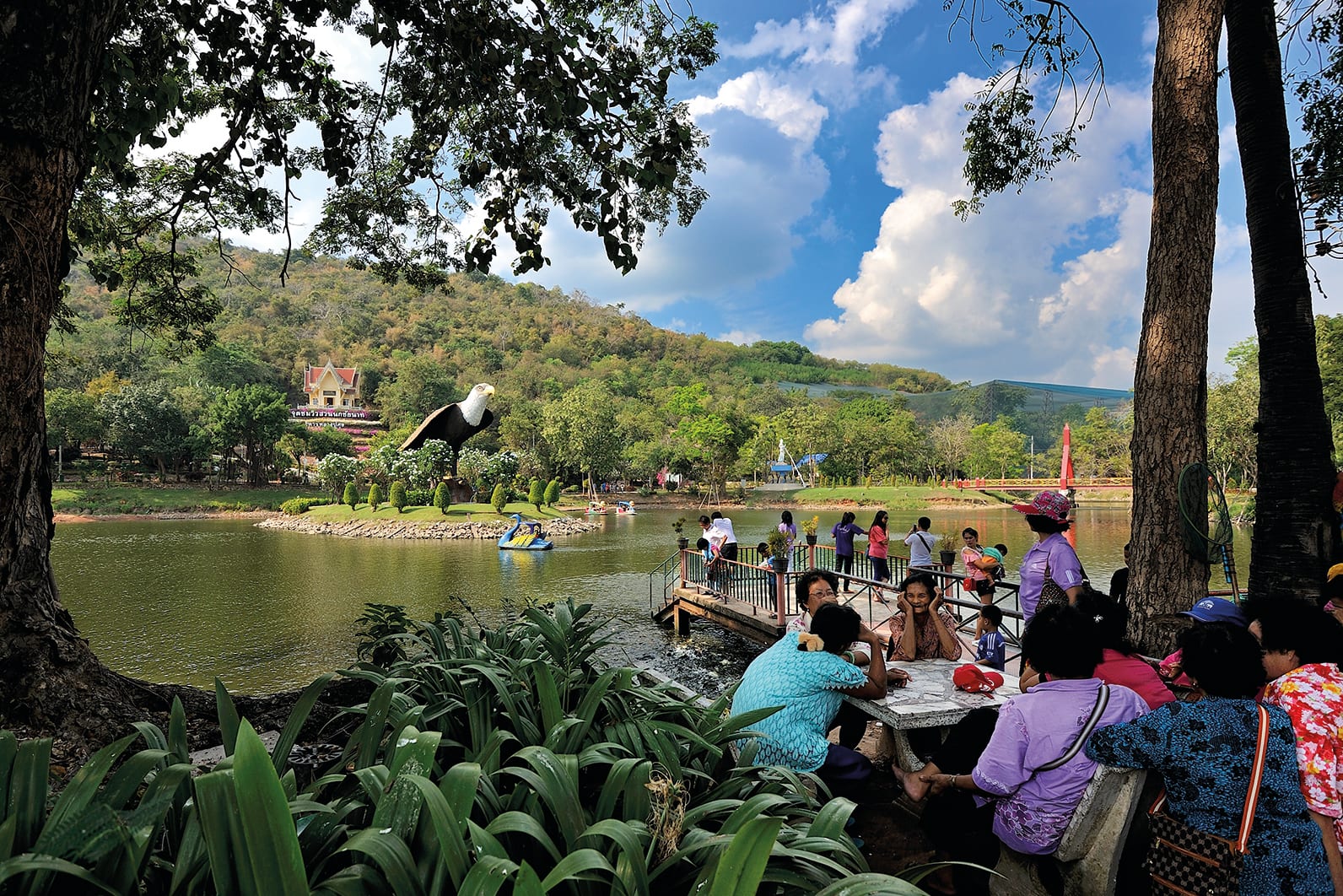
When people think of the top Chai Nat attraction, Chai Nat Bird Park comes to mind first. Open since 1983, it has become the province's defining landmark. The star is the 26-rai open-air enclosure — claimed to be the largest of its kind in Asia — where a giant net covers the entire area and over 100 species of birds live in near-natural conditions. You walk right in among peacocks, cranes, hawks, and eagles flying overhead, which makes it especially popular for families who want kids to experience real birds up close rather than through narrow bars.
Beyond the main aviary, the 248-rai grounds hold plenty more to fill a full day. A favourite among reviewers is the Chao Phraya freshwater fish hall, with over 90 freshwater species and a walk-through fish tunnel that children love. The egg museum is genuinely unusual — a collection of bird eggs from many species — and there's also a planetarium, a giant eagle straw sculpture said to be unique in Thailand, and the Space Water Park with slides for cooling off on hot days (ticketed separately but affordable).
Entry is very good value. Thai adults pay 60 THB, children 25 THB; foreign adults 150 THB, children 75 THB. Senior citizens, people with disabilities, and Chai Nat residents enter free. Open daily 08:30–17:00. The grounds are shaded and leafy overall, though some corners look a little dated and a few pools dry up in the dry season — worth knowing going in.
The location is easy to reach, right on Phahon Yothin Road (Highway 1) at the base of Khao Phlong, Khao Tha Phra Sub-district, about 4 km before Chai Nat town. It's a natural road-trip stop. Plan at least half a day, wear comfortable walking shoes, and bring a hat and water — the grounds are wide and you'll walk more than you expect. A solid first stop for a family trip to Chai Nat.
Chao Phraya Dam

For anyone passing through Chai Nat who wants somewhere relaxed and free, the Chao Phraya Dam in Bang Luang Sub-district, Sapphaya District is the spot locals keep recommending. Its claim to fame is being Thailand's first large-scale irrigation dam, completed in 1957. The concrete structure stretches over 237 metres with 16 floodgates spanning the Chao Phraya River, and a walkway bridge lets you cross to the other bank — a favourite for casual strolls, family outings, or cyclists looking for an open view.
The highlight most visitors mention is the late afternoon: walk the bridge across the dam crest, catch a cool riverside breeze, and watch the sun drop behind the river. Reviewers say midday can be harsh, but arriving around 5 pm gives comfortable walking conditions and the best light. Another popular angle is watching the water rush through the floodgates — during flood season the current is impressively powerful. Early-morning cyclists routinely come to ride the crest and enjoy the fresh air and clear sky.
No entry fee and no worries about budget — free parking, clean restrooms, and a surrounding Rajabhakti Park to stroll through. There are also a fish market and riverside restaurants nearby. The dam is a short drive from Chai Nat town via Sapphaya District, about 6 km in. Access is possible at any hour, but dawn and dusk are the best windows.
One note: cars are not allowed up on the dam crest — park below and walk up. The setting is naturally simple rather than polished as a tourist attraction, and that understated quality is part of the appeal. If you're coming for big activities, you may find it quiet; but for a scenic wind-down, a sunset photo stop, or an early-morning cycle, it delivers easily — and fits perfectly into a two-day Chai Nat itinerary.
Wat Thammamun Worawihan

Wat Thammamun Worawihan is the royal monastery most closely tied to Chai Nat's identity. It sits on the slope of Thammamun Hill above the Chao Phraya River, a temple believed to have been founded in the Sukhothai era and restored in the Ayutthaya period. It's ideal for merit-seekers, history and temple-art enthusiasts, and families wanting a scenic temple stop on the old Chai Nat–Nakhon Sawan road. The focal image is Luang Pho Thammajak — a standing Buddha in the 'warding off relatives' posture on a lotus base, admired for its elegant blending of early Chiang Saen–Sukhothai and Ayutthaya styles, with a dhamma-wheel motif on the palm that gives the temple its name.
The must-not-miss is the 565-step stairway up the hill behind the temple, which leads to the viharn housing Luang Pho Nak on the summit. At the top, the view sweeps across the Chao Phraya bend and the town of Chai Nat in the distance. Many visitors describe the wind as cool and the atmosphere deeply peaceful. Those who find the full climb difficult can still pay respects to Luang Pho Thammajak and offer items at the base — the lower temple grounds are equally worthwhile.
Another charming side is the riverside market running along the bank below the bridge in front of the temple, where locals sell homemade food and farm produce at low prices. Many reviewers enjoy a bowl of noodles with their legs dangling over the Chao Phraya after visiting the temple — merit and a meal together.
Free entry, no ticket. Open approximately 08:00–18:00 daily. Google rating is around 4.7 from thousands of reviews, reflecting genuine affection from both locals and visitors. If you plan to climb the 565 steps, wear comfortable shoes and carry water — the stairway is exposed and midday heat is intense. Morning or late afternoon visits give cooler walking conditions and better light for photography.
Wat Pak Khlong Makham Thao (Luang Pu Suk)

Wat Pak Khlong Makham Thao — commonly called 'Luang Pu Suk's temple' — is an ancient riverside wat at the mouth of Makham Thao Canal in Wat Sing District. Almost everyone passing through Chai Nat stops to pay respects here. Its significance rests on being the temple where Phra Khru Wimol Khunakon (Luang Pu Suk Kesaro), one of Thailand's most celebrated amulet-masters, served as abbot — and on being the temple whose abbot taught Prince Chumphon Khet Udomsak (Sadej Tia), a figure of nationwide reverence. If you follow sacred amulets or enjoy temples with compelling histories, this is exactly your kind of place.
The unmissable highlight is the ubosot, inside which Prince Chumphon personally painted the murals as a gift to Luang Pu Suk during the building of the chapel — a rare piece of royal devotional art found nowhere else in Thailand. After visiting the mural chapel, walk to pay respects to the cast image of Luang Pu Suk and the portrait of Prince Chumphon, then pass under the image base for good fortune — a traditional practice here. The old mondop, Luang Pu Suk's original kuti, and the Guan Yin shrine by the river are also well worth visiting. Many visitors come specifically to ask for protection, safety, and business success.
The atmosphere is calm and leafy, less crowded than major temples in the cities, and the Ta Chin riverside location brings a constant cool breeze. Reviewers consistently note the cleanliness, the warmth of the temple staff, and the pleasantness of a morning or late-afternoon visit. Free entry — only donation boxes and amulet rental for those interested.
The temple is about 25 km from Chai Nat town, along Highway 3183 around km 36–37, easy to drive with parking available. Open daily around 08:00–17:00 (the ubosot may close at midday — allow some flexibility). Dress modestly and, if you want to see the full mural interior, time your visit for when the chapel is open.
Sapphaya Old Police Station Market (Green Dee Market)
The Sapphaya Old Police Station Market — most people call it Green Dee Market — is a retro community market on the Chao Phraya riverside in Sapphaya District. The standout is the old timber police station dating from RE 120 (around 1901), one of the oldest surviving police stations in Thailand and winner of a conservation award from the Association of Siamese Architects in 2018. It now functions as a small community museum displaying old photographs and local stories. If you enjoy old-school street markets with genuine character rather than the same tourist stalls, this is one to save for your itinerary.
The market highlight is the riverside walking street lined with old wooden shophouses for about 300 metres, many vendors dressed in Thai vintage costume, selling local food and rare traditional Thai sweets. One signature item is 'O-liang Hong Khang' — iced coffee named after the old jail cells, a fun nod to the police station theme. Along the way you'll find street art murals for photos and open food stalls. Reviews repeatedly praise how the market still belongs to the local community rather than being staged for tourists, with food starting at just a few dozen baht. It's also Chai Nat's first zero-foam, zero-single-use-plastic market, using banana leaves and bamboo instead.
Free entry — you only pay for what you eat or take home. The market is on the Chao Phraya riverbank in Sapphaya Sub-district, a short drive from Chai Nat town. The key detail to remember: Green Dee Market opens only on the first Saturday and Sunday of each month, 15:00–21:00 (the old station building and community can be explored in the daytime on weekdays, but stalls are at their liveliest on market days). The market has earned a Thailand Tourism Gold Award in the community tourism category and is widely cited as a model eco-market for secondary cities.
Important: if you specifically want the night market experience, confirm the dates match the first weekend of the month before going — arriving on the wrong day means a very quiet neighbourhood. Bring a cloth bag or tiffin carrier to fit the zero-plastic theme, and keep cash ready as most stalls are cash-only.
🛏️ Hotels in Chai Nat
If you'd rather not drive back after a full day, staying overnight in Chai Nat town or by the Chao Phraya makes the itinerary much more relaxed. There are small hotels, riverside resorts, and guesthouses at friendly prices. Book ahead through an app to get a better rate and pick the room with the best view.
🔍 Check Chai Nat Hotel Prices (Agoda)Chai Nat Muni National Museum
If you enjoy quiet browsing through old artefacts at your own pace, the Chai Nat Muni National Museum is well worth a stop. It sits within the grounds of Wat Phra Borommathat Worawihan — so you can visit the temple first and step straight into the museum. The collection began with Phra Chai Nat Muni, a former provincial head monk who steadily gathered artefacts found in Chai Nat and nearby areas, and it is now curated by the Fine Arts Department. A good choice for anyone wanting to understand the deep roots of this Chao Phraya plain city, or for families looking to give children some historical context.
The two-storey Thai-contemporary building tells the story from prehistoric times upward — stone axes and tools, then Buddha images and ceramics in Lopburi, Sukhothai, Ayutthaya, and Rattanakosin styles. The upper floor holds the most praised items: a collection of historic amulet moulds from different eras, and a gilt bronze Buddha in the Mara-subduing posture described by multiple sources as a rare find. Reviewers like how the collection is manageable — not so vast that you exhaust yourself — and each piece has enough context to make it interesting. A comfortable one-hour walk-through.
Cool, quiet, and never crowded inside. Entry for Thais is 10 THB and foreigners 80 THB — students in uniform and monks enter free, which makes it exceptional value. Open Wednesday to Sunday 09:00–16:00; closed Monday–Tuesday and public holidays. Google rating around 4.3 with visitors praising the helpful, knowledgeable staff.
Since the museum is right next to Wat Phra Borommathat, combine the two in one visit — pay respects at the stupa and then walk into the museum. Parking is available. Because it closes Monday–Tuesday, check the day before you leave to avoid a wasted trip.
Wat Phra Kaew Sankhaburi

Wat Phra Kaew Sankhaburi is an ancient temple in the old city zone of Phraek Si Racha, about 23 km from Chai Nat town. It's a natural choice for visitors interested in history and ancient architecture. The centrepiece is a tall square-based stupa that many describe as the 'Queen of Stupas in Southeast Asia' — a Lavo-style chedi with U-Thong–late Dvaravati detailing, its tiered square base stepping progressively inward and upward. Niches on all four sides of each tier hold stucco standing Buddha images in the 'bestowing blessings' posture, and the craftsmanship shows a clear mixture of Sukhothai and early Ayutthaya influences — about 600–700 years old.
A second must-see is the Luang Pho Chai viharn in front of the stupa, which houses an ancient red sandstone Buddha. What visitors notice most is the Khmer lintel carved into the wall behind the image, unusually placed face-up rather than face-down as lintels usually are — believed to have been moved here from a nearby ancient Khmer prasat. The grounds also hold the base and red sandstone boundary stones of an old ubosot, offering plenty of fine stonework details for those who enjoy exploring them closely.
The temple grounds are quiet, shaded, and rarely crowded. Multiple genuine reviews describe it as 'ancient, peaceful, worthy of preservation, beautifully atmospheric' and 'ideal for exploring heritage in detail.' Popular with architectural photographers and dedicated temple visitors. Open daily 06:00–18:00; free entry. Morning and evening light is softest for photographing the stupa.
Note: the temple is part of Sankhaburi's cluster of ancient temples — including Wat Mahathat Mueang Sank nearby — so a combined same-day trip is easy. The location is out of town, so a car is most practical. Dress modestly when entering the viharn and allow time to walk the stupa perimeter, because the craftsmanship details reward a slow look.
Bueng Krachap Yai (Island in the Wetland)
Bueng Krachap Yai is the largest freshwater wetland in Chai Nat Province — about 1,116 rai of water — located roughly 2 km west of Han Kha District centre. In the middle of the wetland stands 'Ko Mueang Thao U Thong', an island of about 120 rai. The star feature is a pontoon walkway made of bamboo floats that carries you across the water surface to the island — a naturally scenic slow-travel experience for those who value quiet countryside water views over Instagram-staged check-in spots. This is a place to walk slowly, breathe fresh air, and take your time rather than tick it as a quick stop.
What draws people back is the floating walkway itself — surrounded by open water as far as you can see, with lotus flowers blooming in patches and water birds including ducks and open-billed storks living here in numbers. Cyclists can rent bikes for about 20 THB each and pedal leisurely around the island, watching local village life. Those after the best photographs should come in the afternoon as the sun drops — a gentle breeze blows all day, and the late light turns the water surface golden. That moment draws the most praise from visitors.
Free entry, open around 08:30–19:00. The only cost is a bicycle rental if you want to cycle. Fresh-fish restaurants are dotted around the wetland edge. Easy to drive to from Han Kha District town. The site regularly hosts the district's Loy Krathong festival and is a consistent draw for Chai Nat cyclists and nature walkers year-round.
Good to know: this is a simple natural setting — amenities are basic and the experience is about calm rather than activities. The pontoon walkway sways gently as you step, so young children and elderly visitors should take care. Morning or late afternoon visits mean cooler walking and more active birdlife compared with midday.
Wat Phra Borommathat Worawihan

Wat Phra Borommathat Worawihan is the second-class royal monastery that the people of Chai Nat regard as the province's guardian temple. Its focal feature is a bell-shaped chedi believed to enshrine the Buddha's relics. Anyone drawn to cultural heritage temples, merit-making visits, or the early-Ayutthaya architectural tradition in a quiet setting will appreciate this temple — you get both the blessing of paying respects and a leisurely look at historic craftsmanship in one visit.
Highlights that reviewers consistently mention include the chedi itself — the heart of the temple — followed by the old viharn and ubosot where the original craftsmanship has been preserved, along with important Buddha images inside the viharn that draw regular worshippers. During the annual robe-wrapping ceremony (Hom Pha Phra Borommathat) the temple grounds fill with activity. The Chai Nat Muni National Museum is located right within the temple grounds, so one stop covers both sacred and historical interests.
Free entry and donations as you choose; open daily approximately 06:30–18:00. Location: Chai Nat Sub-district, Mueang Chai Nat District, about 4 km from town along the Chao Phraya. A personal vehicle is most convenient and there is parking inside the temple. From the town centre, a short motorbike taxi ride works if you don't have a car.
Note: this is an active, well-visited temple. Dress modestly — no tank tops or very short shorts — and be mindful of noise near the viharn. The appeal here is the combination of the revered relics, the long history of the temple, and the national museum sharing the same grounds — a single visit satisfies both devotion and curiosity about history.
Wat Mahathat Sankhaburi

Wat Mahathat Sankhaburi is an ancient temple at the heart of the old city of Phraek Si Racha (Mueang Sank), in central Sankhaburi District on the Noi River. Originally called Wat Phra That or Wat Hua Mueang, it predates Ayutthaya and was restored in later eras. The Fine Arts Department designated it a national monument as early as 1935. It suits history travellers, merit-seekers, and photographers looking for quiet heritage shots without the crowds of Ayutthaya — visitors who've been there describe it as a compact version of the Sukhothai Historical Park, much closer to Bangkok.
The unmissable centrepiece is the group of three 'star-shaped prangs' — tall brick-and-mortar towers on square bases in Lopburi-period style. The surface of each prang is deeply ridged in a star or star-fruit cross-section pattern, which is a rare form and the signature style of the Mueang Sank craftsmen. Alongside them is the large red-brick Phra Mahathat base, a cluster of octagonal chedis in U-Thong influence, and the ruins of an old viharn reduced to eight-sided columns and partial walls. Walking the perimeter reveals ancient Buddha images in both Lopburi and early Ayutthaya styles. The main image people come to venerate is Luang Pho Lak Mueang, locally called Luang Pho Mo — often approached with requests for health-related blessings.
Free entry; plan about one to two hours for a comfortable walk-through. Open during daytime hours daily. Morning or late afternoon visits are most pleasant as the monument grounds are fairly open and midday sun is strong. The atmosphere is calm, shaded, and easy to appreciate at a slow pace. The temple is about 20 km from Chai Nat town via Highway 340 to Sankhaburi town, then turning from the district clock tower approximately 500 m.
Worth knowing: this is the centrepiece of the Sankhaburi cluster — Wat Phra Kaew and Wat Song Phi Nong and Wat Totnot Lai are all nearby, making a one-day heritage circuit entirely doable. Dress modestly as this is both a sacred site and a national monument; don't climb on the structures; and if you want the full old-city experience, allow enough time to walk all the way around the prangs and the chedi bases — the craftsmanship detail rewards a careful look.
Book Tours and Tickets for Chai Nat in Advance
Chai Nat's attractions are spread across several districts. If you'd rather not drive or are coming in a group, guided tours via Klook or GetYourGuide handle routing — some packages include Bangkok pickup and cover several stops in a day. Worth comparing and booking ahead to avoid queues.
💡 Know Before You Go: Chai Nat
Attractions spread across several districts with little public transport. Self-driving or hiring a private car from Bangkok is the most convenient option. Grab is scarce even in town — don't depend on it.
Temple offering boxes, the Sapphaya Old Police Station Market, and community food stalls are mostly cash-only. Keep small bills and coins ready; ATMs exist in town but are rare near out-of-town attractions.
The bird park and riverside temples are mostly outdoors. Midday sun is intense — morning visits mean cooler walking and more active birds. Save the Chao Phraya Dam for the evening when the sunset view is best.
The Sapphaya Old Police Station Market (Green Dee Market) opens only on the first Saturday and Sunday of each month from 15:00–21:00. Chai Nat Muni National Museum is closed Monday and Tuesday. Check before you go.
Chai Nat has many temples and heritage sites. Cover shoulders and knees when entering temple grounds or ubosots, and remove shoes before entering viharns — a courtesy locals take seriously.
Chai Nat is a secondary city visited mainly by Thais. English signs and menus are scarce. A translation app and temple names saved in Thai script will help a lot — locals are friendly and willing to assist.
Plan Your Chai Nat Day Trip to Cover the Most Ground
Chai Nat works perfectly as a day trip or a short overnight from Bangkok — the attractions are spread across just a few districts, and routing by zone saves a lot of driving time. Start early at Chai Nat Bird Park on Khao Tha Phra while the air is still cool and the birds are active; let the children explore the open aviary and the water park. Then loop into town to visit the Chai Nat Muni National Museum and Wat Thammamun above the Chao Phraya. Mid-morning, cross to Wat Sing District to visit Wat Pak Khlong Makham Thao, Luang Pu Suk's temple. Afterwards, branch out to the Sankhaburi heritage cluster — Wat Phra Kaew and Wat Mahathat in the ancient city of Phraek Si Racha. Close the day at Chao Phraya Dam on the Sapphaya side, catching the sunset breeze on the dam crest.
Temples and heritage sites are almost all free to enter — donations only. The two paid attractions are Chai Nat Bird Park (Thais 60 THB, foreigners 150 THB; water park extra) and Chai Nat Muni National Museum (Thais 10 THB, foreigners 80 THB). The Sapphaya Old Police Station Market (Green Dee Market) opens only on the first Saturday and Sunday of the month from 15:00–20:00 — work it into the itinerary only if your trip dates line up. Midday heat by the Chao Phraya can be harsh; pack an umbrella, a hat, and a water bottle, and save the dam for the golden hour — it's where most visitors take their best photos.
After exploring several Chai Nat spots, staying overnight beats a late drive back to Bangkok. Check well-located hotels in Chai Nat town and by the Chao Phraya — good value, and booking ahead gets a better room.
See Hotels in Chai Nat