🔄 Last checked 27 Jun 2026 · details and hours can change — check the venue before you go
📍 All restaurants on the map
Tap a pin for the spot + nearby stays
Chaiyaphum's charm is that it's a "nature province where the good stuff is scattered all around." The highlights aren't clustered in town like in other provinces — they run from the Phu Laen Kha area in the northwest, home to Mo Hin Khao, giant sandstone pillars in open grassland with a campsite for stargazing; down to Tat Ton near town, with a rock-shelf waterfall that flows year-round; out toward Thep Sathit and Nong Bua Rawe, where the pink-purple Siam tulip fields of Pa Hin Ngam and Sai Thong bloom together in late rainy season, alongside heart-in-your-throat photo spots like Pha Sut Phaen Din and Pha Hum Hod. Over in Khon San on the mountain range, there's Chulabhorn Dam, cool all year, and Nam Phud Thap Lao with its clear blue-green water. In town itself there's San Chao Pho Phaya Lae, the ancient Khmer Prang Ku, and an evening walking street for grazing on Isan food. You can string together mountains, waterfalls, spiritual stops, and old-town history all in one trip.
This list includes pins you shouldn't miss in Chaiyaphum, like Mo Hin Khao in Phu Laen Kha National Park, where five stone pillars stand up to around 12 metres tall, earning it the nickname Thailand's Stonehenge; the Siam tulip fields at Pa Hin Ngam, in full bloom from late June to August, paired with the Lan Hin Ngam rock field and the Sut Phaen Din viewpoint; Chulabhorn Dam, the highest mountain dam in Thailand, cool and comfortable year-round; San Chao Pho Phaya Lae by Nong Pla Thao, revered across the whole province; and Prang Ku, a Khmer-era laterite tower that once served as a hospital, the most complete heritage site in Chaiyaphum. Scroll through the details spot by spot and plan your own route.
Mo Hin Khao (Phu Laen Kha National Park)
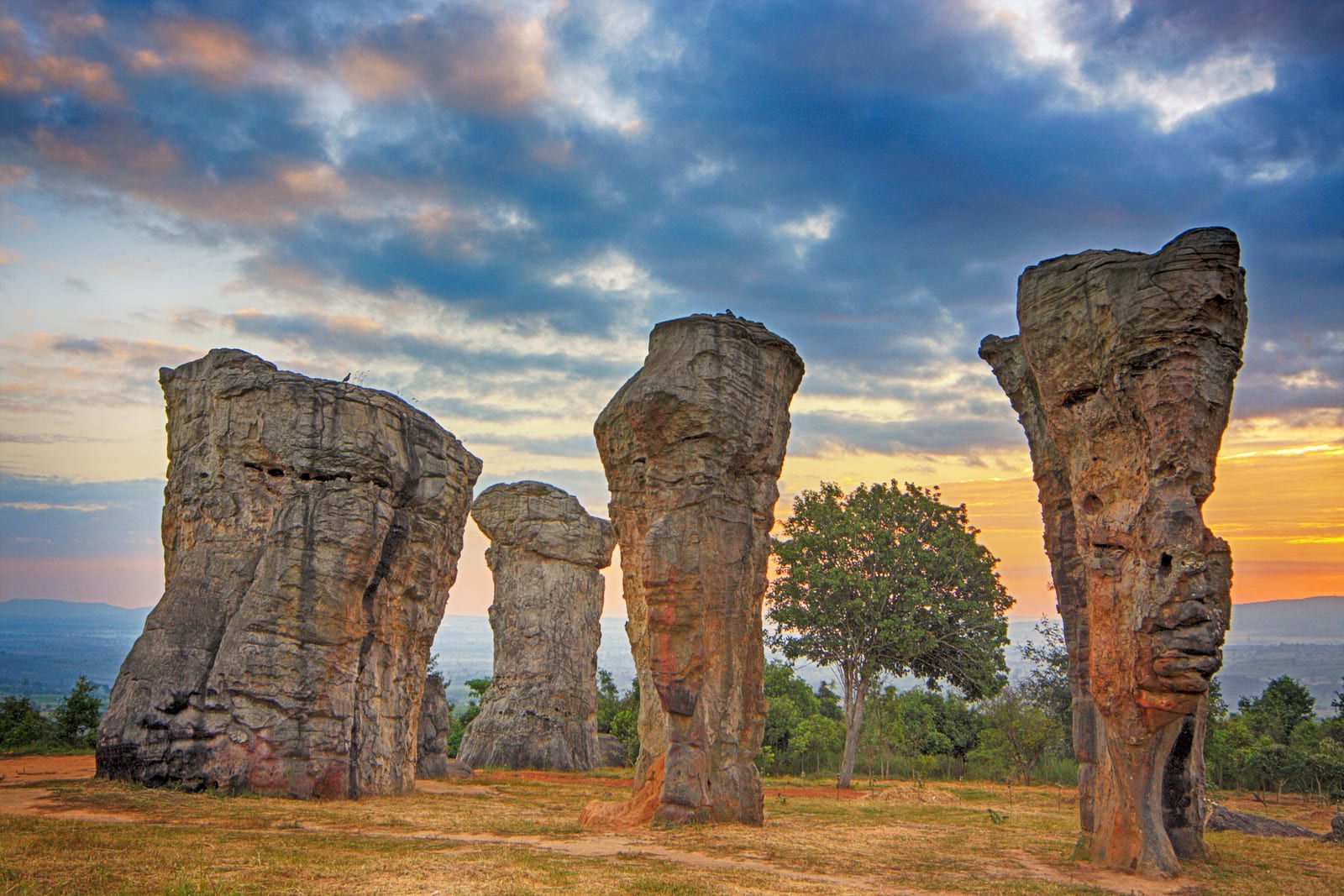
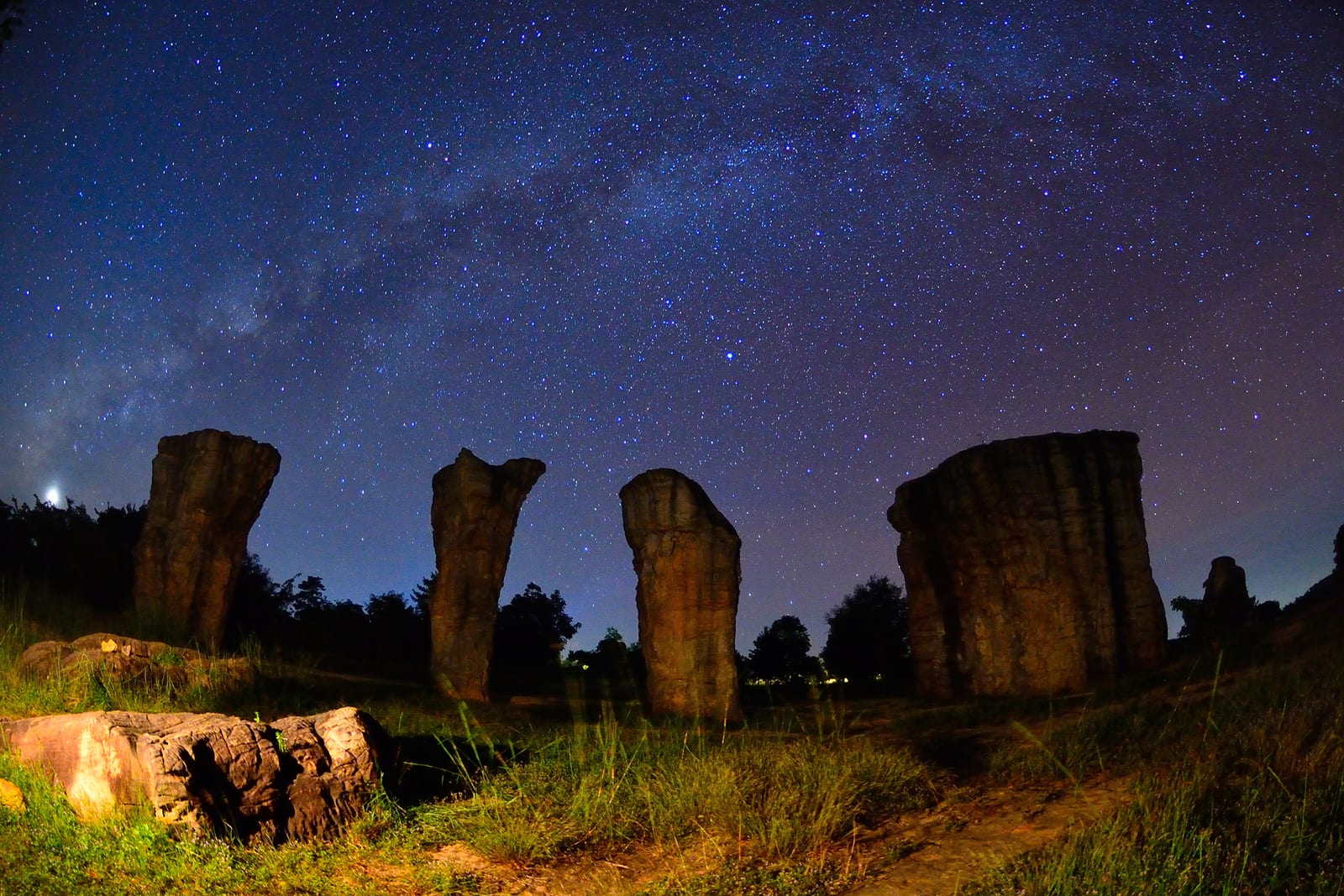
When people talk about a Chaiyaphum attraction you have to try at least once, Mo Hin Khao in Phu Laen Kha National Park is one of the first names that comes up. The draw is the giant sandstone pillars standing in open grassland. The first group is the "five pillars," up to around 12 metres tall, arranged in a striking row that earned the nickname Thailand's Stonehenge — formed by the accumulation of sand sediment and the movement of the earth's crust over millions of years. It's great for nature lovers, photographers, and families who want to bring the kids for an easy walk among the odd rock shapes.
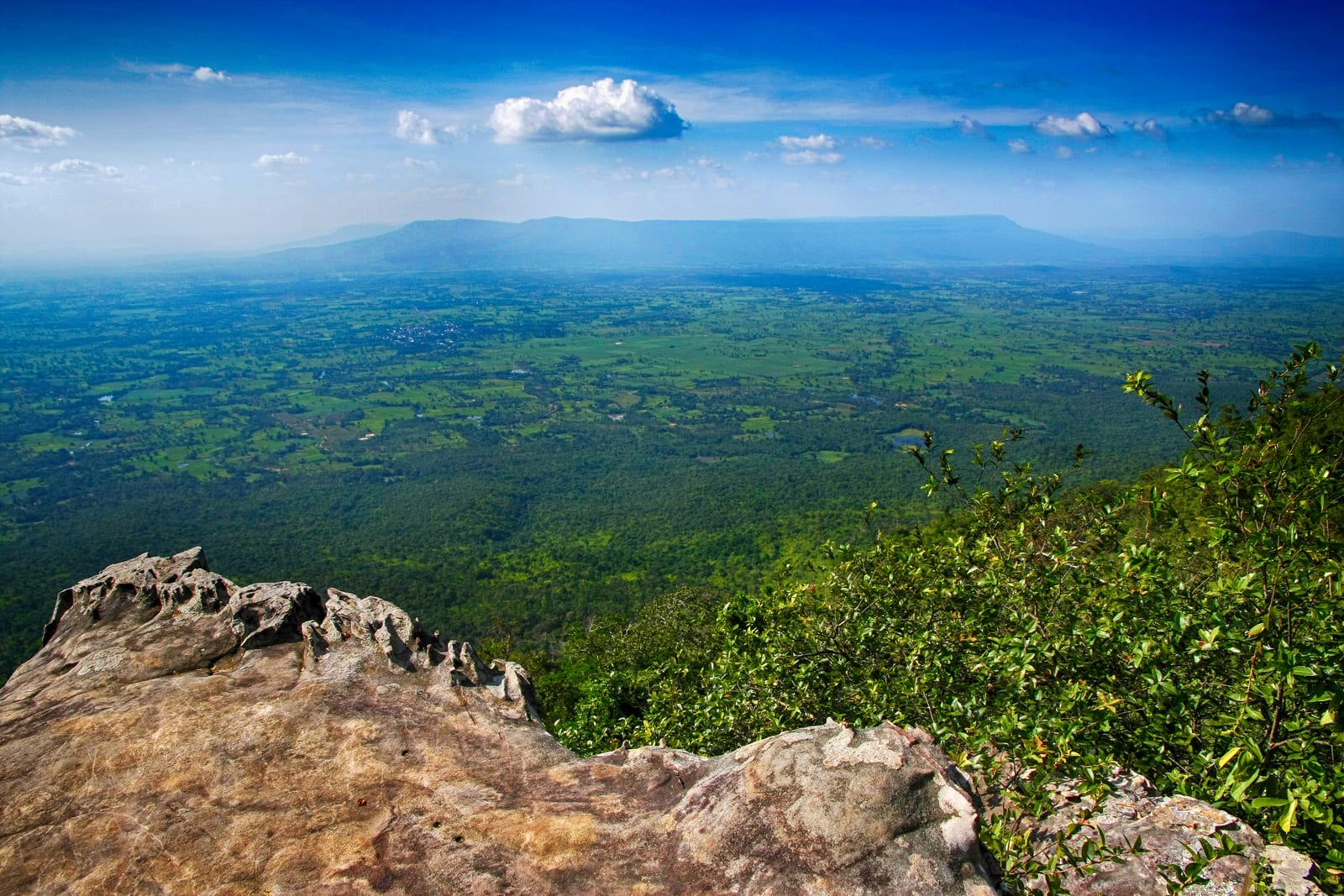
It isn't only the five pillars. Walk on and you'll find several more rock formations — the Mushroom Pagoda, the Banyan Rock House, the Million-Year Rock Garden — and the highlight at the end, the Pha Hua Nak viewpoint (about a further 2.5 km) at roughly 905 metres above sea level, with an open 180-degree mountain view. Many reviews agree the trail is well made, the loop around all five pillars is easy, and the view at Pha Hua Nak is better than expected — some even say "it doesn't feel like Thailand."
The real peak season is late rainy season into cool season, because on mornings after rain there's a chance of a sea of mist floating over the hills. The air on Phu Laen Kha is comfortable nearly all year, dropping to around 12°C at its coldest. The Pha Hua Nak point allows overnight camping, with room for dozens of tents. If you want to sleep in the cool air, stargaze, and wake up for first light with the mist, this is the time to come. Entry is the park fee, about 60 baht per person, open roughly 08:00–18:00.
Things to know before you go: the last stretch of the road up is dirt and laterite, quite steep in places and slippery in the rain — a high-clearance vehicle is recommended, or drive carefully. If you have a sedan, you can park and take a park vehicle up. If you plan to stay overnight or camp during high season, check with the park's Facebook page ahead of time, and bring warm clothes and your own food, as the shops up top are limited. Come early in the morning or stay overnight for the best atmosphere.
Siam Tulip Fields, Pa Hin Ngam National Park
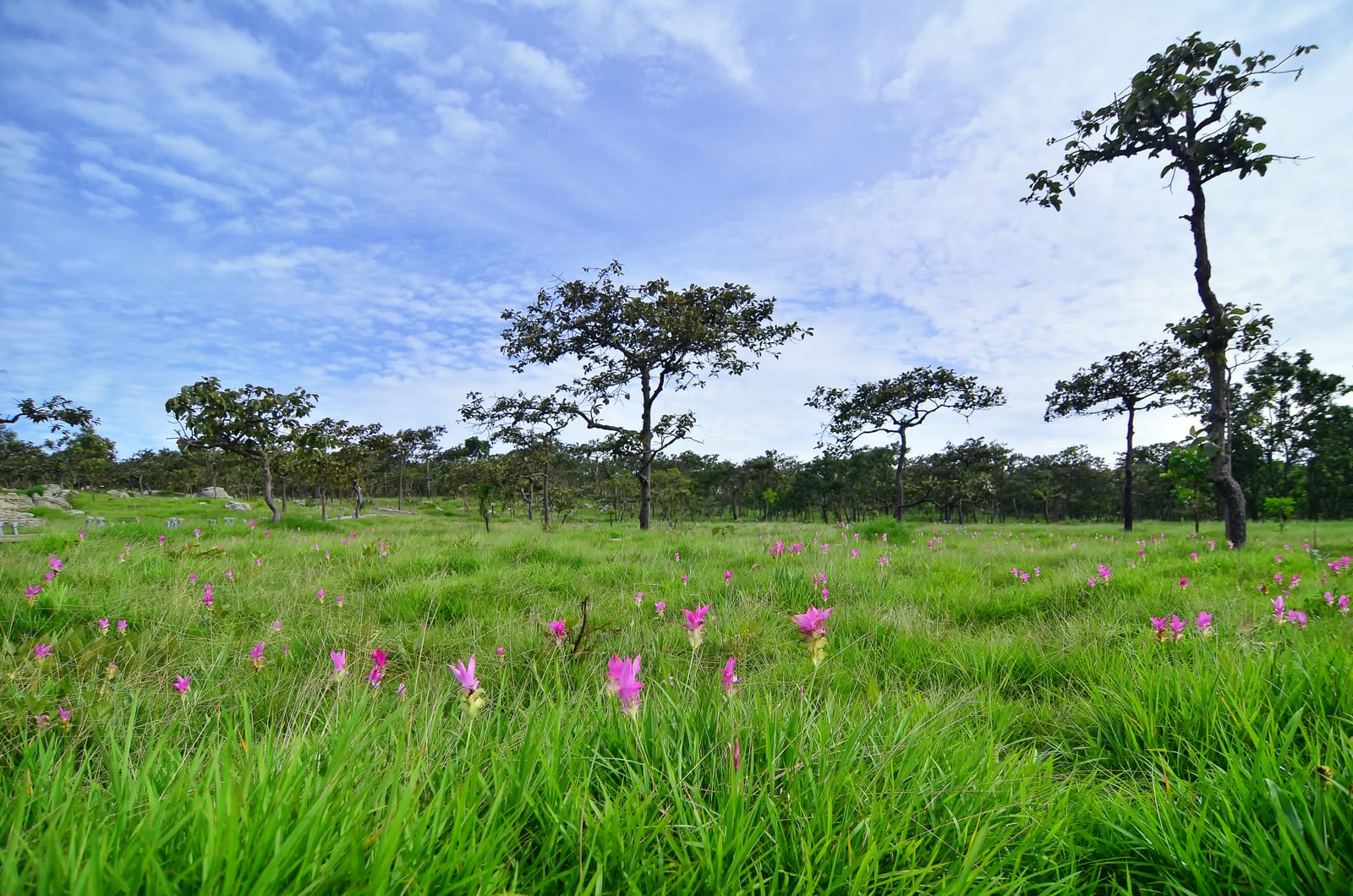
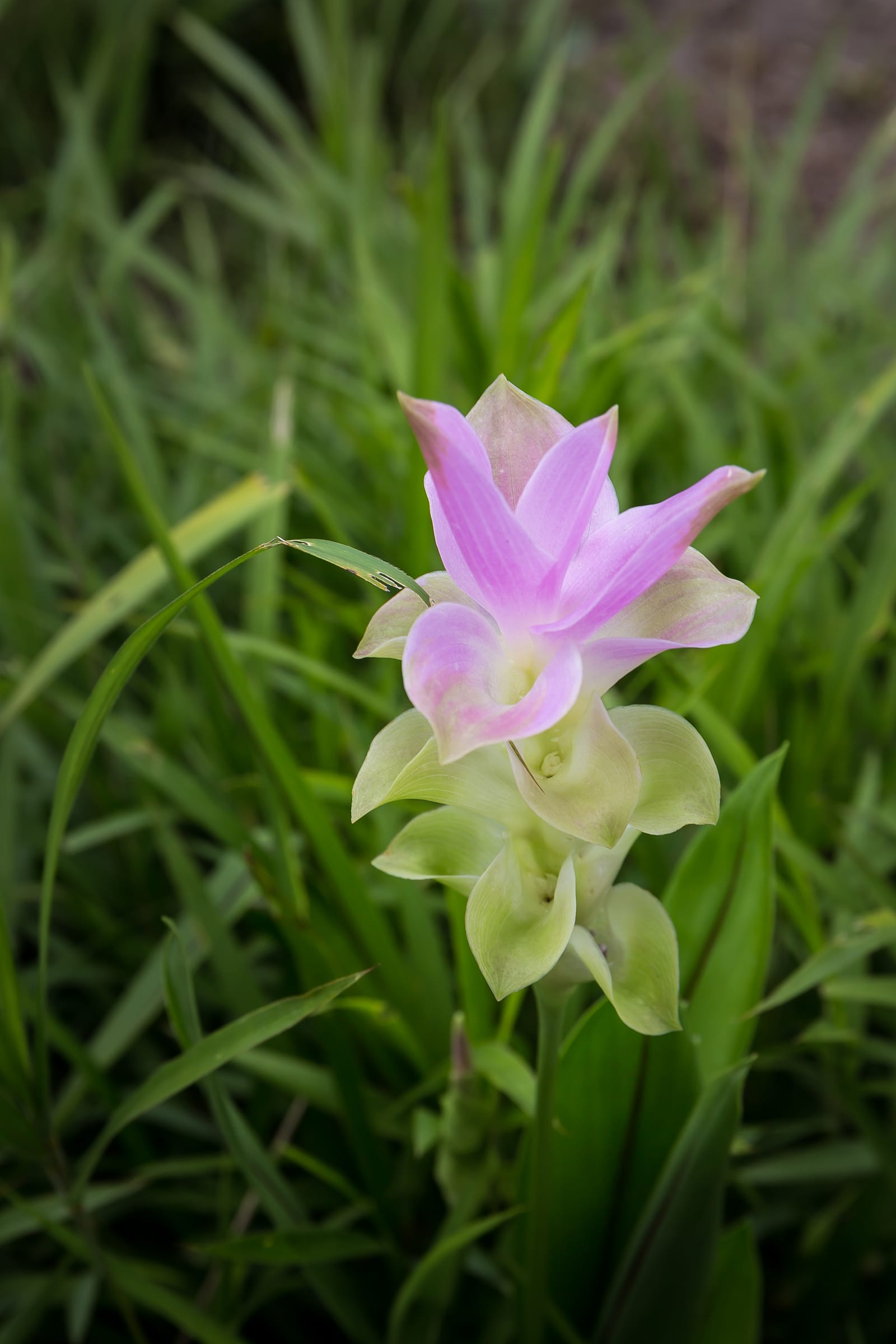
If you've ever seen a photo of pink-purple flowers blanketing a hill through the mist in Chaiyaphum, this is where it comes from — the Siam tulip fields in Pa Hin Ngam National Park, Thep Sathit District. The Siam tulip is a bulb plant that pushes up its flowers all at once as a pink-purple carpet only at the start of the rainy season, from late June to August each year. Miss this window and you'll wait another year. It's great for nature lovers, photographers, and families who want to let the kids run through a field of real flowers, not a landscaped garden.
The highlight isn't only the tulip fields. Inside the park there's also "Lan Hin Ngam," an area of about ten rai full of oddly shaped sandstone boulders, carved by wind and rain over ages into small-necked, big-headed forms — some given playful nicknames like the World Cup Trophy Rock or the Mother Hen Rock — fun to walk and photograph. Another spot you can't miss is "Sut Phaen Din," the park's highest viewpoint at about 846 metres above sea level. Standing there you look out over the Sap Langka forest of Lopburi as far as the eye can see, and if you come early you'll find the sea of mist below that many reviewers say is worth the early start.
On fees, Thai adults pay 40 baht and children 20 baht, foreign adults 200 baht. From the car park you take a tram to the tulip fields for another 30 baht per person (20 for children), then follow a dirt path and wooden boardwalk of about 350 metres or more to view the field at ease. The park is open daily 06:00–18:00. It's in Tambon Ban Rai, Thep Sathit District, a fair distance from Chaiyaphum town — about 270 kilometres from Bangkok by car.
This is popular because it's one of the largest and most famous Siam tulip fields in Thailand. During peak Saturdays and Sundays in July it gets very crowded. Good to know: the flowers look best in the morning while there's still mist and the rain has just stopped, so aim to arrive before mid-morning. Wear shoes that handle slippery dirt, pack an umbrella or rain jacket as it rains often this time of year, and check the park's page before you travel to see how far along the bloom is, so you don't miss the best of it.
Tat Ton Waterfall, Tat Ton National Park
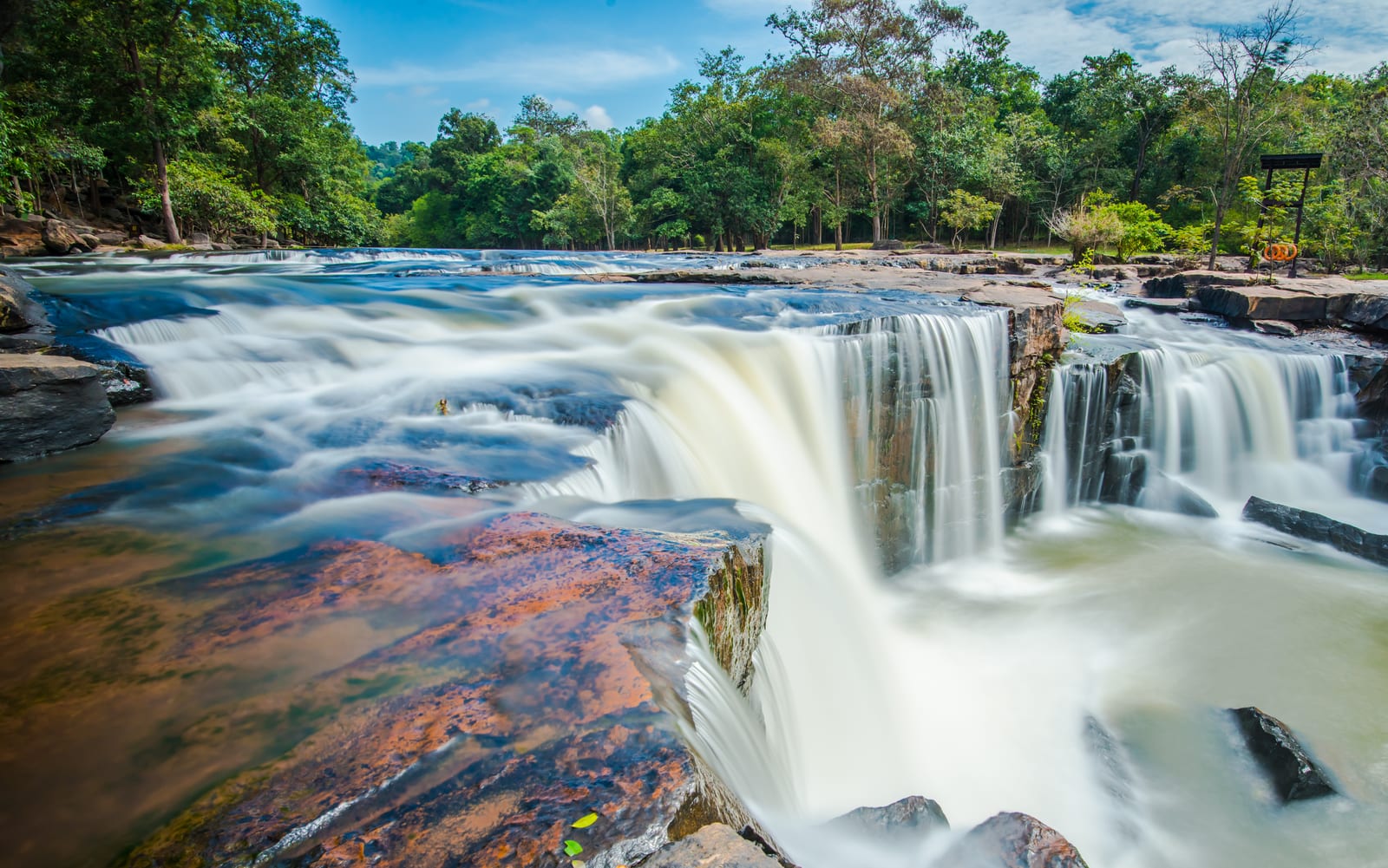
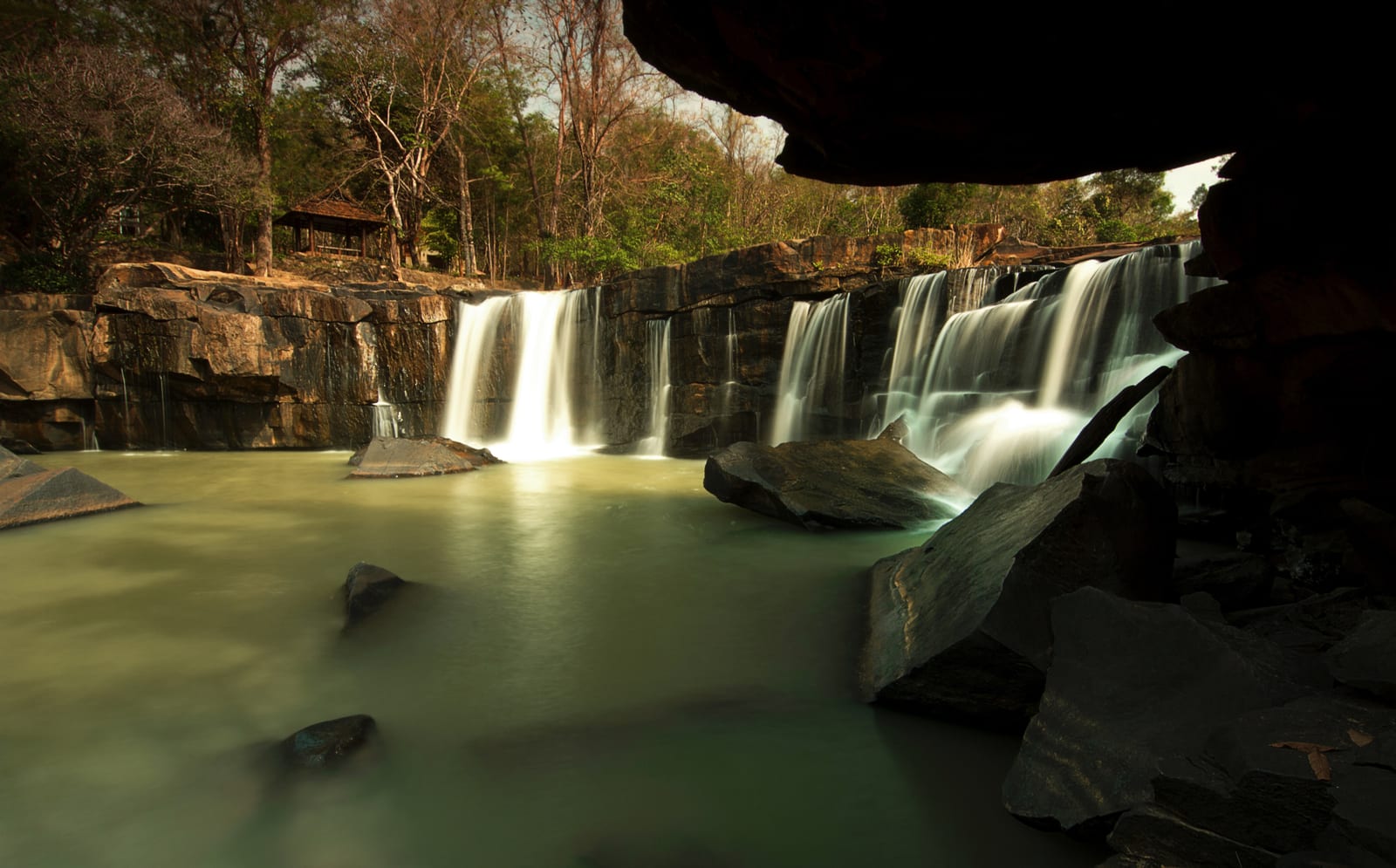
Tat Ton Waterfall is Chaiyaphum town's own waterfall, which many people call a "mini Niagara" — not because it's tall and steep, but because it's wide and long, with water sliding down a broad rock shelf about 50 metres across before dropping over a cliff about 6 metres high along the whole line, like a small curtain of water stretched out. The reason people come back is that it flows all year — not a waterfall where you have to gamble on whether it'll be dry in the hot season. It's great for families bringing kids to swim, couples who like taking photos, and anyone who wants an easy nature stop without climbing a mountain.
The highlight you can't miss is getting into the stream below the falls — clear cool water with boulders to sit and soak on, and park staff keeping watch nearby for safety. Another spot people photograph a lot is the suspension bridge across the stream, which gives you a nice shot with the waterfall as a backdrop. If you like walking on the broad rock shelf above the falls, you can do that too, watching the water flow across the stone in a wide sheet. Most genuine reviews praise the waterfall as beautiful, say you can really swim, note the toilets are clean, and point out the easy walk — the path from the car park to the falls is only about 300 metres and not very steep.
On costs, it's the standard national park rate: Thai adults 40 baht, children 20 baht, plus about 30 baht for the vehicle and a small accident-insurance fee — under a hundred per person all in, good value for a full day in nature. Open 08:30–16:30. It's in Tambon Na Fai, Mueang Chaiyaphum District, about 21 kilometres from town — an easy drive, and a good first stop on a trip before heading into the city.
This is genuinely popular — during Songkran it draws tens of thousands of visitors a day and has ranked among the highest cumulative visitor totals of any national park in the country for several years running. Good to know: the prettiest, fullest water is in the rainy season, roughly June to October. On long weekends it gets very crowded, so come a bit early for the best photo angles and easy space to swim, and take care of slippery rock when walking on the shelf.
San Chao Pho Phaya Lae (Nong Pla Thao)

If you want an attraction that's genuinely in the hearts of Chaiyaphum locals, it has to be "San Chao Pho Phaya Lae" by Nong Pla Thao, just about 3 kilometres from town. This is the shrine of Phraya Phakdi Chumphon (Lae), the first governor and founder of Chaiyaphum, whom local people revere with all their hearts. Anyone passing by stops to pay respects and ask for blessings on work, trade, farming, and health. It suits those seeking spiritual blessings and anyone who wants to understand the roots of this city before heading elsewhere.
The highlight you shouldn't miss is going in to pay respects to the cast image of Chao Pho Phaya Lae in the shrine, which now has a handsome new building, then walking out to the lakeside to find the "giant turtle," a large statue that has become the signature photo landmark here. Beside it is a pond of live turtles, where people like to donate turtle food out of a belief in longevity. Many also release pond snails and fish into Nong Pla Thao as a further act of merit. The overall setting is shady, with plenty of trees and pavilions to sit and enjoy the lakeside view.
Budget is very easy, as there's no entry fee — you only pay for flowers, incense, and candles or turtle food as your faith moves you. Around the shrine are food and souvenir stalls to browse, and there's spacious parking by the lake. Open around 06:00–18:00 daily. Reviews from people who've been agree that it's "not crowded, plenty of trees, a pond with fish to watch," and many come to pay respects every year.
A small thing to know: the busiest time is the sixth-month merit festival, an annual event starting on the first Monday/Wednesday of the sixth lunar month and running several days, with baisi and long-drum processions, market stalls, and a Red Cross fair — the biggest event for Chaiyaphum people. Come then for the full festival atmosphere, though it's much more crowded than usual. On weekdays it's quiet and peaceful, ideal for sitting by the lake and clearing your mind.
Phra Maha That Chedi Siri Chaiyaphum (Phra That Chaiyaphum), Wat Arun Thammasathan
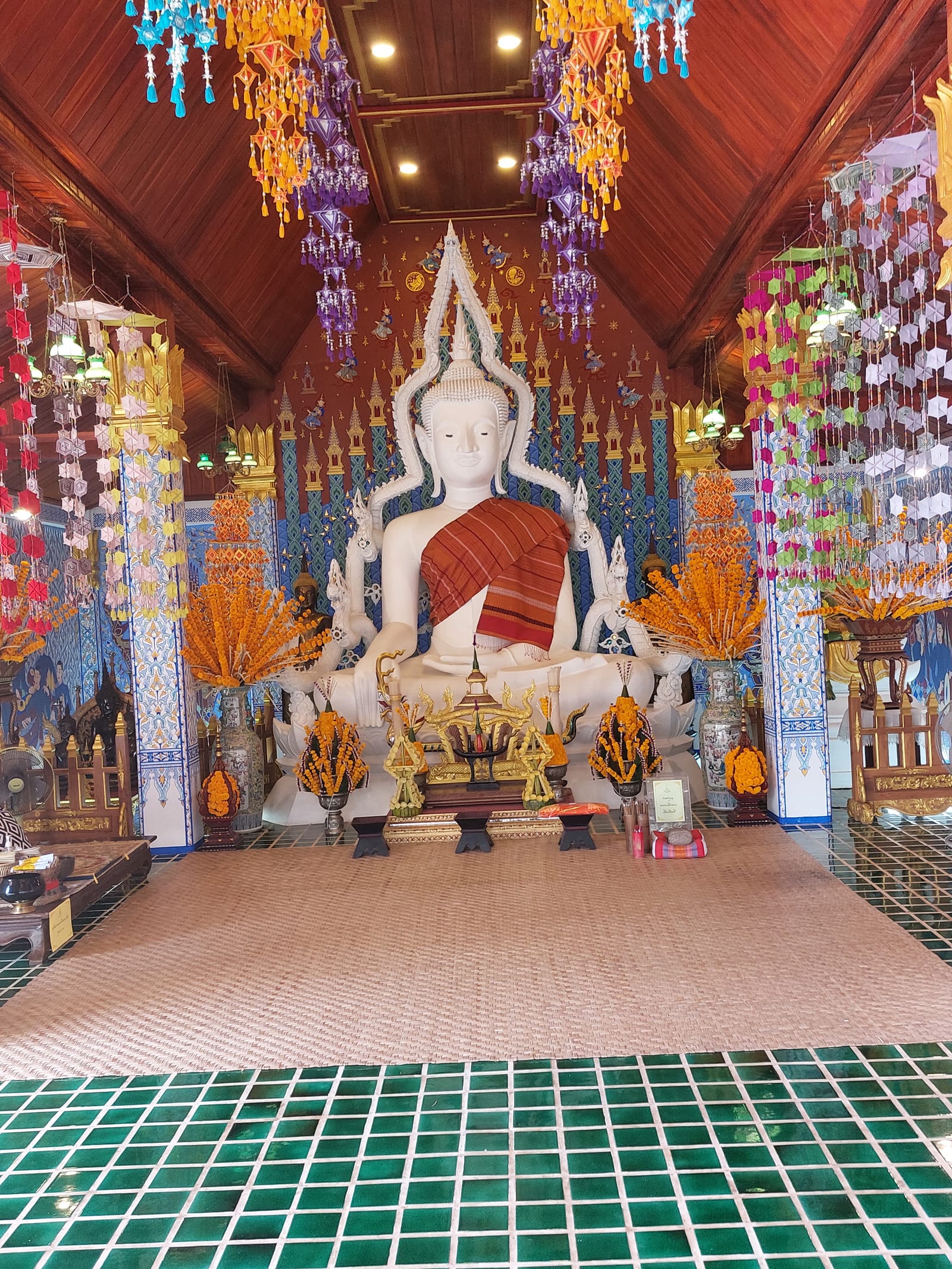
Phra Maha That Chedi Siri Chaiyaphum, which locals here call "Phra That Chaiyaphum" for short, is at Wat Arun Thammasathan on a high hill of Phu Laen Kha in Kaeng Khro District — a meditation-practice temple built since 2007 on more than 200 rai of land. The chedi itself is a large white one about 21 metres tall, in a prasat spired form blending Lan Chang and Lanna styles, with a gleaming gold-clad top and golden standing Buddha images enshrined in niches on all four sides. It suits people who love beautiful temples, merit-makers, and anyone who wants a wide mountain view thrown in.
The highlight you can't miss is climbing the white stuccoed staircase up to the chedi terrace at the top. Once up, you reach a tiered viewing area with a panoramic mountain view in every direction and cool, comfortable air throughout. Many who've been agree the view is very wide, with several good photo angles — the entrance arch, the white chedi against its golden top, and the mountains as a backdrop. If you like photography, go in the morning or evening when the light is soft and just right.
Budget is very easy, as there's no entry fee — both adults and children enter free, with only merit-boxes to give as you wish. There's spacious parking, and the temple grounds are clean and quiet, fitting for a meditation-practice site. Open daily around 06:00–18:00. Walking around and paying respects takes about 1–2 hours to cover.
A small thing to know: the way up is on a high hill and the last stretch of road is fairly steep, so drive with care, especially on rainy days. As this is a meditation-practice temple, dress modestly and speak quietly. It's popular because it combines a beautiful temple, unusual architecture, and a mountain viewpoint in one place, which has made it a pin many people stop at when visiting the Kaeng Khro side.
🛏️ Hotels in Chaiyaphum — Stay in town or close to nature
To make the most of Chaiyaphum, stay overnight so you can climb Mo Hin Khao or reach the Siam tulip fields in the morning, when the crowds are thin and the air is cool. The popular hotels cluster in Chaiyaphum town, easy to get around and close to Tat Ton Waterfall, San Chao Pho Phaya Lae, Prang Ku, and the walking street — with both in-town hotels and resort-style stays. If you're the nature type who wants to wake up to cool mountain air, choose a hotel or campsite around Phu Laen Kha, Thep Sathit, or Khon San near Chulabhorn Dam. Picking a location close to where you want to be first thing in the morning gets you the most value. Compare prices and reviews before you book.
Sai Thong National Park (Thung Bua Sawan · Pha Sut Phaen Din · Pha Hum Hod)
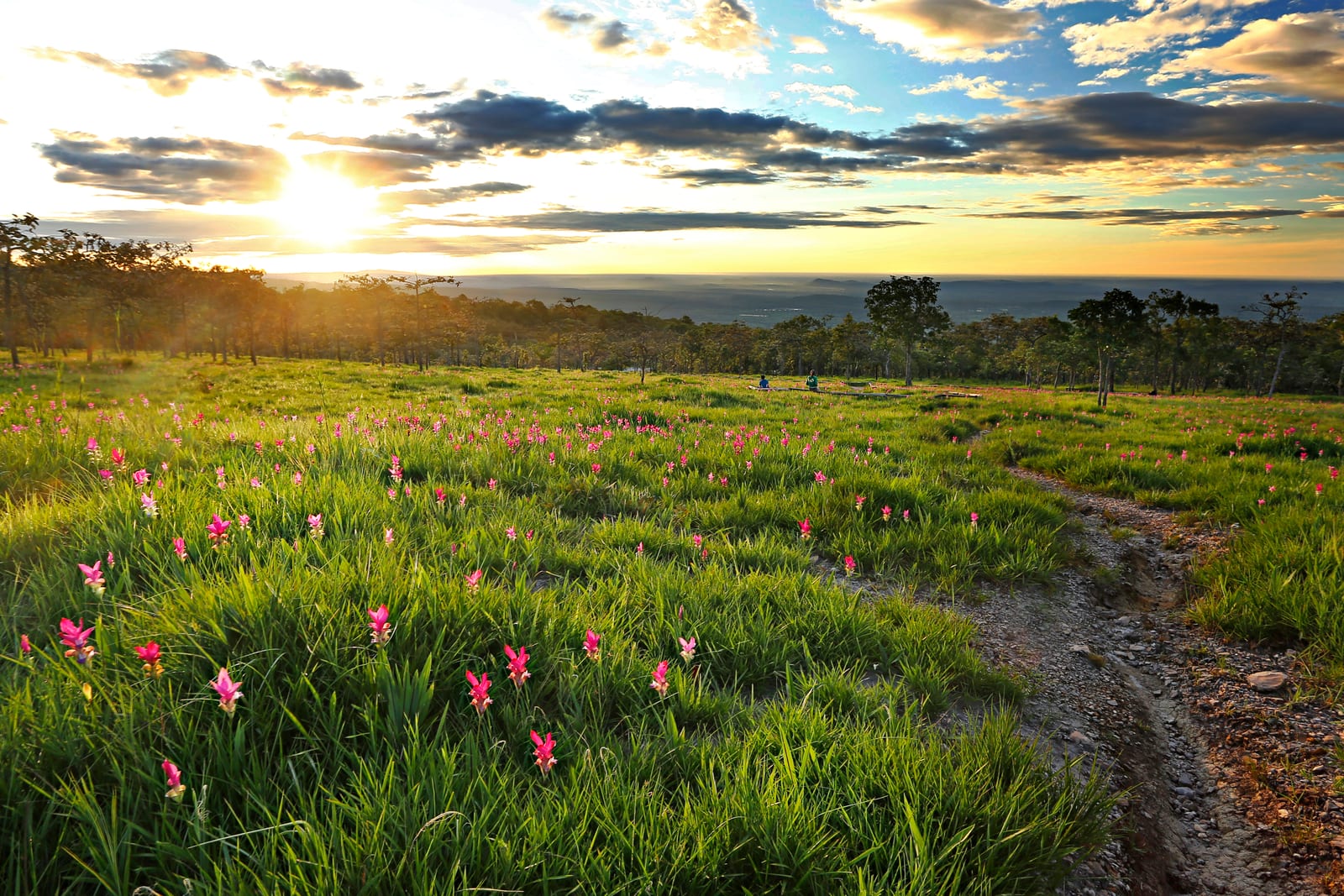
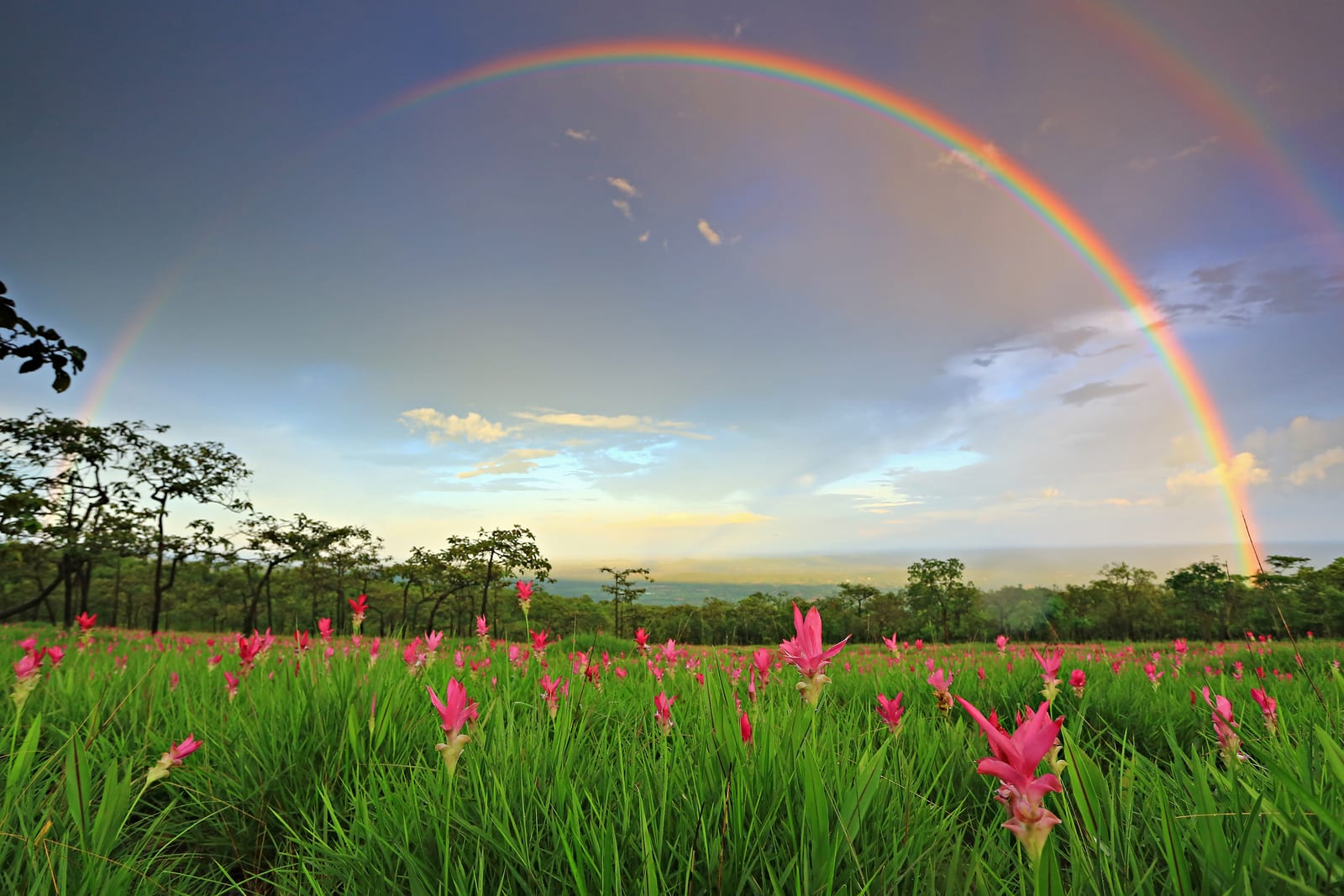
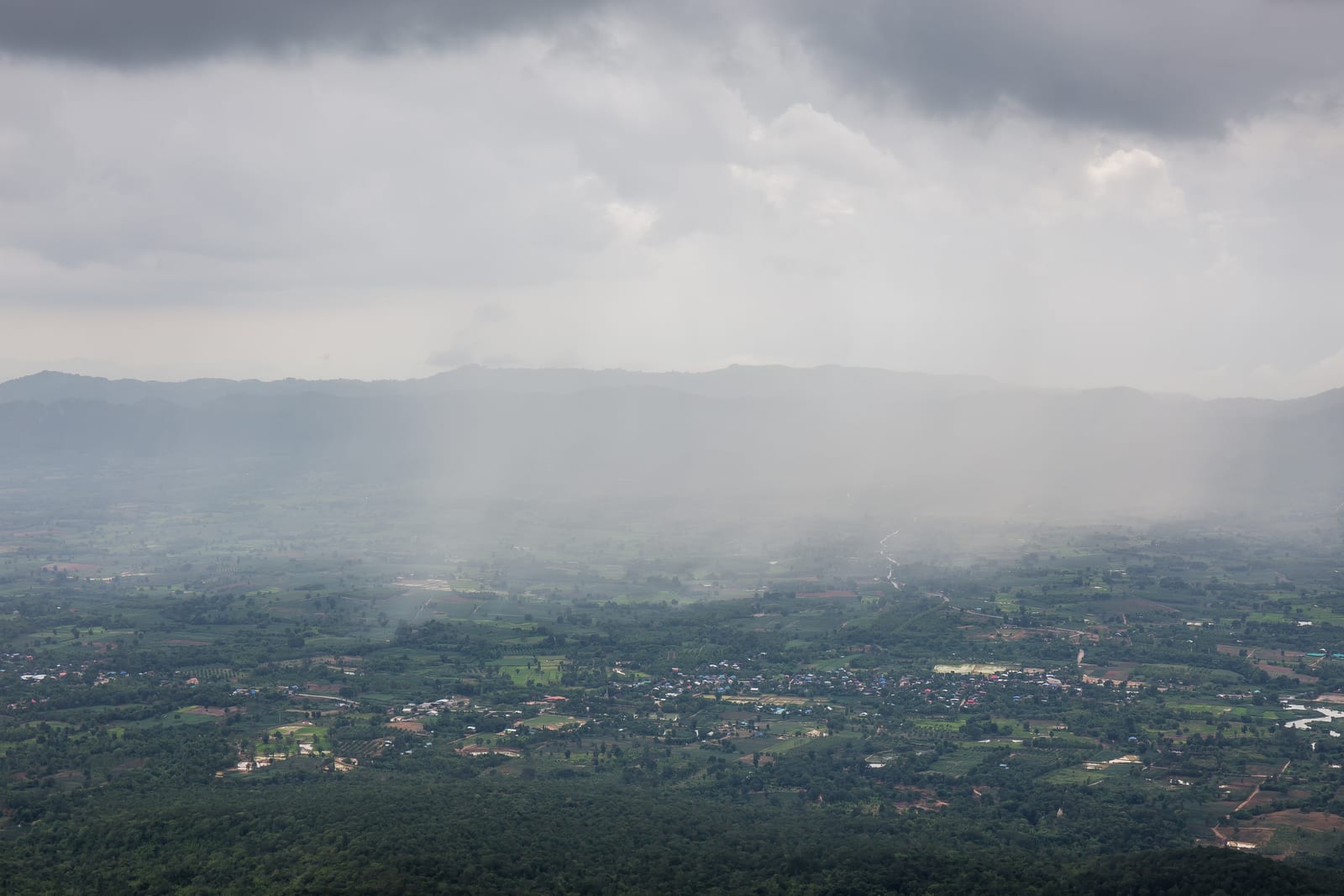
Sai Thong National Park sits on the Phang Hoei range in Nong Bua Rawe District, Chaiyaphum — a destination for nature lovers who want to walk flower fields amid rainforest and then take in photo spots on high cliffs. It suits people who like short hikes, families bringing older kids to feel the cool air, and groups of friends who come to camp overnight. The most-talked-about highlight is "Thung Bua Sawan," the purple-pink Siam tulip fields — five large fields in all, in full bloom from late June to August each year. The Siam tulip is known as the queen of the rainforest, and walking it against the green grassland gives you an atmosphere that's hard to find elsewhere.
Another thing you can't miss is the heart-in-your-throat photo spot "Pha Hum Hod," a slab of rock jutting out beyond the cliff edge — if you're brave, you go and sit with your legs dangling over the mountains below. Many genuine reviews say it's beautiful but genuinely dizzying. Next comes "Pha Sut Phaen Din" and the long line of Pa Hin Ngam cliffs, a spot for watching the sunrise and the sea of mist on a clear morning. From the tulip fields you can walk on along the nature trail to Pha Hum Hod.
Entry is 40 baht for Thai adults, 20 for children, and 30 baht for a car. Open roughly 08:00–16:30. There are campsites and cabins, but good to know: there's no proper restaurant inside the park, so bring your own water and food. It's about 70-something kilometres from Chaiyaphum town, with two ways in — via the main headquarters and via the Sap Mongkhon checkpoint (closer to the flower fields).
This is popular because it combines rainy-season flower fields, thrill-inducing cliffs, and cool air in one place. During the tulip bloom it gets very crowded, especially on long weekends. One more thing to know: some stretches of the road up to the viewpoints run through flowing water, so sedans can't drive up easily — most people switch to the park's vehicles or local songthaews at the service point. Come in the morning for the best light before the crowds arrive.
Chulabhorn Dam (Nam Phrom Dam)
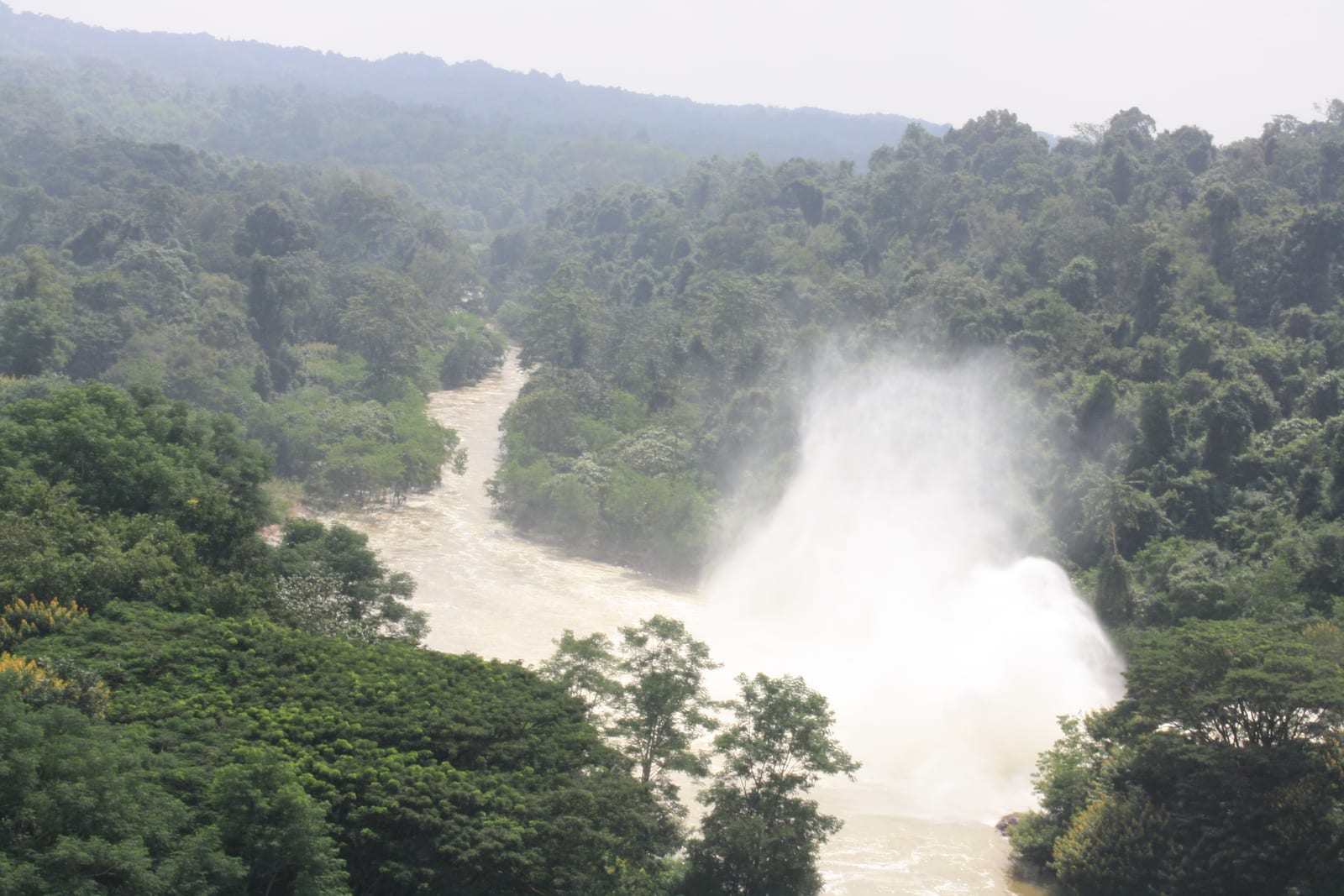
Chulabhorn Dam, which locals here habitually call "Nam Phrom Dam," is the highest dam in Thailand, set on the Khun Phai range in Tambon Thung Phra, Khon San District, at an average of around 800 metres above sea level — which keeps the air cool and comfortable almost all year. If you like driving up into the hills for a chill lakeside seat, looking out over an emerald-green reservoir stretching through a ring of mountains, this is a great fit. It suits nature lovers, families, and anyone who wants to escape the heat and breathe cool air without going all the way to the North.
The highlight you can't miss is the "Sala Lup Khuan viewpoint," where on a clear day you can see the line of Phu Kradueng and Phu Luang in Loei Province in the distance. On the dam crest there's Phra Phuttha Siri Sattarat (Luang Pho Chet Kasat) to stop and pay respects to, along with a garden and a conservation-forest walkway for strolling and photos. Around it there's also a scenic golf course and a boat service to cruise the reservoir. Many genuine reviews agree that "there are beautiful photo spots everywhere," the atmosphere is peaceful and uncrowded, and along the road up you'll pass troops of monkeys living by the roadside at intervals.
Budget is very easy, as entry is free with no charge. Open for visits roughly 08:30–16:30 daily. The dam is about 30 kilometres from the Highway 12 junction at Khon San District, and a fair way from Chaiyaphum town (well over 100 kilometres), so most people make it a long drive or an overnight trip at EGAT's guest houses inside the dam. The prettiest time is late rainy season into cool season, with clear skies, cool air, and a chance to see thin mist floating over the water.
Things to know before you go: the shops and restaurants inside the dam close fairly early, so bring water and food up with you. If you plan to stay overnight or want to walk the trails in the nearby Phu Khiao–Thung Kamang Wildlife Sanctuary, book ahead. The road up is steep and winding, so check your vehicle and drive carefully, especially when mist descends or it rains.
Nam Phud Thap Lao (Nam Phud Thap Lao Arboretum)
If you want to escape the heat without going all the way to the sea, "Nam Phud Thap Lao," or the Nam Phud Thap Lao Arboretum, in Khon San District, is a spot Chaiyaphum locals quietly keep to themselves. This is a natural spring that wells up from underground in the middle of a pool all year, because water is forced up from a rock cavity beneath the mountain at more than 400 cubic metres per hour. The water is crystal clear, so you can see the gravel and sand below, turning blue-green and lovely when the sun hits it. It all sits under large shade trees in the Phu Sam Phak Nam reserve forest — a shady setting with cool, comfortable air. It suits families who want to bring kids to swim, and easygoing types who just want to sit and listen to the water.
The highlight you can't miss is the spring welling up in the middle of the pool, and the stream that winds off into a long channel, with both a deep zone for jumping in from the bridge and a shallow zone where children can soak their feet safely. Many genuine reviews agree the water is very cold — bone-cold — and recommend coming in the morning around 10 a.m., because the water is at its clearest and the crowds haven't arrived. After noon, people fill in and the water gets a little cloudy from the swimmers.
Budget is very kind to the wallet, as entry is free with no charge. There are som tam, à la carte, and drink stalls, mats to rent for a riverside picnic, and coin-operated showers, so many people make it a day trip — eat som tam by the stream, then swim for hours. It's about 8 kilometres before Chulabhorn Dam: from the Khon San junction, take Highway 2055 for about 10 kilometres, then turn in for another 3 kilometres or so, paved the whole way. Open daily around 07:00–17:00.
This is popular because it's a natural water source that's still genuinely clean and pristine — not a man-made pool. In the hot season and on long weekends it gets especially crowded. Locals also revere it as a sacred place, with an annual spring-blessing ceremony. Good to know: bring a change of clothes and non-slip shoes, and pack your rubbish out to keep the water this clear for a long time. Phone signal around here can be weak, so plan for that.
Prang Ku (Prang Ku Heritage Site)

If you want to see traces of Khmer civilisation without driving far out of town, Prang Ku is a pin Chaiyaphum locals will recommend near the top of the list. The site is at Ban Nong Bua, Tambon Nai Mueang, only about 3 kilometres from town — a few minutes' drive. It suits history and archaeology enthusiasts, or anyone visiting Chaiyaphum town who wants to add a cultural stop. It's a Khmer-era laterite prasat believed to have once been an "arokayasala," a hospital, in the reign of King Jayavarman VII around the 13th century CE, and it's known as the most complete heritage site in the province.
The highlight you can't miss is the main prang, built of laterite and still standing tall, surrounded by a boundary wall and a gateway arch, with a library building as in the typical arokayasala plan. The spot people love to study is the carved lintel — one depicting a Buddha image seated in a niche with a Kala face, and another showing the Hindu Churning of the Sea of Milk, reflecting the mix of beliefs in this old community. Inside there's also a naga-sheltered Buddha image in sandstone and boundary stones to see. Many reviews agree the real thing looks smaller than expected compared with the great prasats elsewhere, but the carving is detailed and impressively well preserved.
The setting is an open outdoor lawn with green grass, in the middle of a community by Highway 2158, in front of the municipal school, with Wat Prang Ku helping look after the grounds. It takes under an hour to walk around. Free to visit every day, no entry charge. Come in the morning or evening when the sun is gentler, for better photos and a more comfortable walk.
Good to know: it's an open-air heritage site with limited interpretive signs and few staff on hand, so some corners look a bit worn with time — read up on it briefly beforehand and you'll appreciate what you see more. As it's a sacred place still revered by the community, dress modestly and don't climb on the ruins. Every year in the fifth lunar month (around April) there's a traditional Prang Ku water-blessing festival where locals gather in force — a good moment if you want to see the place come alive.
Chaiyaphum Walking Street (Night Bazaar)
If you reach Chaiyaphum town and want somewhere to stroll and grab dinner without overthinking it, the Chaiyaphum Walking Street (Night Bazaar) is where locals go as a matter of routine. The market is in front of the municipal central stadium on Bannakan Road, ringed by a public park, a youth centre, a playground, and the public library, so it's become the spot where people exercise in the evening and stop to eat afterward. It suits solo visitors, couples, and whole families, because it's easy to walk, the aisles are wide, and it doesn't feel as cramped as some markets.
The highlight is Isan food of nearly every kind — som tam, grilled chicken, sticky rice, fried snacks, pork skewers, meatballs, and on to local sweets and cold blended drinks. From many genuine reviews, people like that the market is clearly zoned, with a food side and a goods side, so you can loop around and cover clothes, bags, shoes, accessories, and phone gear. Food prices are reasonable, plates starting in the tens of baht, so you can graze along easily on a budget. If you're vegetarian, there are enough vegetable and fried-food stalls to choose from.
The atmosphere is a homey evening market, lively with locals more than out-of-town tourists, with friendly vendors, a seating zone, and parking to handle the crowd. Free to enter with no charge. Open daily around 17:00–21:00, with stalls starting to set up around five in the evening and gradually packing up by about nine. Good to know: if you arrive later than around half past eight, many stalls are already packing up — come early evening for the full spread and the best atmosphere.
This is popular because it's the liveliest place to eat and shop in the evening in the Mueang Chaiyaphum area — there aren't many spots like it in town to stroll around. Prices are friendly, it's easy to reach, right in the centre near the park and stadium, with convenient parking. It's a good pick for an easy dinner or a wrap-up to the day before heading back to your hotel.
🎟️ Book Tours and Tickets for Chaiyaphum and Isan in Advance
Many Chaiyaphum spots involve mountain roads and are spread across several districts. If you're not driving yourself, booking a guided tour with transfers makes it easy to cover Mo Hin Khao, the Siam tulip fields, and Chulabhorn Dam in a single trip without plotting the route yourself. Some spots get crowded during the tulip bloom, and booking tickets and tram seats ahead can cut queueing time on site. Compare tour packages, entry tickets, and car rentals in Isan through Klook or GetYourGuide before you go, so you can plan your days to fit and get the best value.
💡 Know Before You Go: Chaiyaphum
Chaiyaphum has no airport or train into town, the attractions are spread across several districts, and some involve mountain roads. Renting a car or hiring one with a driver is the most convenient. Grab is scarce in town — don't rely on it as your main option.
Park entry fees, tram fares, local restaurants, and the walking street are mostly cash-only. Some spots have PromptPay, but the mountain signal is unstable. Carry small bills and coins for entry fees and street food.
The Siam tulip fields bloom only from late June to August, the waterfalls are prettiest in the rainy season, and the dam and viewpoints are cool and comfortable in late rainy to cool season. Plan your dates around what you want to see so you don't miss it.
Mo Hin Khao and the Siam tulip fields have little shade and the mid-morning sun is strong, so go early for cool air, good light, and fewer people. Saturdays and Sundays during the tulip bloom get crowded — come early for an easier visit.
Many spots involve walking on rock shelves, sand, or mountain trails. Wear comfortable walking shoes, and bring a hat, drinking water, and an umbrella or rain jacket in the rainy season. Trails can be slippery after rain, so walk with care.
Chaiyaphum is a destination visited mainly by Thais, so English signs and menus are scarce. Bring a translation app, and booking a guided tour helps a lot with communication and getting around.
Plan Your Chaiyaphum Trip to Get the Most Out of It
Chaiyaphum's attractions are scattered in clusters, so organising your trip by zone gets you the most value. The town–Tat Ton zone is the easiest to do, combining Tat Ton Waterfall, San Chao Pho Phaya Lae by Nong Pla Thao, Prang Ku, and the Chaiyaphum Walking Street in the evening, all close together. Mo Hin Khao in Phu Laen Kha National Park is to the northwest — drive up the mountain early to catch good light and cool air.
For the Siam tulip fields, plan by season: the fields at Pa Hin Ngam (Thep Sathit) and Sai Thong (Nong Bua Rawe) bloom together from late June to August. They're in different districts but you can visit both in a single day, and Sai Thong also has Pha Sut Phaen Din and Pha Hum Hod as heart-in-your-throat photo spots. If you prefer cool air and clear water, head to the Khon San side and pair Chulabhorn Dam with Nam Phud Thap Lao nearby. The tulip fields and waterfalls are prettiest in the rainy season, while the dam and viewpoints are cool and comfortable in late rainy to cool season.
To make the most of Chaiyaphum, stay overnight so you can climb Mo Hin Khao or reach the Siam tulip fields in the morning while the crowds are thin, then walk the walking street in the evening without rushing back.
🔍 Check Chaiyaphum Hotel Prices (Agoda)