🔄 Last checked 25 Jun 2026 · details and hours can change — check the venue before you go
📍 All restaurants on the map
Tap a pin for the spot + nearby stays
The charm of Phang Nga is that you can explore very different experiences all in one trip. Wake up early for the sea mist and sunrise at Samet Nangshe, take a longtail boat through the cave passages to see Khao Tapu and Khao Phingkan in Phang Nga Bay, stop for lunch at Koh Panyi — the fishing village built on stilts in the middle of the sea — then marvel at its legendary floating football pitch. In the afternoon, drive along Phetchakasem Road to pay respects to the reclining Buddha in the stalactite cave at Wat Suwan Kuha, or wander the Sino-Portuguese shophouses of Takua Pa Old Town from the tin-mining era. Nature lovers have Sa Nang Manora waterfall for a swim any time of year, and the striking blue pond inside the old Thap Put quarry that looks more like somewhere abroad when you photograph it. One province for beach lovers, old-town walkers, temple visitors, and photographers — all in a single trip.
Many spots in this list are inseparable from the province itself. Khao Tapu in Ao Phang Nga National Park starred in the James Bond film The Man with the Golden Gun, giving it the nickname that travellers the world over still use today. Koh Panyi has been a Muslim fishing village built on stilts over the water for generations, home to a floating football pitch that has become the stuff of legend. Samet Nangshe is the rock-island viewpoint over Phang Nga Bay where crowds gather every season to wait for the morning light. And Takua Pa Old Town was once a booming tin-mining hub, leaving behind a long row of old shophouses and a Sunday walking street for anyone in the mood to step back in time. Ten spots that won't disappoint — pick two or three for your next trip and see for yourself.
Khao Tapu (James Bond Island) — Phang Nga Bay
When people picture Phang Nga, many think of a single limestone pillar defying gravity in the middle of the sea. That's Khao Tapu — or, as generations of visitors have called it, James Bond Island, after its starring role in the 1974 film The Man with the Golden Gun. This is the place for anyone who wants to bag the iconic Phang Nga Bay shot: photographers, families, and foreign travellers retracing 007's footsteps alike. The islet itself is off-limits (the park protects it because the rock base is thin and fragile), but you can stand and photograph it comfortably from the adjacent Khao Phingkan beach.
The must-do highlight is getting on a longtail or speedboat to cruise among the limestone cliffs rising from the emerald water, stopping at Khao Phingkan — two mountains leaning against each other that create one of the bay's most photographed angles — and passing through the sea caves (tham lod) that boats can sail right through. Most tours also include Koh Panyi, the Muslim stilt village, for lunch. Reviewers consistently say the scenery lives up to the hype, but warn that it gets very crowded, boats go in and out constantly, and the souvenir shops on the island charge more than double what you'd pay in Phuket or town — best to shop elsewhere.
On the budget side, the national park charges 60 THB for Thais and 400 THB for foreigners. Boat tours start at roughly 1,500–2,000 THB and up depending on vessel type and departure point. The site sits within Ao Phang Nga National Park, Mueang Phang Nga District; boats depart from Dan Pier or Surakul Pier, about 15 km from the park headquarters. Daily, with most tours departing around 08:00 and returning late afternoon to early evening.
The enduring popularity comes from being the most instantly recognisable landmark of the northern Andaman coast. Google rating 4.5 from over 1,800 reviews. Key tip: go on the early morning boat if you want photos without the crowd, and check the weather — when seas are rough the longtails can pitch quite a bit.
Similan Islands
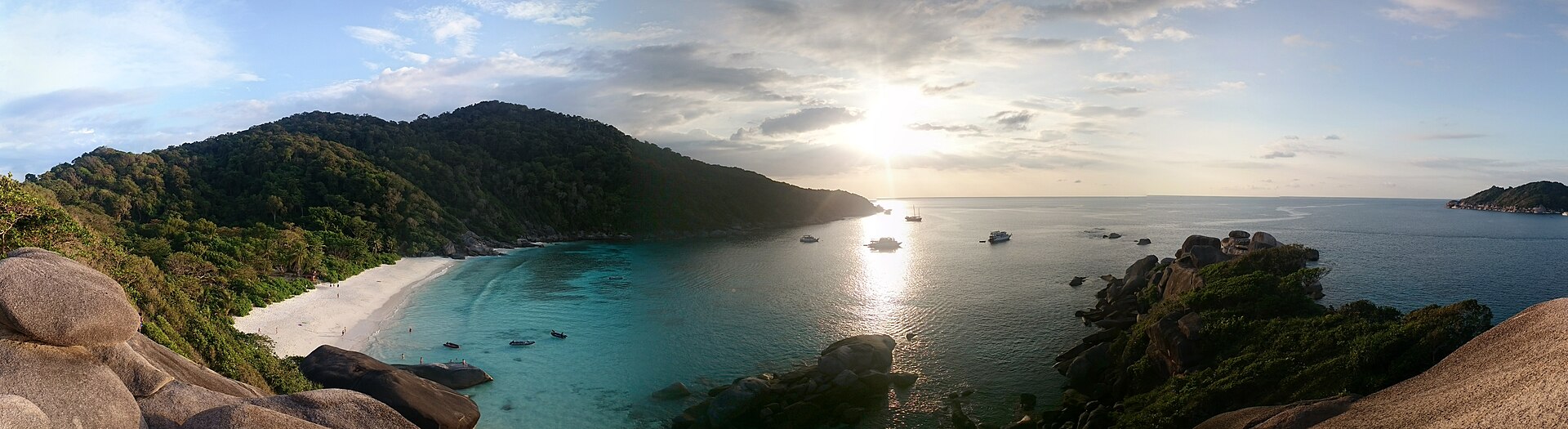
The Similan Islands are among the most beautiful seas in Thailand — a marine national park in Kura Buri District, Phang Nga Province, made up of 11 islands in a row across the Andaman Sea. The real draw isn't just the powdery white sand; it's the turquoise water so clear you can see the sandy floor and entire schools of fish without even diving. That clarity is why divers from around the world rank this among Asia's best dive sites, for both snorkelling over coral and deep diving among submerged rock formations.
The highlight everyone talks about is the Sail Rock on Island 8 (Ko Similan) — a boulder balanced on a hilltop you can climb for the view of Donald Duck Bay (Ao Kuak) below, a crescent of white sand against vivid blue water that appears on postcards everywhere. Ko Miang (Island 4) hosts the park headquarters and overnight facilities, perfect for anyone wanting to fall asleep to the sound of waves.
Most visitors arrive on day-trip speedboats from Tab Lamu Pier near Khao Lak — about 90 minutes each way. One essential planning note: the park is seasonal, open roughly 15 October to 15 May and closed for monsoon from around 16 May to 14 October for ecological recovery. Anyone planning a rainy-season visit genuinely cannot get in.
Park entry fee: Thai adults 100 THB, foreigners 500 THB, not including the boat tour at roughly 1,800–2,500 THB. Tip from regulars: book in advance and go on a weekday. The park caps visitors at 3,850 per day — some days sell out fast. And bring reef-safe sunscreen; the Andaman sun is fierce and the park takes coral conservation seriously.
Samet Nangshe Viewpoint
If there's one place in the whole province that gets people out of bed at 4 or 5 in the morning, it's Samet Nangshe Viewpoint in Khlong Khian, Takua Thung District. The signature image: rows of small limestone islands layered across Phang Nga Bay, with sea mist drifting between them at first light, the sun rising slowly in shades of gold and amber. Nearly every review says the same thing: exhausted at 4 a.m., not exhausted at all once the view appears. A top pick for photographers, nature lovers, couples, and families wanting to catch a sunrise together.
The unmissable experience is the early-morning visit — aim to arrive before 05:30 when the mist is thickest. Thrill-seekers can add the Beyond Skywalk Nangshi, a glass bridge roughly 180 metres long and 80 metres above the sea, with 360-degree views — the longest and highest coastal skywalk in Thailand. The area was also a filming location for the Hollywood film The Creator. The atmosphere up top is quiet, cool, and breezy, with a café and seating areas where you can sip coffee while waiting for the light.
Budget-friendly: the original viewpoint costs around 30 THB to walk up, or 90–100 THB return by 4x4 pickup truck. The Beyond Skywalk charges separately — several hundred THB, though it typically includes a food and drink credit. Anyone wanting to stay for the morning light can pitch a tent or rent a bungalow on the hill. The location is roughly 30–40 minutes from Phuket — easy to drive. Open from the early hours every day.
A few things to know: the access road is quite steep and narrow; if you're not used to mountain driving, the 4x4 service is the safer option. The mist is unpredictable in the rainy season — the clearest skies and best views come around February to May. On long weekends the crowd is significant; arrive early to claim the best photo spots and allow extra time for the trucks up and down.
Koh Panyi (Floating Village + Legendary Floating Football Pitch)
Koh Panyi is a Muslim fishing community that has lived on stilts over Phang Nga Bay for more than 200 years. The entire village sits above the water, connected by a maze of wooden walkways linking homes, shops, a mosque, a school, an ATM, and a post office. This is the right place for first-time Phang Nga visitors who want to see a real sea community — not just beautiful scenery. Most people visit as an add-on to the Khao Tapu (James Bond Island) trip, stopping here for lunch and a walk around.
The highlight everyone comes to see is the legendary floating football pitch: local kids once lashed together a playing surface from timber and plastic floats, and it became one of the most talked-about photo spots in the bay. Honest reviews admit that the pitch is now mostly used as a boat dock for tourist vessels and looks more worn than the photos suggest, but the story and the look of it still make the trip worthwhile. Beyond the pitch: a walk along the wooden boardwalks past the pretty mosque, and a stretch of souvenir shops selling pearl-and-silver jewellery and batik clothing at prices friendlier than on the mainland.
For food, the island has several halal seafood restaurants right over the water; most tours include a set lunch or buffet. English is widely spoken, menus have photos and English text — easy to order. If you come independently, the boat fare is around 60 THB per person; it's usually bundled into James Bond Island tours. Budget about 1–2 hours to walk the full village comfortably.
The island is popular because it's genuinely unlike anywhere else — a fully functioning floating village that has graced travel documentary covers for decades. Key notes: dress modestly (cover shoulders and knees — this is a Muslim community), ask permission before photographing residents, wear shoes with grip because the wooden walkways are narrow and can be slippery, and always clarify prices before buying food or souvenirs. Best visited November to April, outside monsoon season.
Khao Lak Beach
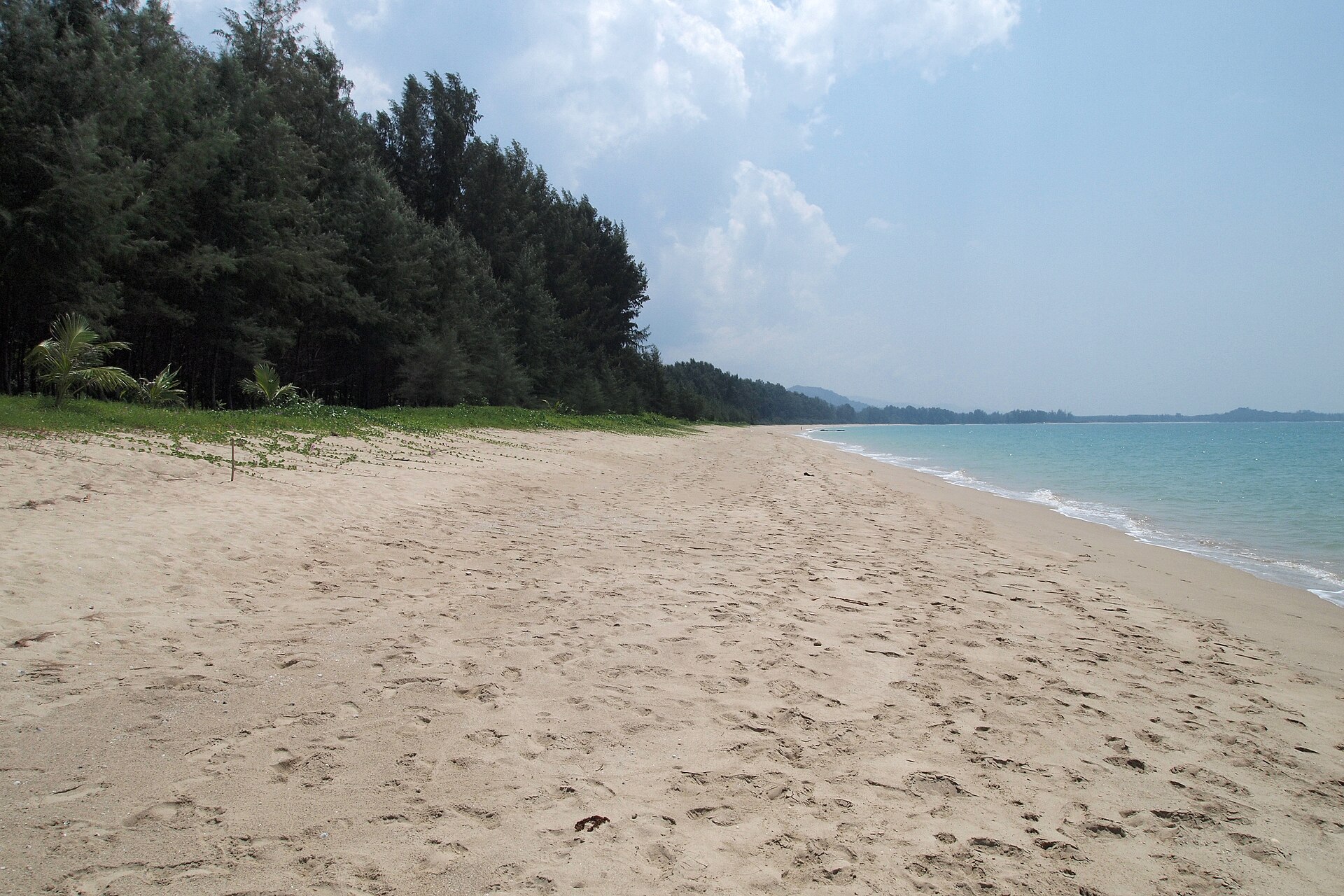
Khao Lak Beach is a long stretch of Andaman coastline in Takua Pa District, Phang Nga Province, in the Khuk Khak sub-area near Khao Lak–Lam Ru National Park — about 60 km from Phang Nga town and roughly 75–80 km from Phuket Airport. The appeal is the long sandy shore lined with rows of casuarina trees that create a shady walk for the full length of the beach. It's calm and unhurried compared to Phuket — great for couples, families, or solo travellers looking for a quieter stretch of sea. Reviews consistently highlight how clean, clear, and uncrowded it feels.
The must-see experience is the sunset: the beach faces west perfectly, and during golden hour the sky shifts colour against the silhouette of the lighthouse and the pines — one of the most beautiful sunsets in the Khao Lak area, according to many regulars. Nang Thong Beach (the black-sand stretch) and Bang Niang Beach are the most popular photography spots. Come evening, the area around those beaches lights up with seafood restaurants, beach bars, and the Bang Niang market for a low-key night out.
Khao Lak is also popular as the departure point for Similan Islands day trips — speedboats leave from the local piers, hotel transfers are usually included, food and dive gear provided. This makes it an excellent base if you want to use Phang Nga's coastline as a hub for sea exploration. Google reviews hover around 4.5 from hundreds of reviewers, reflecting strong satisfaction with the peace and the sunset views.
Good to know: no entry fee, free beach access. Best season to swim and join Similan trips is November to April when the sea is calm and clear; May to October brings stronger waves and is better suited to surfers. The sun is strong — bring sunscreen and water. If you're coming specifically for the sunset, arrive a few minutes before the sun dips to claim a good spot.
🛏️ Book well-located accommodation in Phang Nga
To make the most of Phang Nga, match your base to your plans. Staying in the Khao Lak area puts you close to the beach and the Similan Islands departure piers — ideal for sea-focused, relaxed-pace trips. Staying in Phang Nga town is the most convenient for Phang Nga Bay boat tours, temple visits, and waterfalls nearby. Compare prices across 3 booking sites before committing, and book ahead in high season for the best rooms at the best rates.
Takua Pa Old Town + Sri Takua Pa Cultural Walking Street
If you want to see Phang Nga through a lens that isn't sea and islands, Takua Pa Old Town on Sri Takua Pa Road is the answer. This was once one of the south's most active tin-trading ports; today it's a stretch of Sino-Portuguese shophouses preserved in an unbroken row of more than 500 metres. Two-storey stucco buildings with arched entrances, old wooden shutters, and pastel paintwork line up so photogenically that you can walk and shoot the whole length without running out of angles. Ideal for old-town lovers, café explorers, and families who want a relaxed stroll.
The highlight is the Sunday cultural walking street, when local Takua Pa residents set up stalls selling rare old-fashioned snacks: tao so, o-ew, century-old recipe sweets, mochi, Takua Pa-style sausages, grilled and fried street food, and fresh juices. Another popular stop is the Guan Yu Shrine — locals call it Sin Chai Tung — a roughly 170-year-old Chinese temple in the heart of the old market. The street murals telling the story of the tin-mining era have also become a top social-media check-in spot.
Budget-wise it's easy: walking the street and photographing the buildings costs nothing. Bring a few hundred THB to snack and pick up souvenirs. The location is in Takua Pa town, about 30 minutes' drive from Khao Lak, so it's typically paired as a half-day trip with a Khlong Sang Nae cruise or a walk across the Bun Sung iron bridge.
Before you go: the walking street only runs Sunday evenings, roughly 15:00–20:00, and is seasonal — it tends to close during monsoon. On weekdays you'll get the quiet old-town atmosphere — good for the architecture and a sit in a café inside an old building, but fewer stalls. Check the municipality's event calendar before heading out to be sure.
Wat Suwan Kuha (Cave Temple)
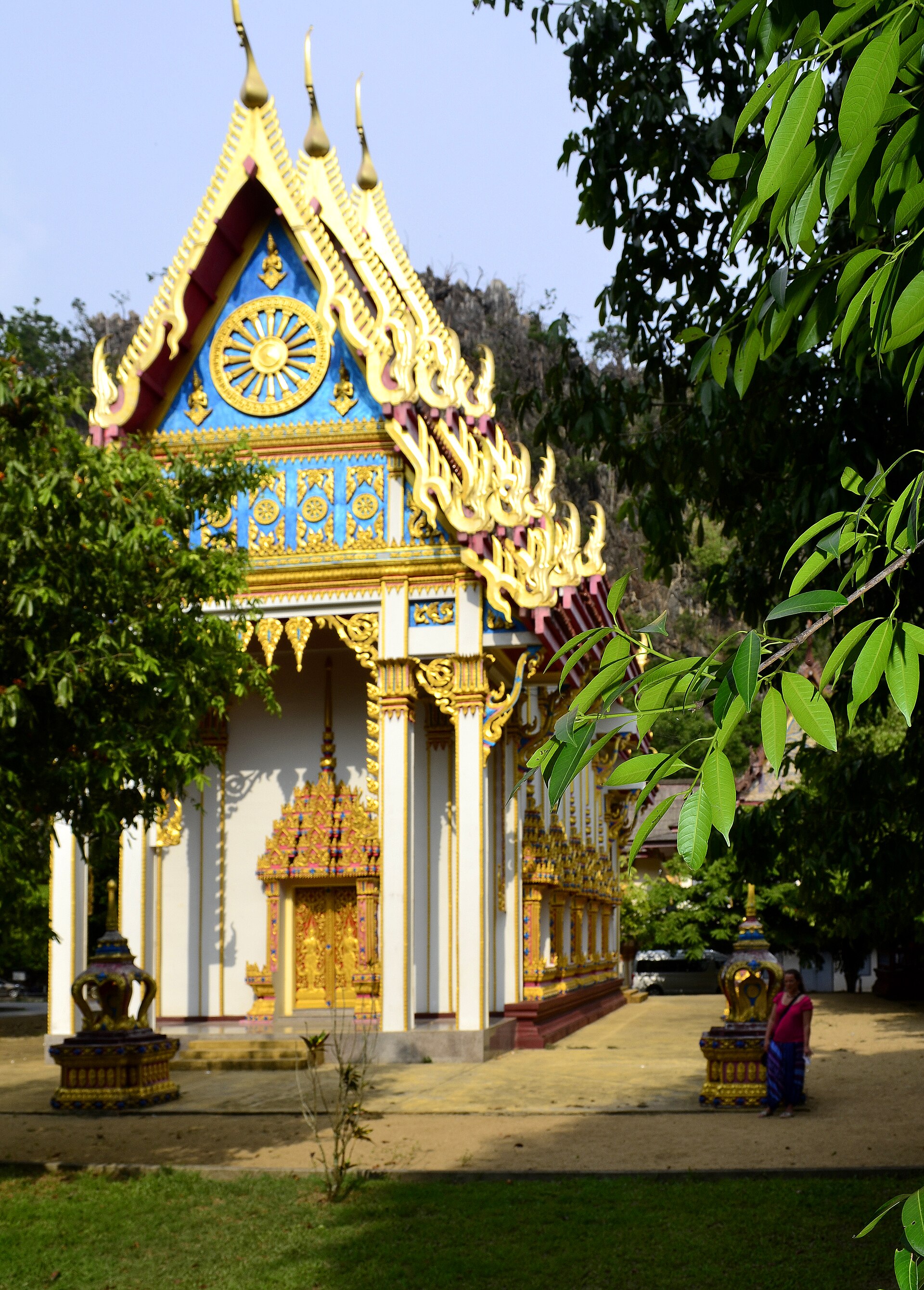
Wat Suwan Kuha — known locally as the cave temple — is an ancient temple that has stood alongside Phang Nga for generations. It sits right on Phetchakasem Road in Krasom Subdistrict, Takua Thung District, making it an easy roadside stop between Phang Nga and Phuket. The main draw is inside a large cave in a limestone hill: a huge reclining Buddha — the Phra Phuttha Saiyas — lying gilded under golden light, surrounded by hanging stalactites and stalagmites with natural light filtering in through the cave mouth. For anyone who likes temples that are quiet and atmospheric, mixed with the wildness of a real cave, this delivers.
Go into the main cave to pay respects at the reclining Buddha first, then continue to the 'light cave' (tham jaeng) where you can clearly see the stalactite formations, and the 'dark cave' (tham muet) which requires a torch and goes deeper into the hill. Inside there are also royal inscriptions from historical visits. Another thing that makes this temple famous — the troop of monkeys out front. Reviews call them tame and entertaining, but there's also a consistent warning that the monkeys here are sticky-fingered and can turn aggressive, so keep valuables, glasses, hats, and plastic bags out of sight.
Extremely affordable: around 20 THB entry (Thais are often let in free, foreigners 20 THB). Open daily 08:00–17:00. Mid-morning light in the cave is particularly beautiful. The temple is on a main road with parking; the walk from the car park to the cave entrance is short. A good first stop on a Phang Nga trip, or a roadside detour on the way to Phang Nga Bay.
Why it's popular: this cave temple is both sacred and unusual — temple visit, cave exploration, and monkey encounter all in one. Google rating around 4.1 stars. Notes: dress respectfully, wear shoes you can walk well in, and watch the monkeys carefully — especially if you're visiting with small children.
Sa Nang Manora Forest Park (Sa Nang Manora Waterfall)
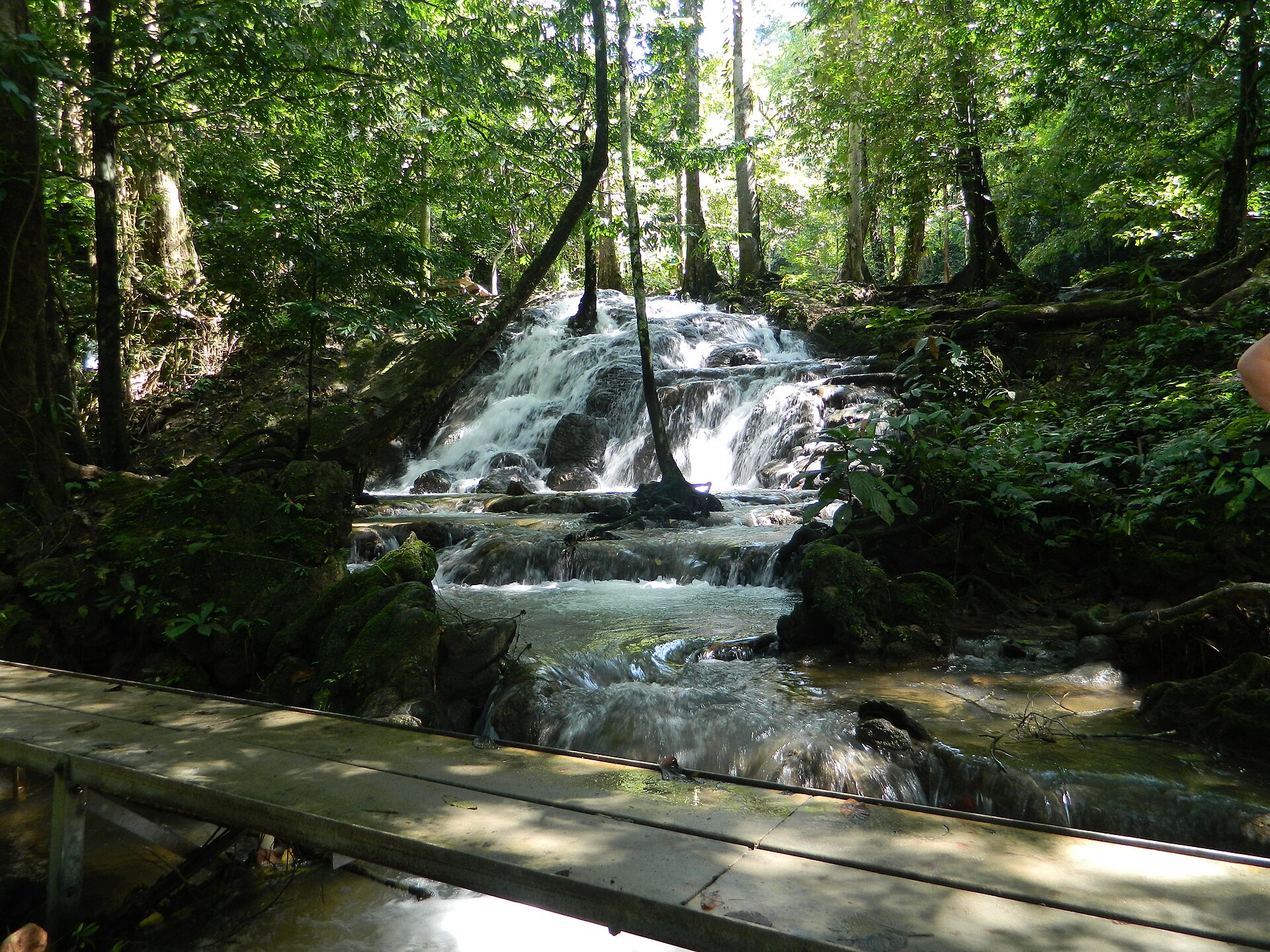
Sa Nang Manora Forest Park — known locally as Sa Nang Manora Waterfall — is a small but lush rainforest of about 180 rai in Nop Pring Subdistrict, just over 4 km from Phang Nga town: less than ten minutes by car. A top pick for families with children, nature-loving couples, or anyone who wants a gentle forest walk without breaking a sweat. The highlight is a stream flowing over tiered stone pools — the main basin is about 10 metres wide, with four low waterfalls between 2–2.3 metres tall. The water stays cool and clear enough to wade in almost year-round. Several foreign reviewers call it the cleanest and most beautiful waterfall in the Phang Nga–Phuket area they've visited.
The unmissable experience is the 2-kilometre nature trail that's mostly flat — it passes through bamboo groves and limestone cliffs and ends at the Fossil Shell Cave, where oyster fossils are embedded in the limestone, and a bat cave. Hard to find elsewhere and genuinely fascinating for anyone interested in natural history. Along the way you'll often spot butterflies, monitor lizards, and various bird species in a cool, quiet atmosphere. The park takes its name from a legend of seven kinnaree (bird-women) who flew down to bathe in the pool here.
Completely free to enter. Wide car park, clean toilets, staff on site throughout. Reviews praise both the friendliness of the staff and the care taken of the park. Open approximately 08:30–16:30 daily. Google 4.4 from over 300 reviews — popular with both Thai and foreign visitors. Many people add this stop after a James Bond Island tour.
Worth knowing: in the rainy season the water runs strong and muddy — staff may close the swim areas or forest trail on safety grounds. In the dry season (around February) water levels can drop. For the best swim and the fewest people, come on a weekday morning. Steps down to the water are steep in places and the footing is slippery; older visitors or those with mobility concerns should take care. Wear non-slip shoes and bring water.
Somdet Phra Srinagarindra Park, Phang Nga (Tham Ruesi Sawan / Khao Chang)
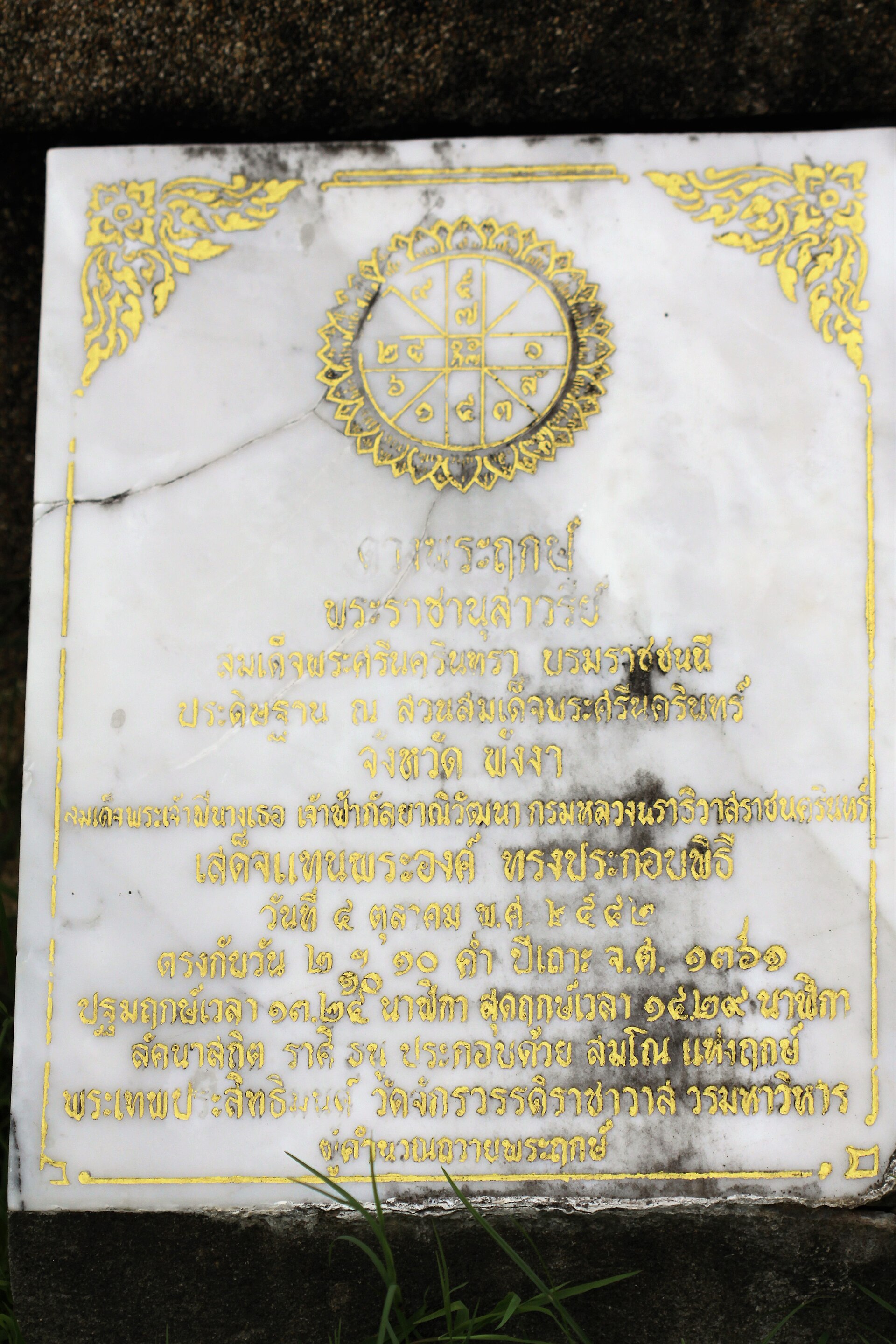
For a free attraction right in the heart of Phang Nga town that manages to be both beautiful and unusual, Somdet Phra Srinagarindra Park (locals call it Suan Somdet, or by the cave name Tham Ruesi Sawan) is worth marking on the map. Located near the provincial hall in Mueang Phang Nga District, Tai Chang Subdistrict, this royal commemorative park covers 162 rai and sits cradled by towering limestone cliffs. Look up and you'll see Khao Chang Mop — the elephant-lying-down hill that has become the symbol of the province. Perfect for walkers, joggers, cyclists, families who want to feed the monkeys, and anyone who wants natural scenery without driving out of town.
The highlight many reviewers say you shouldn't miss is Tham Ruesi Sawan (Hermit Heaven Cave) and Tham Luk Suea (Scout Cave) behind the park: inside you'll find natural stalactites, a clear stream flowing through, and a walk-through cave loop (tham lod) that winds in a circuit through the hill — a spot many visitors say is one of Phang Nga's best-kept secrets. Out front, the park has a wide open lawn, a pond, bridge over the stream, large shady trees, and a statue of Princess Srinagarindra in the centre. Calm and genuinely lush — particularly pleasant in the early morning and early evening when locals come out to exercise.
Completely free to enter, open daily approximately 06:00–19:00. Plenty of parking, toilets on site. Google rating around 4.5 stars — praised by both locals and visitors for cleanliness, mountain views, and the rare combination of city park and full natural atmosphere.
Before you go: there are monkeys living throughout the park in numbers. Reviews warn: don't park near monkey hotspots because they'll pull off windscreen wipers, wiper blades, or anything protruding from your car. Don't carry food bags visibly or they may grab them. If you're going into the caves, wear non-slip shoes (the floor is damp) and bring mosquito repellent. With those precautions in place, this is an easy and rewarding park plus cave plus Khao Chang view all in one.
Wat Tham Ta Pan (Heaven and Hell Temple)
For anyone visiting Phang Nga town who wants a temple experience unlike any other, Wat Tham Ta Pan (widely called the heaven-and-hell temple) deserves a spot on the itinerary. The temple sits at the foot of a limestone hill right in Phang Nga's Tham Nam Phuet Subdistrict — a short drive from the town centre. It appeals to merit-seekers who want to pray, and to explorers who enjoy a light adventure inside a cave. The most-talked-about feature is the paired sculpture gardens: the Buddhalok (Heaven) Garden, with graceful religious imagery, and the Narok (Hell) Garden, lined with statues of demons, Yama (the king of the underworld), and scenes of punishment — eerie, thought-provoking, and genuinely instructive. Young children who scare easily should be kept close.
The unmissable highlight is passing through the Dragon's Belly — a large dragon-shaped archway forming an arched tunnel known as the Dragon Bridge Over Hell — roughly 100 metres long, which leads into the bat cave beyond. Inside it's fairly dark; a monk or the caretaker uncle is usually on hand to lend a torch. The cave contains a stream to cross, flowing water, and spectacular oddly-shaped stalactites and stalagmites for about 600–700 metres. The passage narrows in places with a rope handrail along the cliff face — enough to make the heart beat a little faster. Complete the walk and you can still climb to the stupa and viewpoint at the top of the hill for panoramic views of Phang Nga town stretching out to the mangrove forest line.
Entirely free to enter — donation box only. Open approximately 08:30–17:00 daily. Google rating 4.4 from over 500 reviews; most people love the combination of strange, sacred, cave, and view all under one roof. Some foreign reviewers describe the atmosphere as pleasantly eerie and note the temple is refreshingly un-touristy.
Before you go: wear non-slip shoes because the cave floor is damp and can be wet in places. Bring your own torch or head torch for peace of mind. In the rainy season water levels inside the cave can rise and make walking difficult. Morning or late afternoon are the nicest times for the temperature and the light. Allow time to walk at your own pace — there's no need to rush.
Book Tours and Attraction Tickets in Phang Nga
Want to cover several spots in one day without worrying about boats and logistics? Try booking a tour through Klook or GetYourGuide — options include Phang Nga Bay boat tours visiting Khao Tapu (James Bond Island) and Koh Panyi, kayak-and-cave-paddling trips, and guided packages with pick-up included. Book online in advance to lock in your price and skip the queue at the pier.
💡 Good to Know Before Visiting Phang Nga
Phang Nga's attractions are spread across several districts, and the easiest way to visit is by private car or rental. Grab is scarce and songthaew routes are limited. Khao Tapu and Koh Panyi can only be reached by boat from the Phang Nga Bay piers — booking a boat tour or chartering a longtail is the practical way to do it.
Boat fares, national park fees, the walking street, and souvenir shops on Koh Panyi and in Takua Pa Old Town mostly accept cash only. Bring small notes. Tours and accommodation can typically be paid by card or QR transfer.
Samet Nangshe requires arriving before dawn to catch the sea mist and while parking is still free. Phang Nga Bay boat tours leave in the morning for calmer water and fewer crowd clashes. Temples and waterfalls are cooler and quieter in the morning. The Takua Pa walking street runs on Sundays only.
For Wat Suwan Kuha and Wat Tham Ta Pan, dress modestly — shoulders and knees covered — and remove shoes at the cave entrance or shrine hall as signs indicate. The Wat Suwan Kuha area has a troop of monkeys out front; keep food and bags well secured.
If chartering a longtail for a Phang Nga Bay tour or a crossing to Koh Panyi, always agree on the price before boarding — or book a tour package for full price transparency upfront. Tipping your guide or boat crew a small amount is a nice gesture but never obligatory.
Tourist zones like Khao Lak and Phang Nga Bay tours manage fine in English, with signage and menus in English throughout. In local markets, Takua Pa Old Town, and shops on Koh Panyi you may need to point at items or use a translation app.
Planning a Phang Nga Trip That Actually Works
Grouping by zone saves the most time. Bundle Khao Tapu (James Bond Island) and Koh Panyi in the same day — most boat tours already do this as a single continuous trip. Depart from the Phang Nga Bay piers in the morning for calm water and softer light. Samet Nangshe requires arriving before dawn for the sea mist and sunrise, so build in driving time to the viewpoint as well.
For in-town half-days: Somdet Phra Srinagarindra Park (Tham Ruesi Sawan and Khao Chang), Wat Tham Ta Pan, and Sa Nang Manora Waterfall in Nop Pring all sit close to Phang Nga town and can easily share a day. For the north: pair Takua Pa Old Town (Sunday cultural walking street) with Khao Lak Beach in the same outing, and stop at Wat Suwan Kuha along Phetchakasem Road on the way. The blue quarry pond at Thap Put is on the Krabi side — a natural waypoint when continuing south.
For a multi-day Phang Nga trip, staying in Khao Lak puts you right on the beach with easy access to Similan Islands departure piers. Staying in Phang Nga town is the most convenient base for Phang Nga Bay boat tours and in-town sightseeing. Book ahead during high season to get the best rooms at the best rates.
Browse Phang Nga accommodation