🔄 Last checked 26 Jun 2026 · details and hours can change — check the venue before you go
📍 All restaurants on the map
Tap a pin for the spot + nearby stays
Ranong is famous for Koh Phayam — clear Andaman water that people travel specifically to spend a day or a night on — but the town itself and the surrounding area have a lot to offer too. The charm is that everything sits close together and most of it is free. Wake up early, walk into the lush park, and soak your feet in the Raksawarin Hot Spring. Mid-morning, drive out towards Tambon Ngao and find the Grass Mountain — a bald rolling hillside to climb for 360-degree views. Stop at Wat Ban Ngao to pay respects to the Tin Buddha. In the evening, come back into town and climb Ranong Skywalk, or stroll the Saturday Walking Street. A Ranong trip doesn't need to be rushed — collect each spot one by one.
Several places on this list are iconic Ranong symbols. Koh Phayam is a quiet island of white sand on the Andaman side, often called Thailand's Maldives — take the boat from Pak Nam Ranong pier and spend a full day or stay overnight. Raksawarin Hot Spring is a natural mineral-water spring with no sulphur smell, at around 65 degrees Celsius, divided into Father Pool, Mother Pool, and Daughter Pool. Wat Ban Ngao houses Luang Pho Tibuk — a massive Buddha image cast entirely from tin ore that is claimed to be the world's largest tin Buddha — along with a naga staircase and a large fish pond. Kra Isthmus in Kra Buri district is the narrowest point of the Malay Peninsula; stand and look across the Kra Buri River to Myanmar — a stop no one visiting Ranong wants to skip. For nature enthusiasts there's Ngao Waterfall flowing year-round and visible from the highway, and Khao Fha Chee viewpoint in La-un for early-morning sea mist. Tick them all off and you'll understand why people fall for this small, unhurried province.
Koh Phayam
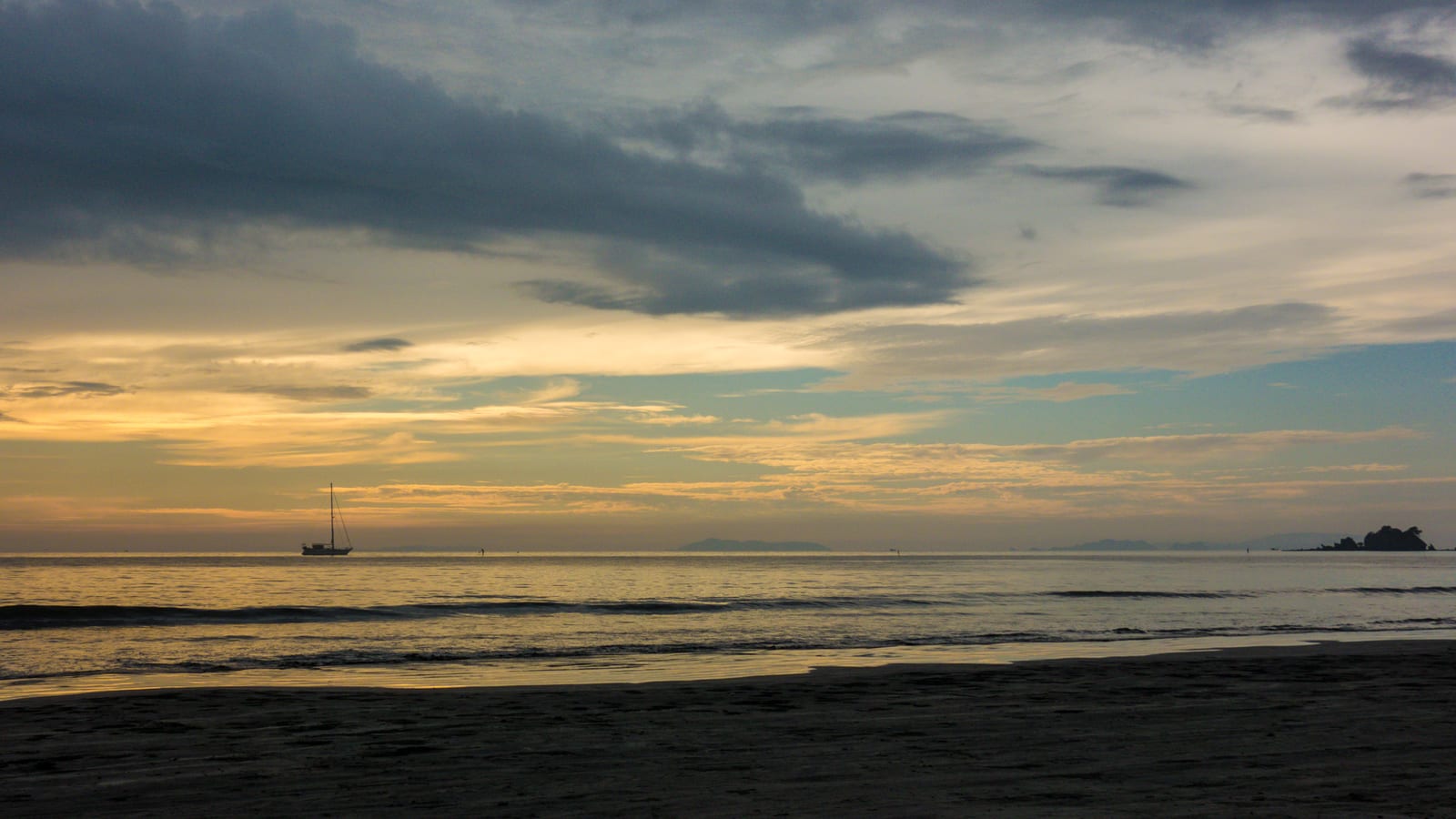
Koh Phayam is Ranong's Andaman island — the kind of place people who want real quiet tend to fall for immediately. It's not as developed as the famous islands further south, there are no cars on the island, and the pace is slow. Multiple reviews describe it as feeling like Thailand twenty years ago. It suits those wanting to escape the noise and sleep to the sound of waves, couples after a genuinely tranquil getaway, and backpackers who prefer unspoiled island nature over nightlife. Those expecting malls or a busy night scene may find it too quiet.
The must-see highlights are two beaches on opposite sides of the island. Ao Yai (Big Bay) has fine white sand stretching far enough for a long walk, and Ao Khao Kwai (Buffalo Mountain Bay) has the famous Heart Rock — a naturally shaped heart formation that is the most photographed spot on the island. Both beaches face west, making them ideal for watching the sunset drop into the Andaman. Reviews consistently name the late afternoon at the beach as the trip's standout moment. There is also shallow-water snorkelling and beachside bars for sitting with a cold drink and watching the sea.
Boats depart from Pak Nam Ranong Municipal Pier. The speedboat takes around 35–45 minutes (approximately THB 350/way) and the slow boat takes about 2 hours (approximately THB 200/way). Morning and afternoon departures are available — times such as 09:30, 11:30, 13:30, and 14:30. Schedules are limited, so booking ahead is recommended. On the island there are no cars; most people rent a motorbike for a few hundred THB per day to get around, or ask their accommodation to arrange transport.
Things to know: during low season (roughly May–October) the sea is rougher and rain is frequent — some ferry schedules are reduced. Always check the weather before departing. On some parts of the island, electricity and mobile signal are limited; some guesthouses only supply power during certain hours. Factor this in and you'll likely find disconnecting enjoyable rather than frustrating. Koh Phayam's reputation keeps growing because it holds onto its natural character and quiet, combined with west-facing sunsets that many visitors say are the main reason they come back.
Raksawarin Hot Spring
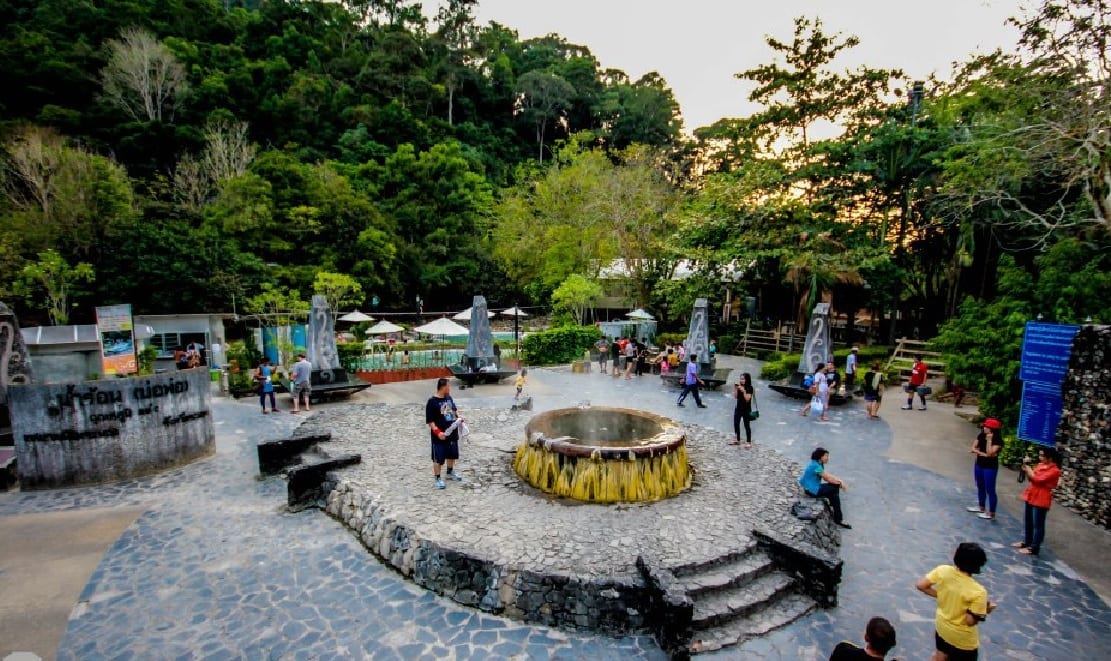
If you come to Ranong and don't stop at Raksawarin Hot Spring, most people would say you haven't really arrived. This is a natural mineral hot spring inside a lush public park right in the centre of town — about 2 kilometres from the main area, a quick tuk-tuk ride away. The centrepiece is three mineral pools everyone calls Father Pool, Mother Pool, and Daughter Pool — the water rises naturally from underground at around 65 degrees Celsius. What many reviews highlight is that the water here is clear and has no sulphur smell, unlike most hot springs — so you leave feeling clean and relaxed, not smelling of eggs. It suits nature lovers, families with elderly relatives who want to soak their feet, and those who like Japanese-style onsen but want a Thai version.
The must-do is standing by Father Pool — the largest — to watch the water bubble up with hot steam rising beautifully for photos. Then walk over and sit at the smaller foot-soak pools along the path; that's free. For those who want a full mineral soak, there's a private onsen zone for a small fee of around THB 40–50, with changing rooms, lockers, and proper soak baths. Multiple real reviews praise how clean and orderly everything is; some mention having their blood pressure checked before getting in. The park also has a suspension bridge over the canal, a yoga corner, and shaded rest areas — easy to stroll for a full day.
Budget-friendly: walking in the park and soaking your feet costs nothing. The private soak zone is around THB 40–50 per person — exceptional value for a real mineral-water experience. Open from early morning to evening (approximately 05:00–21:00 daily; the indoor soak zones are divided into time slots). For fewer people and cooler air, come early morning when the steam is also most visible and photogenic.
A small note: the source water at the top is genuinely 65 degrees — do not climb into the source pool. Use only the designated soaking pools where it has been mixed to a safe temperature. People with heart conditions or blood pressure issues should avoid extended soaking. Bring your own change of clothes and a towel. While you're at it, consider stopping at Wat Taputaram (Wat Hab Phroei) nearby, which is worth a short visit.
Ngao Waterfall National Park
If you're driving along Phetkasem Highway into Ranong and suddenly see a white ribbon of water falling from a high cliff through green forest, that's Ngao Waterfall — the waterfall people associate with this province and recognise at a glance. The key appeal is a tall cliff-face cascade visible from the highway itself, flowing year-round without drying up, making it an effortless roadside photo stop between destinations. It suits nature lovers who don't want a hard hike, families with children, and road-trippers looking for a beautiful check-in along the way.
The must-do is walking in close. The path from the car park is short — about 500 metres on a paved walkway. Once you reach the waterfall you're greeted by clear stream water, a cool mist, and the atmosphere of a dense, moist forest. One thing unique to this park is the Panda Crab — a freshwater crab species new to science, first discovered at Ngao Waterfall, with a white shell and dark purple-black legs. It's become a minor pilgrimage for those who want to spot it in the streams. Serious trekkers will find trails leading up to a viewpoint and a mountain summit.
Being a national park, entry is charged: Thai adults approximately THB 40, children THB 20; foreign adults THB 100, children THB 50; plus around THB 20 for a vehicle. One ticket also covers Phon Rang Hot Spring inside the same park. Open daily 08:30–16:30. Located in Tambon Ngao, about 13 kilometres from Ranong town along the Ranong–Rachakrut road — turn in a short distance to reach the park office.
People like it because it's easy to reach, the waterfall can be seen from the road before you even park, and you don't need to climb a mountain for the view. A note from real reviews: the walkable section is fairly short and some people feel the most impressive angle is actually from the highway, since the waterfall is so tall that standing close you can't see it in full. The waterfall is fullest and most powerful in the rainy season (roughly May–December). The dry season still has water but the flow is lighter. Bring non-slip shoes if you plan to stand in the stream.
Wat Ban Ngao (Tin Buddha / Fish Pond)
Wat Ban Ngao is Ranong's most celebrated temple, known for being complete in a single visit — merit-making, fish-feeding, and a hilltop climb all in one. It suits merit-makers, families with children, and those who want a beautiful roadside temple stop on the way south. The main attraction is Luang Pho Tibuk — officially Phra Tipuka Phuttha Mahasakkayamuni Sri Ranang — a principal Buddha image cast entirely from tin ore, weighing around 3 tonnes, said to be the world's largest tin Buddha. It is enshrined in an elaborate two-tiered ubosot adorned with a magnificent naga staircase leading up.
The must-not-miss is the fish pond — a large pond in front of the temple filled with enormous freshwater fish: giant Mekong catfish, giant catfish, and freshwater pompano. Fish food is available to buy for THB 10 per bag; children love it. The other highlight is a concrete staircase of over 343 steps ascending to Phu Ngao Dao Dueng at the rear of the temple. Those with the stamina to climb will be rewarded with a 360-degree view over Ranong town, the Grass Mountain, and a distant sea. Multiple reviews confirm it's worth the effort.
Entry is free — the only costs are merit-making donations and fish food at your own discretion. Open approximately 08:00–17:00 daily. Located in Tambon Ngao, not far south of Ranong town, on a hillside close to Ngao Waterfall and the Grass Mountain — easy to string into a single half-day trip. In the rainy season the waterfall across the road is at its most impressive.
The temple is consistently well-reviewed and often ranked first among temples in Ranong (Wongnai 4.5). A few practical notes: the hilltop staircase is quite steep and exposed to the sun at midday. Come in the morning or late afternoon, bring water and shoes suitable for walking, and dress modestly inside the ubosot as required.
Grass Mountain (Bald Mountain)
Grass Mountain — known locally as Bald Mountain — is a cluster of three to four low, treeless hills in a row, covered only in grass from the base to the summit. No tall trees, no shade. Walk to the top for a 360-degree view taking in the mountain range, open fields, and Tambon Ngao stretching out to the horizon. It's well-suited for photographers wanting clean, open-sky images, couples who want a sweeping backdrop, families who want somewhere for children to run around on a picnic, and anyone passing through Ranong looking for a beautiful check-in spot not far from town.
The highlight everyone talks about is the two-season colour shift. In the wet season, roughly May to October, the grass is vivid green — the kind of rich carpet that looks like a desktop wallpaper. In the dry season, November to April, the grass turns golden brown, creating an entirely different feel. The path up has concrete steps to the summit — around 384 — not excessively steep but enough to feel. At the top the view is wide open and the effort is worth it. Multiple reviews recommend coming early morning or late afternoon for both better light and cooler air, because the entire hillside has zero shade.
Free entry, no admission fee, open approximately 08:00–18:00 daily. Located in Moo 1, Tambon Ngao, about 13 kilometres from Ranong town along Highway 4 (Ranong–Phang Nga direction), around the 623-kilometre marker, across from Ngao Waterfall National Park. Driving is the most practical option as public transport doesn't reach here. Stopping at Ngao Waterfall in the same trip pairs naturally.
The site is popular enough to have become one of Ranong's official tourism symbols, and frequently hosts the Khao Ya Fest outdoor event towards year-end. Things to be aware of: the hilltop is exposed to full sun and strong wind — bring a hat, sunscreen, drinking water, and wear comfortable shoes. If you come in the dry season expecting green grass, prepare for golden brown instead. For the green-carpet shots, aim for the wet to cool-season transition period.
🛏️ Where to stay in Ranong
The most comfortable base for Ranong is the town centre — it sits midway between the in-town zone (hot spring, public park, the Palace replica, Skywalk) and the Ngao zone (Grass Mountain, Wat Ban Ngao, waterfall). You can go out and be back in the evening from any direction. Options range from hotels with their own mineral-spring pools to budget guesthouses near the walking street. We've put together well-located Ranong stays with price comparison links. Book ahead over long weekends for better rates.
🔍 Check Ranong accommodation prices (Agoda)Rattanarangsan Palace (Replica)
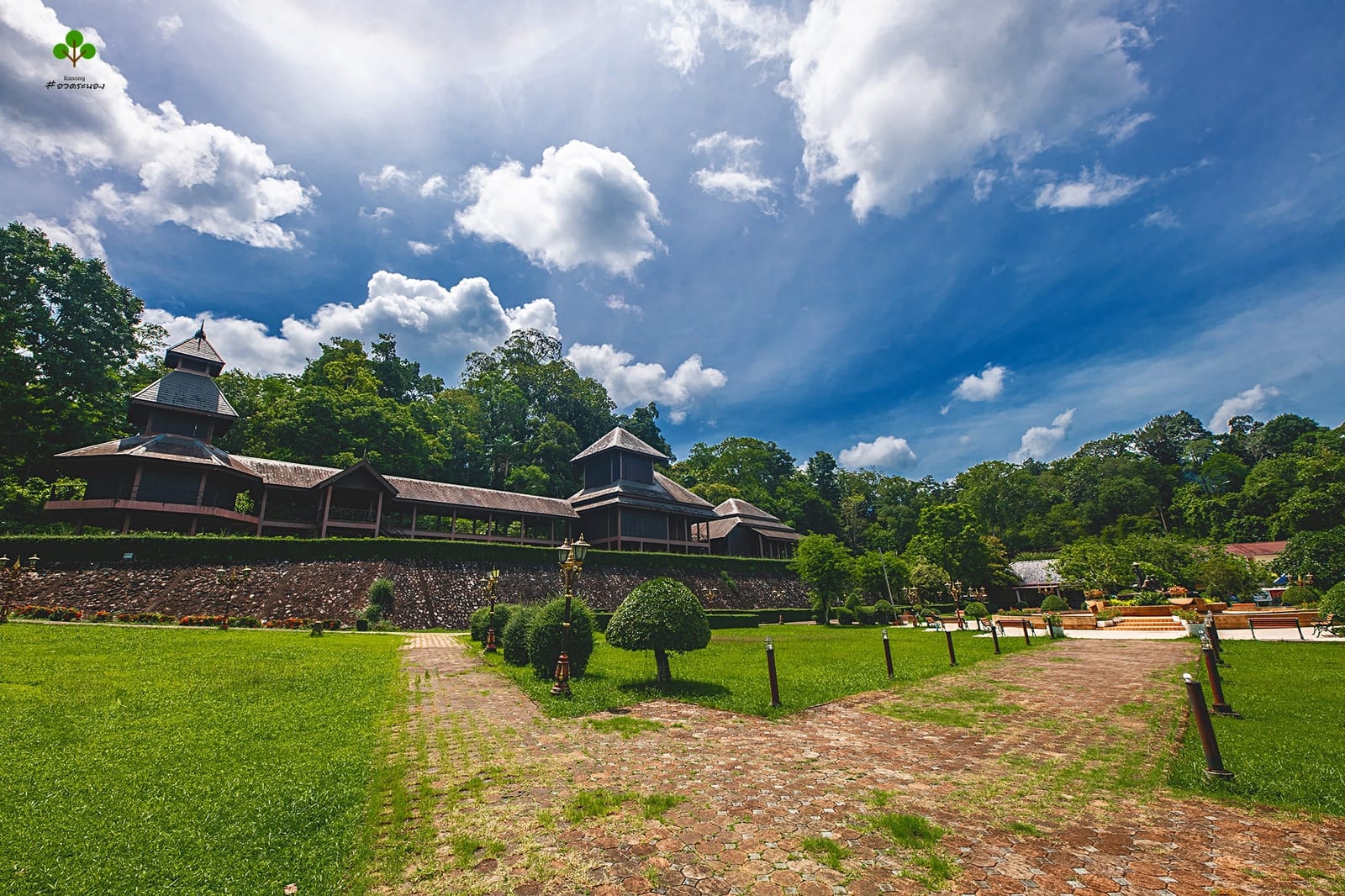
Rattanarangsan Palace (Replica) is a cluster of dark-brown timber buildings standing at the foot of Khao Niwet hill in central Ranong. Built as a memorial to royal visits and overnight stays by three kings — Rama V, Rama VI, and Rama VII — the structures are made of teak and golden teak, combining a European summer-house form with a Thai roof and a distinctive octagonal tower with a spiral staircase. It suits history enthusiasts, families who want to bring children for an educational outing, and photographers looking for unusual heritage architecture.
The must-see highlights are the royal bedchamber, the queen's chamber, and an exhibition of old royal photographs alongside the story of Ranong's historic tin-mining past. Reviews consistently describe the timber buildings as beautiful to walk through and surprisingly cool, with the surrounding grounds feeling like a public garden. A favourite corner is the continuation up to Khao Niwet Skywalk nearby — a panoramic viewpoint above the city that works particularly well in the late afternoon before sunset.
Entry fee: approximately THB 50 for Thai adults, THB 20 for children, THB 100 for foreign adults. The front courtyard is free to walk through. The buildings open Wednesday to Sunday, 09:00–16:00 — closed Mondays, Tuesdays, and public holidays. A practical note: arrive before the 16:00 close as access to the buildings may stop earlier. Dress modestly — cover shoulders and knees — and remove shoes before entering the timber structures.
Its popularity comes from a central location, walkable from town-centre accommodation, and the way it fits neatly into a half-day city itinerary. Plan roughly 30–45 minutes to walk through, then continue straight up to the Skywalk for the view. It's a landmark that packages history, beautiful timber architecture, and a viewpoint together in one area — worth it for those who want to understand Ranong beyond its beaches and hot springs.
Ranong Skywalk
If you want a great city-view photo in Ranong without climbing a mountain, Ranong Skywalk — also called Khao Niwet Skywalk — is the place. It's a new landmark that opened in early 2024 on Rattanarangsan Hill behind Rattanarangsan Palace in the city centre. The skywalk is a spiral elevated walkway that winds upward level by level; at the top the view opens fully in 360 degrees: the colourful rooftops of Ranong town spread out below, green mountain ridges in every direction, and in the distance the Andaman coastline. It suits photographers, those who prefer a relaxed outing, and families looking for a light activity in town.
The highlight many reviewers mention is the sunset angle. Reviews agree the late afternoon light is especially beautiful — some days the sky turns orange against a backdrop of green hills. Along the walkway there are large trees with ribbons tied by visitors, a pretty detail mid-path. The atmosphere is open and breezy. Walk all four corners and you get a different view from each. Come in the morning and there's a chance of catching thin sea mist drifting over the hillside. Budget 1–2 hours for a comfortable explore and photo session.
Free entry. Visitors are required to wear socks and change into provided footwear before climbing — if you don't have socks, there's a rental for around THB 10. Open daily 06:00–20:00. An elevator is available for elderly visitors or those who cannot climb the stairs; everyone else climbs from the car park below — moderate effort, nothing too demanding.
One note: Ranong is the rainiest province in Thailand — keep a compact umbrella or a light rain jacket with you. Sunday evenings and holidays can get busy; try arriving early for cleaner photos without crowds. Small children need close supervision. This became one of Ranong's most talked-about new check-in spots quickly, and the reason is simple — central location, easy access, and a view that genuinely rewards the walk up.
Kra Isthmus (Kra Buri)
Kra Isthmus — also called Kiu Kra locally — is the narrowest point of the Malay Peninsula, right along Phetkasem Highway (Highway 4) near the 545-kilometre marker at Ban Thap Li in Kra Buri district, about 66 kilometres from Ranong town. It functions as both a gateway marker and a provincial symbol. Most people who drive into Ranong from this direction stop here to photograph the large concrete monument that maps out the shape of the Kra Isthmus. It suits landmark chasers, check-in enthusiasts, and those curious to see in person what the narrowest point actually looks like.
The must-not-miss is climbing up to the elevated viewing platform and looking across the Kra Buri River to Myanmar, which is almost within reach. This river serves as the natural Thai-Myanmar border. At this point, the distance from the Andaman Sea to the Gulf of Thailand is roughly 44 kilometres — the origin of the long-discussed Kra Canal concept that has been raised since the Ayutthaya period. Another thing many people do is stop at the famous Thap Li Steamed Buns stall nearby — affordable and good for a snack before continuing the drive.
Free entry, no gate. Open 24 hours every day. Parking and basic facilities available. The atmosphere is quiet and calm — more of a 15–30 minute photo stop than a full-day attraction. Google rates it around 3.8, which directly reflects real reviews: visitors appreciate the river views and the geography, while some note the area is understated and not heavily developed, with limited food and drink available nearby.
Know before you go: some reviews point out plainly that the site is quiet and the facilities are modest — some structures are showing age and there is limited food and drink on-site. Bring water in the car. Frame this as a short stop to photograph and absorb the history and geography for 15–30 minutes, then continue into town for a proper meal. That framing gives the right experience.
Khao Fha Chee Viewpoint
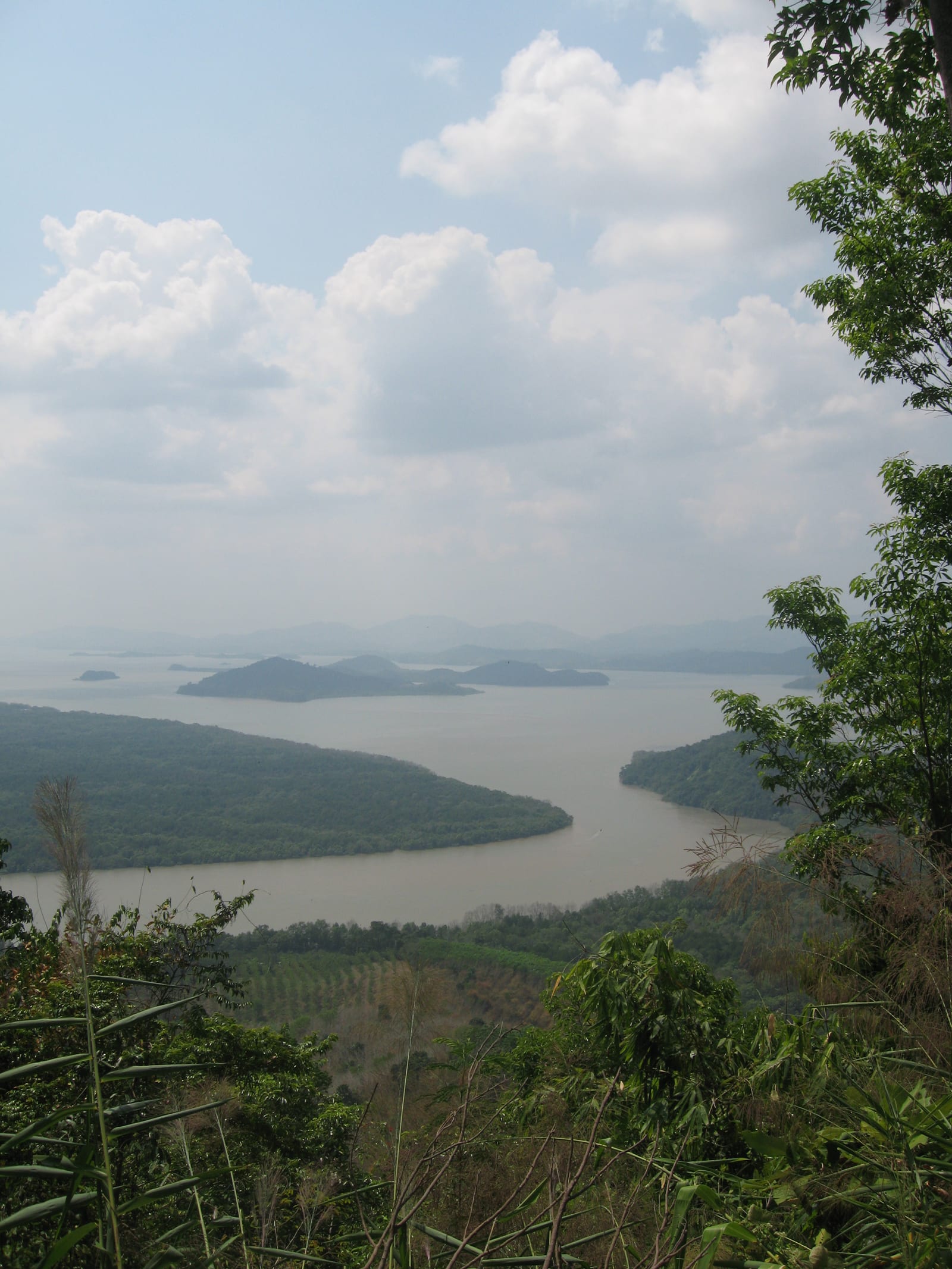
Khao Fha Chee Viewpoint is a hilltop shaped like an inverted cone sitting at around 259 metres above sea level, in Tambon Bang Kaew, La-un District, about 30 kilometres from Ranong town. Anyone who enjoys the cool early-morning air or watching a sunset should make note of this one — views often exceed expectations. The highlight is the angle looking down to where the Kra Buri River meets Khlong La-un as a wide river bend before running out to the Andaman Sea. On the opposite bank is Myanmar, with islands scattered as a backdrop.
The must-not-miss is the early-morning sea mist drifting above the water surface — particularly in the late rainy season to early cool season, November to December, when the chance of thick mist and beautiful light is highest. The late afternoon sunset is also popular; reviewers describe catching fishing boats making their way back to shore against the last light of the day. The atmosphere is calm and unhurried throughout, suitable for visiting alone, as a couple, or in a small group for photography.
Free entry, no admission charge, with a basic car park and facilities available. A café on the summit used to operate but many reviews indicate it is frequently closed — bring your own water and food for the trip up. The road to the summit is around 3 kilometres of paved road that is fairly narrow, steep, and full of bends. Pass oncoming traffic carefully, use your horn on blind corners, and take care with brakes on the descent.
From town, take Highway 4 (Phetkasem) towards Chumphon, around the 580-kilometre marker, and look for the sign for the telecommunications centre on Khao Fha Chee. Turn in and continue up. The site remains popular because the river-meeting-sea view is rare to find, combined with World War II strategic history connected to the area. Those who prefer nature that is calm and uncrowded tend to come back.
Ranong Walking Street
Ranong Walking Street is the weekly evening market that locals wait for all week. It runs along Rueang Rat Road in the old trading district — a street lined with Sino-Portuguese shophouses carrying a Chinese and Burmese atmosphere. It suits those who've just arrived in Ranong and want a relaxed evening walk, some local food, and the feel of a small town without hurrying. Foreign reviews on Tripadvisor consistently describe it as a genuinely local market with no excess of tourist-facing stalls and prices that reflect what residents actually pay. Easy, unhurried, and unpretentious.
The draw is the long spread of local food — fried chicken, mini kanom krok corn cups, unusual southern Thai sweets that are hard to find elsewhere, mango with chili-salt, and pink iced milk that multiple reviews single out as a must-try. What makes this different from a typical night market is a stage in the middle of the street where local cultural performances and live music from community groups rotate throughout every Saturday. There are seats nearby so you can stop, eat, and listen — the atmosphere is warm and neighbourly.
Open Saturday evenings only, approximately 17:00–22:00 (some festival periods are extended to include Friday or Sunday). After around 19:00 local residents come out in numbers and the street fills up. Free entry, no gate fee. Most food costs in the tens of THB per item — a few hundred THB covers a comfortable browse and meal. Located in the town centre, walkable from accommodation in the main area.
Things to know: this is a seasonal market — it's most active around December to April. Outside those months you may find only regular roadside shops rather than the full walking street. Check the municipal or market page before setting out to confirm it's running. If you drove, parking is difficult on Saturday evenings — reviews recommend arriving before 16:30 and finding a seat nearby to wait for the market to open.
Book Ranong tours and attraction tickets in advance
Covering multiple Ranong highlights in one day is much smoother with a tour that includes transport and a guide. No route planning, no driving stress. For island trips and Andaman snorkelling, pre-booking a boat or package through Klook or GetYourGuide locks in prices and skips any on-site queue — especially useful for visitors with limited time.
💡 Know before you go — Ranong
Attractions are spread out and public transport is limited. Grab is hard to find in Ranong. Rent a car or motorbike, or hire a driver for the day — especially for out-of-town destinations like Ngao and Kra Buri.
National park entry fees, parking, the Skywalk shoe rental, and most walking-street stalls require cash. Keep small notes and coins with you. ATMs are available in town but scarce near out-of-town attractions.
Ranong is Thailand's rainiest province. Always carry an umbrella or a light rain jacket. The waterfall and Grass Mountain look best in the wet season, but paths can be slippery — wear shoes with good grip. For a Koh Phayam trip in low season, check whether the ferry is still running before you go.
Khao Fha Chee and Grass Mountain are at their best from early morning until late morning — cooler air and the chance of sea mist. Avoid the harsh midday sun and afternoon crowds.
Wat Ban Ngao is a sacred site. Cover shoulders and knees, remove shoes before entering the ubosot, and keep your voice down inside the temple grounds.
Ranong is a smaller province. English signage and menus are limited outside hotels. Save offline maps and Thai place names on your phone — Google Translate is very useful for conversations with locals.
Plan an efficient Ranong trip in 1–2 days
Ranong's attractions split into clear zones — routing by zone saves time. Island day (full day or overnight): If you have the time, set aside a dedicated day for Koh Phayam. Take the boat from Pak Nam Ranong Pier and spend it swimming at Ao Yai and Ao Khao Kwai and watching the west-facing sunset. Check boat schedules and book accommodation ahead, especially in high season.
Half-day in town: Start at Raksawarin Hot Spring inside Khao Niwet Public Park — walk the lush grounds and soak your feet in the mineral spring. Then stop at Rattanarangsan Palace (Replica) at the foot of Rattanarangsan Hill, and continue up to Ranong Skywalk for the city view in the late afternoon — note that the Palace is closed Monday and Tuesday. Half-day in the Ngao direction: Drive along the Ranong–Phang Nga road and collect the Grass Mountain, Wat Ban Ngao (pay respects to Luang Pho Tibuk, walk the naga staircase, watch the fish pond), and Ngao Waterfall — all close together. If time allows, add Kra Isthmus in Kra Buri and Khao Fha Chee Viewpoint in La-un, the latter requiring an early morning start for the sea mist. Ranong Walking Street on Rueang Rat Road opens Saturday evenings — plan it as a dinner to close the trip.
Covering Ranong's highlights with one or two nights in town is far more comfortable than rushing in a single day. Every zone is reachable and back by evening. We've gathered well-located Ranong accommodation with price comparison links.
Browse Ranong Hotels →