🔄 Last checked 27 Jun 2026 · details and hours can change — check the venue before you go
📍 All restaurants on the map
Tap a pin for the spot + nearby stays
The appeal of Roi Et is that it's an easy-going city with standout sights scattered right across the province. Many of them cluster in the town centre around Bueng Phlan Chai, an island park in the middle of the lake that acts as the city's lungs — you can spend the whole day strolling, pedal-boating, and feeding the fish. On one side of the lake stands Ho Hote 101, an observation tower shaped like the hote, an Isan reed instrument, soaring into the sky so you can look out over the whole city in 360 degrees. By evening the town centre offers Saket Nakhon Walking Street and Wat Pa Kung to eat and shop your way through. For spiritual travellers and view-seekers, drive out of town to pay respects at Phra Maha Chedi Chai Mongkhon on a mountain in Nong Phok, stop at Luang Pho Yai at Wat Buraphaphiram, and lie back on the white-sand beach at Bueng Kluea, a real 'Isan Sea'. You can string together temple runs, town life, nature, and history all in one trip.
This list has the pins you shouldn't miss in Roi Et — like Ho Hote 101, a 101-metre observation tower with a glass-floor skywalk on the 34th floor overlooking Bueng Phlan Chai and the whole town; Phra Maha Chedi Chai Mongkhon at Wat Pha Nam Thip, a white great chedi decorated with gold patterns, 101 metres on each side and 6 storeys tall, designed by the Fine Arts Department; and Luang Pho Yai at Wat Buraphaphiram, the tallest standing blessing-posture Buddha in Thailand, visible from far off. Out of town there's also Bueng Kluea, a white-sand beach nearly a kilometre long that people call the Isan Sea; Prang Ku and Ku Ka Sing, ancient Khmer-art monuments; and Thung Kula Ronghai, a source of top-grade jasmine rice with rice-field views stretching to the horizon. Scroll through the details spot by spot and plan your own route.
Ho Hote 101 (Roi Et Observation Tower)
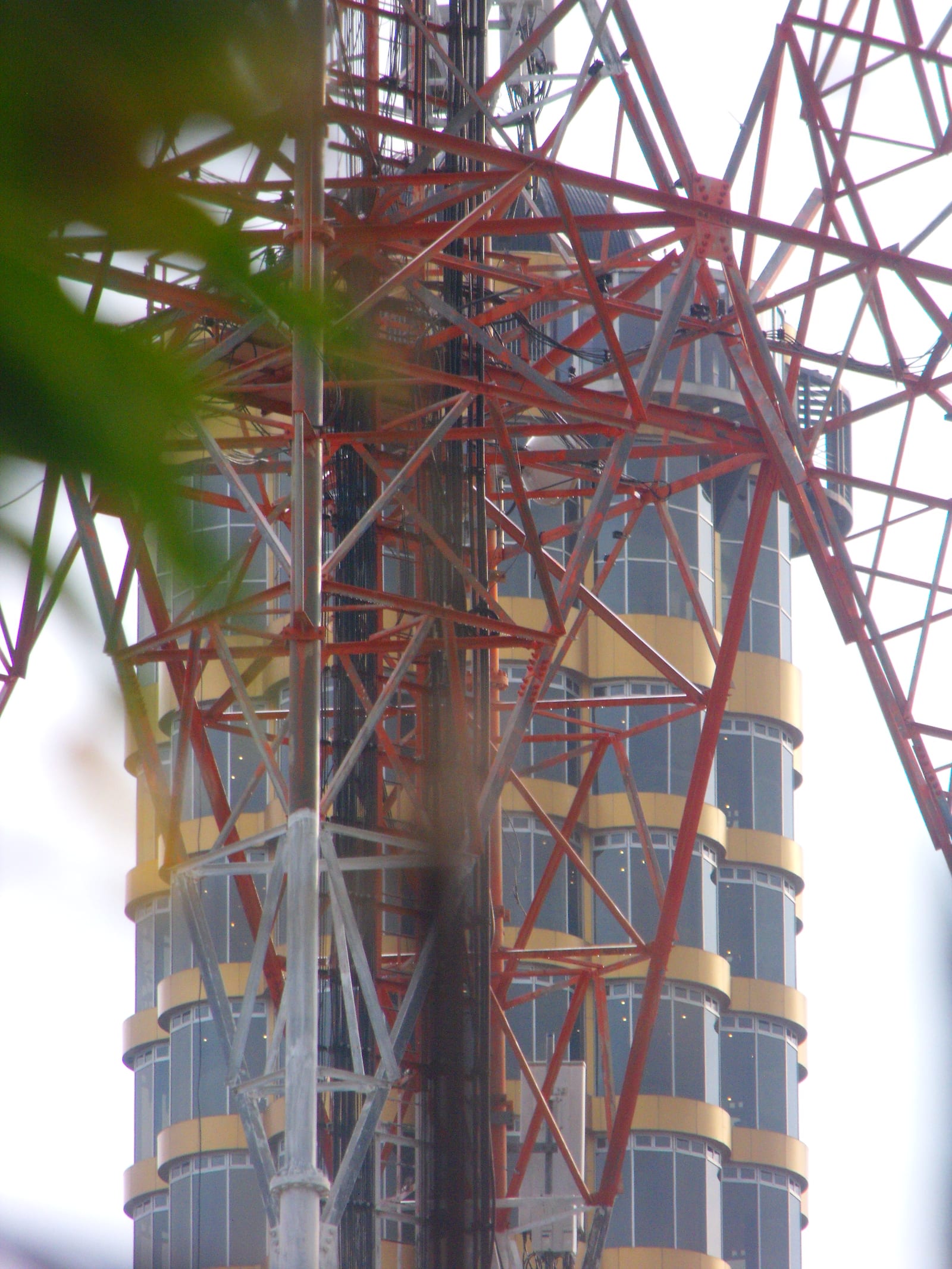
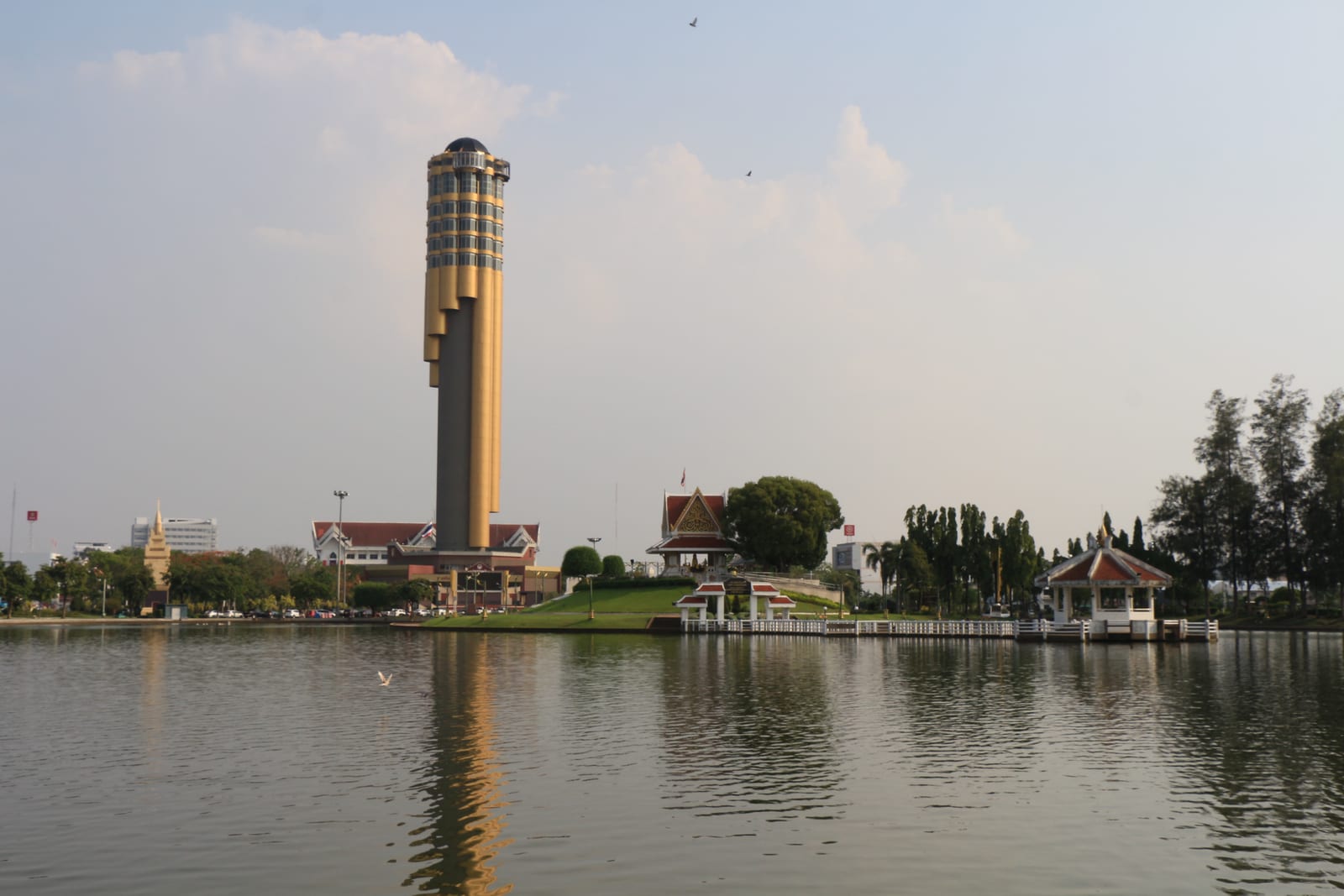
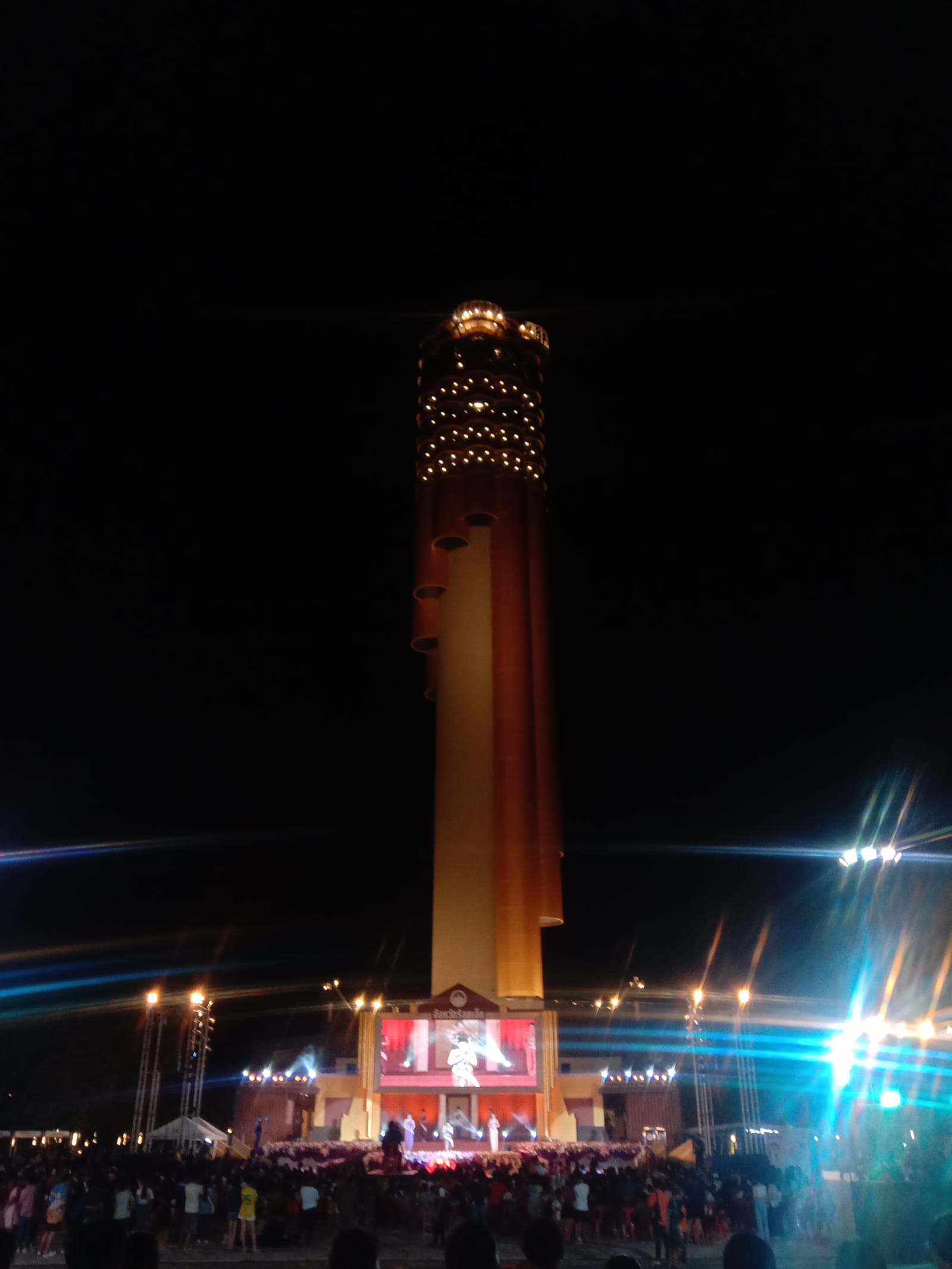
Come to Roi Et and skip Ho Hote 101 and it's like you never really arrived, because this is the landmark you can see standing out from far away — a city viewing tower shaped like the hote, a traditional Isan reed instrument, 101 metres tall to match the province's number. It sits in the middle of Somdet Phra Srinagarindra Park, right beside Bueng Phlan Chai in the town centre. It's ideal for anyone who wants to see the whole of Roi Et from an angle you can't get anywhere else, whether you come solo, with family, or as a couple hunting for a beautiful view.
The highlight you can't miss is riding the lift to the air-conditioned 360-degree viewpoint on the 31st floor, looking out over Bueng Phlan Chai, the town, and the surrounding fields in every direction, then continuing to the clear glass-floor skywalk on the 34th floor — plenty of people say their legs shook but they loved it. This high-angle scene is what reviewers talk about the most. For the brave there are now zipline and tower-jump activities too, while easy-going visitors can wander the city museum, café, and souvenir shops inside the building.
Entry is 50 baht for adults, 40 baht for students and seniors, with free entry for small children and the very elderly — well worth it for the view. It's open for visits from around 9am to 6pm daily. The location is right in the centre of town, easy to reach, with plenty of parking as many reviewers note. For the best light, come in the late afternoon near sunset, when the city slowly changes over to its beautiful night lights.
A couple of things to know: it gets busy on long weekends and Saturdays and Sundays, so you may have to queue for the lift, and the outdoor viewpoint is fairly windy. Anyone afraid of heights may need to steel themselves standing on the glass floor. Overall, though, it's a great-value stop — if you're passing through Roi Et, it's worth going up at least once.
Bueng Phlan Chai
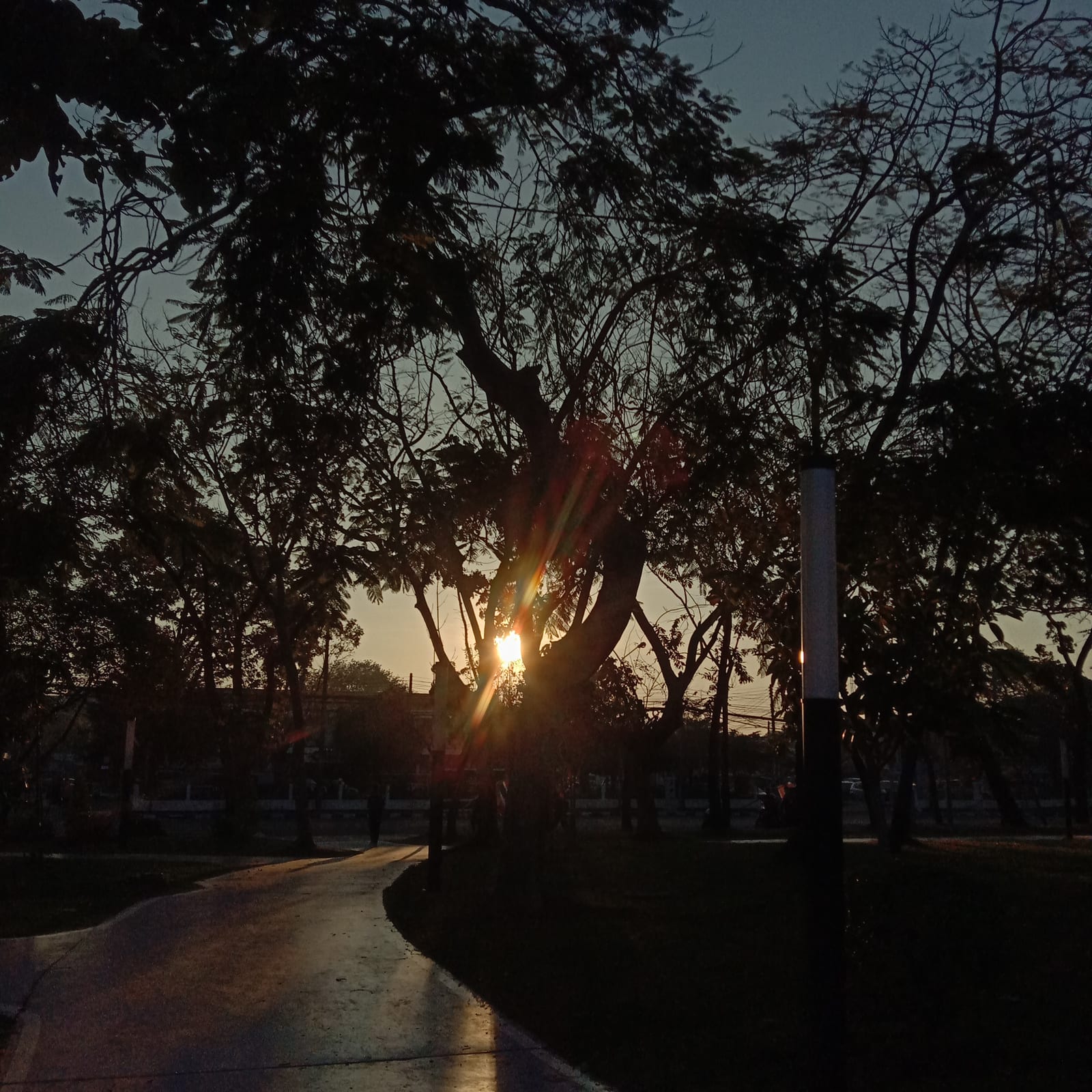
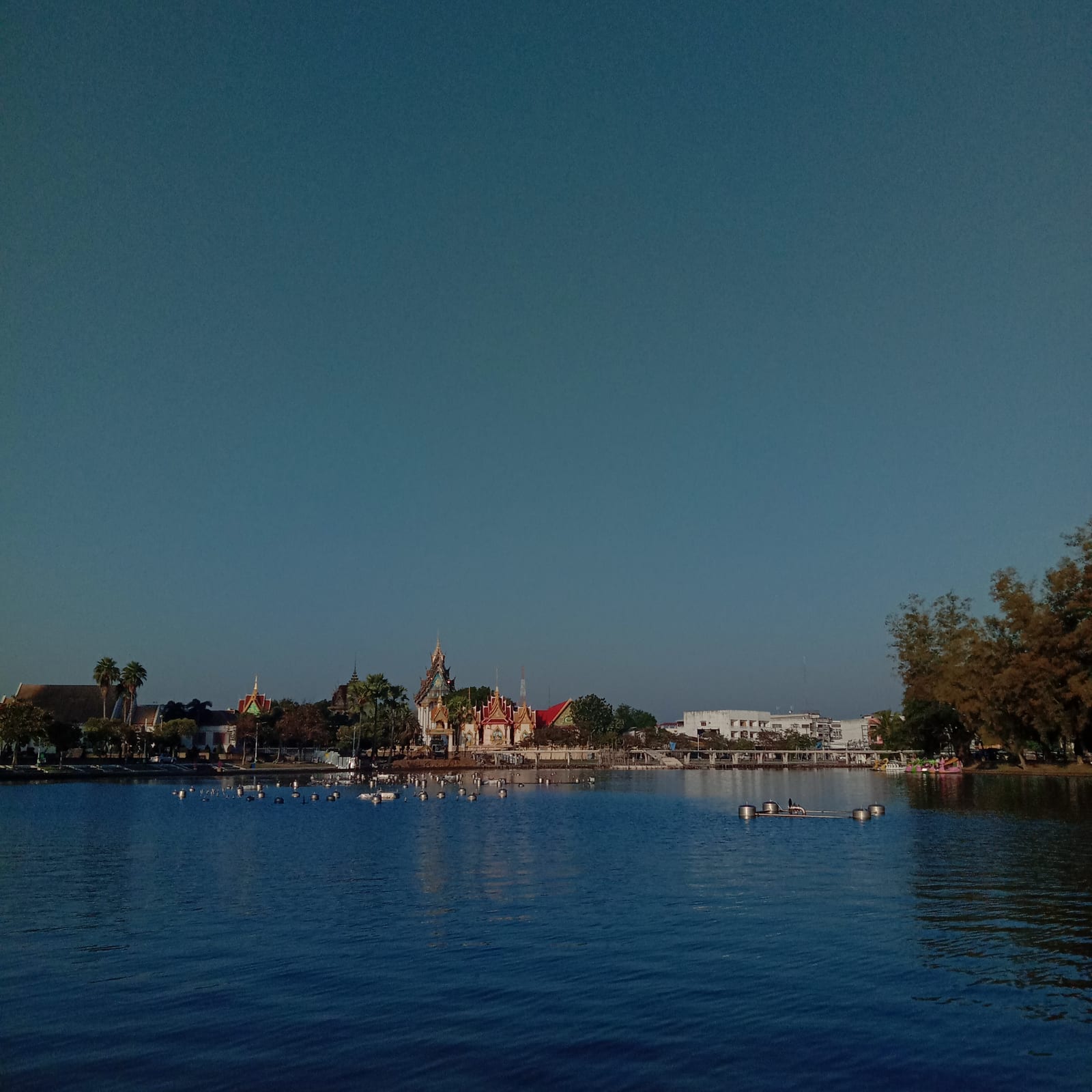
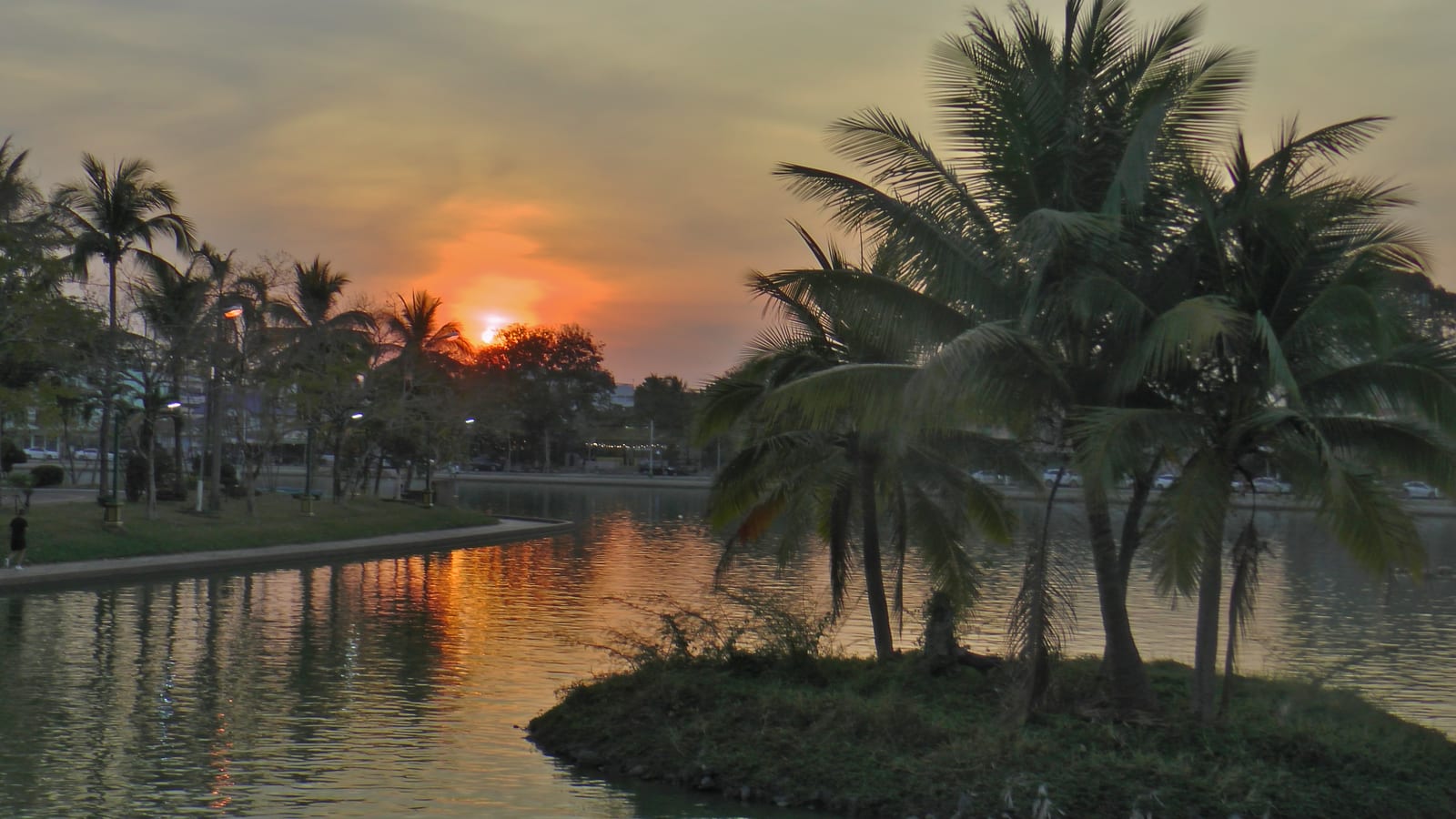
Ask a local in Roi Et where to go for a stroll and almost everyone will answer the same thing: Bueng Phlan Chai, the large island park in the middle of a lake in the town centre that works like the lungs and living room of the whole province. The lake is very wide, with an island in the middle laid out as a flower garden and shaded by big trees, ringed by a walking, running, and cycling path about 2 kilometres around. It suits families, exercise lovers, and travellers who want to soak up the city's easy-going atmosphere.
The highlight you can't miss is pedal-boating out onto the lake and feeding the fish (boat rental is cheap), walking across the bridge to pay respects at the City Pillar shrine that Roi Et people revere, and stopping to see the large walking-posture Buddha image amid the flower garden, the flower clock, and the model waterfall. Kids get a playground and a fitness park to run around in. If you want a high-angle view, walk a little further and you'll reach the Ho Hote 101 tower, from which you can look down over the whole lake.
Genuine reviews agree the place is clean, well kept, with plenty of parking, enough lighting, feels safe, and is full of pretty photo spots. Many say the evening and dusk atmosphere is especially lively, with people running, playing basketball and futsal, and sitting by the water catching the cool breeze. Some foreign reviews even compare it to Lumphini Park in Bangkok.
As for entry, walking in is free of charge, open 24 hours, though the popular times are early morning and evening. It sits in Tambon Nai Mueang, Mueang Roi Et — right in the centre of town, convenient to get anywhere. One small note: during the rainy season the lake water can look murky, and if you come to feed the fish or pedal-boat, come midday to evening when the rental shop is open. Bring an umbrella or hat if you come at midday when the sun is strong.
Phra Maha Chedi Chai Mongkhon (Wat Pha Nam Thip Thep Prasit Wanaram)
 Photo by Seksan Phonsuwan via Wikimedia Commons (CC BY 3.0)🔍 Tap to zoom
Phra Maha Chedi Chai Mongkhon at Wat Pha Nam Thip Thep Prasit Wanaram is a magnificent white great chedi decorated with gold patterns, set on the summit of Khao Khiao in the Phu Phan range, in Nong Phok District about 80 kilometres from Roi Et town. The chedi was designed by the Fine Arts Department — a contemporary style blending Phra Pathom Chedi with Phra That Phanom — 101 metres wide, long, and tall on each side (about 109 metres including the gold pinnacle), with 6 storeys in all, ringed by eight smaller chedis in all eight directions. It suits temple-goers, those seeking blessings for good fortune, people who love beautiful architecture, and families who want wide mountain views.
The highlight many people talk about is walking up floor by floor — each level decorated with stucco patterns and gilded work so exquisite it feels like being in a celestial palace. There's a lift service to nearly every floor, except the very top which you reach on foot. Genuine reviews agree the view from the upper floor is beautiful, with lush green forested mountains stretching to the horizon, especially on a clear day. The atmosphere up there is quiet and peaceful, with a cool breeze, ideal for sitting and clearing your mind. Almost everyone photographs the white chedi against the sky.
Entry is free, no admission charge, open daily from about 06:00–18:00 (some sources list 08:00–17:00). One thing to know is that you have to park at the lot below and take a temple vehicle up to the chedi at the top — the road is fairly steep, being a mountain, so allow time for the drive, and a clear day gives you the best views. Dress modestly as this is a sacred site, and allow about 1–2 hours to visit.
It's popular because it's a landmark of Roi Et province, one of the largest and most beautiful great chedis in the Isan region, and revered by locals. On Google Maps it scores around 4.7 from over a thousand reviewers. Many say it exceeded their expectations and was worth the long drive — if you're passing through Roi Et, it's worth making the stop at least once.
Wat Buraphaphiram (Luang Pho Yai / Phra Phuttha Rattana Mongkhon Maha Muni)
 Photo by Supanut Arunoprayote / Wikimedia Commons (CC BY 4.0)🔍 Tap to zoom
Wat Buraphaphiram is a royal temple in the centre of Roi Et that everyone stops by, because it enshrines Luang Pho Yai, or Phra Phuttha Rattana Mongkhon Maha Muni, the tallest standing blessing-posture Buddha in Thailand. The image alone measures 59 metres 20 centimetres from feet to head, and nearly 68 metres including the base — as tall as a building of dozens of storeys — standing out so much you can see it from almost anywhere in town. It's ideal for those who want to pay respects and make wishes, merit-makers, families bringing elders to make merit, and travellers who want to collect the province's signature landmarks.
The highlight you can't miss is walking right up to stand beneath Luang Pho Yai and looking up. Many reviews agree the same thing: 'up close it's so big you can't fit it in the frame' — you have to step way back to capture the whole image. At the base there's also a museum to walk through, and behind it a chedi enshrining Buddha relics, plus a reclining Buddha (Phra Phuttha Saiyat) beneath a large tree like a little cave, along with images for each birthday to venerate. One loop lets you both pay respects and take lovely photos.
The temple grounds are spacious, shaded, and clean; genuine reviews praise the convenient parking and easy walking, with no need to climb lots of stairs. Entry is free, with only donation boxes and stalls selling flowers, incense, and candles as your faith moves you — the real budget is practically zero. Open daily from around 05:00 in the early morning until about 19:00 in the evening. It sits on Phadung Phanit Road, Tambon Nai Mueang, only a few kilometres from the town centre and bus terminal — easy to reach by car or songthaew.
This temple is popular because it's both a sacred symbol of the city and a memorable photo spot. It scores around 4.4 on Google from several hundred reviews and always ranks among the top attractions in Roi Et. One small note: this is a religious precinct, so dress modestly, and in the morning and evening when the sun is softer the image photographs more beautifully than at midday. If it's your first time in Roi Et, this is the first pin to plant.
Bueng Kluea (the Isan Sea)
If you think Roi Et has no sea, stop by Bueng Kluea — which locals casually call the Isan Sea — once and you'll change your mind. It's a very large freshwater lake of about 7,500 rai that holds water all year round. What earns it the 'sea' name is the white-sand beach along the western shore, stretching nearly 1 kilometre. Walk along the beach, look out at the water spreading as far as the eye can see, feel the cool breeze, and it feels much like being at a real sea, even though you're in the middle of Isan. It suits families bringing kids to swim, groups of friends who want to chill, or anyone looking for a quiet spot to relax close to nature.
The highlight you can't miss is the floating raft restaurants lined up along the shore — order bold Isan dishes, som tam, grilled fish, koi, and larb, and eat while looking out over the water. Kids love the pedal boats and 'caterpillar' boats to paddle around the lake, while those who like to swim can wade in from the sandy beach. The atmosphere is easy-going and down-to-earth rather than fancy, but it's friendly and full of natural views. The evening, when the sun is softer and the light is beautiful, is when most people come, because the air starts to cool and the sunset over the water is lovely.
The budget is very light: entry to the area is free, no admission charge, and you only pay for the raft-restaurant food and pedal-boat/water-play rentals as used. Coming in a group and sharing makes it even better value. It sits in Tambon Bueng Kluea, Selaphum District, a fair distance from Roi Et town, so you'll need to drive. It's open for visits daily from about 09:00–18:00 (some raft restaurants gradually close in the evening).
A small note: this is also a wild-duck conservation area, and in the cool season water birds come to shelter here to watch. Please help keep it clean and don't throw rubbish in the lake. The water level and beach width change with the season — in the dry season the sandy beach is wide and better for swimming. The midday sun is fairly strong, so bring a hat and umbrella to be much more comfortable.
🛏️ Hotels in Roi Et — Stay in the town centre by the lake or near the tower
To make the most of a Roi Et trip, stay a night — you can stroll along Bueng Phlan Chai at dusk, ride up Ho Hote 101 to see the town at sunset, and pay respects to Luang Pho Yai in the morning while the crowds are thin. The popular hotels cluster in Roi Et town around Bueng Phlan Chai, an easy walk to the tower, Saket Nakhon Walking Street, and Wat Pa Kung. There are both town-centre hotels and boutique-style stays. Picking a location near where you want to start the first morning gives you the best value. Compare prices and reviews before you book.
🔍 Check Roi Et Hotel Prices (Agoda)Saket Nakhon Walking Street
If you happen to be in Roi Et on a Friday or Saturday evening, locals will point you first to Saket Nakhon Walking Street, the town centre's biggest cultural walking street. The name 'Saket Nakhon' comes from Roi Et's old name in the Urangkhathat legend, meaning 'the city of a hundred and one gates', so it became a market name locals are proud of. The vibe here is relaxed and easy to walk, suiting foodies, handmade-goods shoppers, and families who want to bring the kids for an evening stroll.
The highlight you can't miss is the Isan local food and snacks on offer everywhere — savoury dishes, sweets, fresh juices, and herbal drinks. Many genuine reviews praise the clear zoning of a food area and a clothing area, easy to walk without getting confused. Another corner many people love is the handmade shops and youth-fashion clothing at friendly prices. Some evenings there's also live music to enjoy as you walk. It's a market that Roi Et people actually come to, not just a tourist one.
The budget is very easy: free entry, and a couple of hundred baht of eating and shopping will fill you up. It's in the centre of town on Ratchuprakan Road, Tambon Nai Mueang, Mueang Roi Et, near Robinson mall and Bueng Phlan Chai, and it's not hard to find parking nearby. It opens in the evening until night, roughly 16:00–21:00, focused on Fridays and Saturdays; come in the early evening when all the stalls are open and the air is pleasantly cool.
A small note: the opening days and times can shift with the season and the organiser's announcements, and at times the market gets a facelift or moves location. Before you go, check the market's Facebook page again so you don't miss it. Coming on a Friday or Saturday evening is the liveliest time with the fullest range of stalls.
Wat Prachakhom Wanaram (Wat Pa Kung)

If you think you have to fly all the way to Indonesia to see a Borobudur-style chedi, stop by Wat Pa Kung in Si Somdet District first. This temple has a large sandstone stupa-chedi drawn directly from the inspiration of the great Borobudur chedi. The story goes that Luang Pu Sri Mahaviro, a meditation-tradition monk of Roi Et, once carried out religious duties at Borobudur in 1988 and was so impressed by its grandeur that he began building this chedi in 1992.
The point people talk about most is that the chedi is made of natural sandstone, said to be the first large sandstone chedi in Thailand. The walls around the chedi are carved with scenes of the Buddha's life and the Vessantara Jataka — you can wander from panel to panel taking it all in. Inside, Buddha relics brought from India are enshrined. Spiritual visitors also often come to pay their respects and ask blessings from Luang Pu Sri here, as he has long been revered by the people of Isan.
The overall atmosphere is that of a forest temple — shaded, quiet, and peaceful — suiting those who want a calm spot rather than a crowded temple. It's especially lovely in the morning and evening when the sun is soft and the sandstone colour sets off beautifully against the sky, ideal for architecture photographers. Dress modestly as this is a temple precinct, and allow a little time to walk around and study the carving detail so you don't rush past the good parts.
Getting there from Roi Et town via Si Somdet District isn't far, and driving yourself is easiest, with a spacious car park. Entry is free, no admission charge. If you're planning a temple-and-spiritual trip in Roi Et, this is a pin you shouldn't skip.
Prang Ku (Prasat Nong Ku)
 Photo by Adriaan Castermans (via Panoramio) / Wikimedia Commons, licence CC BY-SA 3.0🔍 Tap to zoom
If you want to collect a Khmer-style monument without driving far from Roi Et town, Prang Ku — which locals casually call Prasat Nong Ku — is a very handy pin. It's within Wat Si Rattanaram, Ban Yang Ku, Tambon Ma-ue, Thawat Buri District, only about ten-plus kilometres from town — drive out towards Roi Et Airport and turn off into the lane in no time. It suits history lovers, people who like photographing old sanctuary ruins, and families who want a quiet stop along the way. The prang was built of laterite in the reign of King Jayavarman VII, close to a thousand years old, part of a group of buildings believed to be an 'arogayasala', a hospital of the ancient Khmer empire. The Fine Arts Department registered it as a national heritage site back in 1935.
The highlight you can't miss is the laterite main prang standing prominently in the middle of the temple courtyard, enclosed by a wall and with a gopura gateway arch in front. Beyond it are a rectangular library building and a laterite pond (baray) in front of the entrance, where many like to find an angle that reflects the sanctuary. Most visitor reviews agree it's a small Khmer sanctuary but in fairly complete condition. Inside the prang there's a Buddha image to venerate, and walking around it takes less than an hour to cover.
The overall atmosphere is quiet and shaded, as it's within a temple. Entry is free, no charge, with convenient parking. Open daily from about 08:00-18:00. It's especially lively during the traditional 'Bun Song Ku' festival that villagers hold every year around the fifth lunar month (the 15th waxing day), with a water-pouring ceremony and local activities. If you want to see it busy, come then.
A small note: this is a heritage site within a temple, so dress modestly and help keep it clean. The sanctuary isn't large, so if you make it your only destination it may feel small, but as a stop along a Roi Et trip combined with other Khmer monuments in the province it's worthwhile and full of history-lover atmosphere. Come in the morning or evening when the sun is soft for the best photos and the easiest walking.
Ku Ka Sing
 Photo by Dominique Dalbiez (Ddalbiez) / Wikimedia Commons — CC BY 3.0🔍 Tap to zoom
If you drive down to the south of Roi Et around the Thung Kula Ronghai plains, Ku Ka Sing is a pin history lovers shouldn't miss. It's a fairly large, well-preserved group of Khmer-style sanctuaries, set within Wat Burapha Ku Ka Sing, Ban Ku Ka Sing, Kaset Wisai District. It suits people who love heritage sites, who enjoy studying old craftsmanship, or who want to learn a bit about Isan's Khmer history without the crowds. Families or easy-going visitors can walk it comfortably, as the courtyard is wide and shaded within the temple.
The highlight you can't miss is the three prangs set in a row on the same laterite base along a north-south axis, facing east, with the largest central main prang, which once enshrined a Shiva lingam. There are library buildings (viharns) flanking both sides, enclosed by a wall, with gateway arches in all four directions and a horseshoe-shaped moat. The buildings are made of laterite and brick, decorated with sandstone carved in lotus-petal patterns, apsaras, hermits, and model prangs at the tiered roof corners — Khmer art of the Baphuon-Bayon style, around the 16th Buddhist century. Originally built as a Hindu sanctuary dedicated to Shiva, an excavation in 1990 also uncovered a Ganesh, a sandstone Shiva lingam, and gold ornaments.
The atmosphere is quiet in the way of a provincial heritage site, not crowded. Most reviews praise the retro feel and how you can still see traces of its former beauty and grandeur. Some prang tops have collapsed over time, but the main structure is intact and the Fine Arts Department has restored it well. There's no entry fee, it's open for viewing during the daytime every day, and there's a car park within the temple.
One thing to know is that it's a fair distance from Roi Et town — drive along Highway 214 towards Kaset Wisai, then turn into the village for another 10 kilometres or so. Come in the morning or evening when the sun is soft for the best photos and less heat, and dress modestly as it's within a temple. As a bonus, this area is the Thung Kula Ronghai community famous for jasmine rice and silk, so after the sanctuary you can easily go on to see the local way of life.
Thung Kula Ronghai
Thung Kula Ronghai is the legendary wide plain of Isan — an area of over 2 million rai spanning 5 provinces, and the Roi Et side that people stop at most is around Kaset Wisai and Suwannaphum districts in the south of the province. The name sounds sad, because it's said that in the old days it was a dry, barren plain so harsh that even the wandering Kula people couldn't manage to walk across it. But these days it has turned into the country's most famous jasmine-rice-growing area — the salty, sandy soil and the climate here make the rice especially fragrant, so much so that it's earned GI registration. It suits road-trippers who want rice-field views stretching to the horizon, and anyone who wants to buy genuine jasmine rice to take home.
The highlight is the rice-field scenery so wide that the horizon meets the ground. The most beautiful time is late rainy season into early cool season, around November–December, when the rice heads out golden across the whole field. Many people on Pantip reviews say you can drive along the Kaset Wisai routes and keep pulling over to photograph the paddy edges. Early morning you'll find a thin mist floating over the fields, while in the evening the golden light on the rice heads is beautiful. The things you can't miss are photographing the wide-field view, stopping at Kuchinarai / community rice shops to buy genuine Thung Kula jasmine rice, and, if you come during harvest, seeing the real farmers' way of life.
This is an open plain with no entry fee, no closing gate — you can come any time of day, but the best times are morning and evening because the midday sun is strong and very hot. It sits a fair distance outside Roi Et town, so you should drive your own car or rent one, as the photo spots are spread along the paddy edges and rural roads rather than in one central place. The Facebook page 'Thung Kula Ronghai at Kaset Wisai' regularly updates the field's conditions and local activities, so it's worth checking before you go.
It's popular because it's the true image of Isan — wide fields, clear skies, fragrant rice, and the legend that makes people want to see it with their own eyes. Things to know: coming here is about the view and the atmosphere, not a place with full facilities, so bring water, a hat, and sunscreen, and fill up the fuel tank, as petrol stations and shops are fairly far apart. Come in the green-rice or golden-rice season for the best views.
🎫 Roi Et Tickets, Tours, and Activities
If you'd rather see several Roi Et spots without planning it yourself or driving out of town, look at tickets and guided tours with pickup through Klook or GetYourGuide. There are in-town trips, attraction tickets, and airport-transfer packages you can book ahead, with no queueing on the spot. Perfect for anyone who wants an easy trip and to cover Ho Hote, the great chedi, and Thung Kula Ronghai all in one go.
💡 Know Before You Go: Roi Et
The town-centre sights in Roi Et are within walking distance of each other, but Phra Maha Chedi Chai Mongkhon, Bueng Kluea, and Thung Kula Ronghai are out of town in different directions. Public transport is limited, so the most convenient way is to rent a car or motorbike. Grab is very scarce in Roi Et — have your transport sorted before heading out of town.
Temples, food at Saket Nakhon Walking Street and Wat Pa Kung, and pedal-boat rental at Bueng Phlan Chai are mostly cash-only. Carry small bills for Ho Hote entry, parking, roadside snacks, and temple donation boxes. ATMs are easy to find in town but rare at attractions out of town.
Midday in Roi Et is sunny and hot; going up Ho Hote 101 in the evening lets you see the town and Bueng Phlan Chai at sunset, which is more beautiful. Saket Nakhon Walking Street is evenings only and Wat Pa Kung opens Friday-Sunday, so if you plan to walk them, schedule around the right days.
Phra Maha Chedi Chai Mongkhon and Wat Buraphaphiram (Luang Pho Yai) are sacred sites where people genuinely come to worship. Cover shoulders and knees, remove your shoes where the signs indicate, and keep quiet within the viharns and the chedi.
Outside the main attractions, English signs and menus are rare. Bring a translation app to help, or point at pictures at markets and Isan eateries to get by. Most Roi Et locals are kind and patient with visitors.
Thung Kula Ronghai is a famous source of top-grade jasmine rice. If you drive south to Kaset Wisai-Suwannaphum, stop to buy Thung Kula jasmine rice as a gift — it's a signature product you won't find quite the same elsewhere.
Plan Your Roi Et Trip to Get the Most Out of It
Roi Et is easy to visit because the standout town sights cluster around Bueng Phlan Chai. Stroll along the lake, pedal-boat, then cross over to ride up Ho Hote 101 for the 360-degree city view and the glass-floor skywalk, all in one area. That leaves paying respects to Luang Pho Yai at Wat Buraphaphiram, which is also in town, so half a day covers it all. In the evening, follow up with Saket Nakhon Walking Street (evenings only) or Wat Pa Kung (open Friday-Sunday) to graze on Isan food.
If you have more than a day, then drive out of town. For spiritual travellers and view-seekers, head to Phra Maha Chedi Chai Mongkhon at Wat Pha Nam Thip in Nong Phok District, on a mountain to the northeast, where you can walk the 6-storey white great chedi and see the forested-mountain views. For swimming and relaxing, go to Bueng Kluea, the Isan Sea, in Selaphum District, with its white-sand beach and floating raft restaurants. And for history and rice-field lovers, drive south to Kaset Wisai to collect Ku Ka Sing, Prang Ku, and Thung Kula Ronghai, with its horizon-spanning views, all in one area. Plan the out-of-town spots so they run in the same direction to save the most time.
A day trip to Roi Et is fun, but staying a night in the town centre lets you stroll along Bueng Phlan Chai at dusk, ride up Ho Hote to see the town at sunset, and in the morning drive out to pay respects at the great chedi or relax on the Bueng Kluea beach. Compare prices and reviews for Roi Et hotels before you book.
🔍 Check Roi Et Hotel Prices (Agoda)