🔄 Last checked 26 Jun 2026 · details and hours can change — check the venue before you go
📍 All restaurants on the map
Tap a pin for the spot + nearby stays
Sa Kaeo's appeal is the combination of unusual natural landforms and ancient civilisation in the same province. Drive into Ta Phraya and you reach Lalu — earth columns and cliffs sculpted by thousands of years of rain and wind into bizarre, ever-changing shapes across more than 2,000 rai. You ride a local three-wheeled vehicle from point to point, photographing all day. Further into the province, Pang Sida National Park sits inside the Dong Phayayen–Khao Yai World Heritage Forest, with waterfalls, butterfly trails, and a stargazing campsite. Khao Chakan is three ancient limestone peaks in a row, filled with more than 70 caves, resident monkeys, and a million-strong bat colony that pours from the caverns at dusk. And a skywalk at Wat Khao Singto gives 360-degree views of the city from a gentle hilltop. The key spots sit across just a few districts and can be linked into a logical route.
This list covers every pin you should not skip. Sdok Kok Thom Historical Park in Khok Sung is the largest Khmer stone temple in Eastern Thailand — sandstone and laterite built in the Kleang-Bapuon style roughly a thousand years ago, fully restored using the anastylosis method, with a sunrise-through-the-gate phenomenon twice a year. Rong Kluea in Aranyaprathet is the largest border market in Eastern Thailand, where visitors come specifically to browse second-hand branded goods, clothing, bags, and wholesale food. Wat Tham Khao Chakan lets you climb about 300 steps to worship inside a cave and then stay to watch a million bats stream from the openings at dusk. For merit-makers there is Nanattham Sathan, where 320 large white Buddha statues are arranged across an open compound, and the easy hillside Tha Krabak Reservoir just past Pang Sida for calm waterside afternoons. Read each spot below and build your own route.
Lalu (Earth Pillars)
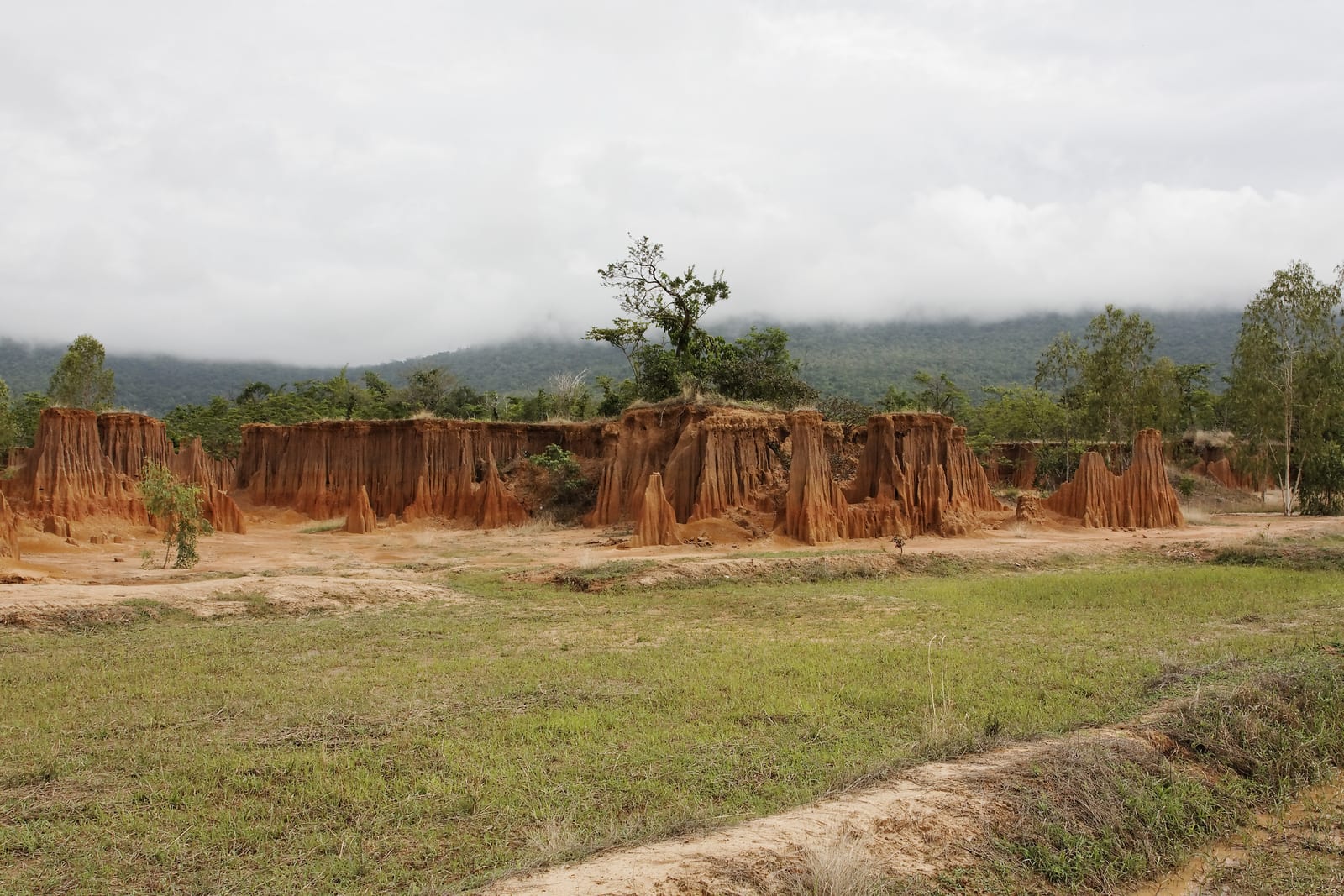
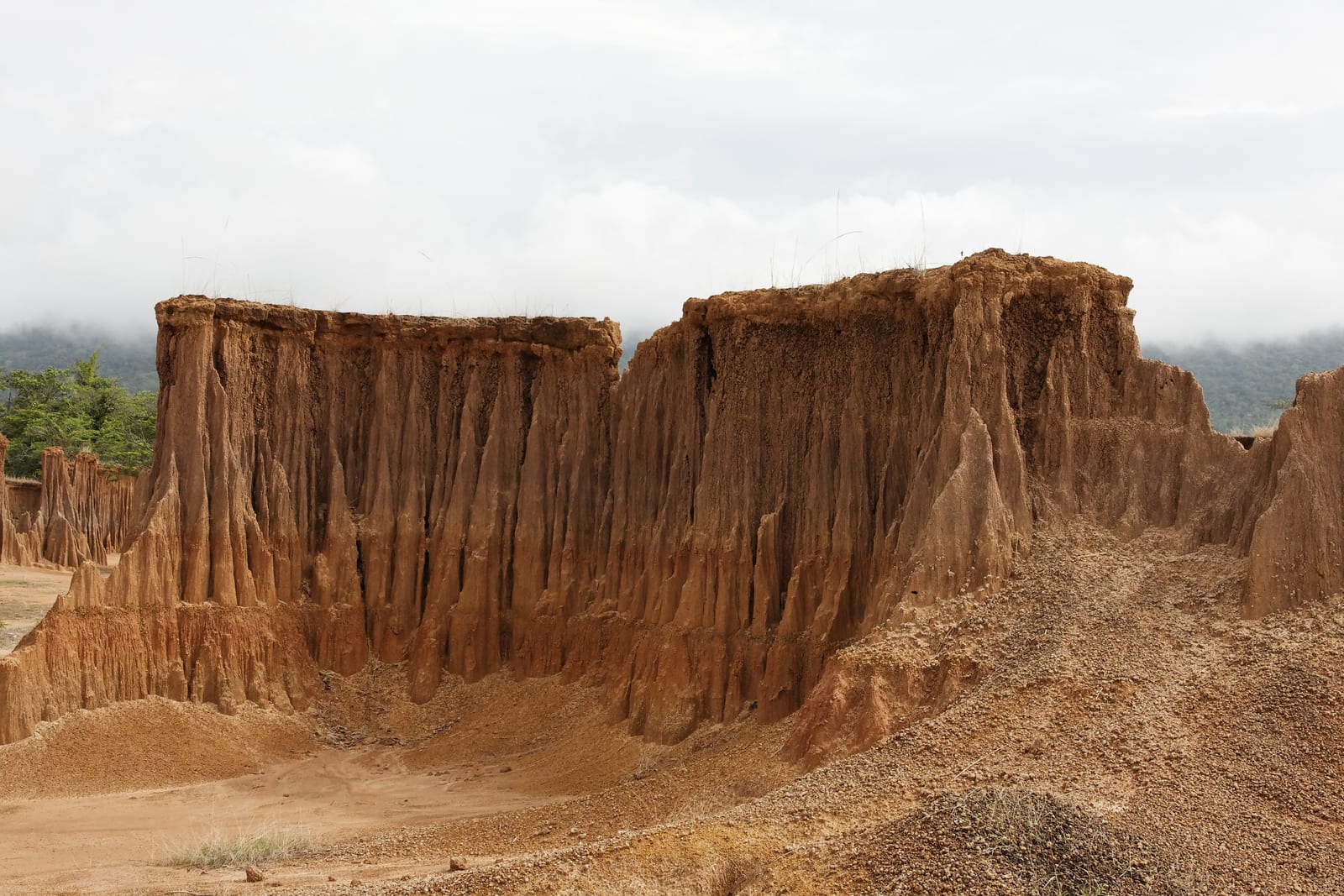
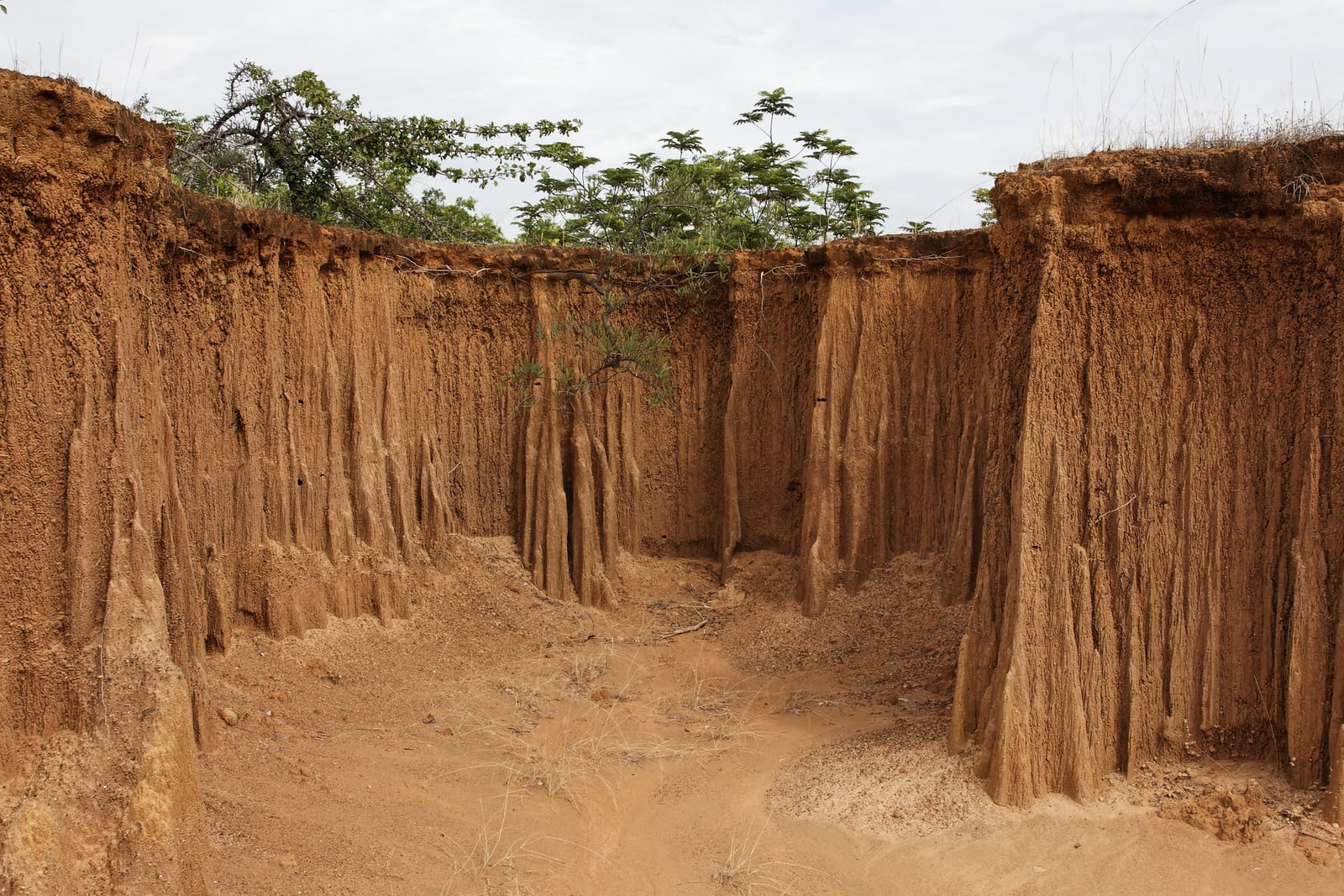
When people talk about a "Thai Grand Canyon" there are several contenders, but Lalu in Ta Phraya, Sa Kaeo, is the real deal — crafted entirely by nature over thousands of years. These earth columns and cliffs come in extraordinary shapes: some resemble city walls, others look like tapered pagodas. They formed when hard layers of compacted soil were gradually worn away by rain and wind, and they now spread across more than 2,000 rai of farmland and rolling green hills. The word "Lalu" comes from Khmer and means "to break through." The striking thing is that the shapes change year on year, as wind and rain continue reshaping them. Ideal for nature lovers, photography enthusiasts, and anyone who wants an experience that looks nothing like the usual Thailand.
The essential thing to do here is ride the local three-wheeled vehicle operated by village residents, which is the only way to reach the formations — private cars cannot enter. Park at the visitor centre, board the community vehicle, and the driver doubles as a guide who explains each formation along the way. Reviews consistently say the moment when the brown-gold earth pillars contrast with the green rice paddies in the background is worth a full stop, and that early morning and late afternoon light turns the soil an extraordinary golden colour. Some periods offer night rides for stargazing.
Light on the budget: the vehicle costs THB 200 per trip and carries up to six passengers — good value in a group. Open daily 08:00–18:00. The site is at Ban Khlong Yang–Ban Noen Kham, Thap Rat sub-district, Ta Phraya district, about 36 km from the district town. The road is rough in places, so allow extra travel time.
Practical notes: avoid midday because the heat is intense and there is no shade. Morning or late afternoon is both cooler and more photogenic. Bring a hat, sunscreen, and plenty of water. The late rainy-to-early-winter season is the most scenic when rice paddies provide a lush green backdrop; the dry season reveals the pillar shapes more sharply without the greenery. Lalu is rated as one of Sa Kaeo's Unseen spots and most visitors who make the trip say it was worth the distance.
Rong Kluea Market (Ban Khlong Luek Border Market)

When people think of the largest border market in Eastern Thailand, Rong Kluea is the first name that comes up. Its official name is Ban Khlong Luek Border Market, located right at the Aranyaprathet–Poi Pet crossing, about 250 km from Bangkok. The name comes from an old salt-storage warehouse that was converted into a market in 1991. Today it has grown into a destination shoppers from across the country drive to specifically — browsing second-hand branded goods, clothing, bags, shoes, home décor, and wholesale food. It suits bargain shoppers on a budget, traders restocking for resale, and anyone who enjoys the back-and-forth of negotiation.
The selection covers almost everything: graded second-hand clothing, jeans, winter jackets and coats, leather bags, shoes, home goods, toys, and wholesale food. The market divides into several sub-zones — old Rong Kluea, new market, Decha Thai Market, Benchawan Market — and the highlight is Golden Gate Plaza (Border Friendship Market), an air-conditioned indoor shopping centre with organised stalls that is much more comfortable than the outdoor sections in strong sun and dust. Google reviews put the overall rating around 4.0, with shoppers praising the sheer volume of goods and warning that skilled bargaining is essential for good prices.
No entry fee. Your budget is entirely determined by how much you choose to buy. A few things to know before you go: the market is very large, so on busy days consider renting a golf cart or taking a motorbike taxi between zones. Restrooms cost around THB 5 and cleanliness varies. Prices for the same item differ from stall to stall, so walk and compare before committing. Free parking exists but can fill up — allow time for that.
Open daily from around 7:00 in the morning until evening (some zones close around 17:30; Golden Gate opens later). Morning to afternoon has the fullest stock and smaller crowds. Since the post-Covid period and the 2025 border situation, the market has been quieter than before and some stalls have closed or are for rent, but the overall market remains open and still has a wide selection. Pairs naturally with a border crossing visit or a side trip into Cambodia.
Pang Sida National Park (Pang Sida Waterfall + Butterfly Watching)
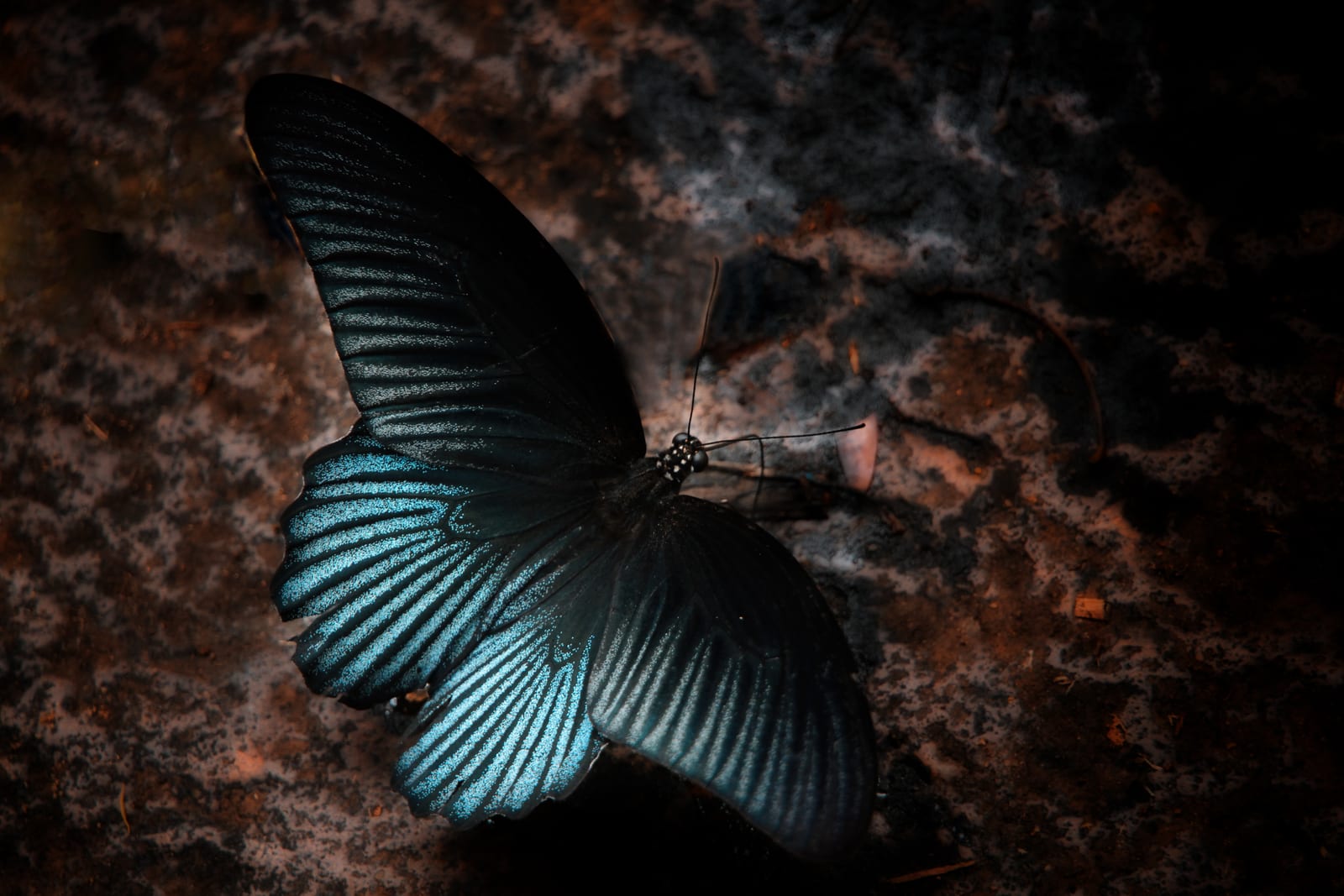
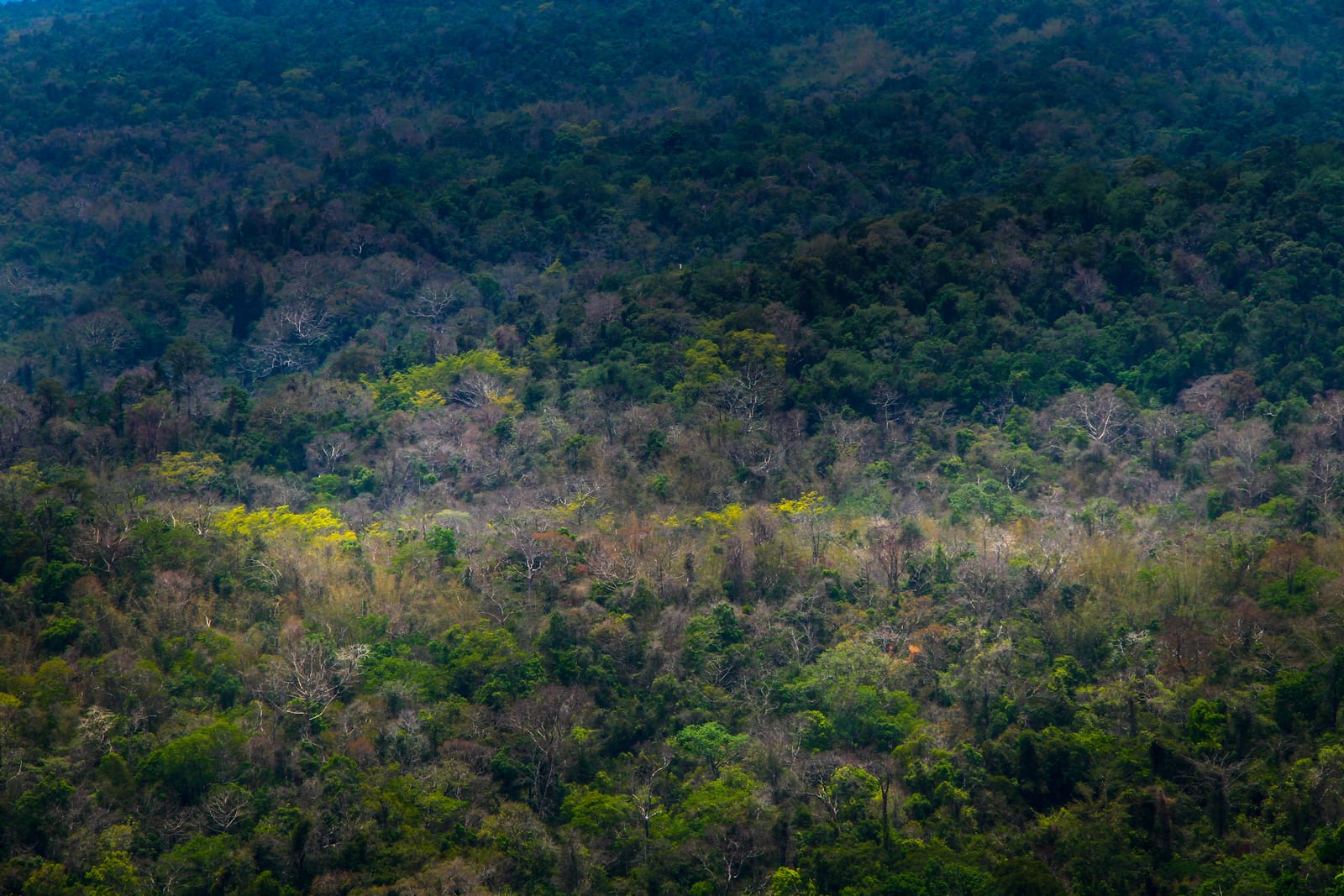
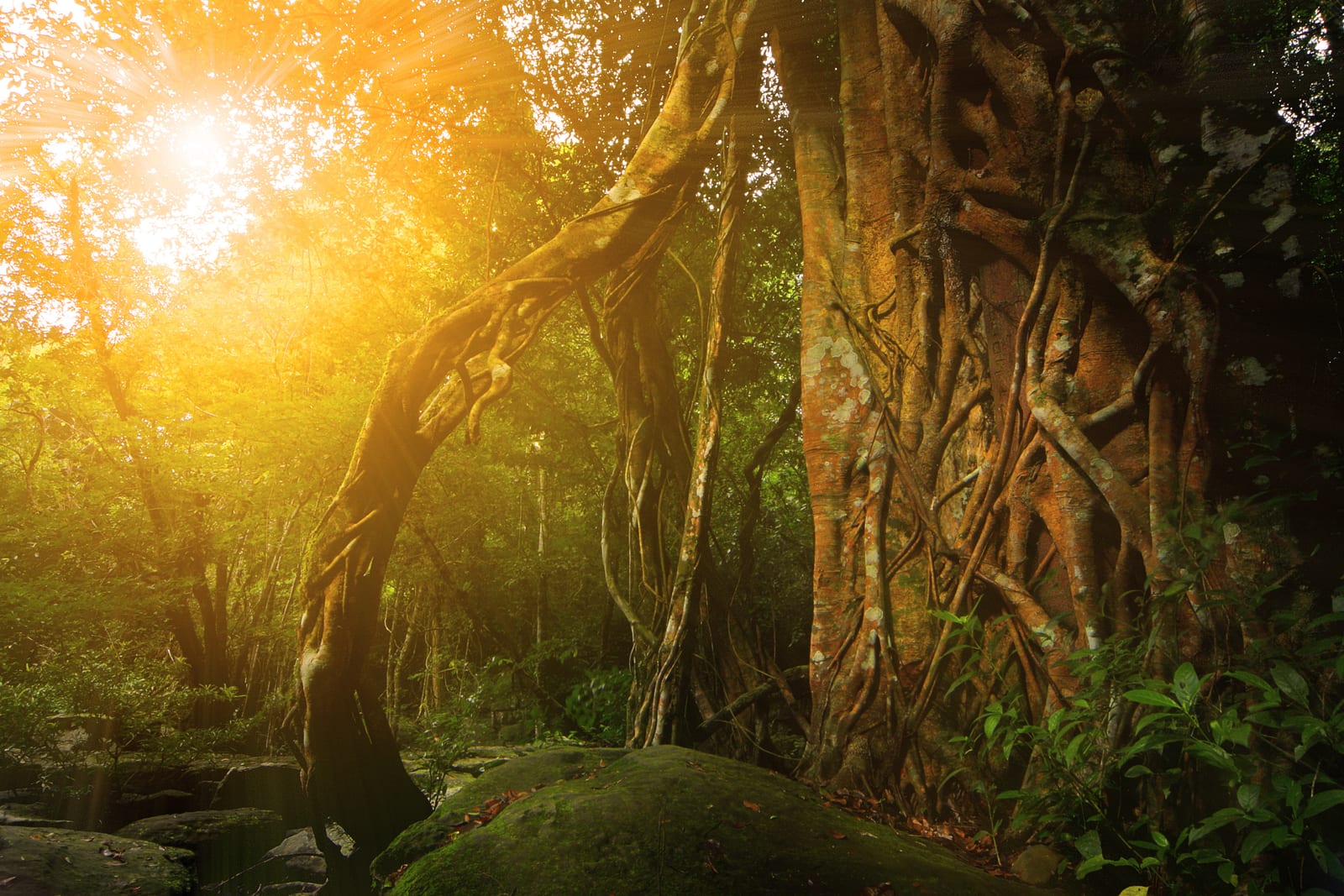
Pang Sida National Park is a large forest in Mueang Sa Kaeo district, part of the Dong Phayayen–Khao Yai World Heritage Forest, about 27 km from the city along Route 3462. Ideal for nature lovers, families wanting to let children play at the waterfall, campers, and anyone who enjoys quiet butterfly or birdwatching. The star of the park is Pang Sida Waterfall — a three-tier stone falls about 10 m high, just 800 m from the park headquarters. It is an easy walk, and during the rainy season the water spreads wide across the rock face in full force. The lower pool is large enough to wade and swim in.
The other highlight that has put Pang Sida on the map is its reputation as the butterfly capital of Eastern Thailand's forests — hundreds of species and 12 dedicated viewing points and mineral licks along the mountain road. The peak period runs from around early June to July, when the park holds its annual butterfly festival and the insects gather in swarms at the mineral licks. Reviews say arriving between 9–11 am on a sunny day gives the best chance of seeing butterflies in large numbers. Lucky visitors driving up the mountain road may also encounter gaur or wild elephants on the roadside.
Admission for adult Thai nationals is THB 40, children THB 20, and foreigners THB 200, plus a small vehicle fee — reasonable for a World Heritage site. The park has a campsite for those who want to stay overnight under the stars. Open daily from morning to evening. Practical note: the waterfall is diminished or dry in the dry season, so come during the rainy-to-early-winter period for the best water display. For butterfly watching, target the early rainy season festival on a clear day. The mountain road has steep and winding sections — check your vehicle and fuel before heading up.
Sdok Kok Thom Historical Park (Sdok Kok Thom Temple)
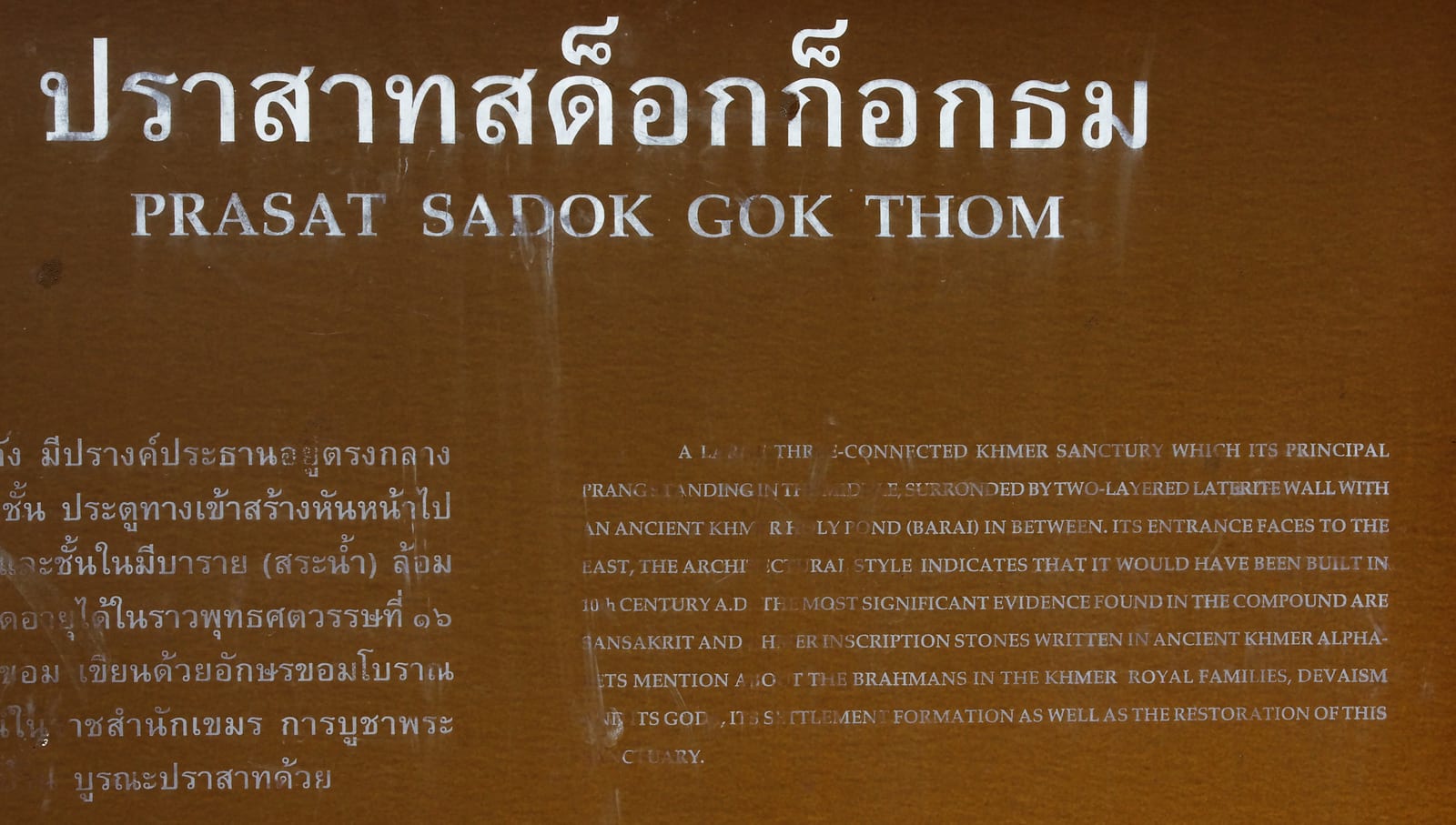
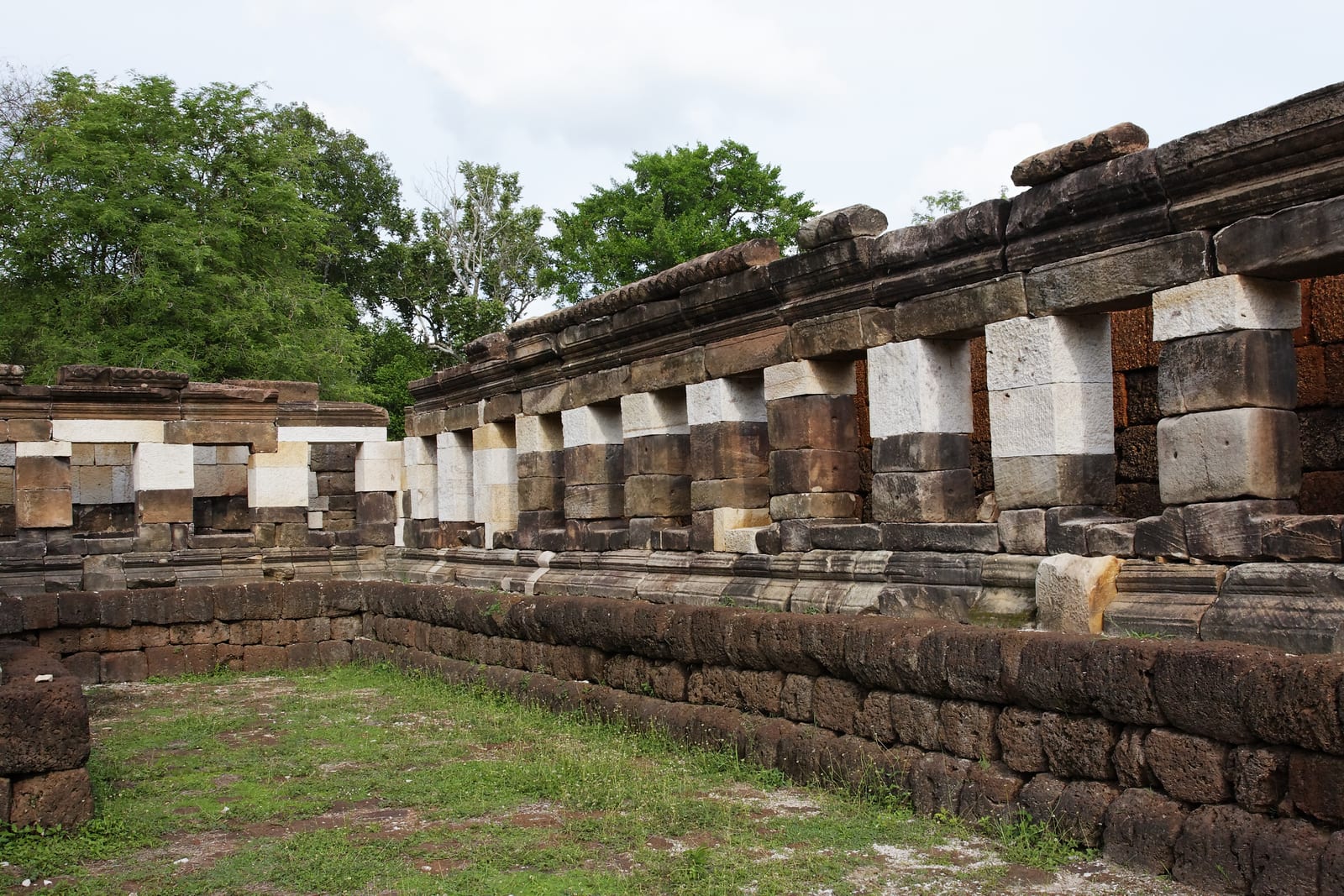
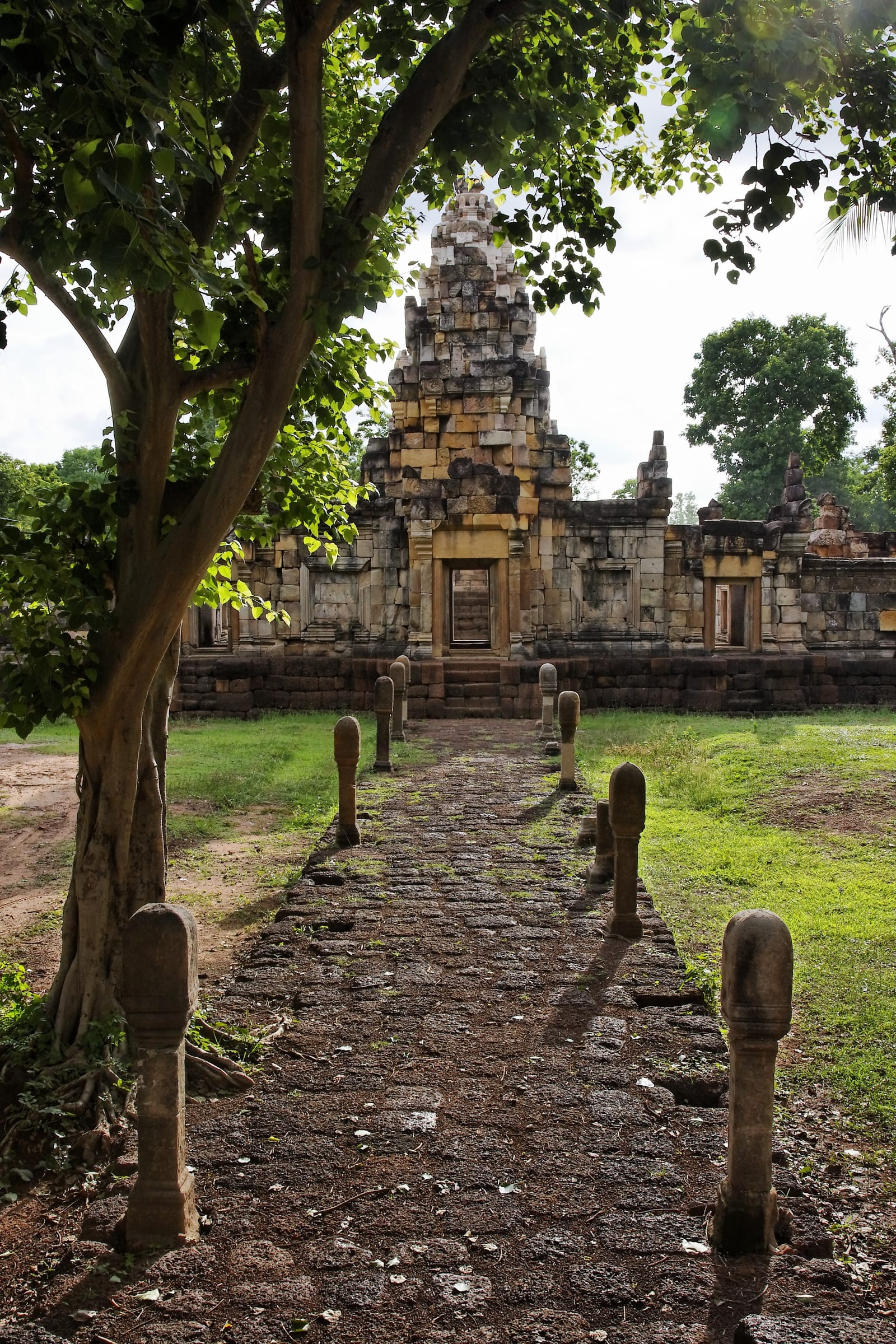
For those who love Khmer temples and prefer to explore them without competing for angles with other visitors, Sdok Kok Thom in Khok Sung district, Sa Kaeo, is worth making the trip. It is the largest Khmer stone temple in Eastern Thailand, built in sandstone and laterite in the Kleang-Bapuon artistic style — dating from roughly the 14th–16th Buddhist century. Originally a Shaivite Hindu sanctuary, the Fine Arts Department fully restored it using anastylosis (replacing each stone to its original position) and designated it Thailand's 11th historical park in 2017. Ideal for history enthusiasts, anyone wanting to see a Khmer temple that resembles a textbook illustration come to life, and families who want to take children somewhere genuinely educational.
The must-see is the central sandstone tower standing in an open courtyard, surrounded by libraries, a gallery walkway, boundary walls, and ancient moats and baray reservoirs. On the entrance side, the exhibition building is praised in many reviews for its quality — bilingual signs, air conditioning for a welcome break from the heat, and young volunteer guides who share the temple's story. The other draw that visitors specifically plan around is the sunrise-through-the-gateway phenomenon, which occurs twice a year around 21–23 March and 20–22 September, when morning light shoots straight through the gate portal. Visitor numbers are higher on those dates.
Free admission for both Thai nationals and foreigners. Open daily approximately 08:30–16:30. Spacious car park, clean restrooms, well-maintained grounds, and a few shaded spots. Real reviews consistently note that crowds are thin, the atmosphere is calm, and you can walk around as if you have the place to yourself. The site is quite remote and close to the Cambodian border, so plan to drive. Midday heat is severe — come in the morning or late afternoon, bring a hat, water, and sunscreen. Those expecting Angkor Wat scale may need to adjust expectations, but for a fully restored, peaceful Khmer temple the site fully delivers.
Wat Tham Khao Chakan + Khao Chakan Arboretum

Wat Tham Khao Chakan is the landmark of Khao Chakan district — three ancient limestone peaks side by side (Khao Ming on the left, the larger central Khao Chakan, and Khao Fa La Mi on the right), each riddled with more than 70 large and small caves. A good choice for those who enjoy a moderate hike, temple worship, and families who want children to see real monkeys and bats. The main highlight is Tham Khao Thalut on the summit: climb roughly 300 steps of concrete and wooden stairs, worship the replica Buddha footprint inside, and emerge through the rock opening to a 180-degree panoramic view of the district.
Two things not to miss, working together. During the day it is the large monkey colony on the lower slopes — thousands of them. Vendors sell small bags of monkey food to scatter, and the monkeys, well-fed and relatively accustomed to people, are calm enough to feed but still quick enough to snatch glasses, hats, and bags, so keep loose items secured. The real draw for the evening is the bat colony: around 18:00 at dusk, a million-plus bats stream out of the caves in a long ribbon across the sky — a spectacle many visitors make a special trip for.
Free to enter. No admission charge. Parking and restrooms are available, with food stalls and monkey-food vendors at the base. The site sits on Highway 317 (Sa Kaeo–Chanthaburi) about 17 km from Sa Kaeo city, easy to drive to. Open approximately 06:00–18:00. If you are planning to watch the bats, arrive before 17:30 so you can also do the summit walk and be ready for the bat flight.
Popular because it combines a temple, caves, viewpoint, monkeys, and bats all in one free site right off the main road. Google reviews rate it around 4.4. Practical notes: some stairway sections are very steep and have wooden steps — take extra care on the descent. Not suitable for those with a fear of heights or elderly visitors with limited mobility. Wear closed shoes, carry water, and never tease or provoke the monkeys.
🛏️ Where to Stay in Sa Kaeo — Near the City and Aranyaprathet Border
A day trip across Sa Kaeo's highlights is doable, but staying one night means you can head to Lalu or climb the skywalk before the heat builds and the crowds arrive. The most popular accommodation clusters in two zones: Sa Kaeo city centre (close to Pang Sida, Khao Chakan, shopping, and restaurants) and the Aranyaprathet–border area, well-placed for Rong Kluea Market and the Poi Pet crossing. Choose the zone closest to your first morning stop for the best return on your stay.
Wood House Khao Chakan
Wood House Khao Chakan is a café in the middle of a flower field with Khao Chakan mountain filling the horizon behind it. Suited to photography lovers, café enthusiasts, and families looking for a breezy place to sit. The venue is an open-air wooden structure that blends into the surroundings, and the grounds — about 6 rai — are planted with cosmos and sunflowers in rotating seasonal displays of deep yellow-gold. Multiple visitors describe the mountain panorama here as the kind of wide-open view that is rare to find in Sa Kaeo.
The wooden bridge extending into the flower field is the main photo spot — walk out and the mountain fills the background at close range. There are hanging-chair seats and a wooden swing for sitting with a drink and a 360-degree view, and a regularly mentioned highlight is the evening bat colony: at around 17:00–18:00 a mass of hundreds of thousands of bats streams from the nearby Khao Chakan cave, visible from a comfortable distance at the café. Real reviewers say coming here gives you flowers, mountain scenery, and bats all at once.
Very easy on the budget: drinks are under THB 100 and include coffee, Thai tea, green tea, cocoa, bubble tea, and cold-pressed juice, plus light snacks such as som tam, sandwiches, banana fritters, and fruit. The flower field is free to walk through with no admission charge. Wongnai rates it around 4.4, with visitors praising the atmosphere and prices; some note that the drinks themselves are average and the real draw is the setting.
Located in Khao Chakan sub-district, Khao Chakan district — from Route 317, turn past the district office and follow the road toward the mountain. Parking is available. The café opens daily 08:00–18:00 (the flower field is accessible from early morning to early evening). Check the café's page before visiting to confirm which flower section is currently in bloom, and if you want to see the bats, arrive around sunset. Midday sun is intense on the open grounds — bring a hat and water.
Skywalk Wat Khao Singto
For anyone driving through Sa Kaeo looking for a spot to see the whole city at once, Skywalk Wat Khao Singto is the answer many visitors mention. It is a glass-panel walkway on a low hilltop about 250 m above sea level in Ban Kaeng sub-district, just a few kilometres from the city. The climb is easy — no serious trail — making it comfortable for visitors who want a great view without heavy effort, whether for merit-making, photography, or bringing elderly family members. The draw is a 360-degree view of Sa Kaeo city and wide rice plains stretching to the horizon, said to be one of the first skywalks built in Eastern Thailand.
The things not to miss: climb about 300 steps (roughly 20 minutes), shaded along the way by trees. At the top, bow before the replica Buddha footprint, ring the bell and shake the prayer chimes for good fortune, then step out onto the glass panels and photograph the colourful dharma-wheel flags fluttering in the wind with the plains below. On the lower level, Tham Wang Naka cave is cool inside — worth a brief stop. Those who come in the evening catch a sunset that multiple reviews single out as the highlight of the visit.
No entry fee for the temple or skywalk. Parking and restrooms are available. You can leave a merit donation in the box at your discretion. Open approximately 06:00–17:00 daily. Early morning and late afternoon draw the most visitors because the light is better and the heat is manageable. Google reviews rate it around 4.5, consistently calling the atmosphere peaceful, the nature beautiful, and the breeze refreshing.
One practical note: the skywalk has a staff member managing safety and allows a maximum of 5 people on the glass at one time. On weekends there may be a short queue. Some stairway sections are steep — wear shoes with grip and carry water. Those with a fear of heights can hold the railing throughout and will find it manageable.
Tha Krabak Reservoir
Tha Krabak Reservoir is a royal-initiative earthen dam in Tha Yaek sub-district, Mueang Sa Kaeo district — about 8 km past the Pang Sida National Park entrance. A favourite quiet-day destination for Sa Kaeo residents who want to escape the city and sit by the water in a cool breeze. The dam embankment stretches more than 700 m and opens up a wide view of clear water set against a line of green hills. For anyone who prefers natural settings without crowds, this is the right call.
The must-try activities are pedalling a swan boat out on the water, wading and swimming at the sandy shallow-water beach where the water is clear and not deep, and renting inner tubes or paddle boats — all available from vendors at the site. Then find a lakeside pavilion and order som tam, grilled chicken, and river fish while watching the view. The most talked-about time to visit is the late afternoon, when the lakeshore becomes a popular camping spot: visitors pitch tents, catch a cool breeze, and watch the sun drop behind the hills. Camping-focused pages consistently rate the wind and the calm atmosphere highly. Nam Tok Noi Tha Krabak, a small waterfall, is close by and easy to combine in the same visit.
Free entry with no admission fee. Pay only for boat rental, inner tubes, and food. Open daily during official hours approximately 08:30–16:30, though many sources say the breezy lakeside atmosphere can be enjoyed until around 18:00–18:30. Campers should check with the Royal Irrigation Department Sa Kaeo office before planning an overnight stay. Best weather is November to January; the hot season draws swimmers instead. No direct public transport — a private car is the easiest way to get here.
A few practical notes: this is a fully natural site with basic facilities and a simple, local character. Drive from Sa Kaeo city via Highway 3462 northward. The site has no luxury amenities — bring your own food, snacks, and supplies, as vendors are limited. That simplicity is exactly what makes it a satisfying retreat from the city.
Nanattham Sathan (320 White Buddha Statues Park)
Nanattham Sathan — commonly called "Suan Phra" (the Buddha statue garden) — is an open-air Buddhist site that grew from the faith of a group of Buddhists who built it themselves over many years. The distinctive feature is more than 320 large white Buddha statues arranged in rows across the grounds, with three large principal images at the centre. On the opposite side, thousands of smaller statues are set out in their own display. The sight of white figures in long rows extending to the horizon is rare in this part of Thailand. It suits merit-makers, meditation practitioners, and anyone who enjoys composing unusual photographs.
The key activity is walking down the full length of the white-statue rows to capture a wide-angle image, especially in the morning or evening when the light is soft and the white figures contrast with the blue sky and surrounding trees. Around the compound there are also sculptural works in a mix of Buddhist and Khmer-influenced styles, so there is plenty to observe during a leisurely walk. Those who appreciate quiet will appreciate the atmosphere here — this is an active meditation retreat, not a tourist park, so the grounds are calm with relatively few visitors and plenty of shade trees. Please keep voices low to avoid disturbing those in meditation practice.
Free to enter with no admission charge. Open throughout the day. Located at Nong Mak Fai sub-district, Watthana Nakhon district, off Highway 3393 between Phra Prong reservoir and Watthana Nakhon town. A private car is most convenient. Can be combined with Pang Sida National Park or Phra Prong reservoir in a single day.
One honest note: conditions can vary by visit. Some visitors report that parts of the grounds look overgrown or occasionally closed, and opening status is not always clearly posted. Check recent Google Maps reviews or call ahead before making a long drive. Dress modestly for the meditation grounds, and bring a hat, umbrella, and water — the walk is outdoors and the sun is strong.
Suan Angoun Thanakrit (Thanakrit Vineyard)
If you assumed Aranyaprathet was only about Rong Kluea Market and the border crossing, Thanakrit Vineyard will change your mind. This is Aranyaprathet district's first seedless grape farm, born when owner Thanakrit Thanasritawen transformed a former paddy field into an agricultural attraction that now draws visitors from Sa Kaeo and nearby provinces. Ideal for families with children, couples who like photography, and anyone who wants fresh-picked grapes to take home.
The highlight is walking under the grape trellises with clusters hanging overhead, picking fruit straight from the vine and tasting it on the spot. The farm grows several varieties — Loose Perlette, Black Opal, Black Beauty, Beauty Seedless, and Shiraz — all cultivated pesticide-free to GAP standards. The photo spot everyone makes a point of visiting is the white windmill in the middle of the farm, a deliberate landmark the owner installed as the signature check-in point. And before you leave, pick up fresh grape juice: the red label is pressed from seedless grapes for a sweeter taste, the purple label is from Shiraz, and cold-blended grape juice is available to drink immediately.
Very easy on the budget: the farm is free to enter with no admission charge. You pay only for grapes or juice that you purchase. Grape vine cuttings are also sold at THB 150 each for those who want to grow their own. The farm is at Ban Nong Thao, Ban Mai Nong Sai sub-district, not far from Aranyaprathet town and Rong Kluea Market. Open daily 08:30–17:30. A private car is most convenient given the location outside town.
One key note: the vines produce fruit almost year-round, but the main harvest season — when the clusters are full and picking is most rewarding — is around July. If your plan is specifically to pick and photograph the vines at their best, aim for that month and call the farm at 081 927 8548 to confirm which plots are ready, as different sections ripen at different times. Morning or late afternoon is cooler for the walk through the open rows.
🎟️ Tours, Tickets, and Activities Around Sa Kaeo
Sa Kaeo has many stops spread across several districts, and if you would rather not drive yourself or want a guide to navigate Lalu, Sdok Kok Thom, and Pang Sida without getting lost, check tour packages and activity tickets in advance on Klook or GetYourGuide. Booking online skips on-site queues, makes price comparison easy, and many packages include transport from Bangkok or can be extended into a cross-border trip to Angkor Wat and Siem Reap, which are close to the Aranyaprathet crossing.
💡 Before You Go: Practical Tips for Sa Kaeo
Sa Kaeo's attractions span several districts and public transport is very limited. Renting a car or hiring a private vehicle for the day is the most convenient option. Grab is hard to find outside the city centre. Plan your route in advance — especially for the Ta Phraya and Khok Sung areas closer to the border, which are quite far from the city.
Private cars cannot enter the Lalu formations — the access road is rough and vehicles are not permitted. You must use the local three-wheeled vehicles at the visitor centre: THB 200 per vehicle for up to 6 people. The driver acts as your guide. Bring cash and prepare a hat and plenty of water — you will be sitting in open sun.
Rong Kluea Market, local food stalls, and small shops mostly operate on cash — bargaining is expected and some vendors accept QR PromptPay but not all. Keep small notes ready for smooth transactions. Shopping centres and cafés in the city accept cards.
Lalu in midday is intensely hot with no shade — go in the morning or evening. At Khao Chakan, if you want to watch the bat colony stream from the cave, plan to be there around 18:00. Organise your route to catch both the early-morning Lalu light and the evening bat flight on different parts of the same day. Pack a hat, water, and sunscreen throughout.
Wat Tham Khao Chakan, Nanattham Sathan, and Wat Khao Singto are sacred spaces. Cover shoulders and knees, remove shoes before entering any ordination hall or inner sanctum, and behave respectfully. At Khao Chakan, also watch out for the monkeys — do not hold visible food bags or loose accessories where they can reach them.
Outside Rong Kluea Market, where vendors are accustomed to foreign visitors, signs and menus are mostly in Thai. Locals are friendly but English is limited. A translation app or phone camera with text translation will help considerably when ordering food and finding directions.
Planning One or Two Days in Sa Kaeo
With one day, the most logical flow is to move from the city outward toward Khao Chakan. Start the morning at Pang Sida National Park — play at the waterfall or walk the butterfly trails if you are visiting in Jun–Jul. Then stop at Tha Krabak Reservoir just past Pang Sida for a relaxed lakeside break. Next, drive up to Skywalk Wat Khao Singto at Ban Kaeng for the 360-degree view. In the afternoon, head to Khao Chakan: climb the temple steps to worship inside Tham Khao Thalut cave at Wat Tham Khao Chakan, then stop at Wood House café for a drink with the mountain view, and stay for the bat colony streaming from the cave at dusk.
With two days, use the second day for the border-area highlights. Start at Lalu in Thap Rat sub-district, Ta Phraya, as early as possible — midday heat is severe there. Ride the three-wheeled vehicle through the earth pillar formations, then drive south toward Khok Sung to visit Sdok Kok Thom Historical Park, the largest Khmer temple in Eastern Thailand. Continue to Rong Kluea Market in Aranyaprathet to browse the second-hand goods. If you are on a merit-making circuit, stop at Nanattham Sathan in Watthana Nakhon, and if you are visiting around July, allow time for Thanakrit Vineyard to pick fresh grapes before heading home.
Covering several Sa Kaeo highlights in a single day is entirely possible, but staying one night means you can reach Lalu before the heat builds or climb the skywalk before the crowds arrive — without the pressure of a long drive home. Most accommodation clusters in Sa Kaeo city centre and the Aranyaprathet–border area. Choose the zone closest to your first morning stop for the best return on your stay.
🔍 Check Sa Kaeo Hotel Prices (Agoda)