🔄 Last checked 28 Jun 2026 · details and hours can change — check the venue before you go
📍 All restaurants on the map
Tap a pin for the spot + nearby stays
The appeal of Sakon Nakhon is that it's a waterside city with its highlights spread all around Nong Han. The main sights aren't clustered in the town alone. Start in the old riverside quarter beside Nong Han, where the white-and-gold Phra That Choeng Chum is the town's defining landmark. Walk a short way and you reach the Ajahn Mun Museum, a white stupa-shaped building, and the indigo-cloth walking street in the evening. Head out of town toward Dong Mafai on the Phu Phan range and you'll find Wat Tham Pha Daen, where scenes from the Buddha's life are carved along an entire cliff face, with an open viewpoint looking down over Sakon Nakhon and the waters of Nong Han. For nature, there's Phu Phan National Park, the Ping Ngu curve, and Kham Hom Waterfall for a rainy-season swim. If you like the unusual, there's Phaya Tao Ngoi beside the Phung River, the Bua Chaloem Phrakiat Park with its red timber bridge over a lotus pond, and Ban Tha Rae — a Catholic community with old shophouses to walk and photograph. You can string together temples, blessings, nature, and old-town scenes all in one trip.
This list includes the pins you shouldn't skip in Sakon Nakhon. Wat Phra That Choeng Chum Worawihan, where the chedi enshrines sacred Buddha footprints, paired with Luang Pho Phra Ong Saen in the viharn, is revered across the province. Wat Tham Pha Daen, with its large sandstone carvings telling the story of the Buddha across a cliff face, is a temple many locals rate as a once-in-a-lifetime visit. Nong Han is the largest freshwater lake in Isan, with a skywalk reaching out into the water. And the Ajahn Mun Phurithatto Museum at Wat Pa Sutthawat holds the relics and story of a forest-tradition monk revered across the whole country. Scroll through the details of each spot and plan your own route.
Wat Phra That Choeng Chum Worawihan

If you're wondering where to begin a Sakon Nakhon trip, most locals will tell you to start at Wat Phra That Choeng Chum Worawihan. This is the town's principal temple, right in the centre of the city and set beside Nong Han, the large freshwater lake of Isan. It's a royal temple that nearly everyone visits first to pray for blessings. It suits those seeking luck, history lovers, and anyone who wants a quiet, shaded temple walk in the morning. It's an ideal opening pin because it's easy to reach and connects well to the other spots in town.
The unmissable highlight is the Phra That Choeng Chum itself — a square white chedi around 24 metres tall with a golden umbrella spire, enshrining four Buddha footprints, which is the origin of the name 'Choeng Chum', meaning where the footprints gather. Pair that with venerating Luang Pho Phra Ong Saen in the viharn, a gilded Maravijaya-posture Buddha image in Chiang Saen style that Sakon locals hold in deep reverence. The temple also has a sacred well decorated with nagas, and a stone Buddha footprint in the old ubosot to walk through and see. Reviewers agree the atmosphere is calm, shaded, and clean — a comfortable place to visit and pray.
There's no entry fee — admission is free, and you can make merit as you wish. It's open for veneration every day from morning until evening (roughly 06:00 to 18:00, and later on some occasions). The location is right in the heart of the city by Nong Han, easy to reach, with convenient parking. A moment many people especially enjoy is Saturday and Sunday evenings, when a walking street in front of the temple sells indigo-dyed and local textiles alongside regional street food — you can venerate the Buddha and then browse the market in one visit.
A small thing to know: this is an important temple, so dress modestly and remove your shoes before entering the viharn. On major Buddhist holy days or during the Phra That Choeng Chum worship festival early in the year, crowds are especially heavy and parking can fill up. Coming in the morning or evening gives you better light and fewer people. It's a temple no one passing through Sakon Nakhon should skip.
Wat Tham Pha Daen
If you asked for one Sakon Nakhon attraction to visit at least once, Wat Tham Pha Daen would be among the first names. It sits on the Phu Phan range in Tambon Dong Mafai, Mueang district, about 17 km from town. The highlight everyone talks about is the large sandstone sculptures carved into the cliff face, telling scenes from the Buddha's life — Buddha images, a Garuda figure, and a giant Naga-sheltered Buddha carved directly into real boulders. The work is so detailed that many reviewers say it's even more impressive in person than in photos. It suits merit-makers, photographers, and anyone who likes one-of-a-kind artwork.
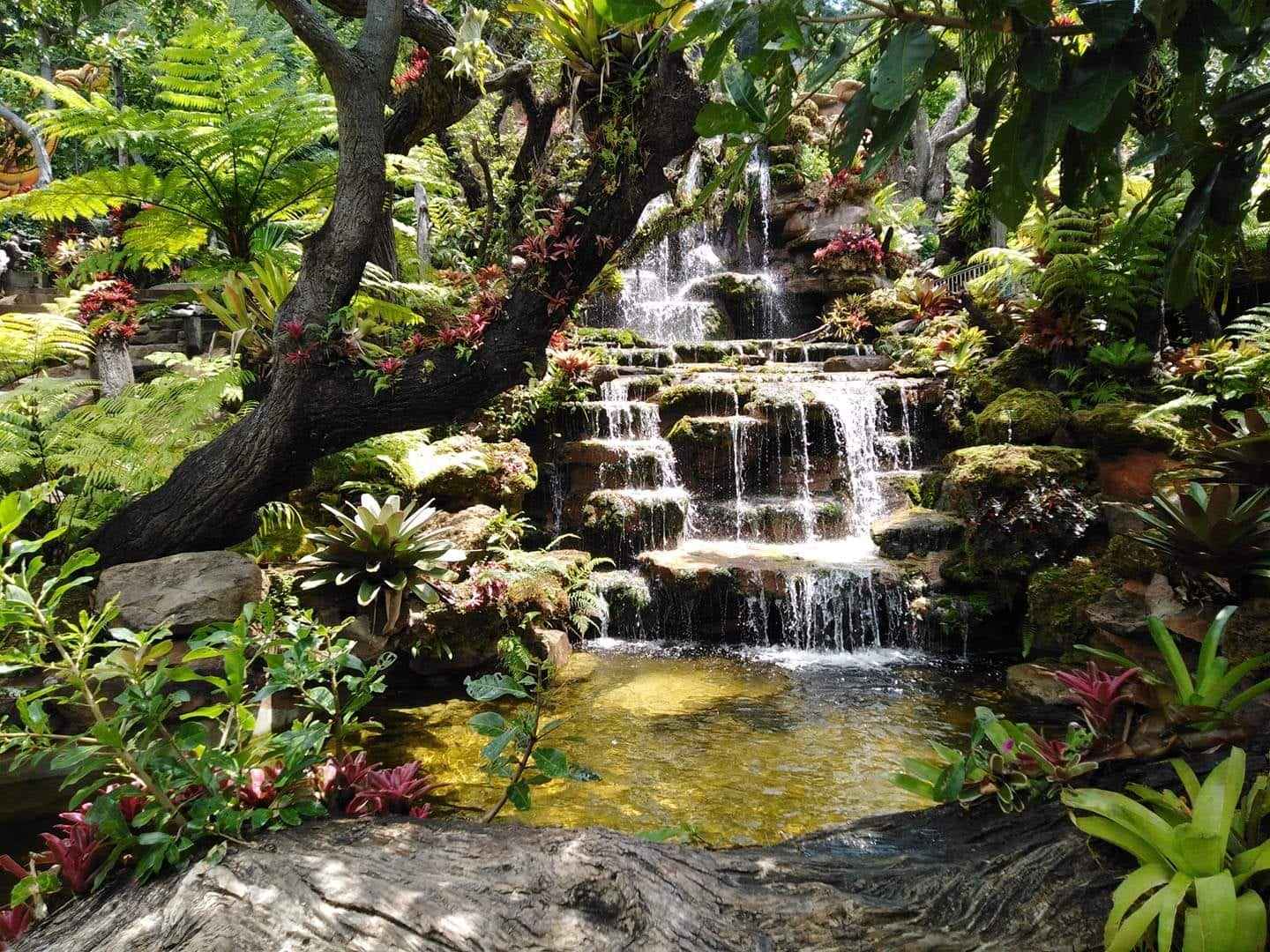
Another must-see is the golden chedi perched on a boulder at the cliff edge — like a Sakon version of the Golden Rock — and a viewpoint looking out over Sakon Nakhon town and Nong Han stretching to the horizon. On clear days the view is superb, and there's a café terrace where you can sip a drink and take it in. The grounds are decorated with flower gardens, a mock waterfall, and pavilion posts made from old tree stumps hundreds of years old — pleasant to wander and photograph all day.
The cost is easy on the wallet: entry to the temple is free, but if you're not driving up yourself, there are songthaews that carry visitors from the car park to the top for around 20 baht each. The road up is fairly steep, so if you drive yourself, check your car and brakes. It's open roughly 06:00–17:00. Go in the morning or late afternoon when the sun is gentler and the view is best. Allow about 1–2 hours to walk around.
A small note: the temple is on a hill and the midday sun is fairly strong, so wear comfortable shoes and bring an umbrella or hat. It's also a place of meditation practice, so dress modestly and keep quiet. Its Google review score is as high as 4.7 from thousands of reviews, reflecting how most visitors are impressed by the artwork, the view, and the peaceful atmosphere on Phu Phan.
Phaya Tao Ngoi
If you're visiting Sakon Nakhon and you're the type who seeks luck and blessings, Phaya Tao Ngoi is a pin you shouldn't skip. It's a giant turtle statue standing prominently in the middle of a pond in a riverside park along the Phung River, behind the Tao Ngoi district office. The turtle is about 4.59 metres wide, 7.39 metres long, and over 5 metres tall, surrounded by naga figures and smaller attendant turtles, its shell topped with a sculpted lotus that holds Buddha images and sacred objects inside. Locals hold it in high regard as the symbol of the district, and people come steadily to pray for luck, work, or a long life. It suits anyone who likes an easy-to-walk sacred spot with no hill to climb.
The must-do is venerating Phaya Tao Ngoi to pray for blessings — at the entrance there are flowers, incense, and candles for offering, and many people come to ask for lucky numbers to try their luck. Another highlight many enjoy is the bridge crossing the Phung River to the temple on the opposite bank, with pretty riverside views in the evening, cool breezes, and easy strolling for the whole family. Reviewers agree the car park is spacious and easy, and the park is fairly clean and shaded. Allow about 1–2 hours to see it all.
The budget is very light because admission is free — no entry fee, you only pay for incense, candles, and flowers as your faith moves you. It's open every day. The location is in the Tao Ngoi district town, about 25–30 kilometres from Sakon Nakhon town, an easy drive, so it's a convenient add-on if you plan a temple-hopping trip around Sakon. If you come on a Friday afternoon from about 3 pm, there's also the Pa Phloen walking street nearby where you can browse and snack on local food.
A small note: this area has flooded during heavy rainy seasons before, so if you come in the wet season, check the weather and water levels before setting out. The most comfortable times to visit are early morning or evening, when it's cooler and the light for photos with the turtle is best. It's popular because it combines a photo landmark, a place to pray for luck, and a riverside spot to relax all in one — well worth a stop on any Sakon trip.
Nong Han (Nong Han Skywalk)

Nong Han is the largest freshwater lake in Isan (and among the largest in the country), covering roughly 123 square kilometres along the edge of Sakon Nakhon town. Its star attraction is the skywalk — a timber-and-concrete walkway stretching nearly 1 kilometre out over the water to a small island. Walk to the end and it feels as if you're standing in the middle of the lake, surrounded by lotus beds, egrets and herons, and on some days villagers paddling out to fish and gather water spinach. It suits people who love quiet nature, photographers, couples, and families looking for a cool spot to catch the breeze.
The unmissable highlight is the sunset. The sun drops behind the far shore of the island beyond the outline of Sakon Nakhon town, its golden light reflecting off the water — many reviewers call it one of the finest sunset spots in the province. The best images come about two hours before the sun sets on days with a thin cloud cover. Beyond the skywalk, there's a viewing pavilion, a photo deck, a large bodhi tree, and lotus beds at the entrance to stop and shoot.
The budget is very easy because admission is free — no entry fee, with roadside parking. The location is on the edge of Sakon Nakhon town, easy to reach, and open all day. People love coming in the evening to wait for the light and to exercise. Midday sun is fairly strong and there's little shade on the walkway, so bring a hat, sunglasses, and drinking water. Some sections of the walkway can be slippery or have damaged planks, so tread carefully — especially with small children or elderly visitors.
It's popular because it's a natural landmark that defines Sakon Nakhon town. In one visit you get the wide lake view stretching as far as the eye can see, an easy relaxed atmosphere, and a beautiful sunset for free. Nearby are Somdet Phra Sri Nagarindra Park and lakeside cafés to continue the trip in one area.
Ban Tha Rae (Catholic Old-Shophouse Community)

Ban Tha Rae is the largest Catholic community in Thailand, set on the northern shore of Nong Han, about 21 kilometres from Sakon Nakhon town on Highway 22, the Sakon Nakhon–Nakhon Phanom road. What draws people is the century-old French-Vietnamese colonial-style shophouses lined up in blocks along both sides of the street, laid out on a grid by a French priest back in 1884. It suits people who love vintage photography, architecture fans, and history-and-culture travellers who want to see a corner of Thailand unlike anywhere else.
The must-do is walking and photographing the old shophouse rows along the community's main street, stopping at the Michael the Archangel Cathedral — a large white church shaped like a ship, evoking the migration across water to settle here — and the century-old Francisco khao piak shop, an old house converted into a restaurant, along with cafés in old mansions such as Udom Detwat. Multiple genuine reviews agree the old buildings are well cared for, photogenic, and calm, and most people finish the walk in under an hour.
The community itself is free to visit, with no entry fee and parking available; the main spend goes to coffee and light snacks. It's walkable every day during the daytime, while most cafés and restaurants open from late morning to evening. Come at the end of the year and you'll catch the signature highlight — the Christmas Eve Star Parade on 24–25 December, when the whole village lights up with stars, a festival famous nationwide.
A note: this is a living community and a religious area, so dress modestly when entering the church and respect residents' privacy. Some buildings are people's homes and not all can be entered. Coming in the morning or evening gives softer light and better photos than midday, and leave time to see the Nong Han view nearby.
🛏️ Hotels in Sakon Nakhon — stay by Nong Han or near Phu Phan
To make the most of Sakon Nakhon, stay a night — that way you can head up to Wat Tham Pha Daen or into Phu Phan National Park in the cool early morning while it's still quiet. The most popular hotels cluster in Sakon Nakhon town, easy to reach and close to Wat Phra That Choeng Chum, the Ajahn Mun Museum, Nong Han, and the indigo walking street. There are in-town hotels as well as lakeside stays with views over Nong Han. If you're here for nature and want to wake to cool mountain air, you can also choose a stay or campsite around Phu Phan and Dong Mafai. Pick a location close to whatever you want to see first thing in the morning — that's the most worthwhile. Compare prices and reviews before you book.
Bua Chaloem Phrakiat Park
If you come to Sakon Nakhon and want an easy spot to stroll and photograph with the whole family, Bua Chaloem Phrakiat Park is one many people talk about. It's cared for by Kasetsart University's Chalermphrakiat Campus, on the Tambon Chiang Khruea side across from Nong Han bay. It's a large lotus pond holding hundreds of lotus varieties — so many that some call it the largest lotus park in Thailand. It suits nature lovers, photographers, people bringing elders for an easy walk, and families with small children.
The unmissable highlight is the long red timber bridge running out into the middle of the lotus pond — walk in for a close look at the blooms around the water. There's a viewing pavilion in the water to sit and catch the breeze, and another popular stop, the large white naga statue that has become a new provincial landmark. Locals believe the naga watches over Nong Han and the town, so many come to pray as well as photograph. In the morning, after sunrise, the lotus blooms open at their finest and the sun is still gentle — better for photos than the afternoon.
The budget is very light because admission is free — no entry fee, with a car park out front, plus a coffee, snack, and drinks shop to rest at, bicycle rental to ride around, and a playground for children to run about. It's open Monday to Friday 08:30–16:30, extending to 18:00 on Saturday and Sunday, so a weekend visit gives you a longer walk.
Things to know before you go: the lotuses are prettiest in the morning, and the cool season makes for the most comfortable walking. Midday sun is fairly strong since it's an open lakeside area, so bring a hat or umbrella, apply sunscreen, and carry water. Some sections of the timber bridge can be slippery just after rain, so tread carefully. If you like quiet, uncrowded visits, come on a weekday morning for the most relaxed atmosphere.
Phu Phan National Park (Ping Ngu Curve Viewpoint)

Anyone driving Route 213 from Sakon Nakhon to Kalasin through Phu Phan National Park will hit a stretch of road that twists in stacked S-curves, which locals call 'Ping Ngu' (grilled snake) — because from above it looks like a snake pinched in grilling tongs until it curls. The Highway Department has made it a rest stop, viewpoint, and check-in point — 'Ping Ngu Ping Rak' — at the Kham Hom highway unit. It suits drivers passing through who want to stretch their legs, photographers, and families who want to feel the cool mountain air without a jungle hike.
The must-photograph highlight is the Highway Department's giant kilometre marker, said to be the largest in Thailand, together with the view of the road looping back on itself against green forest. Climb to the more open spots and you can see Sakon Nakhon town and Nong Han in the distance far below. Reviewers agree that 'you have to look from up high to see the curve's beauty'. If you're travelling as a couple, there's a heart-shaped 'Ping Ngu Ping Rak' sign to photograph together. Early in the year, the tabebuia (pink trumpet) trees in the median garden bloom pink and pretty as well.
The budget is very easy because it's a roadside viewpoint — free, no entry fee, with parking, clean free restrooms, and a coffee and welfare shop selling drinks and light snacks. The spot is about 20-something kilometres from Sakon Nakhon town toward Kalasin, and you can stop at any time since it's a public road, though people favour the cool, clear mornings.
A note: this section of road is steep with lots of curves, so check your brakes and tyres, drive slowly, use your lights as the warning signs indicate, and if you're going to stop for photos, park in the designated rest area — don't stop on the shoulder at the curves, as heavy trucks go up and down the hill often. It's famous both as a scenic pass and a fully equipped rest stop, which is how it became the go-to landmark on the road up Phu Phan.
Kham Hom Waterfall
Kham Hom Waterfall is a rock-terrace waterfall on the Phu Phan range that Sakon Nakhon locals love for cooling off. It's within Phu Phan National Park in Tambon Huai Yang, Mueang Sakon Nakhon, only about 18 kilometres from town — half an hour's drive. It suits families who want to bring children to swim, groups of friends who want to picnic, or anyone who wants to escape the city and sit listening to the water under the trees without travelling far. The water flows down from the Tham Dong Ling hill on the Phu Phan range, so it's clear and refreshingly cool.
The highlight is the wide rock terrace to sit and soak, with water running over boulders in tiers, ringed by shady green forest. Most reviews recommend swimming at the lower level as it's safer, while the upper level gets steep and slippery — when the water is high, rangers post warnings and sometimes close it to swimmers. Another spot many mention is the entrance area near the Ping Ngu curve, which looks out over Sakon Nakhon town and Nong Han in a wide sweep — a fine view many stop to photograph before heading down to swim.
Entry follows national park rates: Thai adults 20 baht, children 10 baht, students 10 baht; foreign adults 100 baht, children 50 baht, with exemptions for children under 3, monks, elderly aged 60 and over, and people with disabilities. There's a small vehicle fee (motorcycle 20 baht, car 30 baht). Open every day 06:00–18:00, with parking and a drinks shop, but no alcohol allowed inside.
The prettiest, fullest time is the rainy season, roughly June to September, when the flow is strong and fills the terrace. In the dry season the water drops to small pools. A note: some rocks are slippery, so wear non-slip shoes and watch small children, and carry your rubbish back out since this is national park land. Its charm is being close to town, easy to reach, cheap to enter, and giving you both a swim and a town view in one place — which is why it's a Sakon favourite people return to again and again.
Phra That Narai Cheng Weng

Phra That Narai Cheng Weng is a Khmer-era stone sanctuary very close to Sakon Nakhon town — just about 6 kilometres out along the Sakon Nakhon–Udon Thani road. It's a single prang built of sandstone standing on a large laterite base, square in form with arched doorways on all four sides. Archaeologists estimate it was built around the 11th century in the Khmer Baphuon style, and it is now registered as a heritage site by the Fine Arts Department. Walk around it and you'll see that although the sanctuary has weathered the centuries, the main structure survives intact enough to imagine its original grandeur.
What many people come to admire are the carved stone motifs, especially the lintels and pediments where the outlines are still clear. The image of Vishnu reclining on the cosmic ocean above a doorway is the origin of the 'Narai' in the name, surrounded by kanok flame patterns and scrolling foliage of the sort found in Khmer sanctuaries across Isan. Anyone who loves ancient art or architectural photography will enjoy observing these details corner by corner — walk slowly and look up at each arch, and you'll spot traces of different craftsmen's hands.
Another charm is the local legend passed down over generations. It's said that when the region was awaiting the relics of the Buddha, the men and women held a building contest — whoever finished before the morning star rose would win. Led by Princess Cheng Weng, the women's side cleverly lit fires to trick the men into thinking dawn had broken so they stopped work. In the end the women finished Phra That Narai Cheng Weng first, while the men left Phra That Phu Phek unfinished. Hearing this story before standing in front of the actual sanctuary makes the visit far more fun.
A visit here is relaxed and suits anyone who wants to drop by a quiet historical site while touring Sakon Nakhon. It's uncrowded and takes about half an hour to see, with a wide, shaded courtyard to rest in — a natural pairing with Phra That Choeng Chum or Nong Han in the same day. Come in the morning or evening when the sun is gentle for better photos of the stone carving and easier walking. Dress modestly as it's within a temple precinct. There's no official entry fee here — the focus is on quiet and historical value.
Ajahn Mun Phurithatto Museum (Wat Pa Sutthawat)
Close out a Sakon Nakhon trip at a place that merit-makers and followers of the forest tradition from across the country make a point of visiting at least once — the Ajahn Mun Phurithatto Museum at Wat Pa Sutthawat, in central Sakon Nakhon. The building is a clean white stupa form, and inside it preserves the relics and life story of Luang Pu Mun, the forest-tradition patriarch whom disciples revere across the land. Anyone with faith in forest monks, or who wants to understand the roots of the Isan meditation lineage, will find this an essential pin.
The most-discussed highlight is the lifelike statue of Luang Pu Mun in a seated meditation posture, and the glass case holding his cremated remains, which transformed into clear white crystalline relics — the spot where people gather most densely to pay respects. Around it are displayed the actual monastic requisites he used — his alms bowl, umbrella, and hand-sewn robes — with panels telling his story from birth to his passing at this very temple in 1949. It takes about 1–2 hours to walk through it all.
Reviews agree the atmosphere is calm and cool, and walking through settles the mind, because it sits within a forest-tradition temple in the middle of town that still has large shady trees, without the crowds of an ordinary attraction. Admission is free, no entry fee, open every day. The location is on Sukkasem Road, Tambon That Choeng Chum, in Sakon Nakhon town — just a few minutes' drive or ride from the centre, with convenient parking and easier access than many forest temples outside town.
A note: this is a sacred place, so dress modestly, remove your shoes before entering the building, keep your voice down, and don't photograph where signs forbid it. On major Buddhist days or the anniversary of Luang Pu Mun's passing, crowds are especially large. If you want a quiet atmosphere, come in the morning or on a weekday, and if you have time, walk on through Wat Pa Sutthawat to see the museum chedi and the full shade of a forest temple in the middle of town.
🎟️ Tickets, Tours, and Activities in Sakon Nakhon — Book Ahead, Skip the Queue
Seeing several Sakon Nakhon spots in one day — Wat Tham Pha Daen, Phu Phan National Park, the Ping Ngu curve, Nong Han, and Ban Tha Rae village — is easier with a guide if you're not driving yourself or just want a relaxed trip. You can book a tour with transfers or an Isan sightseeing package through Klook and GetYourGuide. Booking tickets and activities online in advance means no queueing on arrival, easier time planning at each stop, and often better prices than buying on the spot. Perfect for anyone who wants to fit several attractions into a single trip without worrying about transport.
💡 Know Before You Go: Sakon Nakhon
Sakon Nakhon's standout attractions — Wat Tham Pha Daen, Phu Phan National Park, the Ping Ngu curve, and Phaya Tao Ngoi — are out of town, and public transport is limited. A private car or rental is the most convenient. Grab can be found in Sakon Nakhon but isn't as common as in bigger cities. The road up Wat Tham Pha Daen is steep, so it's best to switch to a community songthaew up the hill.
The songthaew fare up Wat Tham Pha Daen, the street food on the indigo walking street, and most local market shops take cash. Many shops have QR PromptPay, but small community shops still favour cash — carry small bills to be safe.
Wat Tham Pha Daen and Phu Phan National Park are best in the morning for cool air and clear views of Nong Han. Wat Phra That Choeng Chum gets very busy on major Buddhist days, so a morning visit makes it easier to pray. Kham Hom Waterfall is best for swimming in the rainy season.
The indigo walking street in front of Wat Phra That Choeng Chum opens only on Saturday and Sunday evenings — it's the place for Sakon Nakhon's famous indigo-dyed cloth and Isan street food. If you want indigo textiles and the market atmosphere, plan to be here on a weekend.
Sakon Nakhon is a city of forest-tradition monks. Wat Phra That Choeng Chum, Wat Tham Pha Daen, and the Ajahn Mun Museum are sacred places — dress modestly, cover shoulders and knees, remove your shoes when entering viharns, and keep your voice low.
Outside the town, English signs and menus are scarce. Locals are friendly but may speak little English. Bring a translation app or keep Sakon Nakhon place names saved in Thai script on Google Maps to make asking directions and ordering food easier.
Tips to Make the Most of a Full Day in Sakon Nakhon
Start the trip in town in the morning at Wat Phra That Choeng Chum Worawihan, venerating the chedi and Luang Pho Phra Ong Saen before the crowds, then walk on to the Ajahn Mun Museum (Wat Pa Sutthawat), which is also in town. These two are close together and make an easy temple-and-dharma zone. Next, drive out toward Nong Han for photos on the skywalk over the water, and stop at Bua Chaloem Phrakiat Park on the Chiang Khruea side to walk the red timber bridge over the lotus pond. On the way out of town you can also stop at Phra That Narai Cheng Weng, an old Khmer sanctuary about 6 kilometres from town.
The next day, take on the mountains: head up to Wat Tham Pha Daen in the morning to see the stone carvings and the view over town and Nong Han from the hill (songthaew up the hill about 20 THB), then continue into Phu Phan National Park, stopping at the Ping Ngu curve viewpoint and swimming at Kham Hom Waterfall, where the water is fullest in the rainy season. If you're here on a Saturday or Sunday, don't miss the indigo walking street in front of Wat Phra That Choeng Chum in the evening to shop for indigo-dyed cloth and eat Isan food by the roadside. If you're seeking luck, leave time to stop at Phaya Tao Ngoi in Tao Ngoi district to pray for fortune beside the Phung River as well.
To make the most of Sakon Nakhon, stay a night — that way you can head up to Wat Tham Pha Daen or into Phu Phan in the cool early morning while it's quiet, then venerate Phra That Choeng Chum in town at your leisure. Compare hotel prices and reviews before you book.
🔍 Check Sakon Nakhon Hotel Prices (Agoda)