🔄 Last checked 26 Jun 2026 · details and hours can change — check the venue before you go
📍 All restaurants on the map
Tap a pin for the spot + nearby stays
Picture Mae Klong: old wooden houses lining a canal, paddle boats selling Thai sweets, and the smell of grilled seafood drifting on the evening breeze. Samut Songkhram is just over an hour from Bangkok, but the moment you turn into Amphawa or Bang Khon Thi, the pace of life slows immediately. The Amphawa district is the heart of the travel experience here — the floating market opens on weekends along the canal, and once night falls you can hop on a longtail boat to watch fireflies blinking in the lamphu trees along the riverbank. On the Mae Klong side, the famous umbrella-folding market has vendors pulling back their awnings every time the train threads through the middle of the stalls — a sight you won't find anywhere else in the world. One trip here covers floating markets, ancient temples, a Gulf estuary, and canal-side village life all at once.
The standout highlights: Amphawa Floating Market, the most famous evening market in Central Thailand, paired with the firefly boat tour that has become the area's signature night activity. Wat Bang Kung and its Bodhi Tree Chapel is a late-Ayutthaya-era ordination hall whose walls and roof have been completely swallowed by the roots of four tree species — bodhi, banyan, golden fig, and cluster fig — housing the revered Luang Pho Nil Mani image within. Nearby, Bang Kung Camp recalls the naval garrison that helped reclaim the kingdom. On the Bang Nok Khwaek side, the Neo-Gothic Assumption Cathedral has stood on the Mae Klong riverbank since 1890. At the river mouth, Don Hoi Lot is a natural sandbar famous for razor clams, fresh seafood, and mangrove boat rides. Every type of experience the province offers is here in one province — let's go.
Amphawa Floating Market

Amphawa Floating Market is the most celebrated evening floating market in Central Thailand, set along Amphawa Canal in the heart of Amphawa town, Samut Songkhram. It opens only on Fridays through Sundays and long public holidays. The appeal is the row of old wooden houses on both banks of the canal, paddle boats selling Thai sweets and old-school coffee, and riverside grills sending up clouds of charcoal smoke. It's a relaxed spot for an evening stroll — couples, families, and groups of friends all fit in naturally — and a natural entry point for any Samut Songkhram trip since it sits right next to Wat Amphaowanaram.
The things you cannot miss: charcoal-grilled seafood straight from the water's edge — river prawns, shellfish, squid — served with sharp seafood dipping sauce, followed by Thai sweets from the paddle boats: khanom krok, khao niao moon, and old-school filtered coffee. Many reviewers specifically recommend sitting at a waterfront table for the full atmosphere. If you're here after dark, get on a firefly boat — it's consistently named the single best highlight of Amphawa.
Entry is free. A decent meal runs 150–400 THB per person; firefly boat rides cost about 60–80 THB per person. Several paid parking lots are nearby (20–60 THB). The market sits on Amphawa Canal, Amphawa subdistrict, about an hour and a half from Bangkok. It gets going in the mid-afternoon and stays lively until around 21:30. The reason it draws such crowds: you can eat, stroll, photograph the wooden shophouses, and take a boat ride all in the same spot.
Practical notes: Saturday and Sunday get very crowded. Coming in the late afternoon means cooler air and better light. Arrive early if you want easy parking and time to book a firefly boat. Some reviews mention that during the low season the boat vendors thin out, though the riverside restaurants stay open. Bring smaller banknotes — many stalls don't accept QR payment.
Maeklong Railway Market (Talad Rom Hub)

If there is one place in Samut Songkhram that stops people in their tracks, it is the Maeklong Railway Market — also called Talad Rom Hub, the "folding umbrella market." The name comes from exactly what you see: vendors set up umbrellas, canvas sheets, and full displays of vegetables, fruit, and fresh seafood directly on the railway tracks. When the train approaches, everyone folds down their umbrellas and slides their stalls back under the eaves in seconds — the train rolls slowly past within arm's reach — then everything pops back into place as if nothing happened. Locals have nicknamed it the "death market." It suits anyone who wants to witness a market tradition found nowhere else on earth, photography enthusiasts, and families bringing kids to see a train up close.
The highlight you must time correctly is the train arrival, which follows a fixed schedule: inbound trains to Mae Klong Station reach the market at approximately 08:30, 11:10, 14:30, and 17:40. Arrive 15–20 minutes early to catch both the folding and the reopening. Reviewers consistently describe the train inching along at a crawl, close enough to startle you with the horn. While you wait, browse the stalls: Mae Klong mackerel with their characteristic plump shape, fresh seafood, seasonal fruit, and snacks. Check prices at a few stalls before committing, since rates vary between vendors.
Budget-wise, there is no entry fee — you pay only for what you buy. A morning of grazing comes in well under a few hundred baht. The market is right next to Mae Klong Railway Station in the centre of Samut Songkhram town, a little over an hour by car from Bangkok, or you can ride the Bang Laem–Mae Klong train line and alight directly at the market for maximum atmosphere. The market runs daily from morning through roughly 18:00.
The spot has earned an international following because the scene is simply not replicated anywhere else. Its Google rating sits at 4.5 from over a thousand reviews. On weekends and long holidays it gets extremely crowded; a weekday morning visit gives you more room to move. Stay behind the safety lines, watch your bag in the crush, and bring a hat or umbrella — the narrow market lanes trap heat.
Wat Bang Kung (Bodhi Tree Chapel) and Bang Kung Camp

Among the lesser-known temples within an easy day trip from Bangkok, Wat Bang Kung is the one Mae Klong locals recommend first. The focal point is the "Bodhi Tree Chapel" (Bot Prok Phot) — a late-Ayutthaya-period ordination hall whose entire structure has been wrapped by the roots of four tree species: bodhi, banyan, golden fig, and cluster fig. The roots have grown so densely interlocked that they now act as a natural shell, almost obscuring the original building. The image is genuinely extraordinary, and it's the reason many people place this among the most unusual temple chapels in Thailand. It draws history buffs, those who appreciate sacred spaces, and anyone who wants a striking photograph.
Inside the chapel sits "Luang Pho Nil Mani" — also called Luang Pho Dam or Luang Pho Bot Noi — a large Mara-subduing seated Buddha from the Ayutthaya period. Devotees come to pray for smooth careers and financial well-being. The surrounding grounds form the old Bang Kung Camp, a royal naval garrison from the Ayutthaya era that later became a Chinese encampment during the Thonburi period. Warrior statues and interpretive displays tell the story of the kingdom's recovery. Most reviewers praise the quiet, otherworldly atmosphere, though several note honestly that the temple grounds are not large — a thorough visit takes around thirty minutes to an hour.
Entry is free with no ticket required. The temple grounds are open approximately 08:00–16:30 daily; the chapel is open for worship throughout. The address is Ban Khai, Moo 4, Bang Kung subdistrict, Bang Khon Thi district — not far from Amphawa Floating Market, making it a natural pairing for the same day. One small note: if you're wearing shorts above the knee, the temple provides wraps before entering the chapel. Weekends can get busy, so an early morning visit gives you the clearest photographs.
King Rama II Memorial Park (Utthayan Rama II)
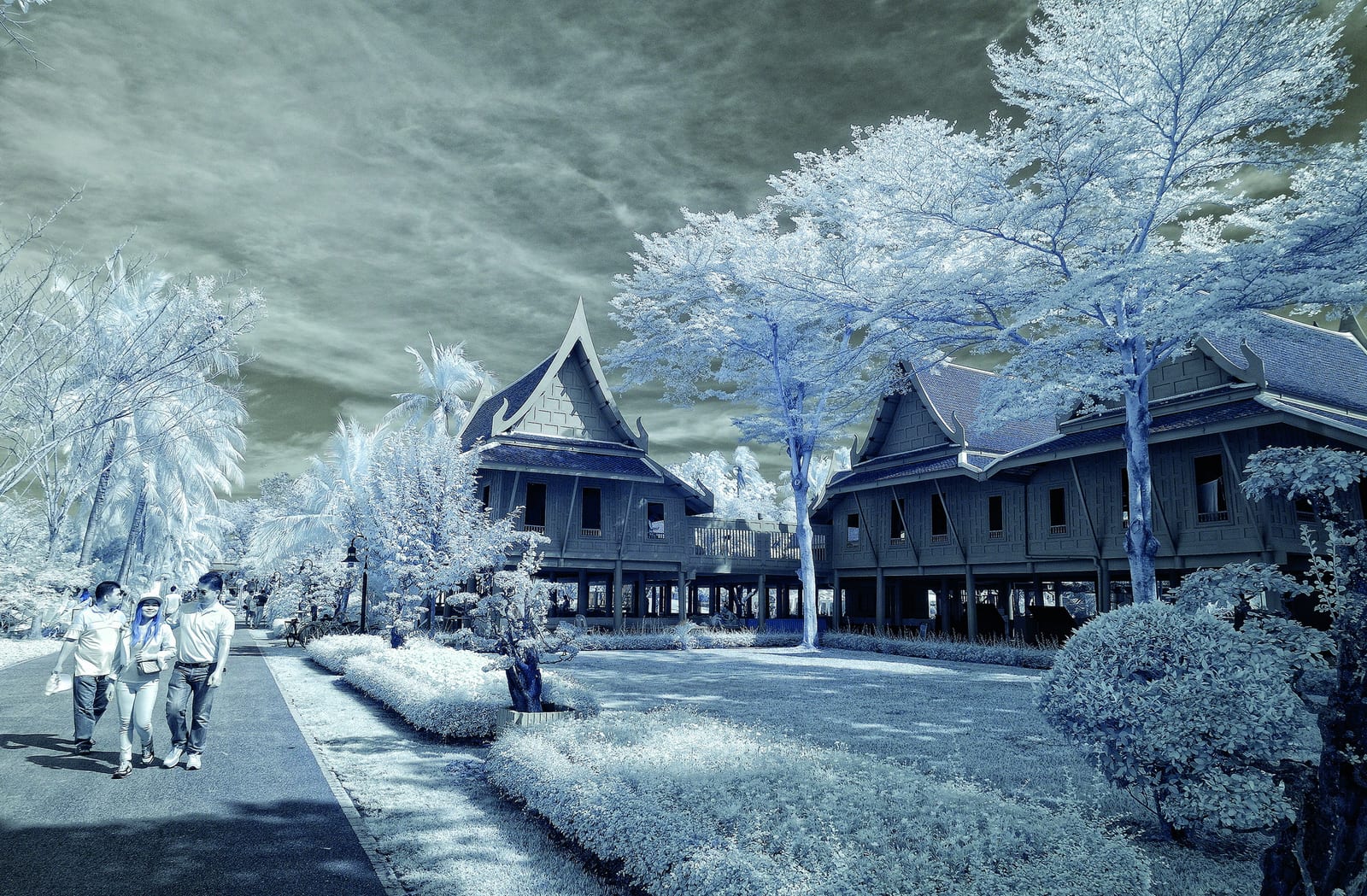
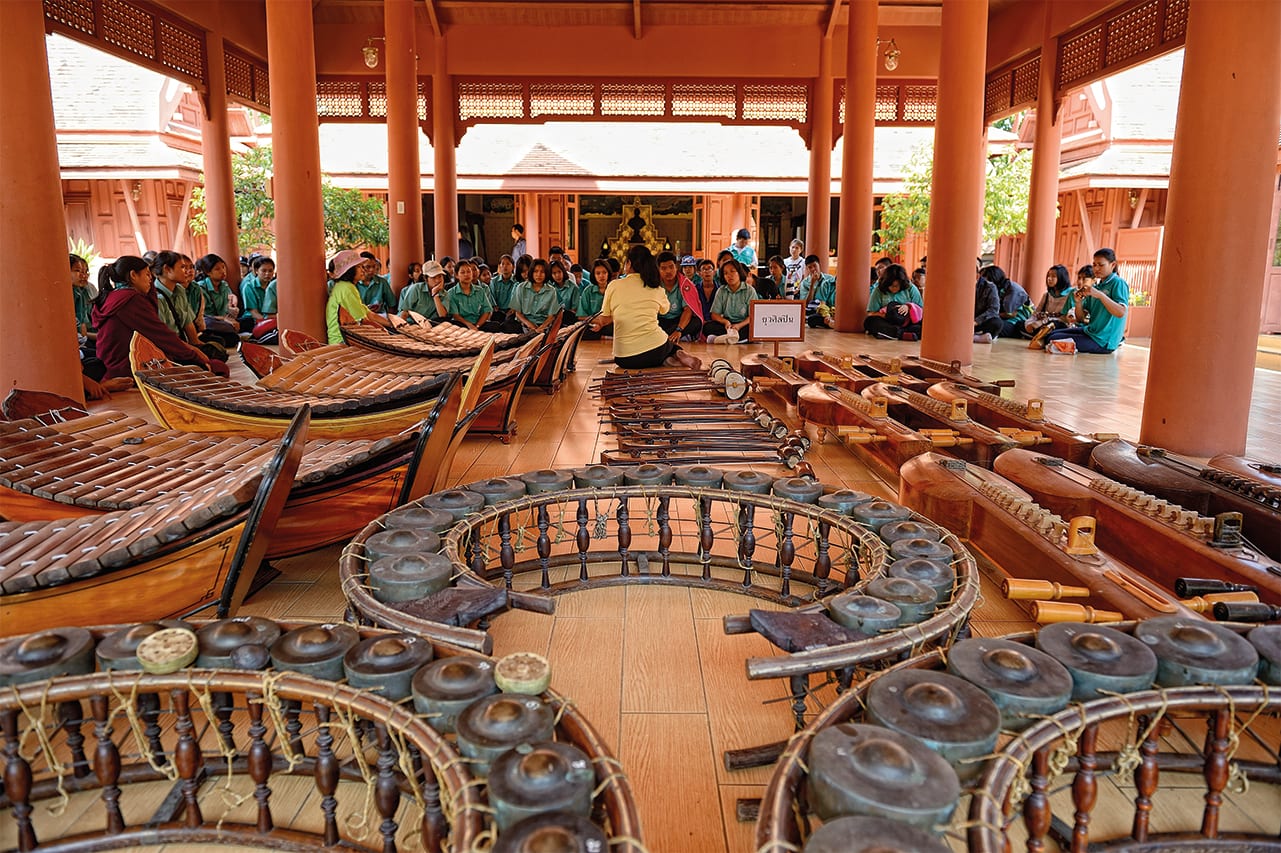
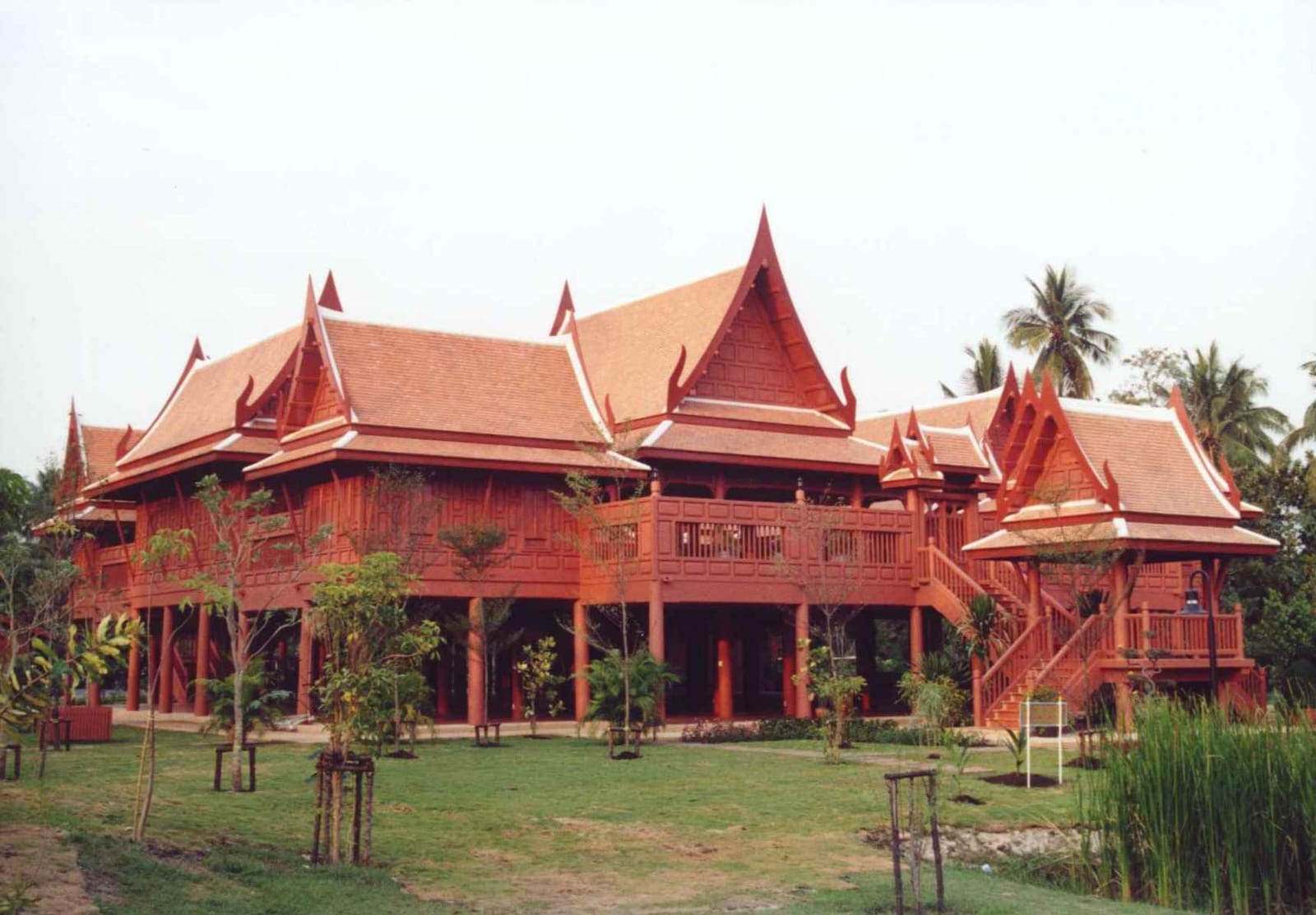
If you're visiting Amphawa and want a quiet, shaded retreat from the buzz of the floating market, King Rama II Memorial Park is the answer — and it's right next door to the market, reachable on foot, sharing the same parking area. The park was created to honour King Rama II, who was born in this area, and it suits anyone who appreciates old Thai architecture, photography, families with children who want to learn something, or simply people who want to wander under the trees along the Mae Klong River.
The centrepiece is the cluster of five traditional Thai houses set up as a museum of early Rattanakosin-era life: a men's pavilion, a women's pavilion, a central hall, a dessert pavilion, and further display spaces housing Thai musical instruments, khon masks, and Benjarong ceramics — giving a vivid picture of how people lived two centuries ago. Multiple reviewers say the traditional houses are genuinely beautiful, the botanical garden of literary plants and lotus pond are cool and peaceful, and the riverside viewpoint produces good photographs from every angle. On some days there are khon dance and classical drama performances at no extra charge.
Admission is very reasonable: 40 THB for Thai adults, 20 THB for children, 60 THB for foreigners. Bicycles are available to rent for 40 THB an hour; wheelchairs are lent free of charge. Open daily except Wednesdays, 08:30–16:30 (ticket sales close around 16:00). Budget one to two hours to walk around comfortably.
Important: the park is closed on Wednesdays — arriving on that day means a wasted trip. Because it sits next to the floating market, which fills up on Friday–Sunday evenings, the ideal strategy is to visit the park in the morning or early afternoon while the light is good and the crowds are thin, then transition to the floating market as evening approaches.
Assumption Cathedral Bang Nok Khwaek
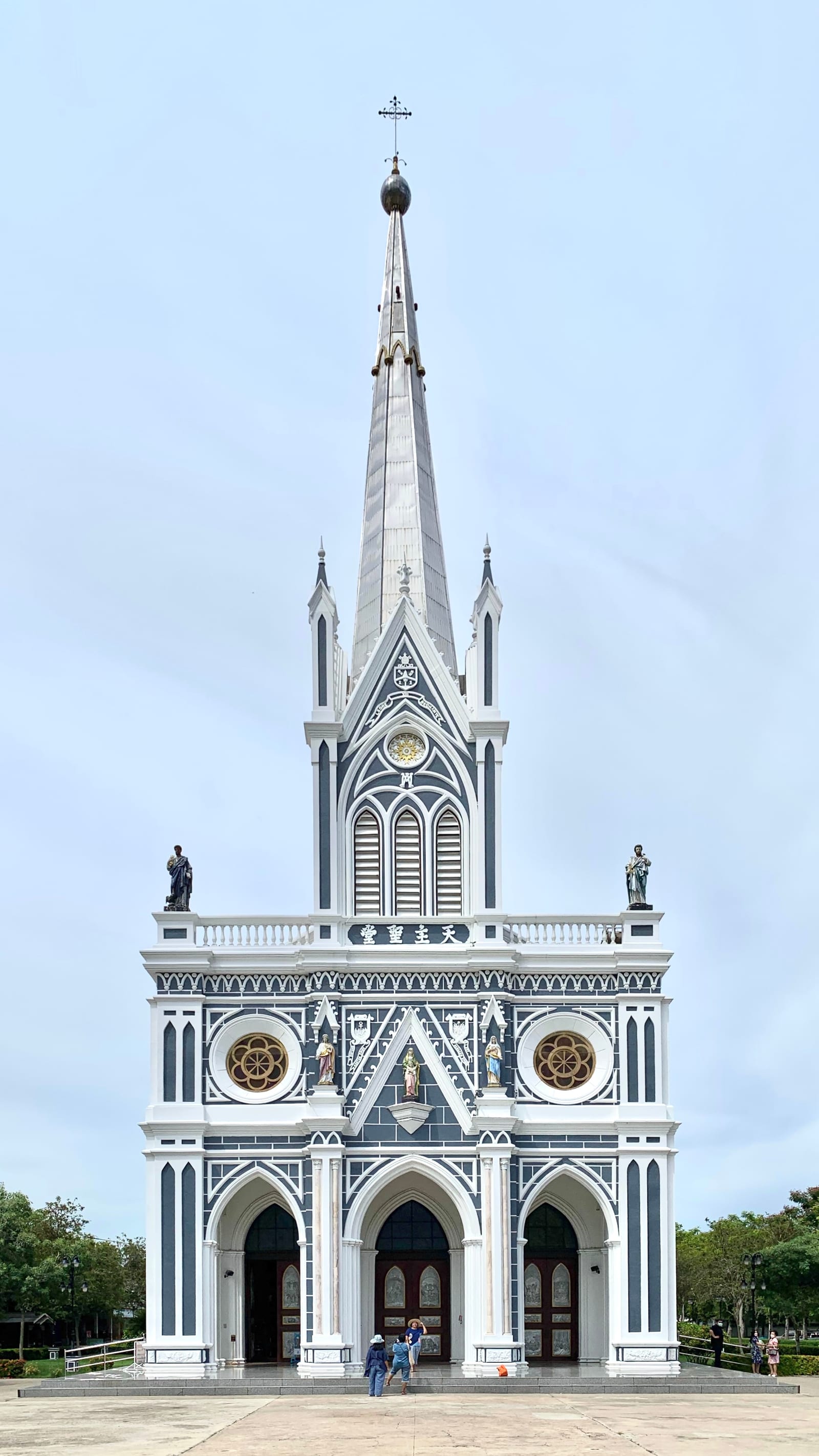
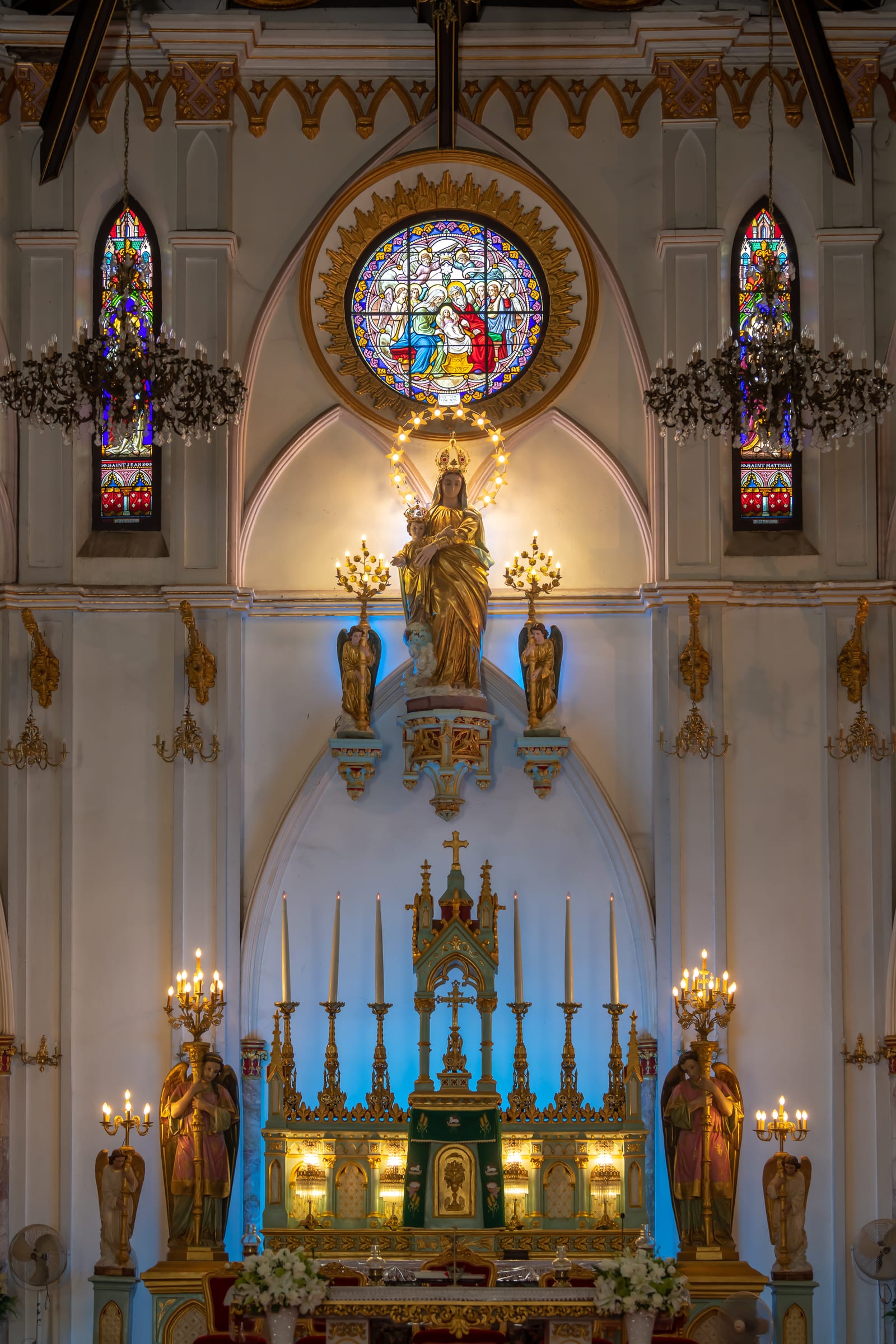
After exploring Amphawa, drive another eight kilometres to Bang Nok Khwaek and you'll encounter an image that stays with you: a white-and-blue church with a pointed spire rising above the Mae Klong River surrounded by orchards. This is Assumption Cathedral Bang Nok Khwaek, a Neo-Gothic cathedral over a hundred years old, built by French missionaries starting around 1890 and taking six years to complete. It serves as the cathedral of the Diocese of Ratchaburi. It's a genuine find for architecture enthusiasts, photographers, and anyone who wants a Samut Songkhram itinerary that goes beyond the usual stops.
The highlights: the steeple visible from far away, and the French stained-glass windows depicting scenes from the life of the Virgin Mary and the saints. On a sunny day, light filtering through the coloured glass produces an effect that multiple reviewers describe as simply worth standing still for. Small details such as the carved wooden doors — the work of Chiang Mai craftsmen — represent an interesting fusion of Eastern and Western craftsmanship. The exterior and grounds are easy to photograph, with a wide parking area.
Entry is free, no ticket required. The exterior can be viewed any day; for a full interior visit it's advisable to contact the cathedral in advance, since the doors may be closed during services (Sunday morning Mass is held regularly). Visitors who've been there note it can feel warm inside during midday. This is a religious site — dress modestly, speak quietly, and be respectful during any services.
The cathedral draws visitors because a riverside Gothic church of this calibre is rare in Thailand. It fits naturally into an Amphawa–Bang Khon Thi day trip; arriving mid-morning when the light is good gives you time to enjoy the space before continuing to a café or the floating market in the evening.
🛏️ Recommended Stays in Samut Songkhram
To get the most out of Amphawa, stay at least one night — explore the floating market in the evening, take a firefly boat ride, then wake up to a quiet canal-side morning with no rush to leave. We've gathered well-located homestays on the Amphawa waterfront and hotels in Mae Klong town centre, all easy to book in one place.
🔍 Check Samut Songkhram hotel prices (Agoda)Don Hoi Lot
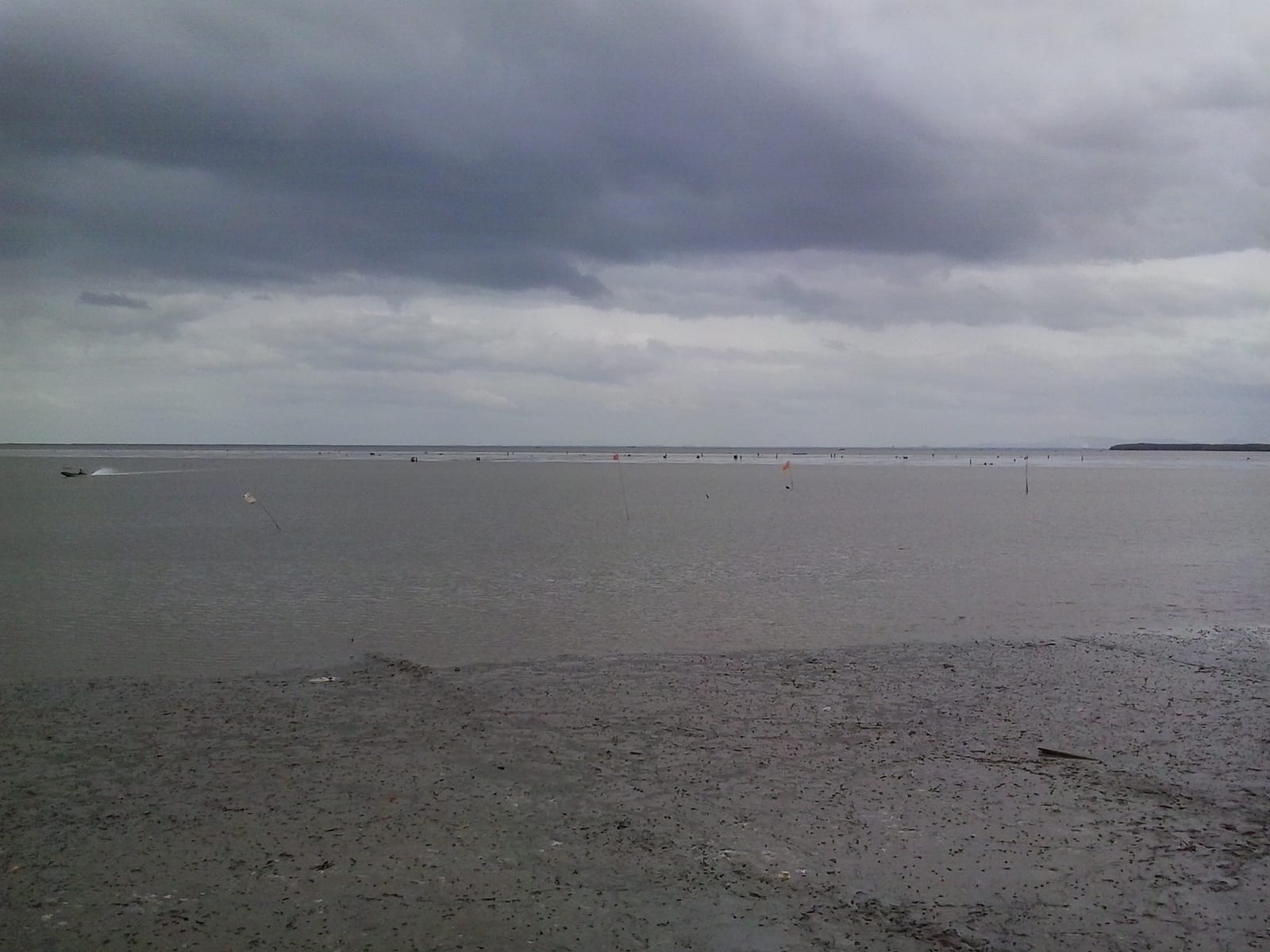
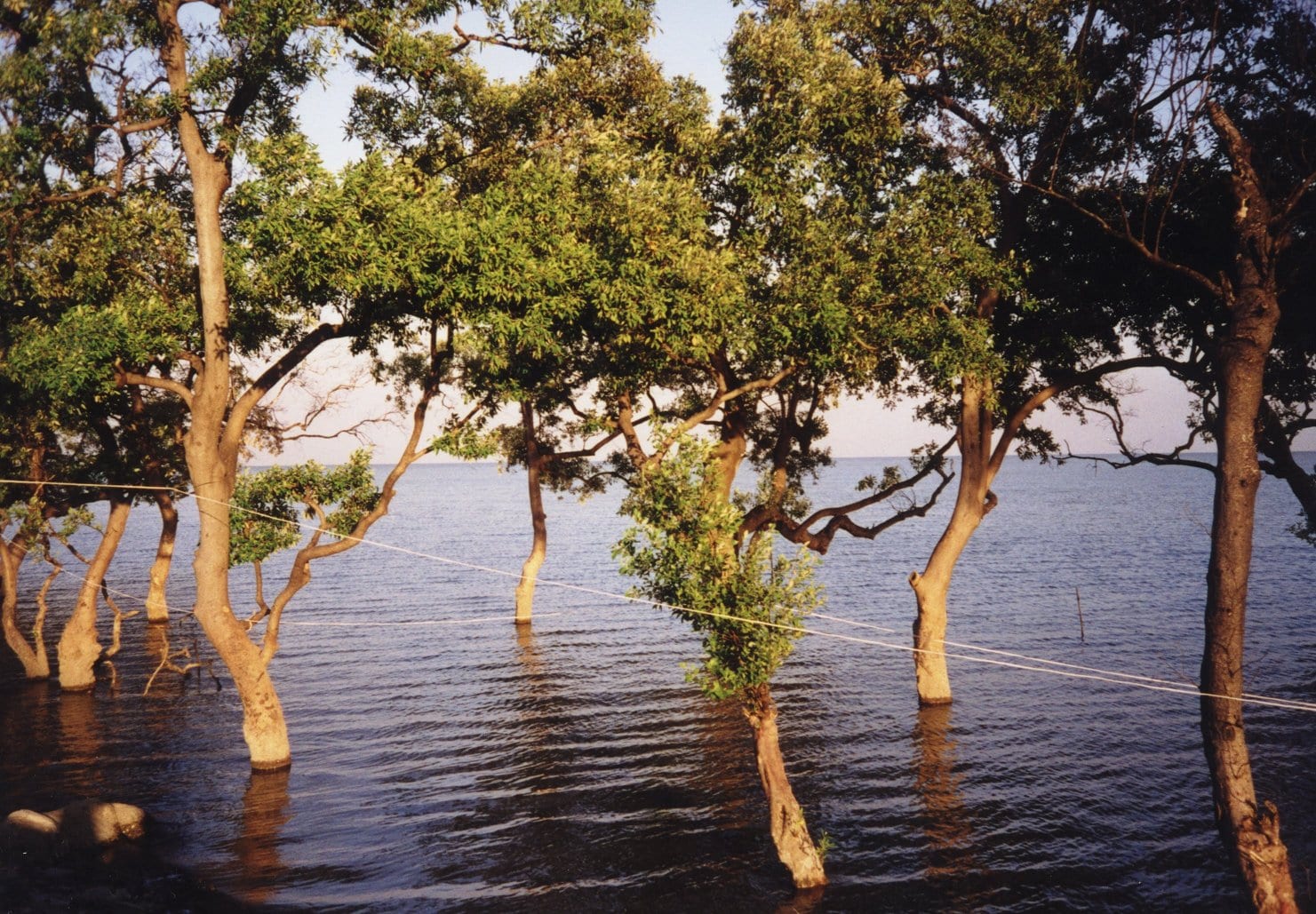
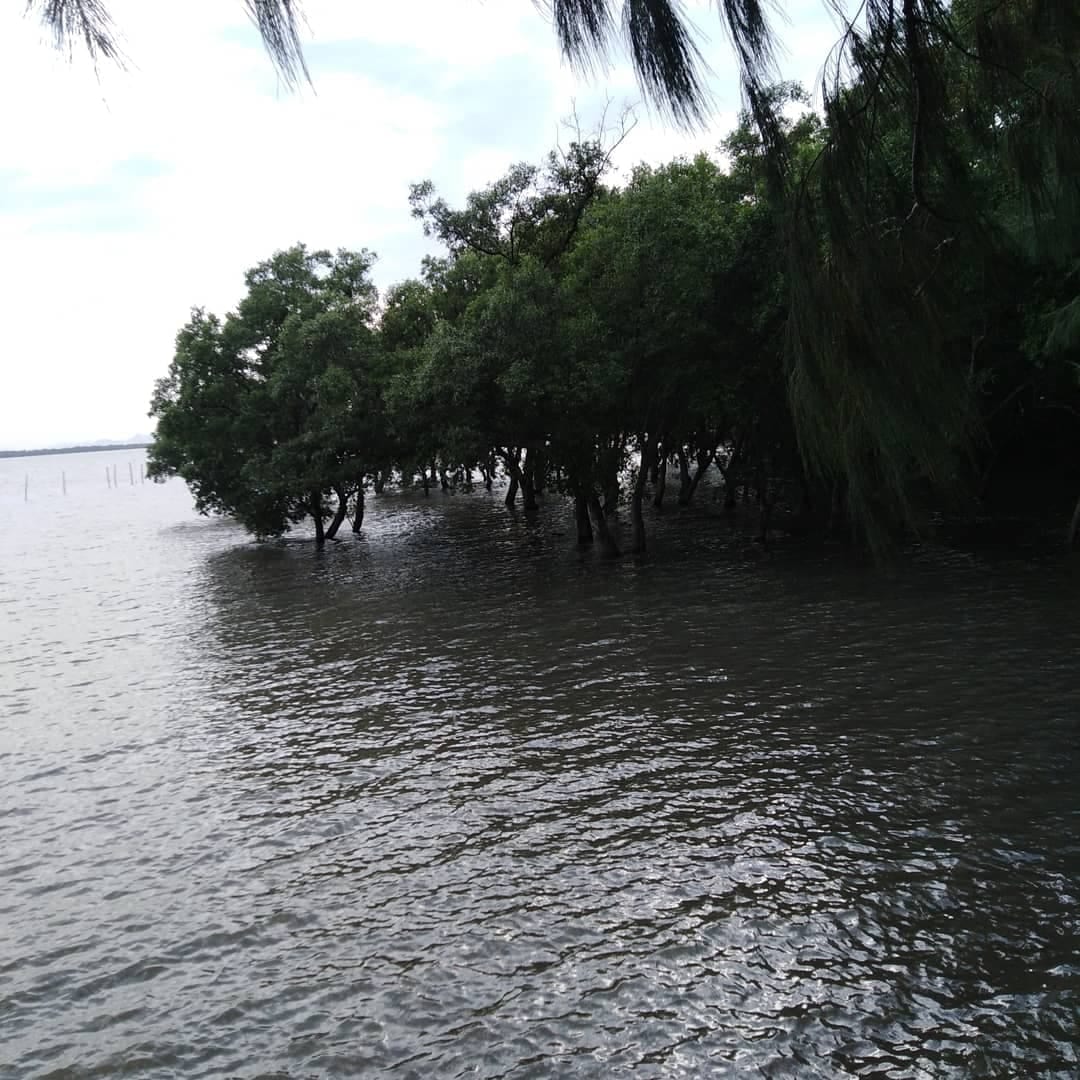
Don Hoi Lot is a natural sand and mudflat at the mouth of the Mae Klong River in the Bang Cha Keng / Laem Yai area of Mueang Samut Songkhram district. It stretches for several kilometres and is famous for its natural population of razor clams (hoi lot). This is Mae Klong town's defining landmark — somewhere almost everyone who comes to the province visits. It works well for families, seafood lovers, and anyone who wants to sit by the sea without driving far from Bangkok, which is barely an hour away. Walking in, you find a long row of seafood restaurants and souvenir stalls creating a lively, informal market atmosphere from morning through evening.
The highlight that makes the most difference: come during low tide (check the tide table before you go — reviewers who arrived at high tide say they missed the sandbar entirely). When the water retreats, locals wade out and tap bamboo poles dipped in lime water into the sand to draw out razor clams — a genuine local technique. Another popular activity is chartering a boat to visit the Krom Luang Chumphon Shrine in the middle of the bay, then cruising through the mangroves to see fishing community life. Boat packages range from short to long routes at around 300–400 THB per trip; negotiate the price before you board. For food: razor clams stir-fried with basil or blanched with dipping sauce, and all manner of fresh seafood. Finish by shopping for dried seafood and sea salt crystals to take home.
Entry to the sandbar is free; roadside parking is available. Open around the clock, with seafood restaurants operating from roughly 09:00–20:00. The draw is the combination of nature, affordable seafood, and a sunset photo spot all in one location. In the cool season, seagulls migrate here and letting the kids feed them is a memory many visitors mention. Key advice: always check the tide schedule first, wear shoes you don't mind getting muddy, and pick the busier-looking restaurants for the freshest catch at the best price.
Tha Kha Floating Market

If you're tired of floating markets that have turned entirely into souvenir stalls, Tha Kha Floating Market is the answer. Set amid coconut groves in Tha Kha subdistrict, Amphawa district, this is a genuinely working community market that has preserved a way of life going back generations. Local orchard growers paddle their boats out carrying produce from their own gardens — coconuts, palm sugar, guava, pomelo, rose apples — and trade it along the canal in the same way their families have done for over a century. It suits anyone who wants a real floating market rather than a staged one.
The highlights that you cannot skip: the food and sweets sold from paddle boats at honest local prices, some items starting at just 20 THB a plate. The range covers boat noodles, fish maw soup, rice noodles with curry, Thai home cooking, and traditional sweets including kanom bueng. Fresh young coconut, cut open right in front of you from the tree, is especially popular. For a deeper look at canal life, rent a paddle boat to explore the orchards and community (roughly 200 THB per boat depending on the route and time). Multiple reviewers note that prices are genuinely low because you're buying directly from the grower.
One essential thing to know: Tha Kha opens only on Saturdays, Sundays, and public holidays from around 06:00 until the early afternoon (approximately 14:00). This is a morning market — goods sell out fast. Arrive early if you want to see the boats packed and the stalls full. No entry fee; bring cash since most vendors only accept it. The market is not far from Amphawa Floating Market, about an hour and a half from Bangkok via Rama II Road.
What people love about it is the simple, unhurried honesty of the place — a quality that has largely vanished from most floating markets. You walk along the canal through coconut shade, chat with the growers, eat inexpensive food, and slow down. A small note: arriving late or on a crowded weekend can feel cramped along the narrow paths; if you plan to charter a boat tour, confirm the price clearly before setting off.
Amphawa Firefly Boat Tour
If you visit Amphawa Floating Market and don't take an evening firefly boat ride, you've left the best part out. This has been Amphawa's signature night activity for years. A longtail boat departs from a pier beside the market, heads along Amphawa Canal and into the Mae Klong River, then slows near clusters of lamphu trees lining the bank. The boat lights go off, and you watch fireflies blinking in tiny pinpoints across every branch — some trees flash in near-perfect synchrony, like a natural Christmas tree. It's a good fit for couples, families with children, or groups of friends looking for a relaxed activity after eating their way through the market stalls.
The moment you don't want to miss: lights out on the water, silence, and the fireflies alone. Many boats also stop to let passengers offer prayers at a riverside shrine or observe evening village life along the way. Shared-boat rides cost around 60–80 THB per person; chartering a whole boat runs about 500–600 THB if you want a private trip. Each ride lasts approximately one to one and a half hours. Several pier operators compete for business — Khun Ya pier, the market-side pier, and various resort boats are all options. The main boarding point is near the municipal pier (Second Bridge) on the floating market side of Amphawa.
Amphawa Floating Market operates only on Fridays through Sundays and public holidays, with afternoon through evening activity. Firefly boats typically launch after sunset, with peak hours around 19:00–20:00. The queue builds up, so it pays to book or buy tickets early in the evening. The reason people make the trip from Bangkok — just over an hour away — is that firefly viewing on this scale is genuinely hard to find close to the city.
Practical notes from real reviews: fireflies are most visible during the rainy season (May–October) and on dark nights with no moon. Coming in the dry season or on a full-moon night may yield fewer fireflies; keep expectations grounded — this is a natural phenomenon with no guarantee. Don't wear strong insect repellent or perfume, and never point a torch or camera flash at the trees, as light disturbs the fireflies and makes them harder to see. Wear long sleeves as a light mosquito barrier.
Amphawa Chaipattananurak Conservation Project
After walking through Amphawa Floating Market, if you want somewhere to sit and breathe away from the canal crowds, the Amphawa Chaipattananurak Conservation Project is a spot many people walk straight past — even though it's right next to the market. This is a royal-initiative community conservation area under the patronage of HRH Princess Maha Chakri Sirindhorn, managed by the Chaipattana Foundation on land donated by Amphawa residents. Inside you'll find a shaded canalside garden, the Nakha Warang cultural courtyard, a community life exhibition room, a demonstration agricultural garden, community shops, and the Phatthara Phat shop selling foundation products. It suits people who want a calm corner, those who enjoy learning about local traditions, and families with children or elderly members.
The thing reviewers talk about most is the Chancharla café, decorated to feel like an old railway station. The signature drink is "Muang Chuen Chancharla" — butterfly pea flower blended with lemongrass and lime — at a gentle price. Another section of the café, the Phatthara Phat side, feels like sitting in a garden with a small pond alongside it. Also worth pausing at: the Tao Tan Palm Sugar Demonstration Centre, where traditional coconut palm sugar production is shown in its original form, and the Nakha Warang courtyard where demonstrations of Thai music, coconut-leaf weaving, and folk performances happen on selected dates.
Entry is free; your budget goes to drinks, food, or souvenirs you choose. The exhibition rooms and garden are open during the day roughly 08:30–16:30, while the shops and café are busiest during floating market hours on Fridays through Sundays, afternoon into evening. The project sits right on the Amphawa Canal waterfront, about seven kilometres from Mae Klong town, reachable on foot from the floating market.
What brings people here is the combination of greenery, calm, and story — a contrast to the packed market stalls nearby. Several reviews mention that you can bring food purchased from boats in the floating market and eat it comfortably here, making it a natural rest stop mid-visit. Note that some activities and performances only happen on weekends; on weekdays you get the peaceful atmosphere but fewer shops open. Allow one to two hours to walk around the garden properly.
Wat Phet Samut Worawihan (Wat Ban Laem)

When Mae Klong people list the places you absolutely cannot skip in Samut Songkhram, Wat Phet Samut Worawihan — widely known as Wat Ban Laem — comes up first. The temple enshrines Luang Pho Ban Laem, a standing Buddha image in the alms-bowl receiving pose, standing approximately 167 centimetres tall. This is the province's most sacred guardian image, drawing a constant stream of worshippers from the local community and visitors from across Thailand. According to tradition, the image drifted down the Mae Klong River and was enshrined by families from Ban Laem who had fled from Phetchaburi. The temple was originally called Wat Si Champa before being elevated to royal monastery status and given its current name.
Most visitors come to pray for health protection from illness, safe travels, and smooth careers. The highlight is entering the ordination hall, bowing before Luang Pho Ban Laem, applying gold leaf, and lighting incense. Multiple reviews describe the atmosphere inside as calm, well-lit, and genuinely moving. Around the compound you can also make merit by offering monk supplies or purchase sacred amulets to take home. On Tripadvisor the temple ranks as the number-one thing to do in Samut Songkhram, with a score of 4.2, and it draws international visitors as well.
The location is particularly convenient: right in the centre of Mae Klong town, only a short walk from Maeklong Railway Market. It's easy to combine a morning prayer visit with a trip to watch the train thread through the market stalls — a pairing local residents often recommend. No admission fee; a wide parking area is available. Restaurants and street food line the surrounding streets. The temple is open for worship approximately 06:00–17:00 daily.
Practical notes: on long weekends, Saturdays and Sundays, major temple festivals (Songkran in April, the annual fair in October, Chinese New Year), the compound gets very crowded. For a more comfortable visit, come early on a weekday morning, dress modestly, and plan to continue to Maeklong Railway Market afterwards for a full morning itinerary.
Book Tours, Tickets & Activities in Samut Songkhram
Want to cover several highlights in a single day without worrying about transport? Consider a guided Amphawa–Maeklong Railway Market tour, or pre-book a firefly boat and floating market package through Klook or GetYourGuide. Options include Bangkok pickup, English-speaking guides, and skip-the-queue boat tickets — ideal for travellers who want a smooth short trip.
💡 Before You Go to Samut Songkhram
From Bangkok, drive or take a minivan or the Mae Klong train — just over an hour. Grab is available but sparse compared to larger cities. Within Mae Klong town and Amphawa many spots are walkable; river ferries and motorcycle taxis fill the gaps. Renting a car is the most practical option if you plan to cover several districts in a day.
Most stalls at the floating markets, Maeklong Railway Market, and the Don Hoi Lot seafood area accept cash only. Some vendors have QR payment, but not all. Carry small notes to pay quickly and avoid change problems.
For Maeklong Railway Market, aim for the 14:30 or 17:40 train arrival. Amphawa Floating Market is liveliest on Friday–Sunday evenings. Firefly boats run after sunset. Visiting on a weekday means thinner crowds and easier photography.
Wat Bang Kung, Wat Phet Samut Worawihan, and Assumption Cathedral Bang Nok Khwaek are active religious sites. Cover shoulders and knees, remove shoes when entering the ordination halls, and keep your voice low during prayers or services.
Most vendors speak Thai; basic English is workable at the main tourist spots and boat piers. English menus appear at larger restaurants. A translation app or pointing at a picture works well everywhere. Mae Klong locals are friendly and helpful with visitors.
For both the firefly boat ride and the Don Hoi Lot mangrove boat, wear the life jacket provided on board. Agree on the price before boarding (firefly ride: around 60–80 THB per person shared, or 500–600 THB to charter the whole boat). Keep valuables secure while boarding and disembarking.
Plan the Best 1–2 Days in Samut Songkhram
The classic single-day itinerary: arrive in the early afternoon, head to Maeklong Railway Market in time for the 14:30 or 17:40 train arrival, then move to Amphawa Floating Market for the evening — walk, eat grilled seafood by the canal, and as night falls, join a firefly boat ride departing from the Amphawa pier. Three highlights in one circuit.
If you have two days, spend the following morning at Wat Bang Kung to see the Bodhi Tree Chapel and Bang Kung Camp, then continue to Assumption Cathedral Bang Nok Khwaek, and close the trip at Don Hoi Lot during low tide to walk the sandbar and eat seafood. Tha Kha Floating Market opens only on Saturdays and Sundays — if you want to see a genuinely local-style floating market in the morning, factor in an early start on the second day.
Staying overnight in Samut Songkhram makes the difference — wake up to quiet canal-side mornings with no rush to leave. We've curated well-located stays in the Amphawa area and along the Mae Klong, all easy to book.
See recommended stays in Samut Songkhram