🔄 Last checked 26 Jun 2026 · details and hours can change — check the venue before you go
📍 All restaurants on the map
Tap a pin for the spot + nearby stays
The charm of Sing Buri is that everything sits close together — a short drive covers every kind of attraction. The riverside town center has old temples and a long stretch of street art along the levee, perfect for an evening stroll in the cool breeze. The Bang Rachan side is the historical zone, with the Heroes Park and a retro Thai market where the vendors dress in full traditional jong-kraben and sabai. Follow the river up through Inthaburi and Phrom Buri and you'll find an old chapel wrapped entirely by bodhi roots, a shady, peaceful meditation temple, and a glasshouse garden café where you can chill all day. There's no need to rush here — you can work your way through the sights one by one at an easy pace.
The highlight locals hold up as the town's signature is the reclining Buddha at Wat Phra Non Chaksi Worawihan — a giant reclining Buddha over 47 meters long, one of the largest in Thailand, and a place anyone visiting Sing Buri should stop to pay respects at least once. Right next door is the Khao Ngam Thai Buffalo Conservation Center, where you can get up close and feed the handsome-horned buffalo. On the Bang Rachan side there's the legendary tale of the 11 village leaders, retold for hundreds of years, and the unmissable Wat Amphawan, temple of Luang Por Jaran Thitthammo — a famous meditation temple that people travel from all over the country to practice vipassana at. Between the old temples, retro market, cafés, and farmstays, Sing Buri is more fun to explore than you'd expect.
Wat Phra Non Chaksi Worawihan
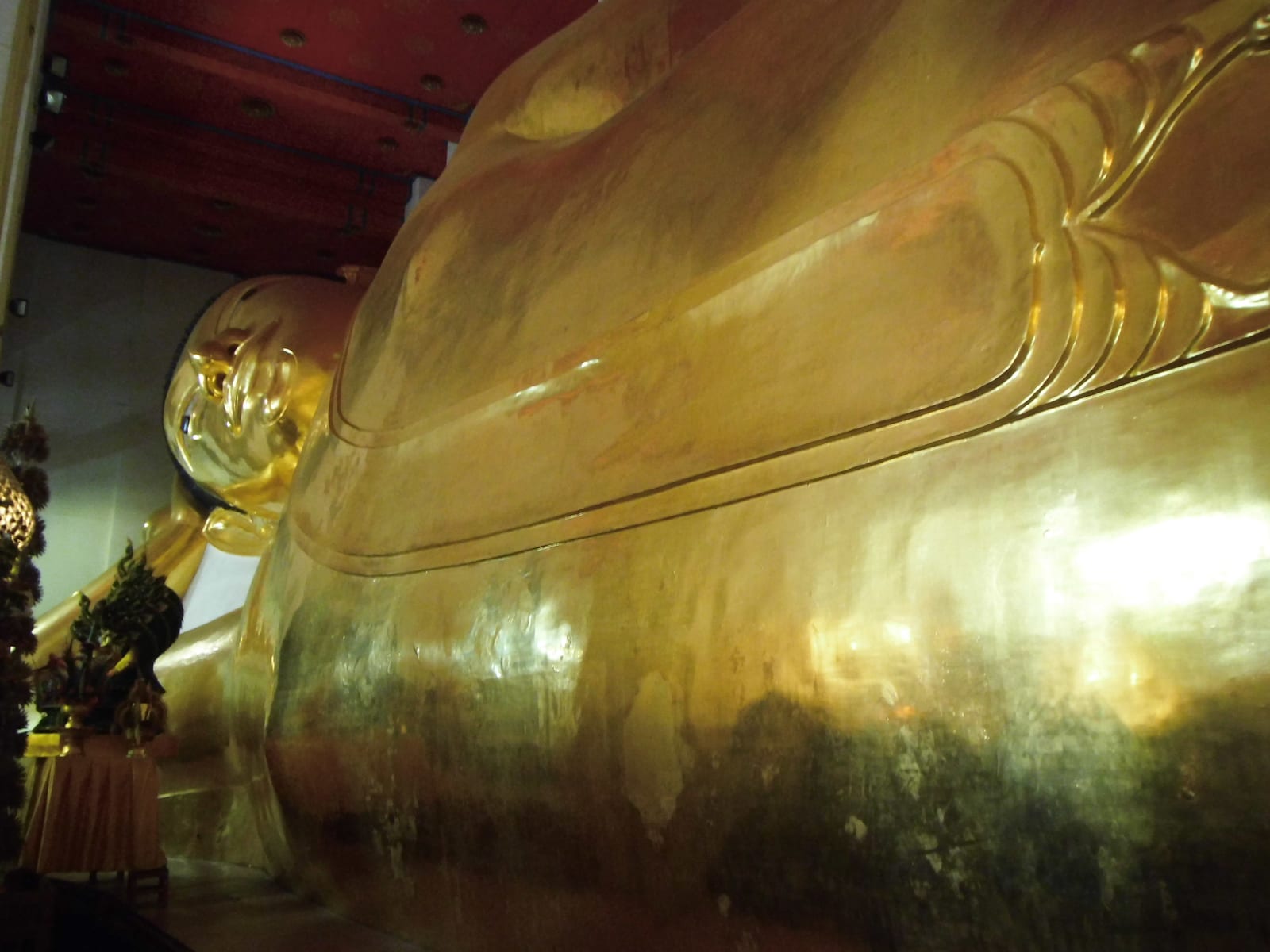
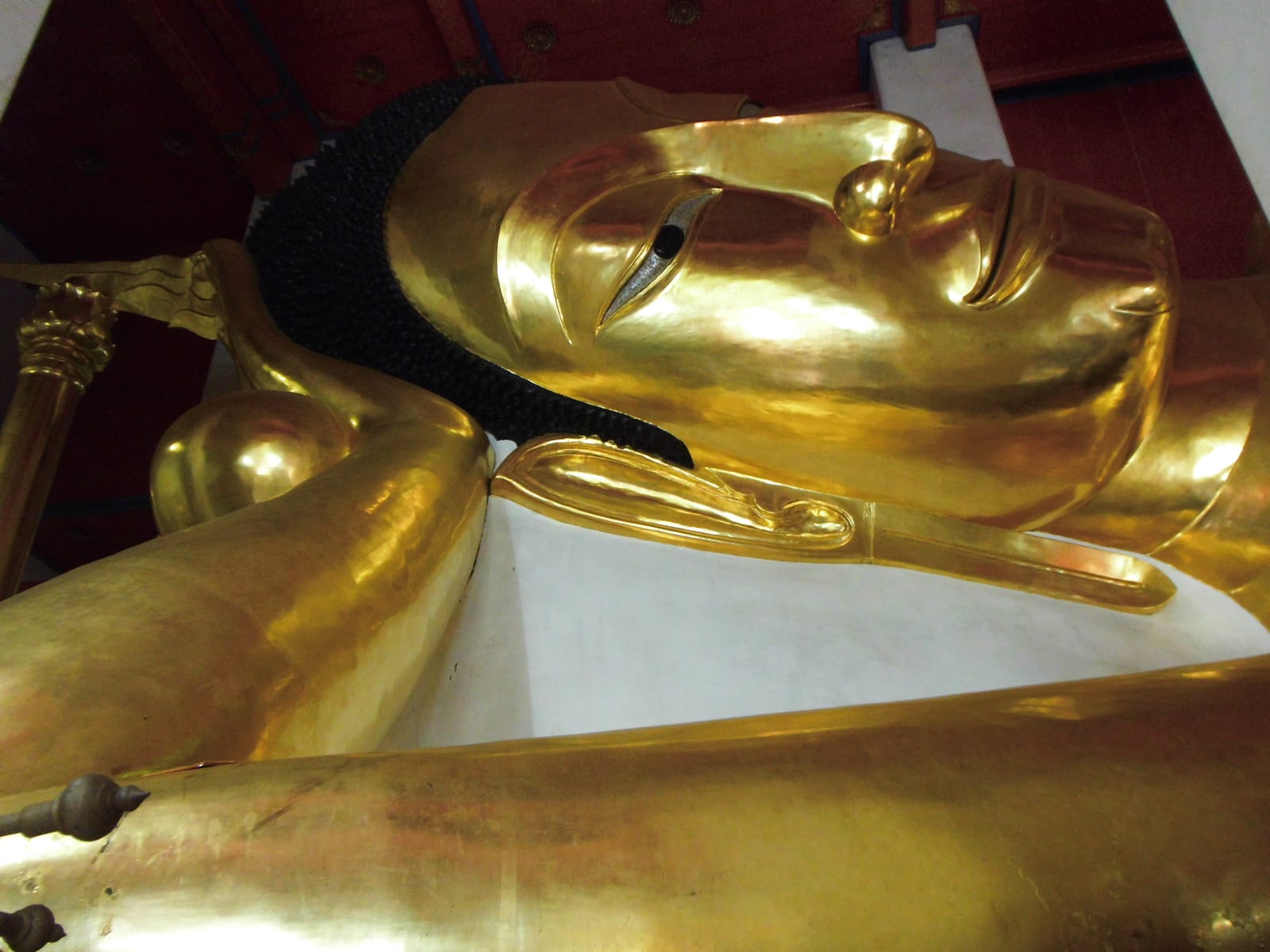
Wat Phra Non Chaksi Worawihan is a third-class royal temple of the Worawihan grade, in Chaksi Subdistrict, about 4 kilometers from Sing Buri town. The highlight everyone comes for is the "Phra Non Chaksi," a giant reclining Buddha measuring 47 meters and 42 centimeters — one of the largest reclining Buddhas in Thailand (many sources rank it among the country's biggest). It's Ayutthaya-era art, and many reviewers describe the serene, radiant face as beautifully calm. Step into the wihan and you have to crane your neck to take in the whole figure. It suits people who love paying respects and making merit, history buffs, and families who want an easy temple outing close to Bangkok with older relatives.
Beyond the reclining Buddha, the temple has plenty more to see — the Phra Kaeo and Phra Kan Buddha images, a gilded lacquered stone Buddha, finely carved teak pillars, and a small museum housing antiquities and old banknotes. There's a large sala tree in front of the wihan and a shady, peaceful atmosphere. Reviewers like how well laid-out the grounds are, with rest pavilions and a fish-feeding spot; on Saturdays, Sundays, and public holidays there's a tram that circles the temple from around 9am to 3pm. Anyone visiting with kids will enjoy these little corners.
There's no entry fee — make merit as you wish. The parking lot is large and shaded, and the front and surrounding areas are lined with restaurants, snack stalls, and Sing Buri OTOP souvenir shops, so you can pick up processed Mae La snakehead fish or local sweets to take home. The temple is open for worship every day; the popular hours are around 08:00–16:00 (it sometimes opens earlier). If you want to practice meditation here, they hold free vipassana courses on the 4th–10th of every month.
It's popular because it's Sing Buri's signature temple — easy to reach, complete for merit-making, letting you both pay respects to the giant reclining Buddha and admire the old artwork. Reviews on travel platforms rate it well and rank it among the top attractions in the province. Good to know: it's a sacred place, so dress modestly, remove your shoes before entering the wihan, and note that weekdays are quieter than weekends, when crowds are larger and all the shops are open.
Wat Phikun Thong (Luang Por Yai)
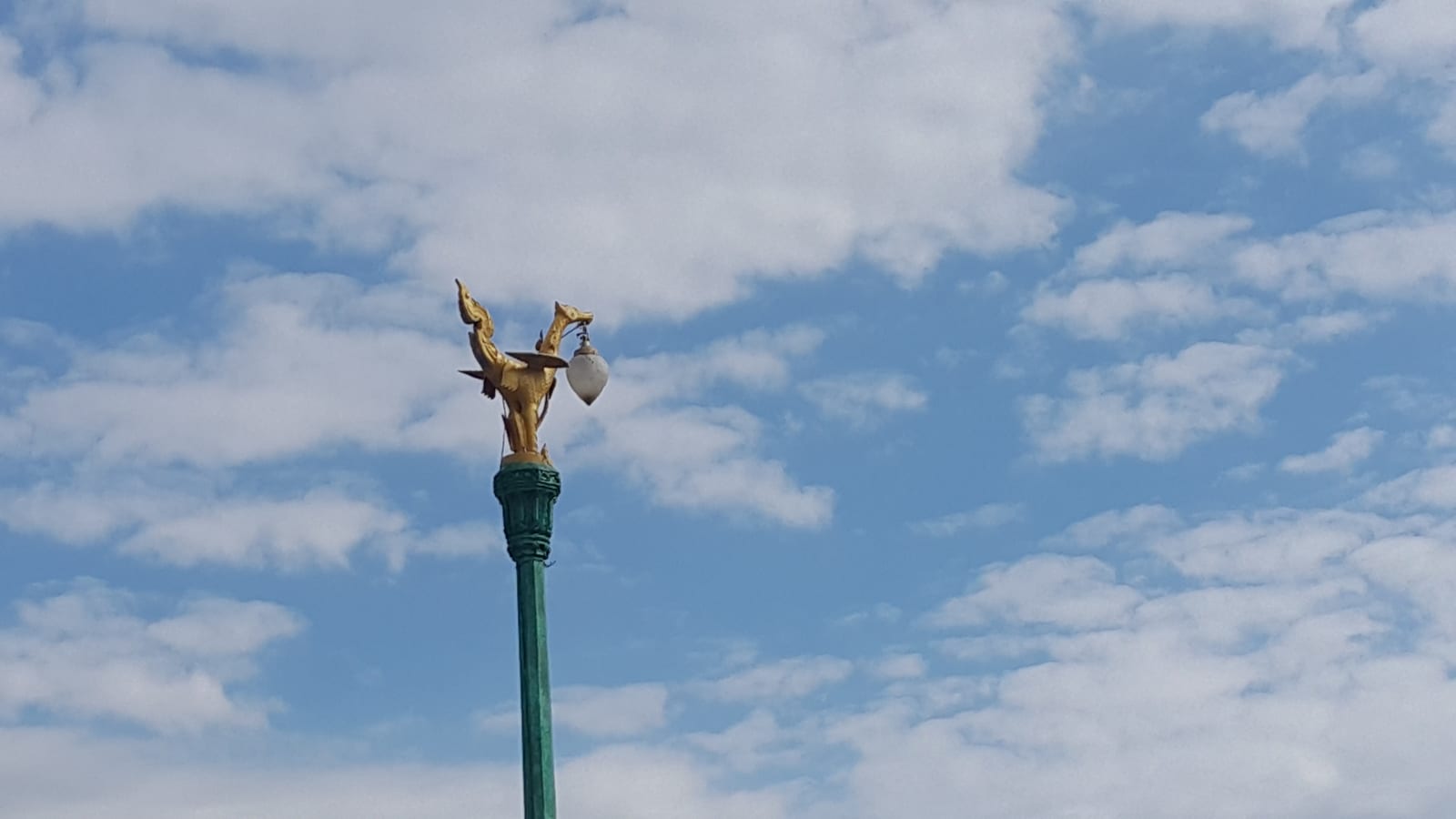
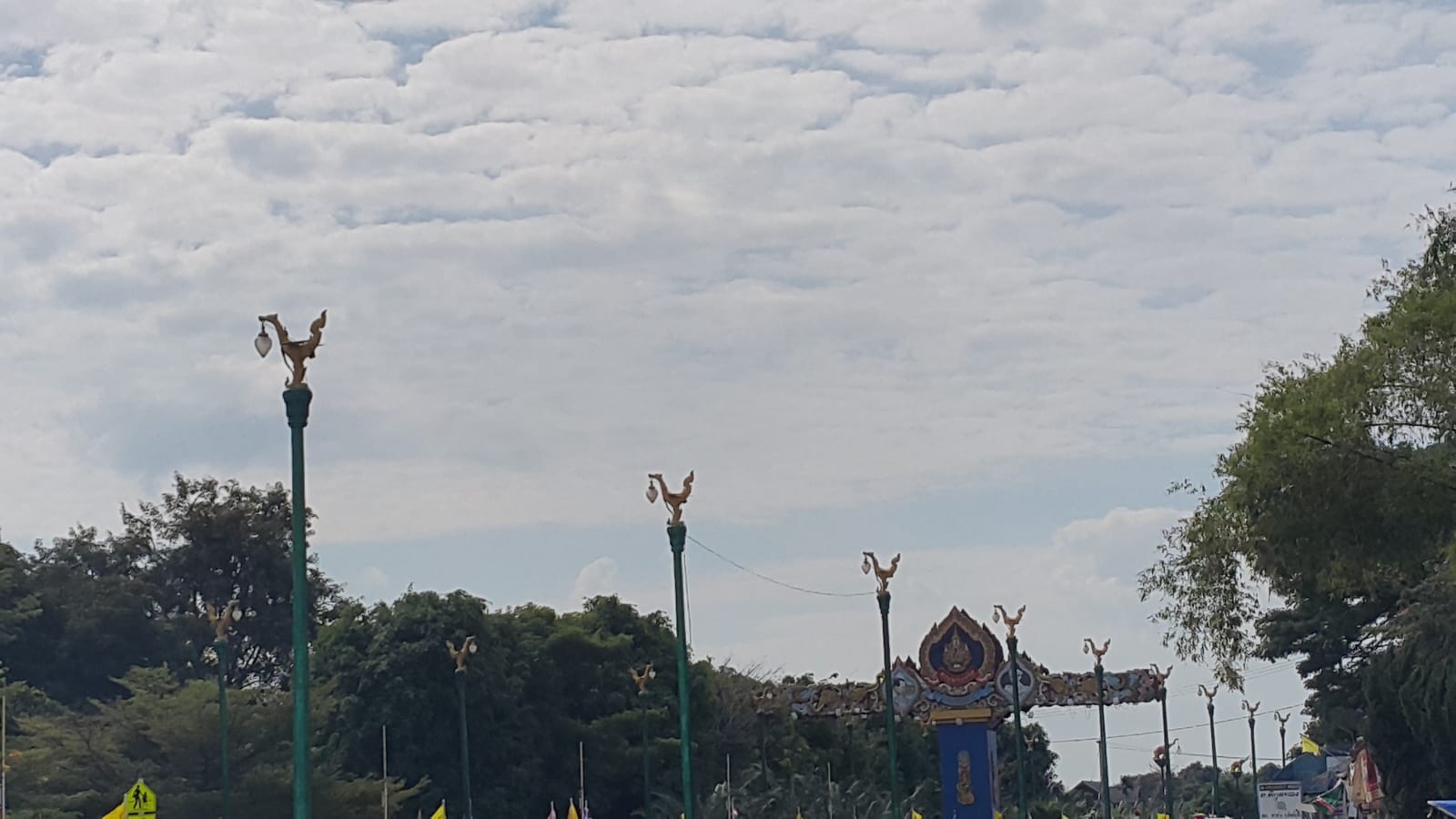
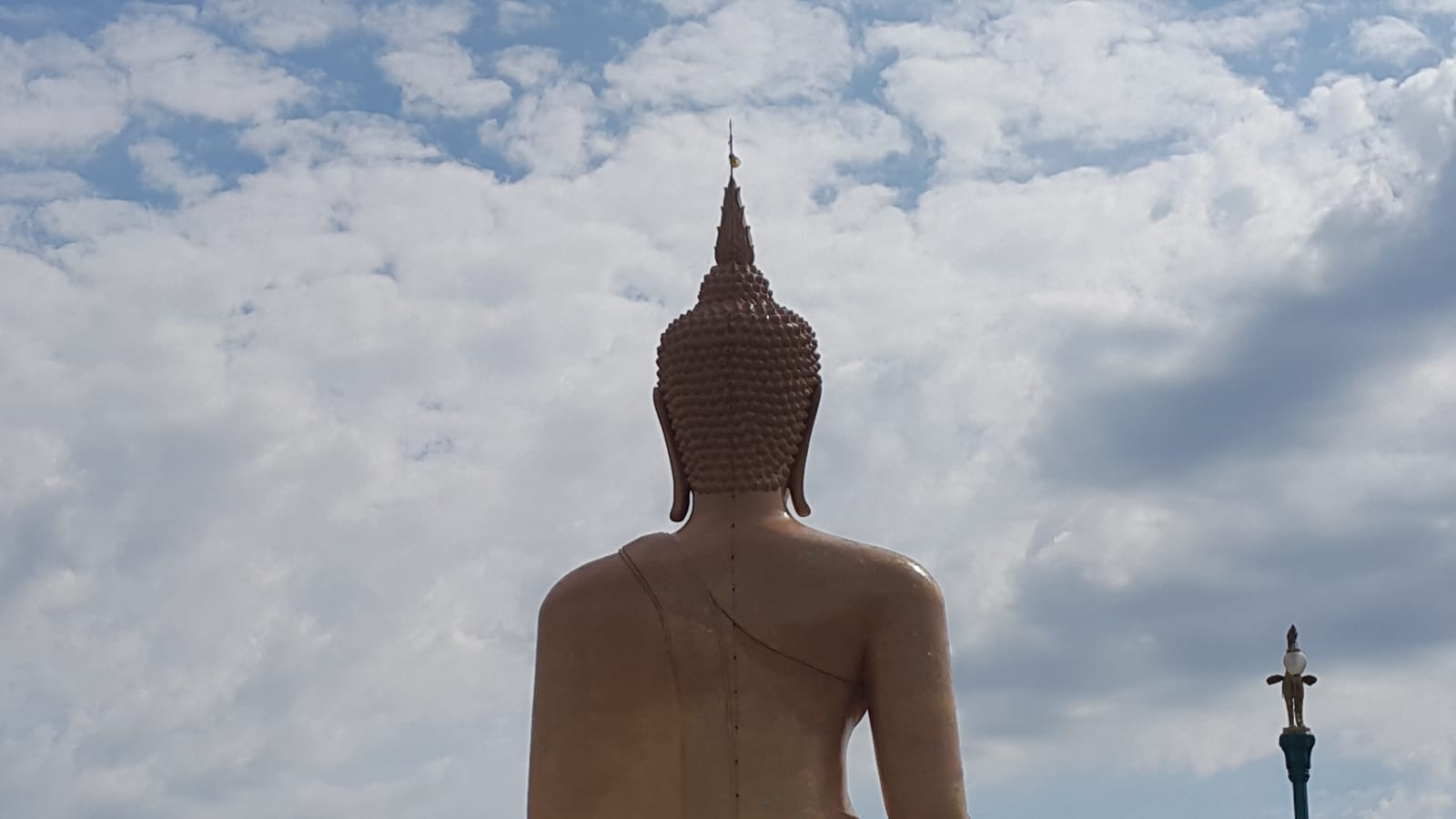
If you come to Sing Buri wanting a temple to worship at that's large, beautiful, and full of stories, Wat Phikun Thong (a royal temple) in Phikun Thong Subdistrict, Tha Chang District, is one of the most popular spots. Locals commonly call it "Wat Luang Por Phae," because it's the temple of Luang Por Phae, a famous revered monk honored across the whole country. The star here is "Luang Por Yai," or the Phra Phuttha Suwan Mongkhon Maha Muni — a giant golden Buddha in the blessing pose, with a lap-width of 11 wa 2 sok, entirely covered in gleaming gold mosaic, standing prominently in the middle of a broad plaza. Everyone who comes ends up craning their neck to take a photo beside it. It suits merit-makers, families bringing elders to worship, and anyone wanting a peaceful attraction close to Bangkok.
Beyond Luang Por Yai, the unmissable highlights are paying respects to the body of Luang Por Phae and visiting the Luang Por Phae Museum, which displays his biography and personal effects. Around the grounds there's a cloistered wihan enshrining the Buddha images for each day of the week, so you can walk and worship all seven, plus a large Phra Sangkajai image and a Ganesha shrine. Anyone with kids can buy fish food to scatter at the pond. Walking a full loop of the temple doesn't take long but leaves you feeling fully blessed.
The temple grounds are shady and clean, and the tree-lined entrance road is green on both sides — many people call it a lovely photo spot. Real reviews praise the beautiful giant Buddha and the spacious, easy-to-walk plaza; only a few note that the restrooms could be kept cleaner. In front of the temple there's a village market selling snacks and souvenirs to refuel before you leave. Entry is free — make merit as you're able. Open daily, roughly 08.00–16.30.
It's popular because it brings everything a worshipper wants together in one place — a landmark-scale giant Buddha for the province, a revered monk people have faith in, and a spacious area that's easy to walk with family. Good to know: dress modestly for the temple, come in the morning to mid-morning for the best light and thinner crowds, and in cooler months some years there's a flower field nearby to stop and photograph.
Bang Rachan Heroes Park (Heroes Monument)

If you want your Sing Buri trip to be about more than eating, the "Bang Rachan Heroes Park" is a stop you shouldn't skip. This is the memorial to the villagers of Bang Rachan who joined forces to fight the Burmese army eight times during the late Ayutthaya period. The park covers about 115 rai, shaded by large trees, making it ideal for families who want to bring kids to learn history by walking through it, people who love photographing landmarks, and road-trippers who can conveniently stop on the way to Suphanburi.
The highlight everyone stands before is the monument to the 11 heroes — cast figures of the village leaders such as Nai Chan Nuat Khiao, Khun San, Nai Thaen, and Phan Rueang, built by the Fine Arts Department and opened by His Majesty King Rama IX. Beyond it is a replica camp showing how the defenses were set up in the old days, and the historical study museum building, divided into zones — from the heroes' biographies and the camp recreation to the heritage of Sing Buri, ancient utensils, and the Mae Nam Noi kiln sites. Many reviews agree you learn more than you'd expect, and kids enjoy walking through it.
The budget is very easy, because entry is "free" to both the park and the museum. Parking is spacious, open daily 08:00–17:00 (during some periods the museum building may close earlier, around 16:30 — best to come from mid-morning to early afternoon). It's located in Bang Rachan Subdistrict, Khai Bang Rachan District, about 15 km from Sing Buri town along Highway 3032 — an easy drive.
It's popular because it's the heart of the "Bang Rachan camp" story that Thais know from films and school lessons. Once here, you can pay respects, take photos, and stroll through the shaded park. Good to know: the midday sun is fairly strong because the monument plaza is open, so bring a hat or umbrella, and allow about 1–2 hours for a comfortable visit.
Ban Rachan Retro Thai Market
If you want to walk a market that's nothing like an ordinary flea market, try the "Ban Rachan Retro Thai Market" at Wat Pho Kao Ton in Bang Rachan Subdistrict, Khai Bang Rachan District, Sing Buri. This market sets up under big shade trees in the temple grounds, with vendors dressed in full jong-kraben and sabai, speaking in old courtly phrases across the whole market. Walking in feels like stepping into a late-Ayutthaya-era Bang Rachan film scene. It suits families bringing elders out, people who want to dress in Thai costume for photos, and anyone wanting to eat hard-to-find local food.
The highlight is the traditional food at tens-to-fifties-of-baht prices. Reviewers mention thong muan (crispy rolled wafers), fresh toddy-palm coconut jelly, Thai sweets wrapped in banana leaf, and Sing Buri specialties like kunchiang sausage and krayasat. Many stalls wrap in banana leaf and natural containers. There are alternating shows of Thai dance and Bang Rachan-style villager swordplay, and sometimes a buffalo tied up in front of the market for kids to photograph. If you want to get more into it, there's Thai costume for rent starting around 50-100 baht, so you can walk and photograph all day.
Entry is free, and a budget of a hundred baht or so per person fills you up comfortably. The parking lot is very large and holds hundreds of cars. The market has over 160 shops, open only on "Saturdays, Sundays, and public holidays adjoining the weekend," roughly 09.00-16.30 (come on a weekday and it's quiet with no stalls). It's about 30 km from Sing Buri town and an easy drive.
People love it because it genuinely goes all-in on the retro atmosphere — it's not just a sign. The costumes, the speech, and the local food all work together to set the mood. You can pop into Wat Pho Kao Ton to pay respects afterward. Good to know: come on the right day, avoid the midday heat since you'll be walking outdoors, and bring cash because many stalls are run by villagers. Arrive in the mid-morning for the fullest selection before the crowds get thick.
Tree-Root Chapel, Wat Sai
If you love attractions that many people don't know about yet — the kind that make you gasp — Wat Sai in Chi Nam Rai Subdistrict, Inthaburi District, is a stop you can't skip in Sing Buri. The temple was originally named "Wat Thayan," an old temple dating to the Ayutthaya period, sitting on the bank of the Chao Phraya. What draws crowds to photograph is the old chapel that's now only brick walls with no roof, wrapped entirely by enormous bodhi and banyan roots that seem to hold the chapel up so it won't collapse. That image of roots gripping the walls under a canopy of trees is the signature of this place.
The must-do is walking around the chapel walls to see the bodhi roots gripping the bricks so tightly they've become one, then going in to pay respects to Luang Por Wat Sai (formerly called Luang Por Khao / Luang Por Thayan), the old principal Buddha image the villagers revere, and heading out to the Chao Phraya side where the view opens up. In the late afternoon, the softened light is the most beautiful time to shoot, as sunbeams filter through the leaves onto the old walls for a mystical mood. Many reviewers agree it feels calm and shady here — a good fit for anyone who loves old temples and unusual photo spots. It's not a grand temple, but it has a charm all its own.
The upside is there's no entry fee, there's parking, and you can stroll it comfortably in just a few minutes. It's a good stop along an Inthaburi route. Open all day (tourism sources note roughly 08:00–16:00 during daytime, when the light is best and it's safe). Review scores are good, around 4.5, and most visitors give positive feedback about how many people still don't know about it and how peaceful it is.
A few things to know: this is a semi-abandoned, semi-ancient site with very old structures, so walk carefully, don't climb on the walls or roots, and dress modestly since it's still a place of worship. In the rainy season the paths can be slippery and there are lots of mosquitoes, so bring repellent to be comfortable. If you're coming with friends or as a photo enthusiast, come in the morning or evening to avoid harsh sun — you're guaranteed to bring home great photos.
🛏️ Where to stay in Sing Buri
To cover every district of Sing Buri without rushing, staying a night makes it far easier. In Sing Buri town and along the Chao Phraya there are small hotels, riverside resorts, and farmstays like Baan Khao Hom where you wake up to rice fields. Head out early to pay respects to the reclining Buddha before the crowds, then come back in the evening to stroll the levee street art. Compare prices and reviews in a few clicks — book ahead on long weekends to get a good room at a good rate.
🔍 Check Sing Buri hotel prices (Agoda)Khao Ngam Thai Buffalo Conservation Center

The Khao Ngam Thai Buffalo Conservation Center is a Thai buffalo farm tucked in beside Wat Phra Non Chaksi in Chaksi Subdistrict, only about 4 kilometers from Sing Buri town. It's a great stop for families bringing kids, or animal lovers who want to see live Thai buffalo up close. It was founded back in 2000 by the Rotary Club of Sing Buri together with the temple, with the aim of raising and preserving Thai buffalo so they don't disappear — since these days people have switched entirely to machinery instead of buffalo labor. So a visit here gives you both an outing and a glimpse of an old way of life that today's kids rarely encounter.
The unmissable highlight is feeding the buffalo yourself. The ones here are very tame around people, so you can walk right up and feed them comfortably. People who've visited agree that ripe bananas are the buffalo's favorite, so you can bring a bunch along, or buy grass/food the center has ready. The farm has several breeds, including albino buffalo in a pale, unusual shade, and buffalo with the beautifully curved horns that live up to the name "Khao Ngam" (beautiful horns). You can take photos beside them up close in a way that's hard to find elsewhere. Kids love it because they get to touch the real thing, not just watch from a distance.
On entry fees, most people can visit without a fixed ticket price — it's more of a merit donation / buffalo-food fee as you wish, so the actual budget is very small. Open daily, roughly 08.00–18.00. The mid-morning to afternoon sun can be hot, so coming in the morning or evening is more comfortable, and the buffalo are in a better mood too. Another plus is that it's right next to Wat Phra Non Chaksi with its giant reclining Buddha, so you can pay respects and play with the buffalo in one trip. That's why it's become a popular stop for people driving through Sing Buri.
A few things to know: buffalo are large animals, and even though they're tame, you should follow the staff's guidance, not make loud noises or startle them. Keep small children close by. Some ground areas are dirt and may get your shoes muddy, so wear shoes you don't mind getting dirty. Overall it's a simple attraction that's both fun and meaningful — great for a short 1-hour stop during a Sing Buri trip.
Wat Amphawan
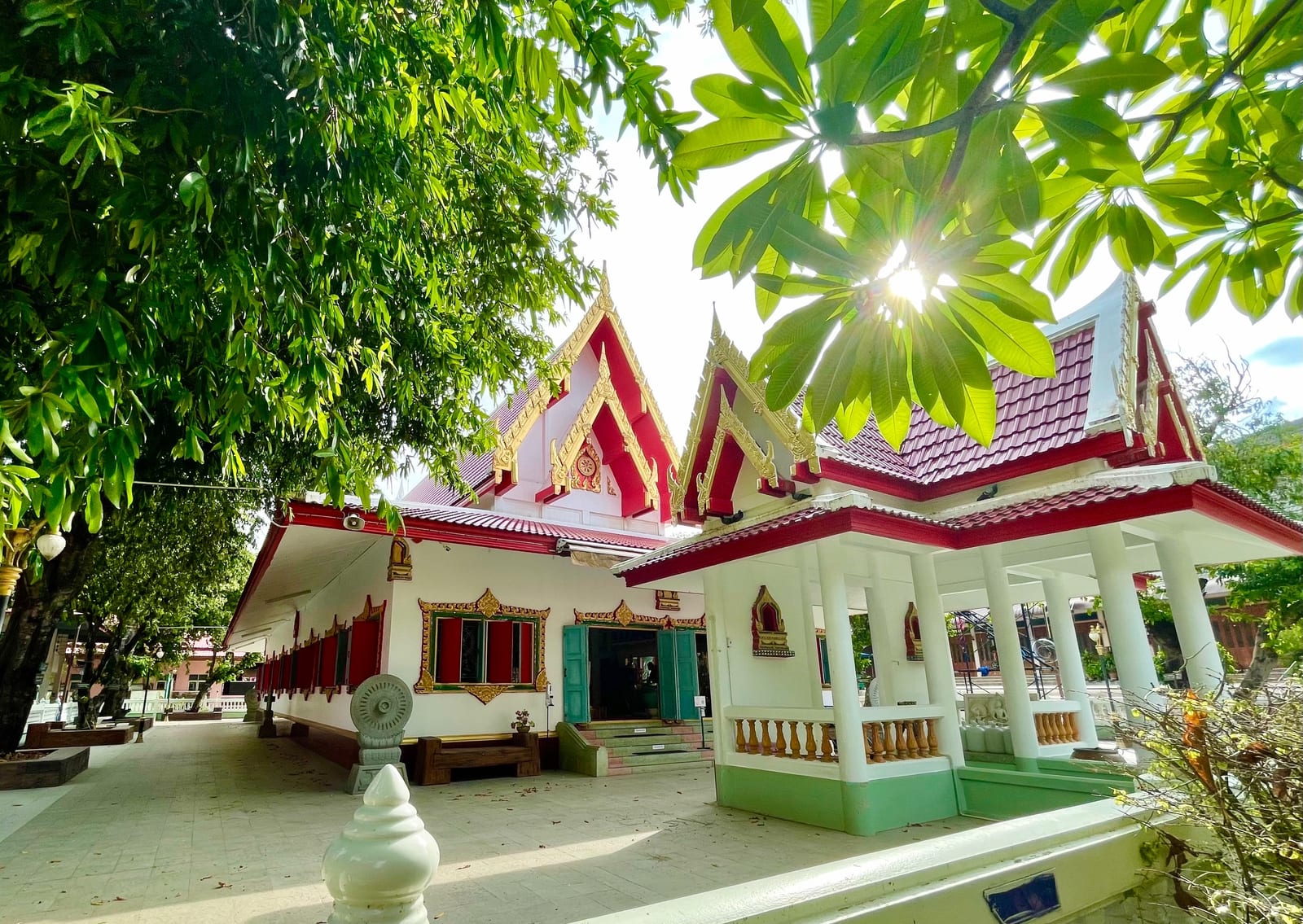
When it comes to meditation temples known across the whole country, "Wat Amphawan" in Phrom Buri, Sing Buri, must be among the first on the list. This is the temple of Luang Por Jaran Thitthammo (Phra Dhamma Singhaburachan), who established the practice of vipassana meditation in the Four Foundations of Mindfulness tradition, the "pong-no / yup-no" (rising / falling) method, which became a model for practice centers throughout Thailand. The temple itself is old, dating to the Ayutthaya period, sitting on the Chao Phraya, shaded by large trees, with an atmosphere so calm that walking in quiets the noise in your own head. It suits both those seeking blessings and anyone wanting a peaceful place to rest their mind for a day.
The highlight everyone stops for is the Dhamma Singhaburachan Chariyanuson Chedi, standing prominently at the temple entrance, inside which the preserved body of Luang Por Jaran is enshrined for followers to pay respects daily, roughly 8am to 5pm. Many reviewers agree that going up gives you goosebumps and a genuine sense of calm and fulfillment. Beyond the chedi there's an old ubosot, a Lopburi-era Naga-sheltered Buddha image, and several other worship spots to walk and complete. The stairway up the chedi is fairly wide, but reviewers warn it gets slippery on rainy days, so wear shoes with good grip.
There's no entry fee — the only real cost is merit-making as you wish and travel. If you want to seriously practice meditation, the temple offers courses, both Friday-Sunday and during Buddhist holy days / waxing-waning moon periods. You must register in advance via amphawan.net (fill in the form; registration closes in the afternoon). The schedule is intense — up at 3:30am for chanting, walking meditation, and seated meditation. Accommodation and meals are provided, no makeup is allowed, and you must dress modestly in white. Those just stopping to pay respects don't need to register and can walk around freely.
The location is very easy to find — the temple is right on the Asia Highway (Highway 1) in the Phrom Buri stretch, about an hour and a half drive from Bangkok. It's a stop many people make on their way north to pay respects. The temple scores as high as 4.7 from several thousand Google reviews, reflecting how impressed people are when they retell their visit. Good to know: dress modestly, covering shoulders and knees, in the sacred area, and come in the morning or late afternoon for the most peaceful atmosphere.
Chao Phraya Levee Street Art (Sing Buri Old Town)
If you love walking and photographing along the water, this is the stop you shouldn't miss in Sing Buri. The Chao Phraya levee street art is a continuous mural running along the flood-wall, stretching from the Bang Rachan Bridge to the 100-Year Memorial Bridge — about 3.4 kilometers in all, making it the longest levee mural in Thailand. Work began in early 2023, with professional artists, volunteers, and local students all helping paint. It suits art lovers, families bringing kids for a stroll, and photo enthusiasts wanting unusual shots.
The highlight is the paintings that really tell Sing Buri's story — riverside life, the history of the Bang Rachan heroes, brightly colored fish and Chao Phraya aquatic creatures, and local specialties and souvenirs. Walk along and you'll keep finding new check-in corners the whole way. On the other side of the walkway is the wide Chao Phraya, which many reviews agree is breezy and cool in the evening with a beautiful sunset. At dusk, lights illuminate the wall for a whole different atmosphere.
The budget is very easy, because it's a public area along the levee in front of the town — free to walk, no entry fee, open to walk any time. It's located in the heart of Sing Buri old town, along Wilaichit Road in Bang Phutsa Subdistrict, Mueang District. Park roadside and walk right on. It's best to come from the late afternoon into evening for good light and cooler temperatures. It's getting more famous by the day as a new landmark the province is pushing hard, and it pairs easily with the old-town district, temples, and riverside restaurants nearby.
Good to know: the walkway is a long open stretch with little shade, so bring a hat and water. If you want to capture every section, allow time to walk or cycle along it, and watch for cars driving on the road that runs beside the levee.
Rai Sing Kaset (Vazana Coffee House)
Rai Sing Kaset, which many people know as Vazana Coffee House, is a glasshouse café in a garden in Thong En Subdistrict, Inthaburi District, Sing Buri. It's a stop that suits café-goers who like to chill in a shady setting, families bringing kids to play, or those bringing along a dog. The place is styled as an agro-tourism attraction blended with a café, with seasonal flower plots, fruit trees, and several kinds of seating to choose from — you can sit in the cool air-conditioned glasshouse, or head out to sit in the garden or by the water, all available.
The highlight people often mention is the photogenic glasshouse, with photo spots scattered throughout the garden, a big fish pond where kids can watch the fish, and a riverside seating zone with a comfortable cool breeze. The menu is varied — from drinks and house-roasted specialty coffee to homemade bakery like banoffee cake and brownies, and main dishes. Many reviews praise the Americano and the fish dishes as well done, and the desserts as tasty; some voices say a few drinks aren't quite consistent yet, so the tip is to order the signature items first.
On budget, there's no entry fee — you can stroll and take photos for free, there's free Wi-Fi and a large parking lot. Per-person budget is roughly 200–400 baht depending on whether you order just coffee and dessert or a full meal. It's located about 2 kilometers past the Tak Fa Bridge; coming from Bangkok, turn in via the Tak Fa Bridge and the café is on your right. Open daily — Monday to Friday 09:00–18:00, and Saturday, Sunday, and long holidays until 20:00.
This café ranks among Sing Buri's most popular because it brings together everything people love — a green garden atmosphere, a great photo glasshouse, a fish pond and riverside corners, and spacious grounds for strolling — good for both families and groups of friends. Good to know: weekends get crowded, so if you want lovely photo corners without jostling, come in the morning, and double-check the closing time because weekdays and holidays differ.
Baan Khao Hom Farmstay
If you want to escape Bangkok and sleep amid the rice fields without a long drive, "Baan Khao Hom Farmstay" in Hua Phai Subdistrict, Mueang Sing Buri District, is a place many people talk about. This is a full-fledged agro-tourism farmstay, with Thai-style wooden houses set in the middle of rice paddies, surrounded by organic vegetable gardens, a lotus pond, a water pond, and animals like albino buffalo, ducks, chickens, and geese. It suits families who want to bring kids close to nature, groups of friends who want to chill in the fields, or working people who want a real night of rest.
The highlight many reviews agree on is that the activities are so packed you barely have time to get bored — feeding the fish, tending the albino buffalo, cycling through the paddies morning and evening, riding an ATV (usually an extra charge), riding the farm tractor, driving the watering boat, climbing the bird-watching tower, and even net-fishing. Come early and you can give alms in front of the house, and you can also see the rice-growing process, the mill, and real vacuum rice-packing. The must-try is the paddy-house dinner set: shrimp-paste chili dip served with fresh vegetables, sun-dried snakehead fish, fried mackerel, tom saep, and three-color organic rice (hom mali, brown, and riceberry). Breakfast is pork rice porridge with traditional khanom khrok.
On budget it's good value — most reviews put the package at around 750–850 baht per person, including 1 night's stay, 2 meals, a snack, and nearly all the activities (except ATVs, which cost extra). The rooms are a handful of Thai-style wooden houses in 2-3-4-bed layouts, with en-suite bathrooms and air-conditioning. It's about 20-some kilometers from Sing Buri town, roughly a 2-hour drive from Bangkok. The Google score is around 4.3 stars, and people frequently praise the kind owners who look after you like family, and the evening paddy-field atmosphere that photographs beautifully from every angle.
Good to know: this place focuses on advance bookings and usually opens Friday-Sunday (per registry data, 09:00–18:00). Before you go, call to check availability and book your stay with the page "Baan Khao Hom Sing Buri" or the number 082-724-0322, because rooms are limited and fill up fast on long weekends. Bring mosquito repellent and a light jacket, because out in the fields it's breezy and cool with plenty of mosquitoes as nature intends.
Tickets and tours for Sing Buri
Sing Buri's attractions are spread across several districts — the town, Khai Bang Rachan, Inthaburi, and Phrom Buri. If you're not driving yourself or want to cover several spots in one day without planning the route, look for guided tours with transfers through Klook or GetYourGuide. Book tickets and activities in advance so you don't have to queue on-site — great for anyone who wants to hit the temples, retro market, and riverside corners all in one trip.
💡 What to know before you visit Sing Buri
The attractions are spread across several districts and public transport within the province is limited, so a private or rental car is easiest. Grab can be hailed in town, but on the Bang Rachan and Inthaburi sides it can be hard to find — plan your transport ahead.
The retro Thai market, roadside food stalls, and buffalo-food fees at the farm mostly take cash. Many small shops don't have card readers, so carrying small bills and coins makes things smoother.
Sing Buri's midday sun is strong, so paying respects and walking the park is more comfortable in the morning. Save the open-air photo spots like the tree-root chapel and the levee street art for the evening, for the breeze and lovely light.
The Ban Rachan Retro Thai Market at Wat Pho Kao Ton opens only on Saturdays, Sundays, and holidays. If you want to see the jong-kraben-and-sabai vendors and local food, plan your trip to land on a weekend.
Wat Phra Non Chaksi, Wat Phikun Thong, and Wat Amphawan are sacred sites, so dress modestly, cover shoulders and knees, remove your shoes before entering the wihan, and keep quiet — especially at Wat Amphawan, where people come to meditate.
Sing Buri is a local town with few English signs and menus. Try a translation app when ordering. Sing Buri people are kind and helpful — a smile and pointing at pictures go a long way.
Planning a one-day trip in Sing Buri
Arranging your route by zone makes the trip most fun. Start the morning in the Chaksi town area, paying respects to the reclining Buddha at Wat Phra Non Chaksi Worawihan before the sun gets strong, then walk over to the Khao Ngam Thai Buffalo Conservation Center in the same subdistrict to feed the buffalo and take photos. From there, drive to the Khai Bang Rachan side to the Heroes Park, and if it's a Saturday, Sunday, or holiday, stop for lunch at the Ban Rachan Retro Thai Market inside Wat Pho Kao Ton — a budget of 100–200 THB fills you up comfortably.
In the afternoon, head north to the Inthaburi side, stopping to photograph the tree-root chapel at Wat Sai on the Chao Phraya, then sit down for a coffee at Rai Sing Kaset (Vazana Coffee House), the glasshouse garden café. Close the evening by strolling the Chao Phraya levee street art in the old town, catching the cool breeze and the sunset view. If you have more than a day, add Wat Amphawan for meditation and an overnight stay at Baan Khao Hom Farmstay.
Fitting all of Sing Buri's spots into one day may be a stretch — stay a night and explore without rushing. Check out stays in Sing Buri town and along the Chao Phraya, compare prices, and book easily in a few clicks.
See stays in Sing Buri