🔄 Last checked 27 Jun 2026 · details and hours can change — check the venue before you go
📍 All restaurants on the map
Tap a pin for the spot + nearby stays
Surin's appeal is that it's a genuine elephant city with deep Khmer-Kuy cultural roots. Its attractions sit on two layers. In town, the sightseeing is easy on foot: Wat Burapharam, a royal temple in the city centre where you pay respects to Luang Pho Phra Chi and the relics of Luang Pu Dun Atulo, sits right next to the red Khmer-style city pillar shrine you can walk on to. At dusk the Surin Walking Street comes alive with Isan street food and down-to-earth silk stalls. Outside town is where the real highlights are: Ban Ta Klang Elephant Village in Tha Tum district, where the Kuy people live alongside their elephants like family members; Prasat Sikhoraphum, a five-tower Khmer prasat on a single base in the middle of a lawn beside a pond; and Khao Sawai, a low three-peaked hill where you climb a stairway lined with 1,080 bells to venerate Phra Phuttha Surin Mongkhon. You can string together spiritual, historical, nature, and silk-shopping stops in one trip.
This list includes the pins you shouldn't miss in Surin, such as Ban Ta Klang Elephant Village — the largest Elephant Study Centre in the elephant city, with an elephant museum, an elephant cemetery, and two elephant shows a day. There's Prasat Sikhoraphum, whose central tower still bears one of the most beautiful lintels and apsara carvings in Isan — Shiva Nataraja mid-dance. And there's the ancient gold-brocade silk-weaving village of Ban Tha Sawang, run by the Chansoma group, who weave cloth on a 1,416-heddle loom with four or five people producing just a few centimetres a day, and who once wove the fabric for the leaders' outfits at APEC 2003. For museum lovers there's the Surin National Museum, which tells the story of the town from prehistory to the elephant-keeping way of life in an easy-to-follow way. Scroll through the details spot by spot and plan your own route.
Ban Ta Klang Elephant Village (Elephant Study Centre)
 Photo by Maduea Salaengluang (Panoramio) via Wikimedia Commons, licensed CC BY 3.0🔍 Tap to zoom
When you think of Surin, the first place that comes to mind is Ban Ta Klang Elephant Village, also known as the Elephant Study Centre — an elephant-keeping village of the Kuy people, said to be the largest domesticated-elephant village in the world, gathering more than 200 elephants from Ban Krapho, Ta Klang, and nearby villages. The real charm here isn't just seeing elephants; it's seeing how people and elephants live together like family members. At some homes, the elephant sleeps under the same raised house as its owner. It's a great fit for families bringing children to learn, people who love community life, and anyone who wants a trip that gives them more than photos.
The unmissable highlight is the elephant show, twice a day at 10:00 and 14:00, every day including holidays — you'll see elephants dance, paint, play football, and throw balloons, drawing cheers across the whole ground. There's also an elephant museum that tells the story of the mahout's way of life and the history of elephant catching, an elephant cemetery that reflects the deep bond between people and elephants, and you can stroll the village at an easy pace. Anyone who wants to get closer can usually buy sugarcane or bananas to feed the elephants themselves.
On the budget side it's easy on the wallet: adult entry 50 baht, older children 20 baht, small children 10 baht, and foreigners 100 baht. Open daily around 08:00–17:00. It's located in Tambon Krapho, Tha Tum District, about 60 kilometres from Surin town — driving yourself is the easiest way. Allow a bit of extra time for the journey and plan to arrive in time for a show.
A few things to know: the sun at the show ground can be strong, so bring a hat, umbrella, and drinking water, and wear comfortable shoes because the area is large. The busiest time is the Surin Elephant Round-up Festival around November — come then for the fullest atmosphere, though the crowds are heavy too. On a weekday it's more relaxed, and you can walk the Kuy way of life quietly at your own pace.
Prasat Sikhoraphum (Prasat Ra-ngaeng)
 Photo by Amata Niyomsataya via Wikimedia Commons (CC BY-SA 3.0)🔍 Tap to zoom
Prasat Sikhoraphum — which locals habitually call Prasat Ra-ngaeng — is the most beautiful and best-preserved Khmer prasat in Surin. Its distinctive feature is the five brick towers set in a row on a single laterite base, the central one rising tall and surrounded by satellite towers at all four corners, all standing in a green lawn beside a pond. Whether you love history, admire Khmer architecture, or simply want beautiful photos, this place delivers on all counts. It suits solo travellers, couples, and families alike.
The must-see is the lintel above the doorway of the central tower, carved with the ten-armed Shiva Nataraja mid-dance, surrounded by Ganesh, Brahma, Vishnu, and Uma. It is considered one of the most beautiful and complete lintels in Thailand. Another feature that excites many people is the apsara carvings on the door frame pillars, with patterns strikingly similar to the apsaras of Angkor Wat — something you can barely find at any other Khmer prasat in Thailand. Walk up slowly to see the carvings up close, then step back to shoot a wide angle capturing all five towers reflected in the water — genuinely photogenic from every angle.
On entry fees it's easy on the wallet: Thais around 10 baht, foreigners around 50 baht. It's open every day from midday to evening (opening hours may adjust by season; a morning or late-afternoon visit is recommended when the sun is gentler and the light is lovely). The prasat sits along Highway 2077 in Sikhoraphum District, about 35 kilometres from Surin town — an easy drive, with parking.
Genuine reviews agree it's well maintained, clean, and shaded, without heavy crowds — you can wander quietly for an hour. Its Google rating reaches 4.5 from over a thousand reviews, so it's no surprise that anyone coming to Surin makes a point of stopping by. A small note: the grounds are fairly open and the midday sun is strong, so bring a hat and water, and dress respectfully as this is a heritage site that people still hold in reverence.
Phanom Sawai Forest Park (Khao Sawai) & Phra Phuttha Surin Mongkhon
Phanom Sawai Forest Park — which Surin locals habitually call Khao Sawai — is a low three-peaked hill rising out of the plains about 22 kilometres from town. It's both an attraction and a merit-making site the locals have felt attached to for generations. Anyone coming to Surin who wants a calm, shaded atmosphere, a gentle climb, and to bring some merit home will find it a great fit. It suits Buddhist worshippers, families bringing elders to make merit, and people looking for a quiet viewpoint in the evening.
The unmissable highlight is climbing the stairway up the male peak (Phnom Pro) to venerate Phra Phuttha Surin Mongkhon, a large white Buddha in the blessing posture with a lap width of 15 metres, standing out and visible from far away. Both sides of the climb are lined with 1,080 bells to ring one after another for good fortune, and the sound rings out across the whole hill — an image many people mention. Besides the great Buddha, there are nine sacred objects of the town to pay respects to, including the relics of Luang Pu Dun Atulo, a black Buddha image, a replica of the Buddha's footprint, a Guan Yin shrine, a sacred turtle, and a sacred pond.
The overall atmosphere is shaded, with large trees to rest under, and the summit is a viewpoint looking out over the plains as far as the eye can see. Many genuine reviews favour the evening, when the light is soft and the crowds are thin, though some say plainly that the stairway has more than two hundred steps — if you can't manage it or you're bringing elderly visitors, budget your energy and time. In the dry season some spots may look parched, not as green as in the rainy season.
Entry is very light: 20 baht per person, open daily around 08:00–18:00. It's an easy drive from town. This is a popular spot because it's the province's sacred hill, with an annual Khao Sawai pilgrimage tradition that draws big crowds. A note: dress respectfully as this is a place of worship, wear comfortable walking shoes, and bring water up with you — that's best.
Wat Burapharam (Luang Pu Dun Atulo) + Surin City Pillar Shrine
 Photo: JJ Harrison, Wikimedia Commons (CC BY 3.0)🔍 Tap to zoom
If you had to choose one place that is the true heart of Surin town, Wat Burapharam is the answer. It's an old royal temple in the city centre, more than 200 years old, built in the time of the first governor of Surin, on Chitbamrung Road in Tambon Nai Mueang — an easy walk from the market or the town centre. Anyone visiting Surin for the first time who wants to pay respects to the town's guardian Buddha will find it ideal. Surin people themselves regard it as a spiritual centre, coming to make merit and chant at the start and end of each month as a matter of routine.
The unmissable highlight is Luang Pho Phra Chi (older folk call it Luang Pho Prachi), a sacred terracotta Maravijaya-posture Buddha image enshrined in a four-faced mondop — a guardian Buddha of the town that Surin people revere greatly. Another spot people come specifically for is the museum and the enshrinement of the relics of Luang Pu Dun Atulo, a famous meditation-master monk and a first-generation disciple of Luang Pu Mun. He spent the rains retreats here from 1934 until he passed away, and practitioners from across the country come to pay respects without pause. The viharn also has murals telling the story of the Buddha's life to look over slowly.
The location's advantage is that it sits right next to the bright-red Khmer-style Surin City Pillar Shrine — you can walk across and pay respects there in the same trip, collecting two important places in one spot. The atmosphere in the temple is shaded, quiet, and calm, ideal for sitting to settle the mind. Most travel reviews praise it as clean, orderly, and imbued with a reverent feeling. There's no entry fee to the temple — only donation boxes for you to give as your faith moves you.
Things to know: it's a Dhammayut temple, so dress respectfully and remove your shoes before entering the viharn and mondop. Early morning and evening have the nicest weather. It's generally open daily for veneration until around 18:00. There's parking in the temple. During the Surin Elephant Festival at year's end it gets especially busy.
Huai Saneng Reservoir
If you're in Surin and want a place to sit and catch a cool breeze in the evening, Huai Saneng Reservoir is one of the first things Surin people think of, so much that it's earned the nickname 'the sea of Surin.' It's a large reservoir of the Royal Irrigation Department, just about 5 kilometres from town — under ten minutes' drive. It's a great fit for families who want to bring the kids to run around, couples looking for a quiet corner to watch the sunset, or anyone who wants to escape the town's bustle and sit chilling by the water.
The unmissable highlight is the dam crest, over 4 kilometres long — a smooth paved road that people love to come and stroll, cycle, or run along in the breeze. In the evening, the golden light reflects across the wide expanse of water as far as the eye can see, an image many reviewers agree is genuinely beautiful. Another interesting spot is the pavilion of HRH the Princess Mother (Somdet Ya), located within the irrigation area — a historical corner where many people stop for photos.
No need to worry about food, because below the dam crest there are restaurants and food stalls lined up to choose from: bold-flavoured Isan dishes, fried and grilled snacks, right down to inexpensive local nibbles. Many people like to buy food and lay out a mat for a picnic by the water, go fishing, or swim — especially during Songkran, when this place gets especially lively as one of the province's most popular Songkran water spots.
The upside is that it's free — no entry charge — open daily from midday to evening (around 07:00–18:00, depending on the spot). All you'll spend is on food and drink. Things to know: this is a simple, unfussy leisure spot with no flashy activities; its charm lies in the relaxed atmosphere, the cool breeze, and the sunset view. Come in the late afternoon to evening for the best atmosphere, and bring your own mat or ground cloth if you want to picnic in comfort.
🛏️ Hotels in Surin — sleep in town and head out to the elephants and prasats
To get the most out of Surin, try staying at least one night, so you can split it into a day exploring the town and a day driving out to see the elephants at Tha Tum and Prasat Sikhoraphum without rushing. The most popular hotels cluster in Surin town, near the railway station, Wat Burapharam, and the walking street, with both convenient city-centre hotels and friendly-priced boutique stays. Wake up early to pay respects at Khao Sawai while it's still quiet, or catch the morning elephant show easily. Choosing a location near where you want to go first thing gives you the best value. Compare prices and reviews before you book.
🔍 Check Surin Hotel Prices (Agoda)Surin Walking Street Market
If you arrive in Surin in the early evening and don't know where to go, the Surin Walking Street (locals habitually call it the night bazaar) in the city centre is the easiest answer. It's a long walking street that opens almost every evening; once the sun drops and the breeze picks up, the stalls gradually put up their tents, set up stoves, and light the fires, and the smell of grilling drifts from far off. It's a great fit for anyone who wants real Isan food at down-to-earth prices, to stroll casually without dressing up — families can bring the kids, and solo visitors are just as comfortable.
The highlight is the food zone, fully loaded with both savoury and sweet: from som tam, grilled chicken, grilled pork, sticky rice, laab, and nam tok, to fried snacks, khanom chin, local sweets, herbal drinks, and freshly blended fruit smoothies that many people say are worth queuing for. Many genuine Google reviews praise the variety of food, the low prices, and the friendly vendors. Another corner not to miss is the handicraft and Surin silk stalls, local goods, clothing, and small souvenirs that are pleasant to browse.
On expenses it's very wallet-friendly: free entry, no charge, and a real grazing budget of around 100–200 baht will fill you up generously. It's located around Krung Si Road in the central district, an easy walk from a hotel in town. It opens in the evening from about five o'clock until a little past nine, every day.
This is a popular spot because it's a snacking and market-strolling place that Surin people come to as a routine, with a genuinely lively evening-market atmosphere — not a market staged for tourists. A small note: most vendors speak Thai and Isan, and English menus are few, so if you come around six in the evening you'll get the fullest and freshest selection. Parking nearby is fairly tight at peak times. Take a walk through once and you'll be hooked on the charmingly priced Isan food here.
Ban Tha Sawang Ancient Gold-Brocade Silk-Weaving Village
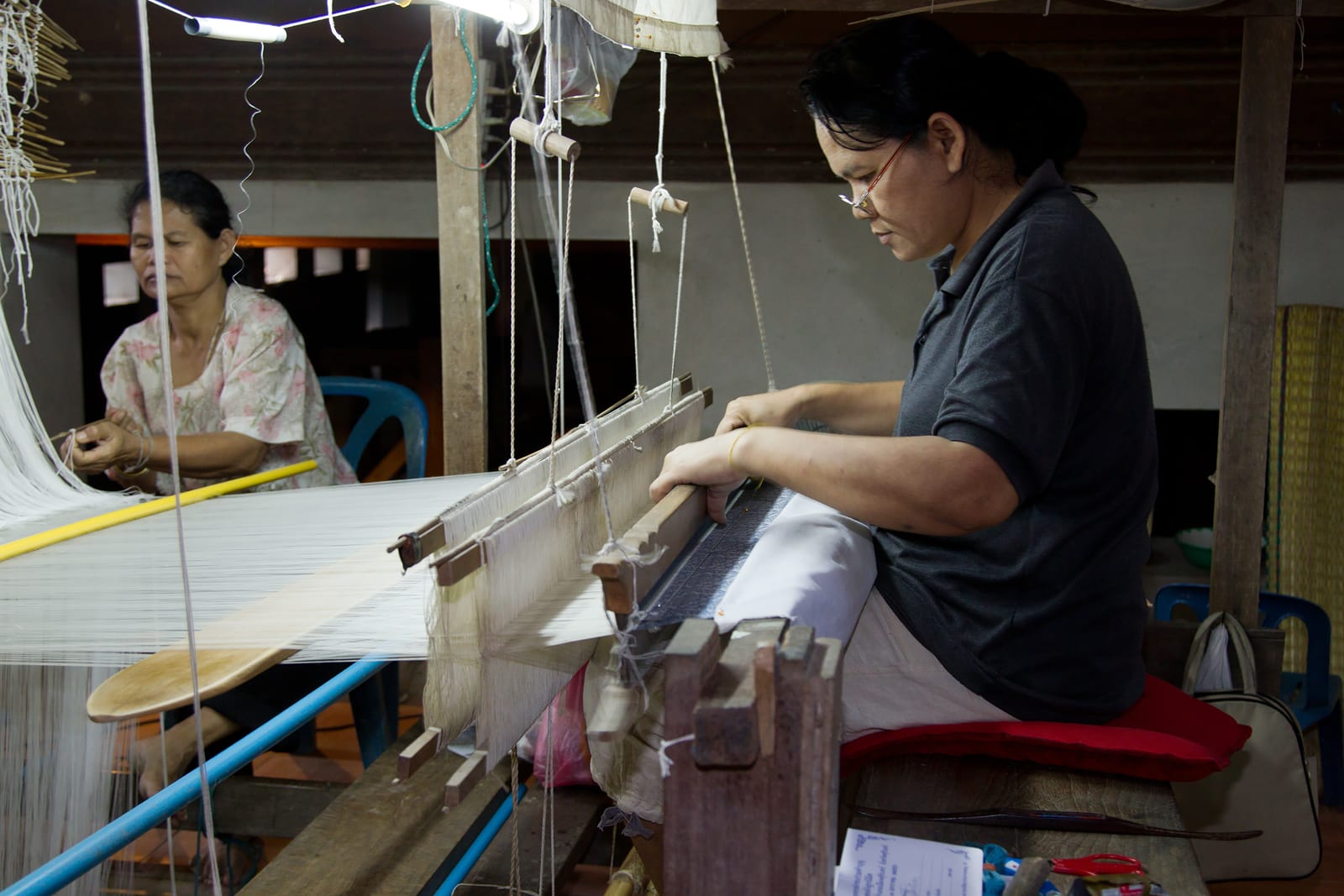
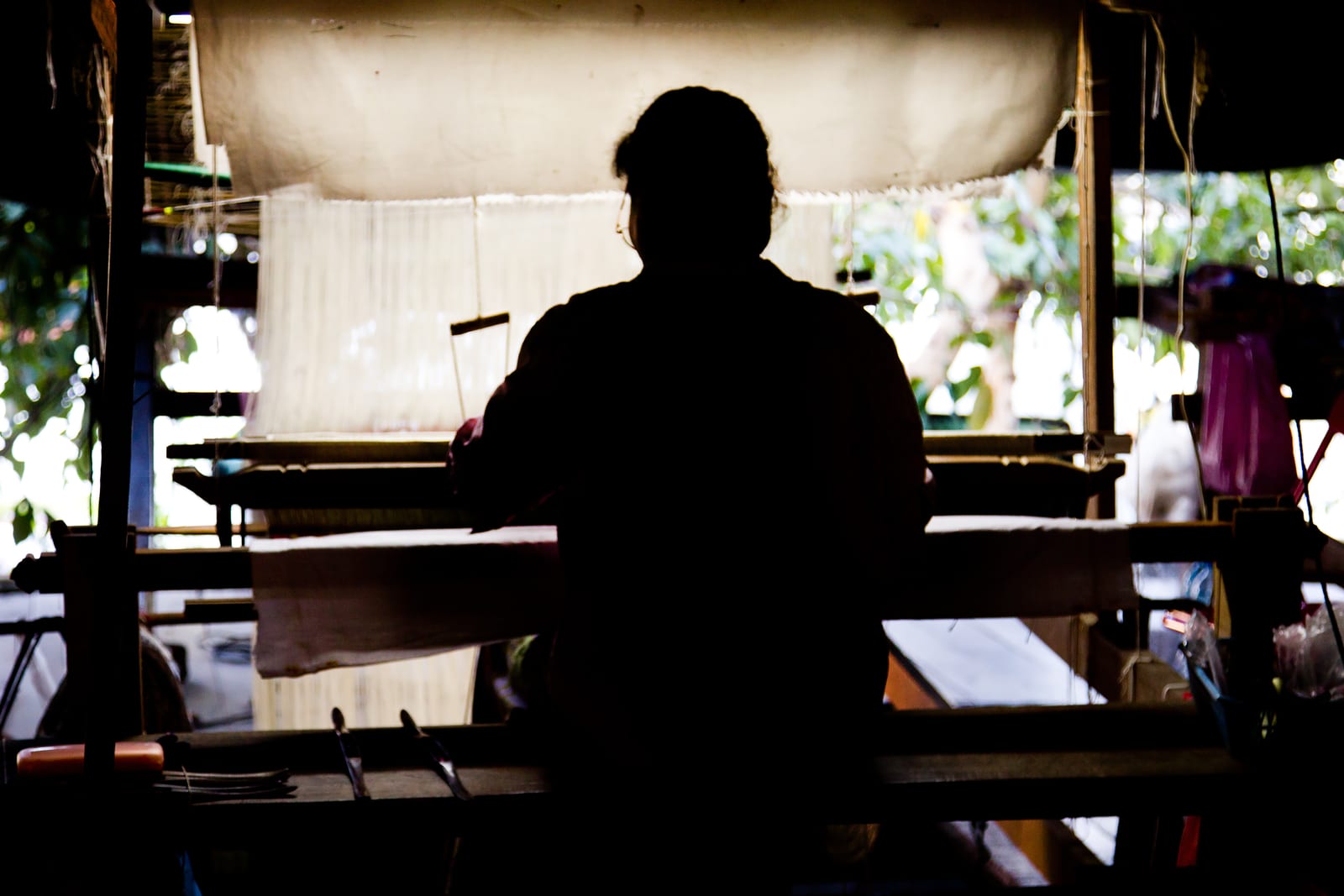
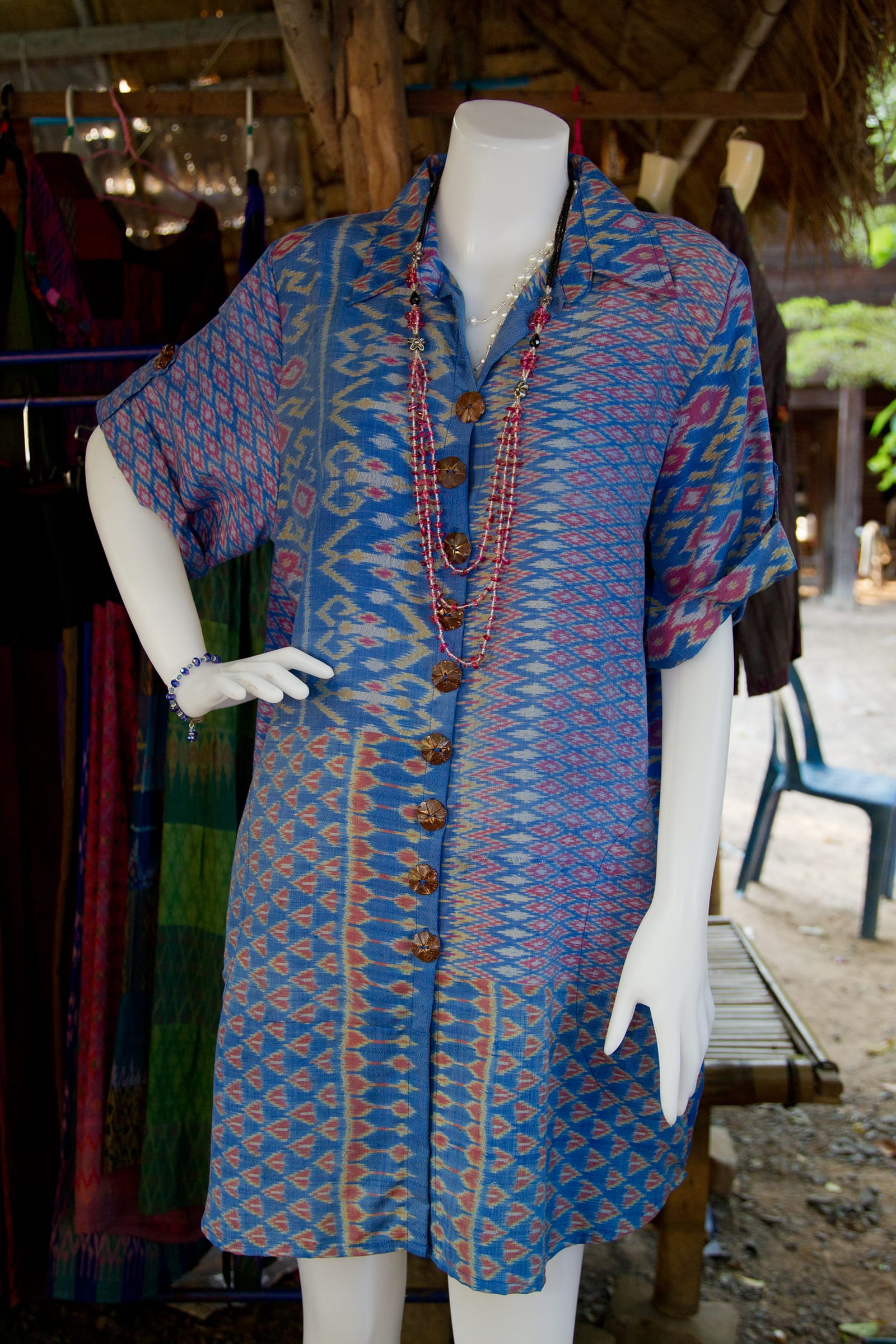
If you want to understand why Surin silk is famous nationwide, you have to come to the Ban Tha Sawang Ancient Gold-Brocade Silk-Weaving Village of the Chansoma group, in Tambon Tha Sawang, about 10 km from Surin town — a 20-minute drive. This isn't an ordinary cloth shop; it's a weaving house that has revived the ancient royal-court gold-brocade weaving tradition. The most talked-about feature is the giant loom, which uses as many as 1,416 heddles and requires 4–5 people weaving together on a single piece, producing only a few centimetres a day. Once you see it with your own eyes, you understand why some pieces cost hundreds of thousands of baht.
The unmissable highlight is walking through the real process from the start — silk reeling, natural dyeing from the primary colours, and sitting to weave on an ancient loom threading in the gold thread one strand at a time. The clack of the reed and the rhythm of the weavers' hands make for an atmosphere hard to find elsewhere. Another corner many people love is the textile display and the works of Ajarn Weeratham Trakulngoenthai, the man behind the revival of this craft, including the cloth once woven into outfits for the leaders at the 2003 APEC meeting, a source of community pride.
On the budget you can relax, because it's free to visit, no entry charge, open daily around 08:30–17:00 (closed on public holidays). It's a great fit for people who love crafts, culture lovers, or a first stop on a Surin trip to lay the groundwork on silk before heading elsewhere. Foreign visitors' reviews say it's a quiet, uncrowded place where you really learn something, and the souvenirs are good quality — scarves, bags, and cotton cloth.
A small note: some members of the group may not speak English fluently, and English signs are few, so if you're going with foreigners, having a translation app ready will help. The actual weaving usually happens during daytime hours, so if you want to see the weavers working as a full team, mid-morning to afternoon is recommended. And the masterpiece gold-brocade pieces are made to order at high prices, so if you're not planning to buy, you can simply come to look around and take photos at ease.
Surin National Museum
If you've just arrived in Surin and still aren't sure what this town has going for it beyond elephants, the Surin National Museum is the first place to stop. It's a Fine Arts Department museum telling Surin's story from prehistory, through the Dvaravati period and the Khmer civilisation, to present-day life. It's arranged into 5 zones: natural history, archaeology, town history, ethnology, and provincial heritage. It suits families bringing children, history lovers, and anyone who wants to understand the roots of this town before heading out to the stone prasats or the elephant village.
The highlight many people mention is the Khmer civilisation zone, which gathers antiquities and fragments from stone prasats scattered across the province and puts them on display up close — lintels, carved figures, and things hard to see elsewhere. Another interesting part is the story of the three main ethnic groups, Kuy, Khmer, and Lao, especially the elephant-catching way of life of the Kuy, a hallmark of Surin, plus the silk and silverware zone showcasing the town's famous crafts. The building itself is designed in a Khmer prasat form, with a gopura archway at the entrance — photogenic.
Most reviews praise the modern displays, the easy-to-read information panels with English labels, and the comfortable, not-tiring walk, taking about 1–2 hours to cover. Entry is just 20 baht for Thais, 120 baht for foreigners, which is very good value for what you get. Some people note that a few zones are still hot in the dry season, so a morning visit is recommended for more comfort.
It's located along the Surin–Prasat road (Route 214), about 3–4 kilometres south of town, with a large parking lot — driving or renting a motorbike is the most convenient way. It's open Wednesday to Sunday, 09:00–16:00, closed Monday–Tuesday and public holidays. Things to know: don't come on Monday or Tuesday because it's closed, and allow time to arrive before three in the afternoon so you can walk through all the zones.
Voyage Cafe (beside Huai Saneng Reservoir)
Anyone in Surin looking for a waterside spot to chill will find Voyage Cafe is what the locals go for. It's a modern-loft-style café with bare concrete columns set beside Huai Saneng Reservoir at Ban Khok Krapho; drive just a little way out of town and you hit an open view of both the water and the green rice fields. It's a fit for people who want to escape the bustle and nurse a coffee for hours, right through to families bringing kids to play, because there's a sand-play area where children can have fun while the adults sit and enjoy the view.
The highlight reviews mention often is the green tea (matcha) and the passion-fruit ice cream, which many people say are excellent, while for dessert there's honey toast to order alongside coffee. The menu here is fairly broad, from fresh coffee, tea, and bakery to main dishes and cold beers in the evening. The atmosphere is divided into a cool air-conditioned zone and an outdoor waterside zone where the breeze is cool, with plenty of trees and several nice photo corners — people love coming to capture photos in the softer late-afternoon light.
On the budget it's easy on the wallet, averaging around a hundred-something baht per person, no entry fee, with parking in front. Open daily 09:00–20:00, closed Thursdays (the beer-bar zone stays open a bit later). A note from genuine reviews: the midday sun can make the outdoor zone hot, so the air-conditioned zone or a late-afternoon visit is recommended, and if you order a main dish it may take a while because everything is cooked fresh to order — allow a little extra time for peace of mind.
It's grown popular because it brings together everything café lovers like in one place: a lovely view beside the reservoir, plenty of photo corners, a kids' zone, and a range of affordable drinks and food. It's a check-in spot Surin locals and travellers keep recommending to each other. If you're already visiting Huai Saneng, carry on to Voyage — it's very close by.
Prasat Ban Phluang

If you like Khmer heritage sites in a quiet setting without the crowds, Prasat Ban Phluang is worth a stop. The prasat is a single, compact tower built of white sandstone standing on a rectangular laterite base, with a U-shaped moat surrounding the base, so that seen from the front the prasat stands out prominently in a green lawn — a scene that photographs beautifully both morning and evening.
This prasat was built in the Baphuon style around the 11th–12th centuries as a Hindu religious site. The features people often mention are the lintels and pediments, carved with delicate patterns. The lintels on the east and south sides depict Indra riding the elephant Erawan, while the north side depicts Krishna subduing the naga Kaliya, the lines still crisp enough to view up close, and there are even small animals such as squirrels and deer tucked in above the pediment — a detail rarely found at other prasats.
Another thing that makes Prasat Ban Phluang interesting is its restoration. The Fine Arts Department once dismantled the entire prasat to reinforce the laterite base, then reassembled the stones one block at a time by anastylosis, like a jigsaw puzzle, giving it the fairly complete form you see today. As for the missing top of the prasat, one theory is that it was never finished in the first place.
The surrounding area is an open, easy-to-walk lawn, and it takes only a short while to look around, making it a good stop along the way or paired with other prasats on Surin's Khmer route. It's open every day, and entry isn't expensive. Most genuine reviews praise it as small but lovely, clean and well cared for, with carvings still beautiful enough to enjoy in full.
🎫 Tickets, Tours, and Activities in Surin
Many of Surin's attractions are out of town in different directions — the elephant village at Tha Tum, Prasat Sikhoraphum, and Khao Sawai. If you'd rather not drive yourself, or you want someone to tell you the story of the elephants and the Khmer civilisation, look for a guided tour or a full-day transfer package for convenience. Booking entry tickets and activities in advance through Klook or GetYourGuide means no queuing on site and makes it easier to plan your timing around the elephant show. Compare the options and prices first.
💡 Know Before You Go: Surin
Surin's in-town attractions are close together, but the elephant village at Tha Tum, Prasat Sikhoraphum, and Khao Sawai are out of town in different directions. Public transport is limited and Grab is scarce in Surin. The most convenient way is to rent a car or arrange a car with driver before heading out of town.
Entry to the elephant village, the prasats, and Khao Sawai, the food at the walking street, and most silk shops are cash-only. Carry small bills for entry fees, parking, and roadside snacks. ATMs are easy to find in town and at the Prasat Ban Phluang mall, but there are few at the out-of-town attractions.
Southern Isan has a strong sun and gets hot in the middle of the day. Walking around Prasat Sikhoraphum and climbing Khao Sawai in the morning or late afternoon is much more comfortable. The elephant village has scheduled shows, so check the show times before you set off to arrive in time.
Ban Ta Klang Elephant Village is a community where people genuinely live alongside elephants. Follow the guidance of the mahouts and staff, don't approach or feed elephants on your own without permission, and respect the Kuy way of life in the area.
Wat Burapharam, Prasat Sikhoraphum, and Phra Phuttha Surin Mongkhon on Khao Sawai are sacred sites where people genuinely come to worship. Cover shoulders and knees, remove your shoes where signs indicate, and keep your voice down within viharn areas.
Outside the major attractions and the museum, English signs and menus are few. Bring a translation app to help, or point at pictures at markets and local shops to get by. Most Surin people are kind and friendly to travellers.
Plan Your Surin Trip to Get the Most Out of It
Surin is easy to tour if you split it into an in-town day and an out-of-town day. Start the in-town day at Wat Burapharam in the city centre to pay respects to Luang Pho Phra Chi and the relics of Luang Pu Dun Atulo, then walk on to the city pillar shrine nearby. In the afternoon, stop at the Surin National Museum to lay the groundwork on elephants, silk, and the Khmer civilisation before you go see the real thing. On an evening when the Surin Walking Street is on, stroll and eat Isan street food and shop for local silk on a grazing budget of a few hundred baht.
Give the whole out-of-town day to the elephant city. Drive to Ban Ta Klang Elephant Village in Tha Tum district to catch one of the two daily elephant shows. Along the way or on the way back, stop at Prasat Sikhoraphum in Sikhoraphum district to see the five-tower Khmer prasat and the Shiva Nataraja lintel. If you love nature and the spiritual, climb Khao Sawai in Tambon Na Bua, about 22 kilometres out of town, up the stairway of 1,080 bells to venerate Phra Phuttha Surin Mongkhon. Finish the day sitting in the cool breeze at Huai Saneng Reservoir or sipping coffee with a view at Voyage Cafe by the water, and don't forget to stop at Ban Tha Sawang to watch the gold-brocade silk weaving and pick up souvenirs to take home.
You can cover the whole town of Surin in a single day, but staying at least one night lets you split it into an in-town day and a day heading out to the elephants and prasats without rushing. Most hotels cluster in Surin town, from where it's an easy trip on to the outlying attractions. Compare prices and reviews for hotels in Surin before you book.
🔍 Check Surin Hotel Prices (Agoda)