🔄 Last checked 25 Jun 2026 · details and hours can change — check the venue before you go
📍 All restaurants on the map
Tap a pin for the spot + nearby stays
If you've never been to Ubon, the city has a quiet charm that grows on you. Most of the top sights are clustered around the old town near Thung Si Mueang — close enough to walk between them. Wake up early and pay your respects at Wat Thung Si Mueang to see the ancient wooden scripture library on water, then cross the road to stroll through Thung Si Mueang park, the heartbeat of the city and the stage for the Candle Festival procession. Pop into the National Museum, housed in the century-old provincial hall, and then as evening falls head over to Ratchabut Night Market for Thai-Chinese-Vietnamese street food. On Friday, Saturday, or Sunday the walking street loops around Thung Si Mueang for browsing and snacking. For those wanting nature in the city, Hat Wat Tai on the Mun River is the place to sit and watch the sun go down.
One of Ubon's standout qualities is its one-of-a-kind temple design. Wat Sirinthorn Wararam Phu Phrao — the Glowing Temple — out in Si Rin Thorn district has become the image of the province: phosphorescent Kalpaphruek tree motifs on the back wall of the ordination hall that cast a green-blue glow after dark, creating the most talked-about night-photography spot in the city. Wat Phra That Nong Bua has the Sri Maha Bodhi chedi in white and gold, modelled after the Bodh Gaya stupa in India — tall and stately, stunning by day and lit up beautifully at night. Further out there's the spacious, shady Ubon Zoo, perfect for a full-day family outing, and Central Plaza near Chae Ramae for air-conditioned shopping and movies. One trip to Ubon covers temples, markets, and a riverside beach all in one.
Thung Si Mueang
If you want to truly understand the heart of this city, Thung Si Mueang is non-negotiable. This large public park sits in the centre of town opposite the old provincial hall (now the National Museum) and is the green expanse that Ubon residents have cherished for generations. Originally the "Nathung Si Mueang" — the city lord's rice field — it was converted into a public recreation ground during the reign of King Rama V. The park is a good fit for everyone: morning joggers, families with children, and travellers who just want to photograph an iconic landmark.
The highlight you can't miss is the large golden wax-candle sculpture — the park's signature photo spot, frequently called out in real reviews as "beautiful" and deeply symbolic of Ubon, the Candle City. Nearby stands the Grand Royal Merit Candle, erected for a special occasion, and the city pillar shrine. There's also a monument to Chao Kham Phong, the province's founder. Stroll the paths, pass lotus ponds and the many memorials, and enjoy yourself — most importantly, Thung Si Mueang is the centrepiece of Ubon's Candle Festival procession, the most famous tradition in the province.
Reviewers largely agree that midday is bright and quiet, but early mornings and early evenings bring cooler air and plenty of joggers and aerobics groups. Friday through Sunday evenings see the walking street and night market spring up around the park — stalls of local street food, background music, a lively crowd. Entry is free, no charge at all. The park is open daily roughly 05:00–22:00 with parking available; pets are welcome. If you arrive at Songkran you'll find boisterous water fights — avoid that if you prefer quiet. For the best light and atmosphere, come early morning or late afternoon.
Wat Thung Si Mueang (Hor Trai Klang Nam)
If you only have time for one spot in Ubon, many people choose Wat Thung Si Mueang — the temple is the town's beating heart, right next to the park and easy to walk to. The star here is the Hor Trai Klang Nam, the wooden scripture library built entirely of timber and raised on stilts above a pond. Constructed during the reign of King Rama III (around 1842), people of that era placed it over water to protect the scriptures from termites and ants. The building is a fusion of Thai, Burmese, and Lao architecture — layered Burmese-style tiered roofs rising to a Thai-style finial. Nearly every review agrees it is one of the most complete and beautiful scripture libraries of its kind in Isan.
Don't rush off. Inside the temple grounds you'll find Phra Chao Yai Si Mueang, a revered image worth paying your respects to, and the ancient ordination hall (Hor Phra Phutthabat) with nearly two-hundred-year-old murals depicting daily life and battle scenes of that era. The gilded lacquer doors by old craftsmen are still intact. If you love woodwork, carving, or architectural history, you can spend a very pleasant hour wandering the compound. Photographers will want the reflection of the Hor Trai across the pond with the carved white gateway — this is the most popular shot.
No entry fee, free all day. The atmosphere is shaded, quiet, and never crowded. Reviewers frequently praise the cleanliness and calm. An hour is enough to see everything; this makes a great first stop or mid-itinerary check-in when exploring the city centre. Location is excellent — right on Luang Road in the middle of town, walking distance from the park and local food shops.
A note: this is a sacred site, so dress modestly. For the sharpest reflections on the still pond, come early morning or late afternoon when the light is soft and the sun is at an angle. The scripture library is primarily viewed from the outside along the pond bank — that alone gives you the full picture.
Wat Sirinthorn Wararam Phu Phrao (Wat Rueang Saeng)
For a night-time attraction in Ubon that you have to see at least once, Wat Sirinthorn Wararam Phu Phrao — known by everyone as Wat Rueang Saeng, the Glowing Temple — is the answer. The temple sits on a hillside in Chong Mek sub-district, Si Rin Thorn district, about 3 km before the Chong Mek border crossing and around 70-plus kilometres from the city. The golden-tiled ordination hall sits on the hilltop commanding a wide view of the Sirinthorn Reservoir and the Lao mountain ridgeline. It suits photographers, those who enjoy quiet temple visits, and families wanting something genuinely unusual for the children.
What made this temple famous nationwide is the large Kalpaphruek tree on the back wall of the ordination hall, made from phosphorescent-glazed tiles. By day they absorb sunlight; after dark they slowly release a green-blue glow in the form of a tree of life covering the entire wall. The design was created by craftsman Kunakorn Parinyapunno, inspired by the tree in the film Avatar. Reviews consistently say you need to wait until the sky is completely dark to see the glow at its most vivid — and the darker the moon phase, the better, because you can see both the glowing tree and the stars above simultaneously.
Admission is free, no charge at all. There's a car park. The temple opens from around 06:00 to approximately 21:00. The ideal visit strategy is to arrive before sunset: take in the daytime view of the gold-tiled ordination hall gleaming in the light, admire the carved lotus-pattern gate pillars, then stay on to watch the Kalpaphruek light up in the evening — two experiences in one trip.
A note: the temple asks visitors to dress modestly as this is a sacred site, and not to walk on surfaces painted with the phosphorescent material in order to keep it intact. During long holidays the crowds grow; for unobstructed photos, try arriving after around 19:00 when people start to leave. The combination of the glowing image — hard to find anywhere else — plus hilltop views is why this is Ubon's top night-photography landmark.
Wat Phra That Nong Bua
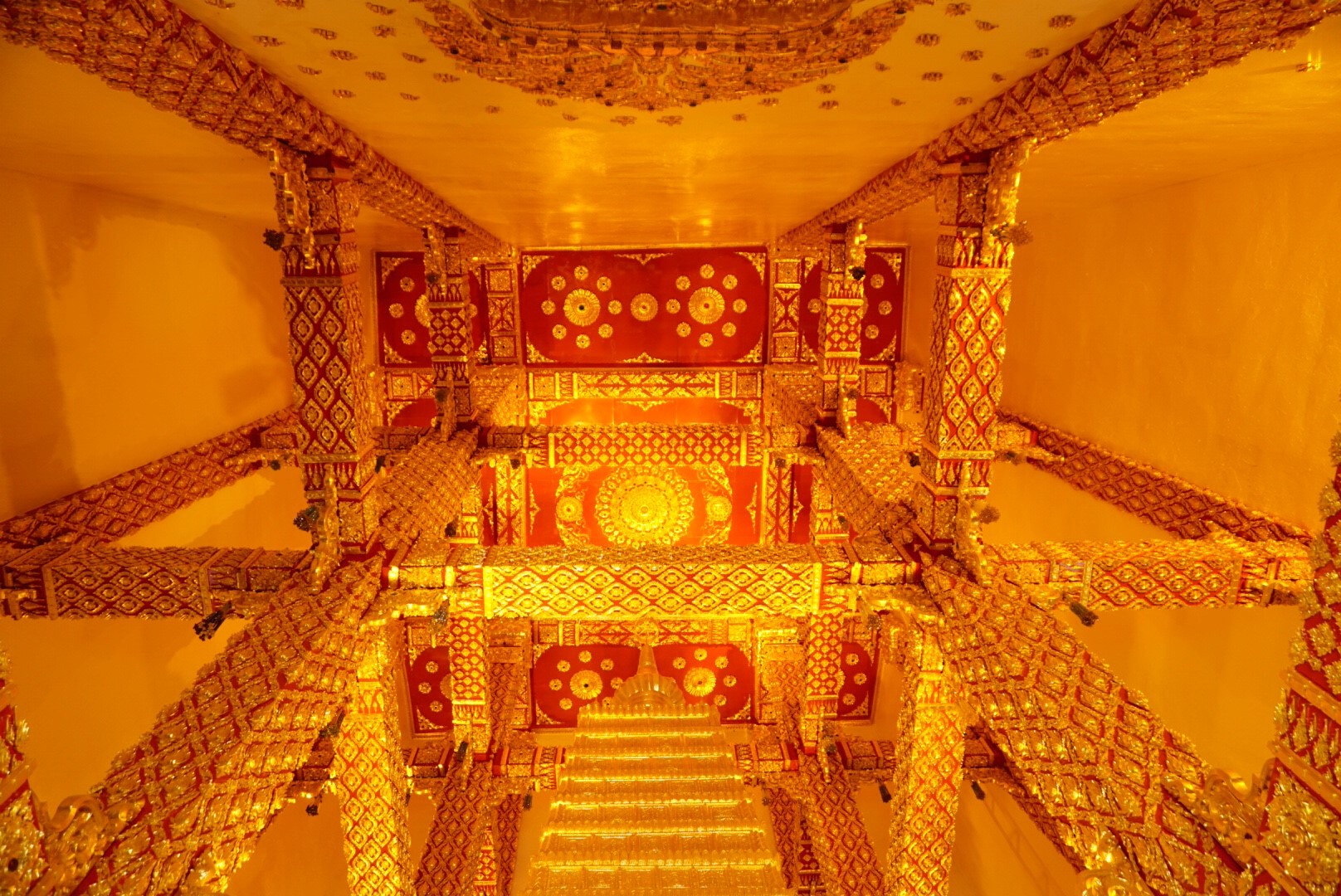
For a temple that looks unlike anything else in Isan, Wat Phra That Nong Bua is the pin many people put on their must-visit map. The moment you drive up, the Sri Maha Bodhi chedi commands the view — a large white-and-gold tower modelled on the Bodh Gaya stupa in India. Its square base measures 17 metres per side, it stands around 56 metres tall, and it was built in 1957 to celebrate the 2500th year of Buddhism. The interior enshrines sacred relics. The entire surface is carved with intricate Buddha images and Jataka tales. This is also the patron chedi for people born in the year of the Snake. It suits temple-goers, architecture photographers, and families looking for a peaceful space to walk around.
Beyond the main chedi, do not skip the two large nagas at the entrance — Phu Krit Korakon and Ya Mani Ket, often called the rainbow nagas — tall and eye-catching, widely visited for wishes about wealth and fortune. Further inside there's a reclining Buddha and the principal image in the ordination hall. Real Google reviews consistently praise the temple as clean, well-maintained, and serene. Some visitors note that in the early evening, when the lights come on, the chedi takes on a different kind of beauty worth coming back for.
Entry is free. The temple is on Thamma Withi Road, Mueang Sub-district, Mueang Ubon District — not far from the centre and easy to reach by car or ride-hail. Open daily from around 06:00 to about 19:30. For fewer people and cooler air, come in the morning; you can walk around the chedi photographing the carved reliefs without rushing.
This temple is beloved because it feels like a gathering point for the whole province — a Google rating above 4.7 from thousands of reviews reflects that. During Khao Phansa and Ok Phansa there are merit-making ceremonies and beautifully carved wax candles to admire. As a sacred site, dress modestly: shoulders and knees covered, and keep voices low when entering the ordination hall.
Ratchabut Night Market
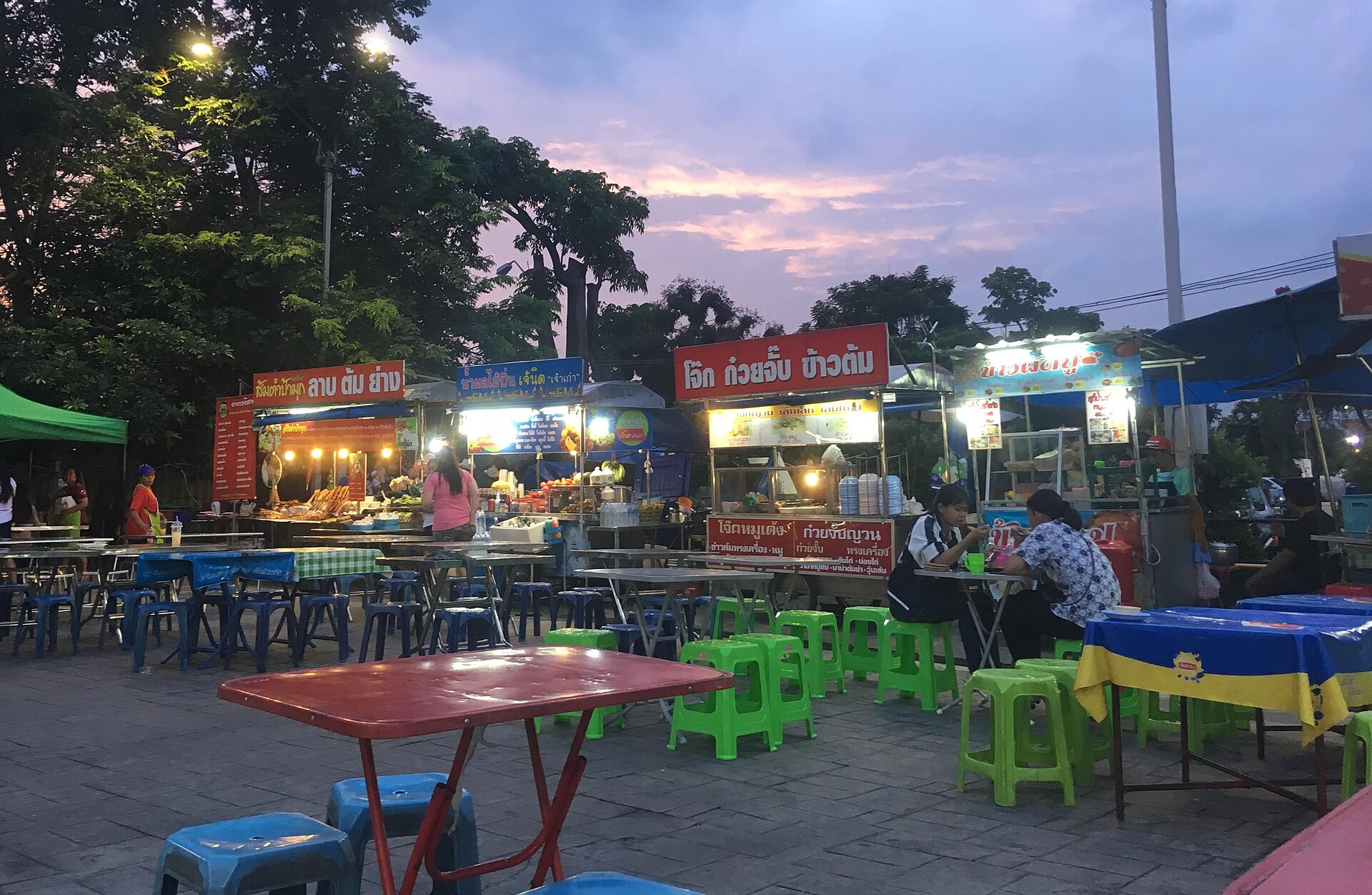
Ask any Ubon local where to go for dinner, and the answer you'll hear most is Ratchabut Night Market — or as people here call it, the Thung Si Mueang Night Market. This is the city's biggest evening food market, spread along Ratchabut–Khuan Thani Road on the south side of Thung Si Mueang park. By day the space is empty pavement; from 4 pm onwards vendors set up, and the whole strip becomes a collection of Thai, Chinese, Isan, and Vietnamese street food all in one stretch. It's the ideal dinner stop for anyone who's just arrived and wants to eat like a local from the start.
The market's charm is both its variety and its deeply Ubon character. Vietnamese food is the star act you should not miss: Naem Nuang (Vietnamese grilled pork rolls), Pate (Vietnamese-style baguette filled with Vietnamese sausage and liver paste), and steamed cup cake with pork topping that you'd be hard-pressed to find elsewhere. For snackers, the fried meatballs at the Mitr Samphan stall draw a regular queue. There's also Kuay Jap Yuan, som tum, grilled chicken, Isan sausage, and to finish, tofu dessert and tao thueng at Mam's stall — consistently praised for being fragrant and just-sweet-enough. One circuit and you've covered savoury and sweet without moving tables.
The budget is comfortably light — dishes run about 30–80 THB. Some food-video creators have done an entire market walk with 500 THB left over. The prices are local prices, not tourist prices. There's enough seating inside the market and parking nearby; even at peak evening hours it manages the crowds. Google rating sits at 4.0, and people tend to say the same thing: "cheap and good."
The market is open daily from roughly 16:00 to around 22:00, with the busiest period from 18:00 to 20:00. Get there at the start of the evening because items like Pate and Naem Nuang sell out early. It's an open-air market, so bring an umbrella in the rainy season, and allow a little extra time to find parking when it's busy.
🛏️ Hotels in Ubon Ratchathani — Easy Booking, Easy Exploring
Staying in the city centre means you can be at Wat Thung Si Mueang before the crowds arrive, and stroll to Thung Si Mueang park and Ratchabut Night Market in the evening without a long drive. The old town and Thung Si Mueang area has hotels and guesthouses at a wide range of prices. During the Candle Festival in early July, rooms fill up fast — book ahead. Compare prices and reviews before you commit.
Pha Taem National Park
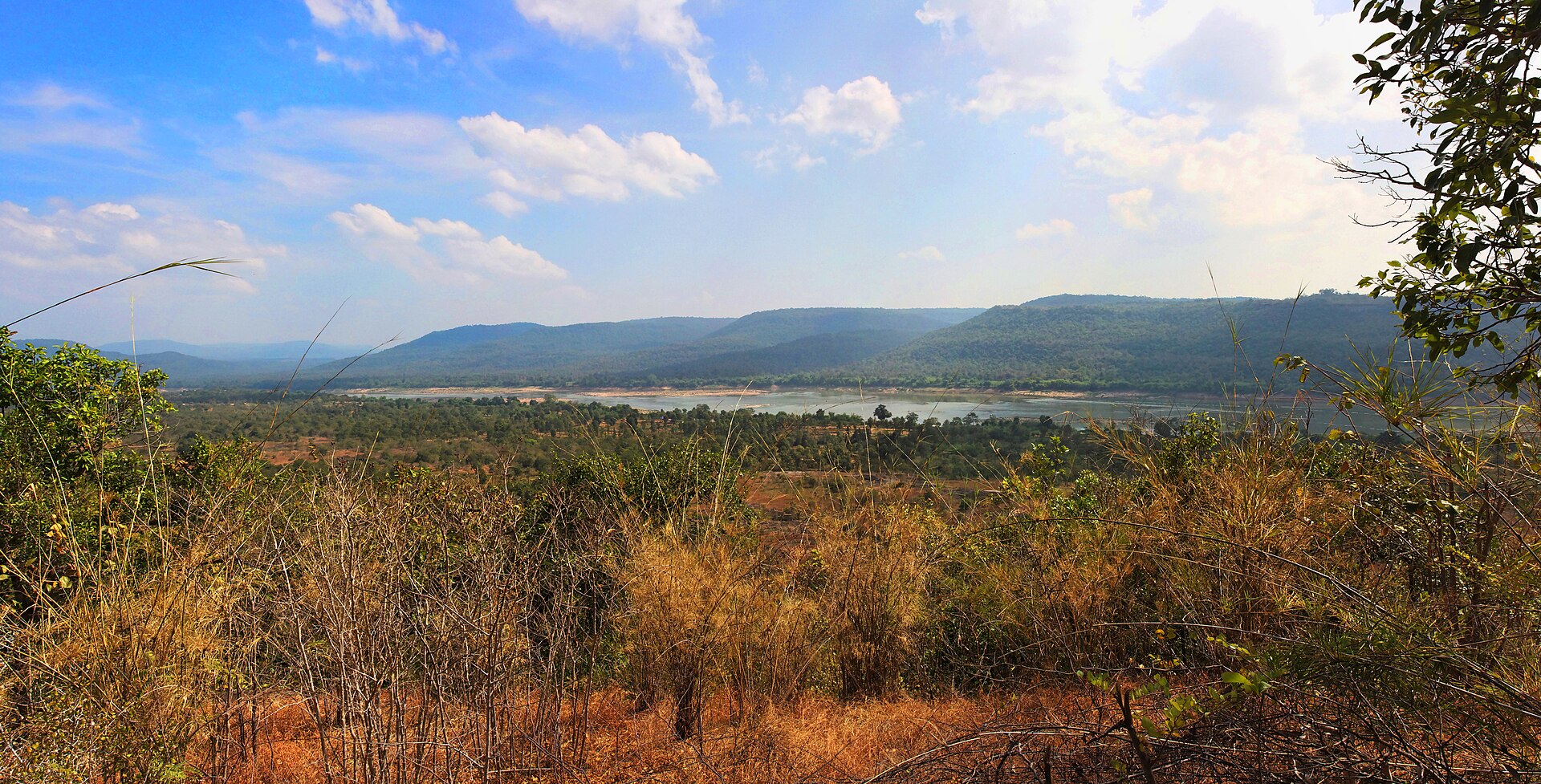
Pha Taem is a national park on the Mekong riverbank in Khong Chiam District, right at the Thai-Lao border. The name translates literally as "the cliff that has been painted on" — because on the sandstone faces above the river there are prehistoric rock paintings estimated at 3,000–4,000 years old, stretching continuously for over 180 metres with more than 300 individual images: people, handprints, giant Mekong catfish, turtles, elephants, and tool-and-utensil motifs. This is one of the longest and oldest groups of rock paintings in Thailand. Pha Taem is not just a photo stop — it's evidence that people lived along the Mekong for thousands of years. Standing in front of it, you genuinely feel that you're looking at what those people left behind.
There are three highlights everyone talks about. First: the cliff-edge walkway that takes you past the painted rock groups one cluster at a time, with the Mekong and the Lao bank spread wide below. Second: Sao Chaliang, mushroom-shaped rock columns formed by millions of years of wind and water erosion, located a short distance before the main cliff — easy to stop for photos on the way. Third: the sunrise viewpoint. Pha Taem is known as the spot in Thailand that sees the first light of day before anywhere else in the country. At New Year, people come up in large numbers to wait for the first sunrise of the year.
Getting there from Ubon city is about 90–100 km, driving through Khong Chiam and along the Mekong. Count on about 1.5 to 2 hours. A private vehicle is most convenient since the various spots inside the park are spread out. The park opens daily 06:00–18:00. Admission is 40 THB for Thai adults, 20 THB for Thai children, 400 THB for foreigners, plus 30 THB per car. Bring cash — the toll booths in this area often don't accept cards.
Practical tip from people who've been: leave your accommodation well before dawn to be up on the cliff for the first light. The temperature is cool, the light is extraordinary, and the numbers are smaller. After sunrise, walk the cliff-edge path to see the rock paintings, then stop at Sao Chaliang on the way back. Wear proper walking shoes, bring water, and give yourself a full day — after coming this far, there's no reason to rush.
Hat Wat Tai
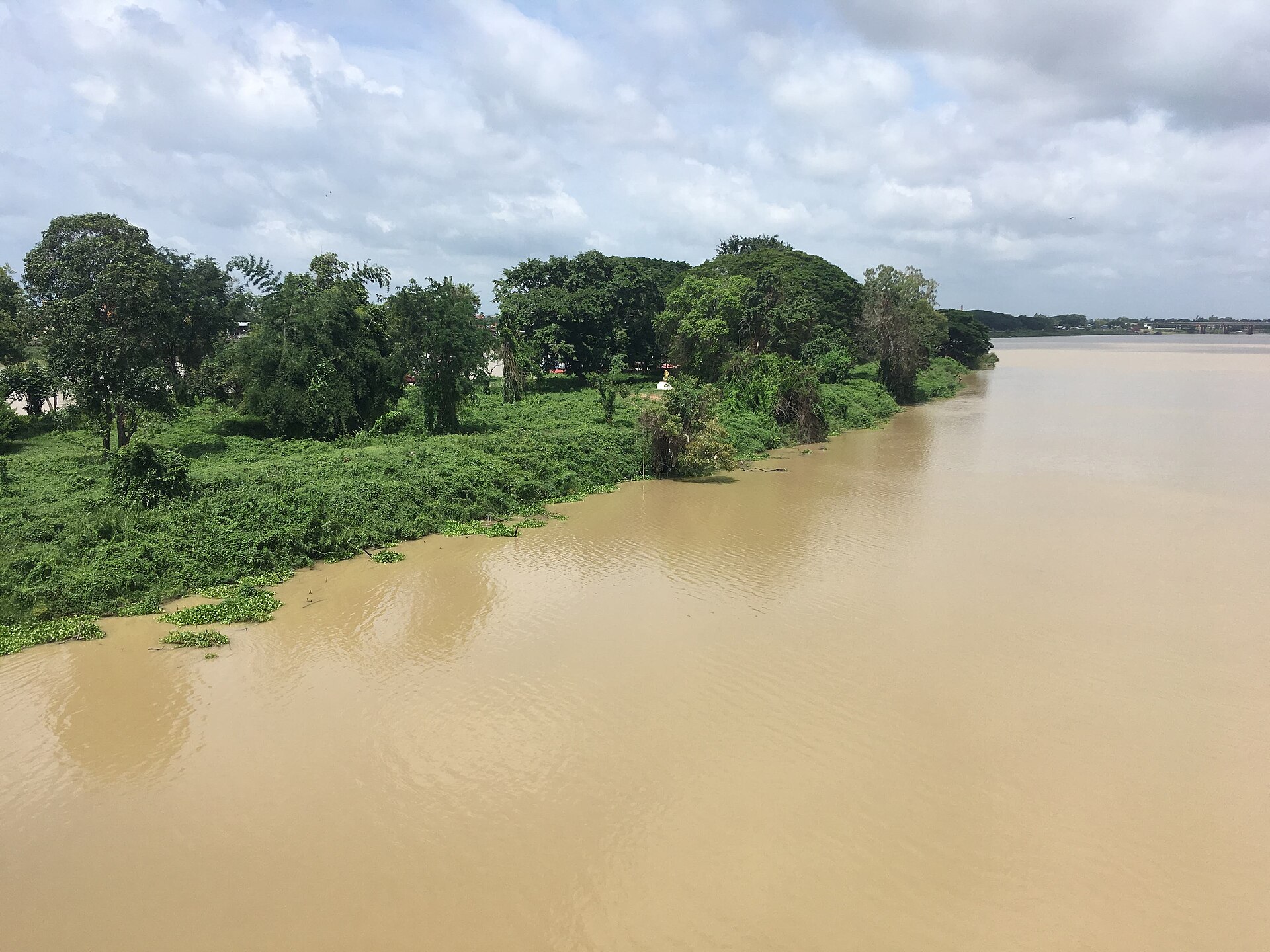
Hat Wat Tai is a sandbar island in the middle of the Mun River, sitting within the Ubon Nakhon municipality — just a few minutes' walk from the city centre, near Wat Tai Phra Chao Yai Ong Tue. This has become Ubon's dry-season landmark. When the Mun drops in water level, a stretch of white sand and a shaded island emerge, and the local community builds a bamboo bridge roughly 250 metres long spanning the water to the island. It's ideal for those who want an "in-city beach" feel without driving far, and suits families, couples, and photographers equally.
The highlight you must do is walk the bamboo bridge — each pole driven into the riverbed, tightly packed, stretching out across the current. Reviewers call it the longest bamboo bridge in Ubon. Equally unmissable is sitting at the riverbank for the sunset over the Mun: golden light reflecting on the water, one of those images that stays with you. Most reviews suggest arriving from around 16:00 onwards, when the heat drops, so you can paddle in the shallows and then wait for the sun to go down. On the island there are floating raft restaurants where you can order grilled prawns, grilled fish, or dishes cooked to order — eating with your feet on the sand.
Walking onto the sandbar is free — no entry fee. Park on the community side and cross the bridge. You pay only for food and drinks from local vendors; residents ask visitors to support the community stalls. The location is near Kriang Bridge, with clear signage to the beach access — not hard to find.
One critical point: this place is seasonal. The sandbar and bridge are fully ready roughly from January to May during the dry season. In the rainy season the water rises and the bridge is dismantled. Coming at the wrong time of year may mean you find only a full riverbank. A second point: the Mun's current is quite strong and depth changes rapidly — a single step can drop into much deeper water. If you bring children to wade, keep close watch. Plan to arrive in the late afternoon to get the sandbar, the food, and the sunset all in one go.
Central Plaza Ubon Ratchathani
Central Plaza Ubon Ratchathani — or just "Central Ubon" to locals — is the province's largest shopping mall, open since 2013 on more than 140,000 square metres on the ring road (Highway 231) near Chae Ramae sub-district. For anyone in Ubon who wants to escape the heat, shop for brands, catch a film, or find everything in one place, this is the answer. The building's architecture plays with the province's lotus motif, with lotus ponds around the exterior. Inside the layout is open, clean, and orderly — a comfortable choice for families, couples, and solo travellers.
The standout draws are 200-plus stores including Robinson, Tops Market, PowerBuy, SuperSports, B2S, and fashion brands such as UNIQLO, Mango, Levi's, and Charles & Keith — several of which opened their Ubon branches here first. For cinema-goers, Major Cineplex runs 7 digital screens. There's a Fun Planet zone for children and an aquarium displaying hundreds of rare fish species that kids love. The food zone is packed: MK, Sizzler, The Pizza Company, Sukishi, Shabushi, Yayoi, Starbucks, plus a food court serving local Isan food and street-food staples at low prices.
Entry is free. Budget depends entirely on how much you eat or shop. A food court meal costs from the low hundreds of THB. The parking lot handles over 1,500 cars. Opening hours are approximately 10:30–21:00 weekdays and 10:00–21:30 Saturday–Sunday (check for specific show times or promotions). The mall is a bit of a drive from the old-town side of the city, but easy to reach by car or ride-hail — just minutes from the airport.
Reviews from travellers say the mall is clean, spacious, comfortable to walk through, well-stocked, and that staff are helpful. Many visitors flag it as the best place in the city for shade on a hot afternoon. Note that Saturdays, Sundays, and long holidays bring noticeably more people, and the food court and popular restaurants may have queues. For a quieter experience, weekday mornings after opening are much more relaxed.
Ubon Ratchathani National Museum
If you want to understand Ubon on a deeper level, this is the best starting point. The Ubon Ratchathani National Museum is housed in the old provincial hall — a two-storey colonial building in cream yellow, built in 1918 and now over a hundred years old. The building itself is so handsome that many visitors photograph the exterior before even going inside. It suits history enthusiasts, fans of southern Isan culture, families wanting to teach children something, and anyone looking for a cool air-conditioned space to browse at midday.
Inside there are around 10 rooms tracking topics from geography and prehistory through Dvaravati, Chenla, Khmer, into Thai-Lao culture, antique textiles, traditional musical instruments, and ancient Buddha images excavated locally. The highlight not to miss is the sandstone sculpture of Ardhanarishvara — Shiva fused with Parvati in a single form — said to be one of the oldest examples of its kind in Southeast Asia, along with stone sema boundary markers and Buddha images from various eras. Real reviews frequently mention that signage includes English translations throughout, making it easy to follow the story room by room.
The atmosphere is quiet, unhurried — reviewers describe it as having a small museum all to yourself. A leisurely circuit takes 1–2 hours. Admission for Thai nationals is just 20 THB, foreigners 100 THB, children and seniors free. That's exceptional value. The location is central on Khuan Thani Road, right next to Thung Si Mueang park and the city pillar shrine — walk over to worship and explore the old town afterwards.
Important practical note: open Wednesday–Sunday 09:00–16:00. Closed Mondays, Tuesdays, and public holidays. Check the museum's Facebook page before visiting. The museum is worth it specifically because it wraps up all of southern Isan's story in one place — and the building itself is already a photo-worthy landmark.
Ubon Ratchathani Zoo
For a full day out with the family that won't get boring, Ubon Ratchathani Zoo is the recommendation locals pass on to one another. The zoo positions itself as a Jungle Park — placing the animals in a real forest setting across a huge 1,217-rai site within Dong Fa Huan Reserved Forest, Kham Yai sub-district, just about 8 km from the city. Many animals are in open-air paddocks separated by moats rather than metal cages, giving the whole experience a more natural, shaded feel than a conventional zoo. It works for families with children who want to see animals up close, and for photographers who like green, leafy framing.
The highlights visitors talk about most include a wide variety of species: tigers, lions, giraffes, zebras, pygmy hippos, capybaras, orangutans, and many bird species. There are scheduled feeding shows for tigers, lions, and penguins throughout the day. A popular option is the tram tour of the zoo grounds with live commentary; alternatively, you can rent a golf cart and explore at your own pace — children love it because they get closer to the animals than walking alone allows.
Budget-wise it's manageable. Entry for Thai adults is around 130 THB, children 40 THB; children under 3 and seniors 60+ enter free. Parking is 50 THB. The tram costs 25 THB. A golf cart rents for around 300 THB per 1.5-hour circuit. Open daily 08:30–16:30 (tickets stop selling in the afternoon). Morning visits are recommended — cooler air, more active animals, and more comfortable walking.
One real-review observation worth knowing: the grounds are enormous, so walking the whole thing is tiring — use the tram or golf cart. Some visitors note the species count isn't as large as the major Bangkok zoos and there are no elephants, but the genuine selling point is the jungle atmosphere and open paddocks where the animals clearly have room to move. Several reviewers mention it feels like one of the most animal-friendly zoos in the region. A Google rating of 4.3 shows most visitors come away with a positive impression.
Want to get more out of Ubon Ratchathani? Book tours and activities
Covering multiple spots in Ubon — including out-of-town temples like Wat Rueang Saeng Phu Phrao — is smoother when you book a guided tour or activity online in advance through Klook or GetYourGuide. You often pay less than on the day, a guide takes you there, and you skip the ticket queues. Pick only the activities that genuinely interest you; live prices and availability are on each platform.
💡 Before you head to Ubon Ratchathani
The old-town cluster around Thung Si Mueang is walkable. For temples and attractions outside the city, use Grab or rent a car. Public transport to Wat Rueang Saeng and the zoo is limited — renting a car or hiring a driver for the day is the most flexible option.
Ratchabut Night Market, the walking street, and most street-food stalls are cash-only. Keep small bills on you. The malls and shops in the city accept cards and QR payment.
Wat Rueang Saeng Phu Phrao only shows its glowing art after dark — plan an evening trip. Ratchabut Night Market opens from 16:00 till late. The walking street runs Friday–Sunday evenings only. Match your timing to avoid missing the highlights.
Early July around the start of Buddhist Lent is the most electric time at Thung Si Mueang — beautifully carved wax candles on display, massive procession. Crowds are large and accommodation fills up fast; book well ahead.
Wat Thung Si Mueang, Wat Phra That Nong Bua, and Wat Rueang Saeng are sacred sites. Dress modestly — shoulders and knees covered — and remove shoes before entering the ordination hall or shrine buildings.
English signage and menus appear at major temples and the malls, but most markets and local shops operate in Thai. A translation app or pointing at what you want works fine. Ubon locals are known for being friendly and willing to help visitors.
How to structure your Ubon itinerary
The most efficient city route starts in the morning at Wat Thung Si Mueang to see the wooden Hor Trai Klang Nam while the light is still soft, then crosses the road to Thung Si Mueang park and the National Museum — three sights in the same old-town pocket in one morning. One watch-out: the National Museum is closed Mondays, Tuesdays, and public holidays, so check the date before building your day around it. From there, continue mid-morning to Wat Phra That Nong Bua, also in the city — the white-and-gold Bodh Gaya-style chedi photographs well at any hour.
Save the afternoon and evening for Wat Sirinthorn Wararam Phu Phrao (Wat Rueang Saeng) in Si Rin Thorn district, because the glowing art on the ordination hall only reveals itself after dark. Arriving before sunset gives you both the daytime view of the golden hall and the Lao mountain ridgeline, then you stay on for the glow. For dinner back in the city, head to Ratchabut Night Market, open from 16:00 till late — or, on Friday through Sunday, the walking street around Thung Si Mueang. If you have extra time, add a day at Ubon Zoo in Kham Yai or a late afternoon at Hat Wat Tai on the Mun River.
Want to wake up and walk to Wat Thung Si Mueang before the crowds, or stroll the Thung Si Mueang walking street in the evening without a long drive? Booking a hotel in the Ubon city centre makes getting around the old town much smoother. Options range from full hotels to smaller guesthouses at different price points.
Check hotels in Ubon Ratchathani