🔄 Last checked 25 Jun 2026 · details and hours can change — check the venue before you go
📍 All restaurants on the map
Tap a pin for the spot + nearby stays
Udon Thani is a city you can fill an entire day in without leaving the centre. The main public park, Nong Prachak Silpakhom, is a large lake with a 3.2-kilometre walking and cycling path looping around it, and the Giant Yellow Duck floating in the middle has become the city's defining symbol. A short distance away is UD Town, an open-air community mall next to the train station, packed with evening street food. Central Udon Thani has shopping, cinema, restaurants, and everything else — easy for an evening stroll followed by dinner. For merit-making, the Chinese Ancestor Shrine in the city centre is the local go-to for luck, fortune, and fortune-telling strips.
Venture a little further and you reach the highlights people specifically come to Udon for. The Red Lotus Sea at Nong Han Kumphawapi: in December through February, red lotus flowers blanket the water as far as you can see. Take a boat out in the early morning when the light is gentle and the flowers are fully open. Kham Chanod in Ban Dung — a forested island in a lake said in legend to be the gateway between the naga realm and the human world — is among the most visited spiritual sites in the country. Wat Pa Phu Kon in Na Yung district has a temple with a vivid blue roof on a mountaintop sheltering a 20-metre white marble reclining Buddha surrounded by green mountain scenery. Phu Phra Bat Historical Park in Ban Phue is now a UNESCO World Heritage Site — sandstone rock formations and prehistoric paintings. Phu Foi Lom in Nong Saeng offers cool hilltop air, ideal in the cold season. Each place has a different character; a two-to-three-day trip covers them well.
Nong Prachak Silpakhom Public Park (Giant Yellow Duck)
For a relaxed city-centre outing in Udon Thani, Nong Prachak Silpakhom is the first name that comes to mind. This is a large lake at the heart of the city that functions as the province's main public park, with a walking, running, and cycling path roughly 3.2 kilometres long around the water — clearly separated lanes for pedestrians and cyclists. It's a good fit for everyone: morning exercisers, families with children, couples getting some fresh air, and visitors who just want a free photo stop at a genuine landmark.
The highlight everyone comes looking for is the Giant Yellow Duck floating in the middle of the lake — now officially the city's symbol. The good news is that after disappearing for over four years, the big duck returned to duty in mid-2025, this time sporting a Thai flag badge on its chest, and a family of smaller ducks has been added alongside. The spot draws the same crowds as always for photos and check-ins. Beyond the duck there's an island reached by a footbridge, a fountain, a clock tower, and flower gardens offering several more photo angles.
For atmosphere, most reviews agree that the best time is early morning and the late afternoon approaching sunset — cooler, comfortable breeze, plenty of joggers and aerobics groups. Cafes, breakfast spots, massage shops, and bicycle rental stalls (single bikes and tandem bikes) circle the park. Entry is free, no fee at all. If you drive, parking is around 30 THB.
One practical note: midday is bright and warm because the area is open and exposed, so morning or evening visits are more comfortable. The park is open every day from early morning until late, and the location right in the city centre is easy to reach. This tops the rankings for Udon Thani on multiple platforms because it is accessible, free, and has a duck you simply won't find anywhere else.
Red Lotus Sea (Nong Han Kumphawapi)
The Red Lotus Sea, or Nong Han Kumphawapi, is a large freshwater lake that transforms into a sea of pink every winter. The flowers that blanket the surface are technically lotus vine, not standard lotus, but when millions bloom simultaneously the effect is spectacular enough to draw both Thai and international visitors. This spot suits nature lovers, photographers, couples, and families willing to get up early. The lake is in Chiang Waew sub-district, Kumphawapi district, roughly 45 minutes to an hour southeast of Udon city.
The highlight not to miss is taking a boat out early in the morning. From 06:00 to around 10:00–11:00, the flowers are fully open and the light is soft. Out in the middle of the lake you're surrounded by a carpet of pink lotus extending in every direction, with water birds passing periodically. Many visitors say the light in the first hour of the morning hitting the petals is the image they remember all year. Ban Diem pier is the most popular departure point: plenty of boats, close to the village, food stalls nearby for breakfast, and easy parking.
Entry to the lake is free — you pay only for the boat. A small boat for two passengers costs around 300 THB; a larger boat for around six passengers costs around 500 THB. Ride duration is 45 minutes to 1.5 hours. Parking is a small fee of around 30 THB. The best months for full blooms are December through February. Outside that window the flowers may be sparse or not yet open — check conditions with the pier's page before making the drive.
This is a popular destination, and after a certain well-known celebrity's visit it drew even more attention. Worth knowing: you must get up early because the flowers close around midday. Some reviewers mention vendors pushing photos or merchandise; agree on the boat fare clearly before boarding. Bring a hat and sunscreen, and come on a weekday for more space and easier logistics than on weekends.
UD Town
For a relaxed evening out in Udon Thani that covers everything in one spot, UD Town is where locals take their out-of-town friends almost without exception. It's an open-air shopping centre in the city centre, next to Udon Thani train station on Thong Yai Road — easy to walk to from the city. What sets it apart is that it's not a closed, air-conditioned box; it's an open environment with trees, a small fountain, seating areas, and a circuit of restaurants, cafes, clothing shops, beauty clinics, and established brands around the perimeter. It works for foodies, shoppers, and those who simply want to be outside in the cooler evening air.
The must-do highlight is the evening market section (UD Night Market) near the train station side — dense with street food: Isan dishes, grilled meats, Japanese food, ice cream, and sit-down drink spots. International reviews on Tripadvisor praise the reasonable prices, the variety, the cleanliness, and the fact that vendors don't pester you — the vibe is like a Bangkok night bazaar but more local. There are also rotating events: concerts, dance zones, seasonal festivals, and changing photo spots with new themes each time, so it rarely feels repetitive.
Entry is free, plenty of parking, and a few hundred THB gets you a satisfying dinner. Opens approximately 10:00–22:00 daily, though the peak energy starts after 17:00 when the night market kicks in and the air cools down. Visitors arriving in the middle of the day may find some stalls not yet open and the heat noticeable since the space is outdoors.
UD Town consistently ranks as a top Udon attraction because it answers multiple needs in one place — good food, shopping, photos, and a comfortable walk. Google rating is 4.4 from over four thousand reviews, meaning both locals and international visitors consistently approve. One practical note: holidays and event days bring crowds and faster-filling parking, so give yourself a little extra arrival time.
Ban Chiang Archaeological Site (Ban Chiang National Museum)
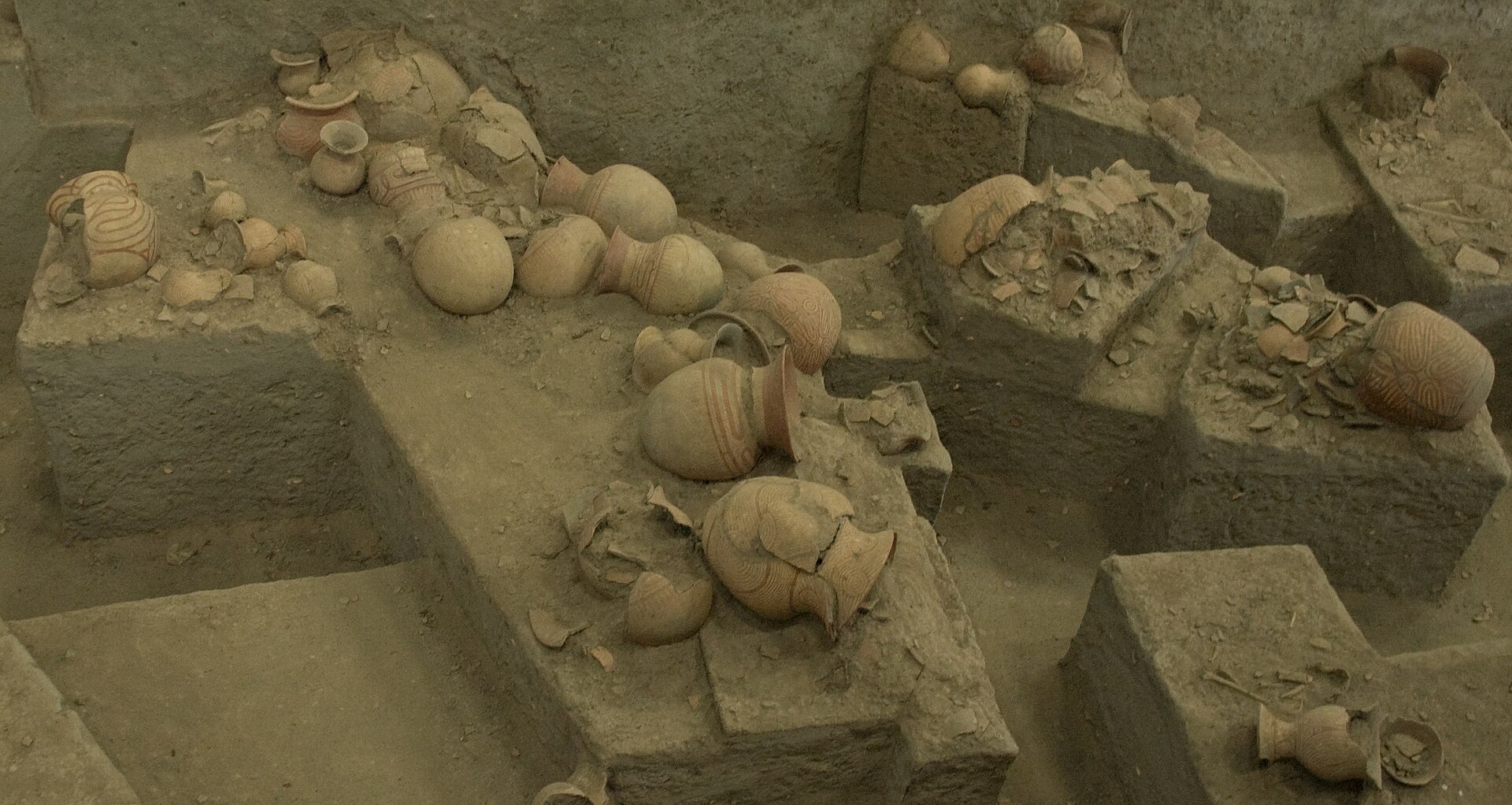
Ban Chiang is one of the most significant prehistoric archaeological sites in Southeast Asia, inscribed as a UNESCO World Heritage Site in 1992. This was once an agricultural community with knowledge of bronze metallurgy dating back roughly three to five thousand years. What put it on the global map is the painted pottery — red hand-painted swirl and curved-line motifs on buff surfaces — now so iconic it has become the symbol of Udon Thani.
A visit divides into two key stops. First, the Ban Chiang National Museum, which displays actual pottery, bronze tools, beads, and skeletal remains found at the site, arranged to walk you through the early, middle, and late periods clearly and accessibly. Second, and arguably more memorable: the open excavation pit at Wat Pho Si Nai, a short distance from the museum. Here the excavation has been left open for viewing, showing burial jars and skeletal remains positioned exactly as found in the earth — a genuinely rare sight.
Getting here from Udon city takes around an hour, driving about 50 km to Nong Han district. The museum is open daily 09:00–16:00. Admission is 30 THB for Thais, 150 THB for foreigners. Students in uniform, Thai seniors, and ordained monks enter free. The fee is excellent value given what there is to see.
Practical advice from people who have visited: allow at least half a day to see both the museum and the Wat Pho Si Nai excavation pit properly. Mid-morning to early afternoon can be warm, so bring water and comfortable shoes. Read the interpretation panels as you go — the deeper you follow the story, the more engaged you become with daily life here thousands of years ago.
Udon Thani Chinese Ancestor Shrine and Thai-Chinese Cultural Centre
For one place in Udon Thani that gives you both merit and beautiful photos, the Chinese Ancestor Shrine (Phu-Ya Shrine) is what locals point to first. This is a venerable Chinese shrine serving the city's Chinese-heritage community for generations, situated beside Nong Bua park in the city centre — easy to walk to from the central accommodation and market areas. It suits those seeking blessings for work, money, or exams, and those wanting to ward off bad fortune for the year. Lovers of Chinese architecture will also find plenty to appreciate, because right next door is the Thai-Chinese Cultural Centre, a large Chinese-style building you can photograph all day.
The most talked-about draws are the six-point blessing ritual, fortune-telling sticks (many visitors say they are uncannily accurate and return to make good on granted wishes), fortune-warding ceremonies, koi feeding in the pond, and a stroll through the Millennium Virtue Garden — a Chinese-style waterfront garden. For those who love dressing up, there's a Chinese costume rental service in multiple styles and sizes starting from a few hundred THB; the Chinese-architecture backdrops make for photos that feel like stepping into ancient China. The overall atmosphere is shaded and tranquil, with a lakeside pavilion for resting. Most reviews praise the spacious grounds, the calm, and the helpfulness of volunteer guides.
Entry to both the shrine and the Cultural Centre is free. Pay only for incense and prayer items, costume rental, or koi food — a few hundred THB covers everything comfortably. Open daily roughly 09:00–18:00 (Cultural Centre until around 19:00). Location is on Sa Chao Neramit Road, Mak Khaeng sub-district, Mueang Udon. Parking available, easy to reach.
This spot ranks highly because it packages everything a trip to Udon needs: spiritual resonance that locals trust, Chinese architectural photo settings, and simple, easy activities like koi feeding and costume rental. Google reviews sit around 4.6 from several hundred visitors — both Udon residents and out-of-town travellers consistently recommend it. If you're visiting in December, you may also catch the 99-metre Golden Dragon that is brought out for seasonal events. This makes a perfect starting point for an in-city day.
🛏️ Hotels in Udon Thani
With this many spots to cover, a centrally located hotel near Nong Prachak, UD Town, or Central Udon makes life much easier. Head out to the Red Lotus Sea, Kham Chanod, or Wat Pa Phu Kon in the morning and return to the city to rest. There are budget through mid-range options to choose from. Compare prices and real reviews before booking — especially in the cold season when rooms fill fast.
Wat Pa Phu Kon
Wat Pa Phu Kon is a Dhamma Yut forest temple that sits tucked inside the national forest reserve of Pa Na Yung–Nam Som, at the boundary of three provinces — Udon Thani, Loei, and Nong Khai — around 125 km north of the city. The draw that brings people from across the country is the ordination hall with its vivid blue roof rising from the mountaintop. Inside is enshrined Phra Phuttha Saiyat Lokanat Sat Da Maha Muni, a white Carrara marble reclining Buddha from Italy, 20 metres long, set in sections with exquisite craftsmanship. The setting is an ideal match for merit-makers, those seeking a peaceful place for reflection, and nature lovers willing to tackle the mountain road.
Visitor reviews consistently point the same direction: many say it is one of the most beautiful and serene temples in Isan. The white marble surface of the reclining Buddha against the surrounding green forest nearly takes your breath away. One reviewer wrote that it looks like everything you've imagined a Thai temple should be. The experiences to focus on are: entering the hall to pay respects to the reclining Buddha, walking around the interior looking at the Buddhist art covering the walls, then stepping outside to stand in a cool breeze taking in the all-round mountain view. There is also the Phra Pathom Rattana Burapha Chedi, a stupa housing sacred relics.
Entry is free, purely merit-based donation. The shrine hall opens for worship daily from around 08:30 to 17:00 (the temple grounds open earlier). A note: the final stretch of road up the mountain is fairly steep and the upper car park has limited space. Weekday visits avoid the congestion and heat that builds on weekends. A sarong or cover-up cloth is available to borrow for those not dressed modestly, and there is wheelchair and pram ramp access.
What makes this temple so popular is not just the beauty but the rare quality of calm in the forest — cool air, quiet, no bustle, the right environment for sitting in stillness. There's a coffee shop and rest area to recharge before heading back down. If you're planning a Udon itinerary with a spiritual or nature focus, this belongs on the list. Just budget plenty of travel time because it's far, and the road takes a while.
Kham Chanod (Wang Nakin / Wat Siri Sutho)
Kham Chanod, also known as Wang Nakin (Wat Siri Sutho), is a forested island in a lake in Ban Dung district, north of Udon Thani city. According to local legend, this is a gateway between the naga realm beneath the earth and the human world above, making it a key pilgrimage destination for those seeking blessings from Pho Phu Sri Sutho and Mae Ya Sri Pathuma. Anyone drawn to places with an air of mystery, story, and atmosphere quite unlike an ordinary temple will find this place resonates strongly. Most reviews say the same thing: once you cross the bridge onto the island, you feel a stillness and a certain energy that is genuinely difficult to describe.
The highlights not to miss are walking across the bridge onto the island to pay respects at the shrines of Pho Phu Sri Sutho and Mae Ya Sri Pathuma, and the sacred well in the centre of the island where many visitors collect holy water and make their wishes. Another draw for photographers is the giant fig tree and the densely growing chanod trees casting deep shade all around. Before entering the island you remove your shoes, which adds to the experience as a ritual transition — the atmosphere is immediately quieter, sounds of water and leaves, a sense of reverence.
Entry to the island is free, with a donation box for maintenance. Parking is also free. Most of the expense goes on baisi ceremony sets, flower offerings, incense and candles, and spirit-house items sold in rows of stalls at the entrance. A few hundred THB covers it comfortably. Open daily approximately 08:00–16:30 (hours may adjust during festivals). Morning visits mean fewer people and cooler conditions. Long holidays and auspicious Buddhist calendar days draw large crowds.
Kham Chanod is around 100-plus km from Udon city — roughly 1.5 to 2 hours by car — best for those driving their own vehicles or coming in a group. Popularity has grown significantly since it featured in TV dramas and spiritual media. Google rating is 4.6 from tens of thousands of reviews. Practical points: dress modestly, expect crowds on public holidays, and note that the ground can be hot underfoot at midday — arriving early morning or later afternoon is easier on your feet.
Central Udon Thani (Central Plaza)
For a single place in Udon Thani that handles shopping, eating, cinema, and getting out of the heat, Central Udon Thani is the go-to for city residents. The mall is on Prachak Silpakhom Road in the city centre, long established and renovated on a large scale since 2012. It now runs 5 floors plus a basement, with Central department store, a Tops supermarket, Major Cineplex with 8 screens, restaurants, and fashion brands including Uniqlo, H&M, and Muji — all under one roof. It works well for families, travellers who want to cool off, and anyone who wants a relaxed evening walk.
The most frequently mentioned attraction in reviews is the Food Park food court on the lower floor, serving Isan food and made-to-order dishes at friendly prices. Families with young children have the Kidzooona play zone. Cinema-goers get a large format, comfortable seating, and strong air conditioning. Outside the entrance, the event lawn hosts rotating markets and activities throughout the year — Songkran and New Year's Eve are particularly lively.
Weekdays are relatively quiet and comfortable to browse. Saturdays, Sundays, and long weekends draw noticeably bigger crowds as this is where Udon residents and visitors from neighbouring countries all converge. Entry is free; budget is up to you — the food court starts from the low tens of THB. Parking for around 2,000 cars is available.
A quick practical note: the mall opens 10:30–21:00 daily (Sat–Sun from 10:00). It connects directly to the Centara Hotel by a walkway. The Major Bowl Hit bowling alley that used to be here closed in 2019 — if you specifically planned to bowl, check first. For shopping, eating, cinema, family errands, or simply sheltering from the afternoon heat, this is the most complete option in Udon.
Phu Phra Bat Historical Park
Phu Phra Bat Historical Park is a wide sandstone plateau on the Phu Phan range where millions of years of erosion have sculpted the rock into unusual overhangs and formations scattered throughout the forest. Ancient people then used these shelters as dwellings and ceremony sites, leaving behind rock paintings estimated at 2,500–3,000 years old along with Dvaravati-era stone sema markers. In 2024, UNESCO inscribed the site as Thailand's 8th World Heritage Site. It's an excellent fit for light hiking combined with history, families, and photographers.
The most talked-about feature is Hor Nang Usa — a mushroom-shaped rock overhang with a small room-like space at the top adapted into a small shrine, which has become the signature photo spot of Phu Phra Bat. Beyond that, there are Tham Chang, Tham Wua-Tham Khon with visible rock paintings of people and animals, and a group of rocks connected to the Nang Usa-Thao Barat legend. Signed walking routes are clearly marked, with both short and long loops; realistic walking time is 1.5 to 3 hours depending on how many points you visit.
The setting is open forest alternating with stone platforms, with shade coming mainly from the rock formations themselves. Visitor reviews praise the cleanliness, the detailed information signs, the friendly park staff, and the electric vehicle transfer service within the park. Admission is 20 THB for Thais, 100 THB for foreigners — outstanding value for what there is to see. Open daily 08:30–16:30.
Location is in Mueang Phan sub-district, Ban Phue district, northwest of Udon city — about 60–67 km away, best reached by private vehicle. Practical points: come in the morning because midday sun is strong with limited shade. Wear shoes you can walk on rock in. Bring water. Avoid the rainy season as the rocks become slippery. Allow at least half a day to walk the site properly without rushing.
Phu Foi Lom (Eco-Tourism Destination)
Phu Foi Lom is an eco-tourism destination on the Phu Phan Noi range in Nong Saeng district, south of Udon Thani city, at around 600 metres above sea level — high enough to keep the air comfortably cool nearly all year round. The name "Phoi Lom" comes from the lichen filaments that once draped the large trees here. The site suits families wanting to bring children to learn about nature, campers looking to pitch tents in the cool air, and anyone who needs a break from the city without driving too far.
The highlights here are packed into one area. Start with the Queen's 60th Birthday Plant Collection Garden — drive in and walk through the grounds at your own pace. Next is Jurassic Park, where large-scale dinosaur replicas are positioned along the paths (children love it), along with a museum display of ancient fossil specimens in glass cases. For nature walkers there are trail routes through mixed deciduous forest and dry dipterocarp woodland, alternating with grassland clearings, and the Pha Rap Arun viewpoint where you can see a small ridgeline of mountains stretching below. Multiple reviews note that weekdays are quiet, the breeze is cool, and you can stand at the viewpoint and stare for a long time.
Costs are low: most areas are free or charge a small fee by zone. Extra fees apply if you pitch a tent or book a bungalow overnight. A welfare shop on the hill sells food and drinks so you don't need to carry everything. Opens roughly 06:00–20:00 daily. About 50–60 km from Udon city, around an hour by car.
Phu Foi Lom is especially popular in the cold season when the air is sharp, morning mist rolls in, mountain flowers bloom, and the night sky is clear enough to see stars. Google rating is 4.7. Points to know: the road has steep sections near the top — check your vehicle before going. If you want to catch mist or the Pha Rap Arun sunrise, either stay overnight or leave the city very early in the morning. Pack warm clothing — it will be cold.
Tickets, tours, and activities in Udon Thani
Hitting multiple spots in a day — like the Red Lotus Sea, Kham Chanod, or Wat Pa Phu Kon, which are spread far apart — is far smoother with a booked guided tour and transport. You skip the driving, skip the parking hunt, and some packages include the boat ride or admission. Compare itineraries and prices through Klook or GetYourGuide; booking online is easy and you don't queue at the gate.
💡 Before you head to Udon Thani
City sights like Nong Prachak, UD Town, and Central are walkable or easy by Grab. But the out-of-city highlights — Red Lotus Sea, Kham Chanod, Wat Pa Phu Kon — are 1–2 hours apart and public transport is sparse. Renting a car or hiring a driver for the day is the most practical option.
The UD night market, street food stalls, boat fares at the Red Lotus Sea, and offering sets at Kham Chanod mostly work on cash. Keep small bills on hand. Big malls like Central and larger shops accept cards and QR payment.
The Red Lotus Sea is at its best from 06:00–08:00 and boat service is primarily in the morning. Kham Chanod and Wat Pa Phu Kon are most pleasant in the morning to mid-morning before they fill up. Nong Prachak is nicest in the cool evening.
Kham Chanod, Wat Pa Phu Kon, and the Chinese Ancestor Shrine are sacred sites. Dress modestly — shoulders and knees covered — remove shoes where required, and keep a respectful manner throughout.
English signage and menus appear at malls and some larger shops. Markets and out-of-city attractions are mostly Thai-language only. A translation app helps; pointing and smiling works too. Udon people are generally warm and accommodating to visitors.
Many attractions are free or charge small parking and incense fees. Tipping is not expected but rounding up for your boat skipper or a helpful guide is appreciated. Keep small change and small bills for donations and fees at various sites.
How to structure your Udon Thani itinerary
Spend day one in the city and keep it comfortable. Start morning to mid-morning at Nong Prachak Silpakhom for photos with the Giant Yellow Duck and a cycling or walking lap of the lake. Drop by the Chinese Ancestor Shrine and Thai-Chinese Cultural Centre to pay your respects. In the afternoon, escape the heat at Central Udon Thani. Then in the evening, head to UD Town and the night market for street food. All of this is within a few kilometres of the city centre.
Reserve a second day for the out-of-city highlights that pull in opposite directions. If you're visiting in winter (December–February), the Red Lotus Sea at Kumphawapi is the top priority — be at the pier before 07:00–08:00 because the flowers close at midday and boats run mainly in the morning. Kham Chanod in Ban Dung and Wat Pa Phu Kon in Na Yung are each 1.5–2 hours from the city and in different directions — pick one per day rather than rushing both. Renting a car or hiring a driver is by far the most flexible approach since the sights are so spread out.
With this many places to see across Udon, booking a central hotel for a night or two makes the most sense. Head out to the Red Lotus Sea, Kham Chanod, or Wat Pa Phu Kon in the morning and return to the city to rest in the evening. Check availability and prices for the dates you're planning — especially in the cold season when rooms go fast.
Check hotels in Udon Thani