🔄 Last checked 27 Jun 2026 · details and hours can change — check the venue before you go
📍 All restaurants on the map
Tap a pin for the spot + nearby stays
The appeal of Uthai Thani is that it's a "small riverside town that's easy to explore but packed with good things." The highlights cluster into two main zones: the old town along the Sakae Krang River, and the Lan Sak–Ban Rai side, which is limestone-mountain country. In town, a few steps take you from a community morning market to houseboats, old riverside temples, and Khao Sakae Krang, where you can climb up to pay respects and take in a 360-degree view of the town. Cross over to the Lan Sak side and the scenery changes to limestone forest, green valleys, cornfields with mountains as a backdrop, and minimalist cafés set in the valley. You can string it all together easily — temples, nature, community markets, and photogenic cafés.
This list includes pins you shouldn't miss in Uthai Thani, such as Wat Tha Sung (Wat Chantaram), with its Crystal Viharn — a hundred metres long and lined with shimmering glass mosaic — and the Golden Castle, gleaming gold with intricate Thai motifs. There's Hup Pa Tat, a prehistoric forest in a limestone valley that you reach by walking through a cave tunnel; Khao Sakae Krang (Wat Sangkat Rattana Khiri), where you climb 449 steps to pay respects, ring the bells, and enjoy the view; the Sakae Krang riverside morning market, where you can watch houseboat life and give alms to monks paddling boats; and Wat Uposatharam, with early-Rattanakosin murals. For café lovers there's My Merchain, a café set in the valley, and the Trok Rong Ya walking street, an old-town quarter of century-old timber houses. Scroll through the details spot by spot and plan your own route.
Wat Tha Sung (Wat Chantaram) — Crystal Viharn and Golden Castle
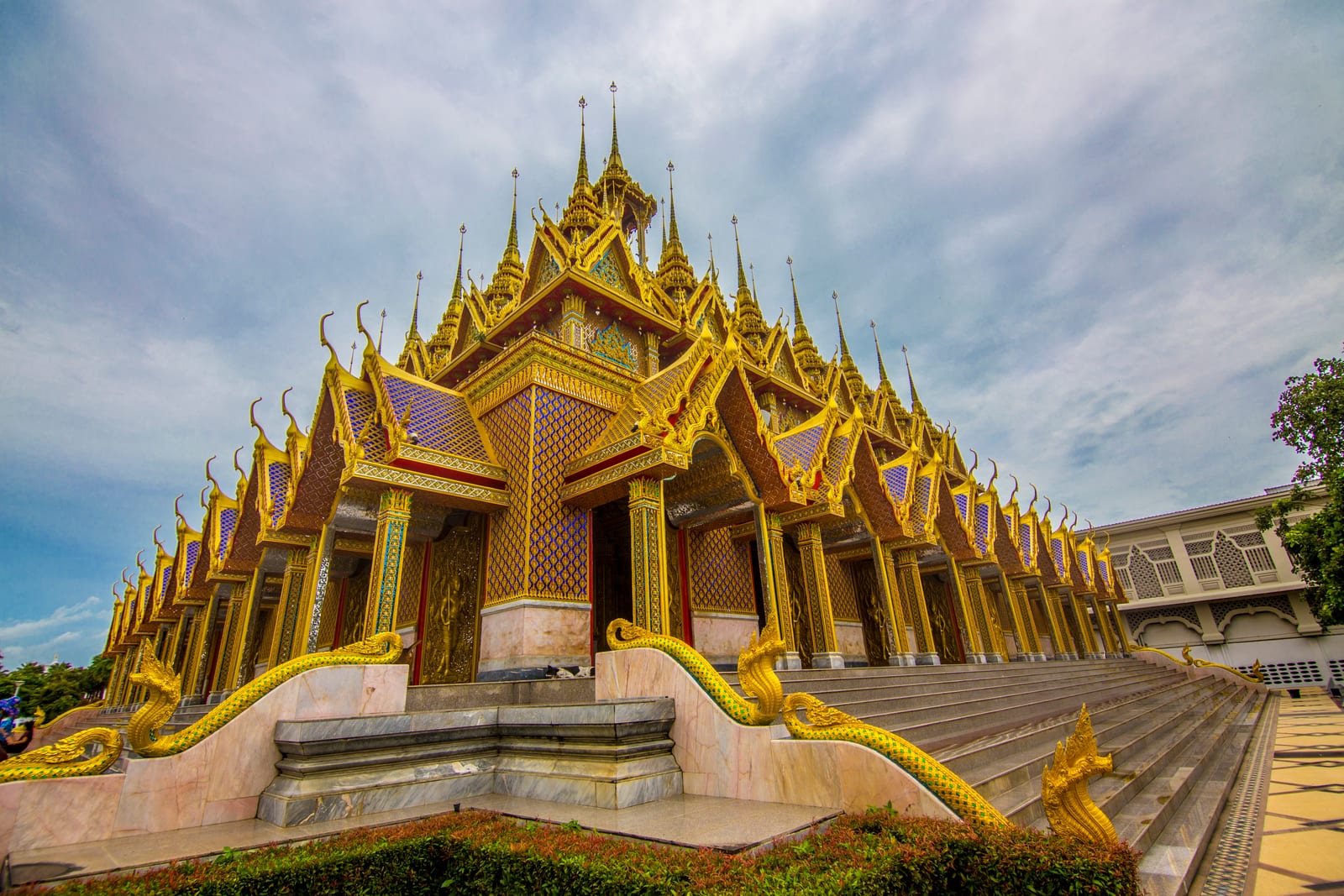
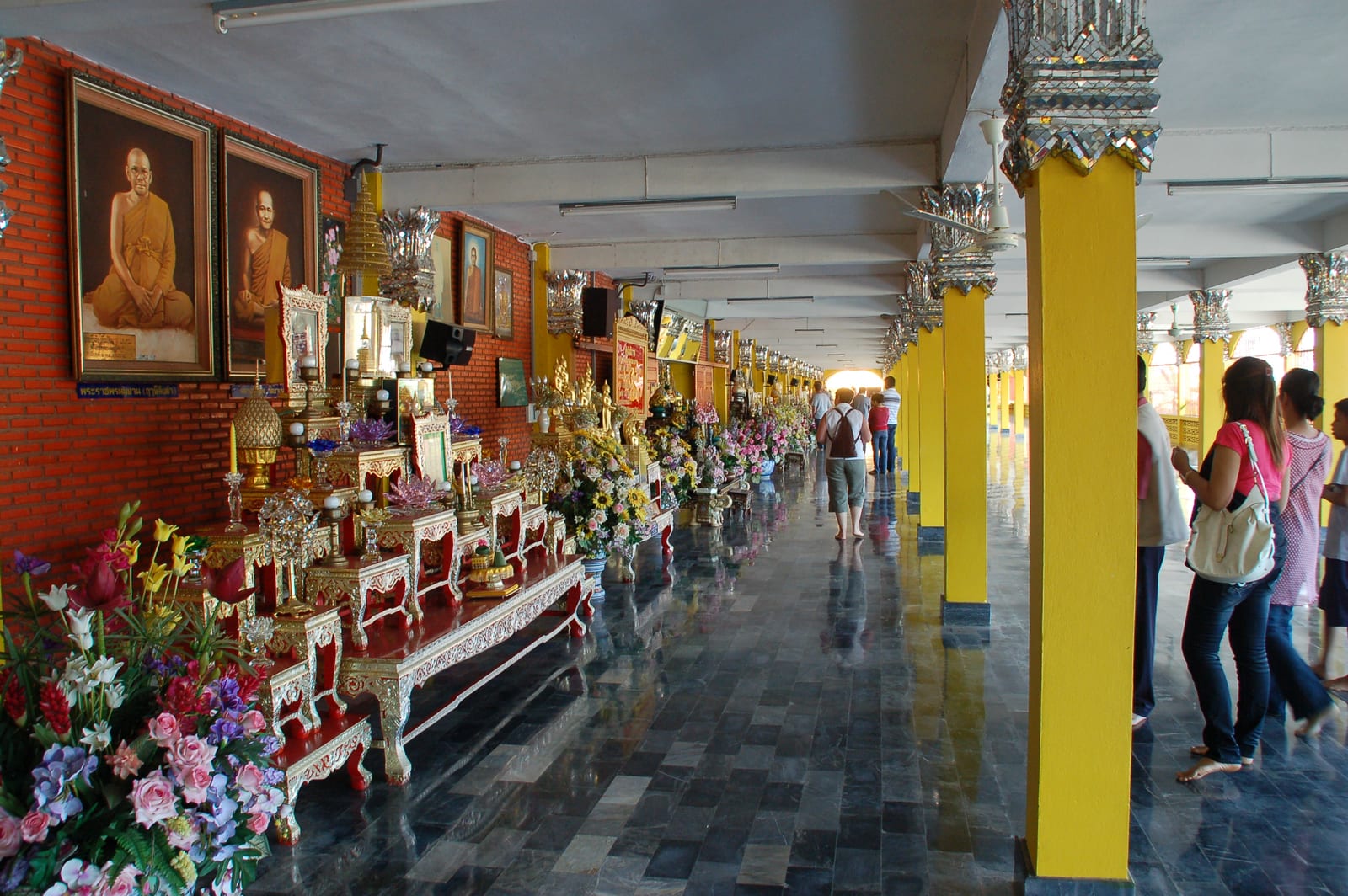
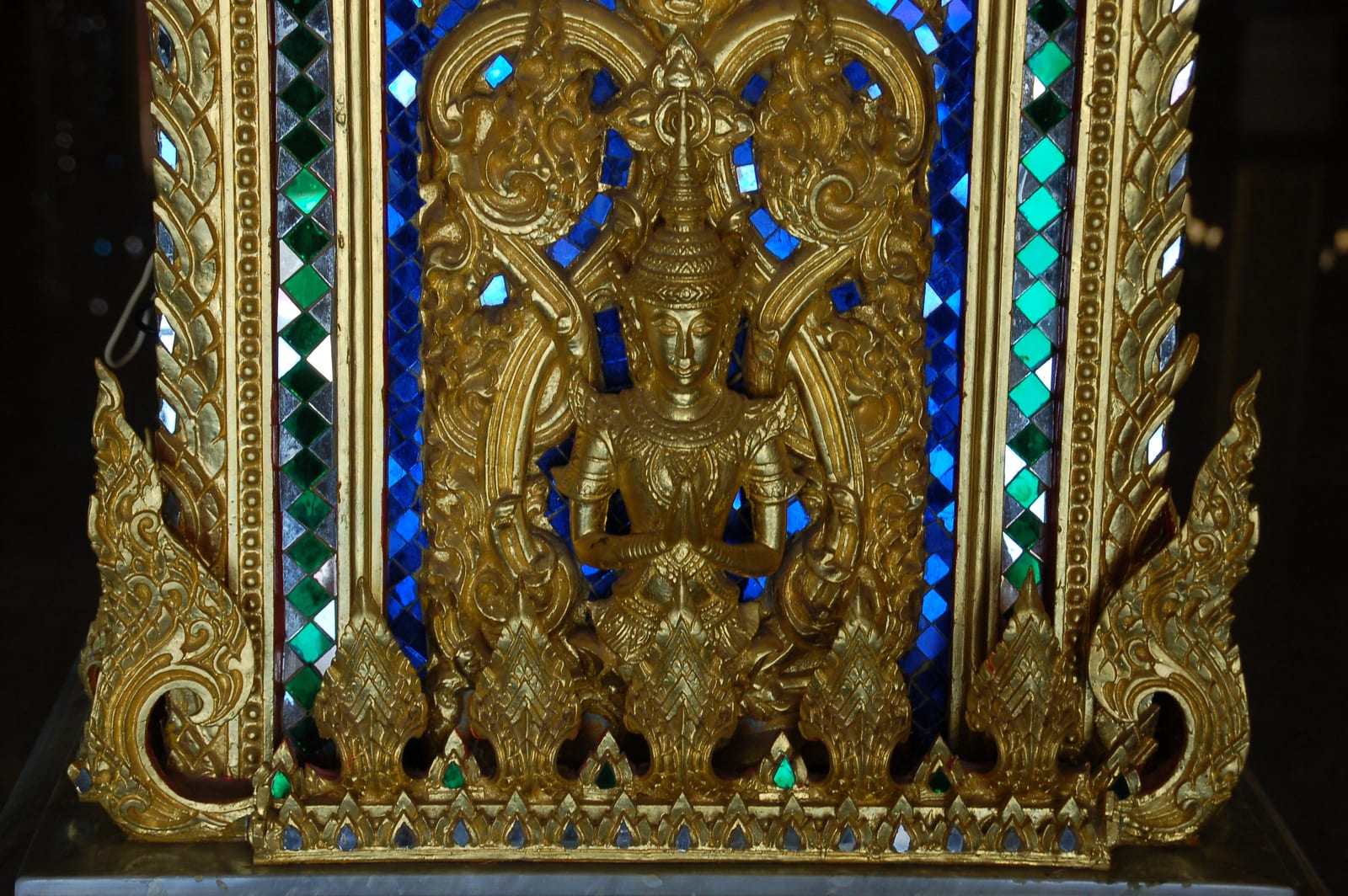
If you had to pick just one Uthai Thani attraction that people talk about most, Wat Tha Sung — officially Wat Chantaram — is the answer. It's an old Ayutthaya-era temple that Luang Pho Ruesi Ling Dam (Phra Ratchaphrommayan) restored into an enormous complex spanning thousands of rai along the Sakae Krang River. It suits merit-makers who want to pay respects at the master's body, photographers after grand shots, and families who want a beautiful temple that can fill a whole day.
The unmissable highlight is the 100-metre Crystal Viharn, its interior covered entirely in shimmering white glass mosaic — from the pillars and walls to the ceiling hung with more than a hundred chandeliers. When the light hits, it throws off sparkling reflections, as if you're walking through a palace of glass. At the far end lies the body of Luang Pho Ruesi Ling Dam in a glass coffin for people to pay their respects. Another pin people come specifically for is the Golden Castle (Prasat Thong Kanchanaphisek), gold all over with finely carved Thai motifs. Many genuine reviews agree that under strong sun the castle turns such a brilliant gold that you can't photograph it fast enough, and the carved doors are beautiful too.
You can relax about costs: entering the temple and viewing the Crystal Viharn and Golden Castle is free — just make merit as you wish. The temple is so vast that trams run visitors around to the various points, with fares in the tens of baht. It sits just a few kilometres from Uthai Thani town toward Manorom, an easy drive with a large parking area.
One thing to know before you go: the Crystal Viharn opens in sessions — mornings 09:00–11:45 and afternoons 14:00–16:00 — while the Golden Castle opens around 08:00–16:00. Anyone arriving over the lunch break may find the Crystal Viharn closed, so check the times carefully so you don't miss it. Dress modestly, as this is a sacred site, and allow at least 1–2 hours, because there really is a lot to see.
Hup Pa Tat (Unseen Thailand)
 Photo: VN.NguyenDucDuy / Wikimedia Commons (CC BY-SA 4.0)🔍 Tap to zoom
Hup Pa Tat is a natural attraction many people rank as an Uthai Thani highlight. It's inside the Tham Prathun Non-Hunting Area in Tambon Thung Na Ngam, Lan Sak. What hooks people is that you have to walk through a short, dark limestone cave tunnel (rangers lend out flashlights) and then emerge into a "valley" ringed by steep limestone cliffs. Inside is a dense grove of ancient tat palms, growing so thickly that it feels like you've stepped into a prehistoric forest. It's perfect for people who enjoy easy nature walks and photography and want to find a spot unlike anywhere else.
The unmissable moment is the light spilling down through the cave mouth and the gaps in the cliffs. Many genuine reviews agree that morning to late morning is when the light is at its most beautiful, ideal for capturing sunbeams in your photos. Another curiosity here is the "pink dragon millipede," which was discovered for the first time in the world right at Hup Pa Tat. The nature trail is around 700 metres round trip, an easy walk that takes about 1–2 hours.
The atmosphere inside is shaded and cool because the cliffs block the sun for most of the day. Many people say that no matter how strong the sun is outside, walking through the cave feels like stepping into a natural air-conditioned room. The entry fee is very low: Thai adults 20 THB, children 10 THB (foreigners 200 THB). Open daily 08:30–16:30, with a parking area; pets are allowed, and most information signs are in Thai.
It's popular because it was once named one of the Tourism Authority of Thailand's Unseen Thailand spots, making it a check-in point almost everyone stops at when visiting Lan Sak. One thing to know: some stretches of the path are rough stone and can be slippery if it rains, so wear sneakers or shoes with good grip. Bring mosquito repellent and drinking water, and leave plenty of time to take photos.
Khao Sakae Krang (Wat Sangkat Rattana Khiri)
 Photo by Kasinthon Ratchaoros / Wikimedia Commons (CC BY-SA 4.0)🔍 Tap to zoom
If you come to Uthai Thani and want to see the whole town in one glance, Khao Sakae Krang (Wat Sangkat Rattana Khiri) is a must. It's the highest hilltop in the middle of town, within the municipality, just a few minutes from the riverside morning market. It suits everyone from merit-makers who want to pay respects to photographers after a 360-degree town view — one trip up gives you the temple, the viewpoint, and the calm all at once.
The highlight is the 449-step dragon staircase running from the foot of the hill up to the mondop at the top. If you're up for it, walking up is recommended, because along the way you watch the town slowly reveal itself — but if your legs aren't up to it, there's a road you can drive to park at the top. Up there sits a replica Buddha footprint in the mondop and Phra Phuttha Mongkhon Saksit, the town's sacred palladium. Many people like ringing the bells lined up on the summit to make a wish, then drawing fortune sticks that reviewers say are impressively accurate.
The view is the real thing. Most reviews agree that you can see Uthai Thani town and the winding Sakae Krang River in every direction. The morning brings good weather and clear skies, while sunset is especially beautiful — many recommend staying until the town lights start to come on. Entering the temple is free, and it's open around 06:00–18:00 daily, with parking and small shops at the bottom.
Things to know: the late-morning sun is hot and the stairs are fairly steep, so bring water and comfortable shoes. If you're walking up, plan to rest in stages, and since this is a temple, dress modestly. At the end of Buddhist Lent there's the Tak Bat Thewo ceremony, where monks walk down the 449 steps to receive alms on the plaza below — a tradition the whole province looks forward to, and one reason this is one of Uthai Thani's top landmarks that visitors return to again and again.
Sakae Krang Riverside Morning Market
If you want to see Uthai Thani the way locals actually live it, get up a little early and head to the morning market on the Sakae Krang riverbank, at the riverside plaza in town, across from Wat Uposatharam. This isn't a market staged for tourists — it's a real fresh market where locals do their daily shopping. Vendors set up their stalls before the sky even lightens. Stroll around at an easy pace, watch houseboat life, and pick up something to eat along the way. It's perfect for anyone who loves a simple atmosphere, early risers, and families who want to bring the kids to experience riverside life.
The star that many people give top billing to is "giving alms to monks who paddle boats," around seven in the morning. The monks paddle across the Sakae Krang River to receive alms at the riverbank — a rare sight that makes the morning feel special. As for food you shouldn't miss, there's giant gourami, Uthai Thani's famous local fish, available both fresh and fried; old-recipe khanom bueang that's getting harder to find; and richly flavoured khanom chin with snakehead-fish curry. There are also garden vegetables, home-cooked dishes, and plenty of local sweets.
No need to worry about the budget: entry is free, food is at local prices, and a few tens of baht per dish will fill you up. Most reviews praise the good, friendly atmosphere, cheap fresh produce, and the fun of feeding fish by the river. The market opens very early, roughly 5 a.m. to 9 a.m. — arrive a little late and the good stuff is already gone. It sits in the middle of town, an easy walk from the riverside lodging area, with parking around the nearby roundabout.
A small thing to know: the municipality sometimes renovates the riverside area, so the market stalls may temporarily move to a nearby road. It's worth checking the location before you set out, and aim to arrive before seven so you catch both the busy market and the boat alms-giving in one trip.
Ban Chai Khao (Thailand's Switzerland)
If you've ever dreamed of seeing green mountains stacked in layers like a postcard from abroad but didn't want to fly far, Ban Chai Khao — which many people casually call "Thailand's Switzerland" — in Tambon Thung Na Ngam, Lan Sak, is closer than you'd think. The draw is the lush green fields and cornfields backed by the layered limestone ranges of Khao Pla Ra and Hup Pa Tat, stretching as far as the eye can see. It's perfect for photography lovers, nature fans, families, and anyone who wants to escape the city and breathe quietly for a day.
The unmissable feature is the raised viewing deck you can climb for check-in photos, looking out over the road cutting through the cornfields with the mountains behind. Come on a cool-season morning and you might catch mist drifting around the mountains — genuinely reminiscent of somewhere abroad, just as reviews describe. Another thing people mention often is the local restaurant on site, with som tam and laap to eat under a bamboo shelter along with the view — an easy meal that's tasty and fits the setting.
The budget is very easy. The viewpoint itself has no entry fee — just a donation box for site upkeep at the entrance. If you want to camp overnight there's a field for it, at around 100 THB per person, with toilets and power outlets; small children are free. It's just about 2 kilometres from Hup Pa Tat, under a 10-minute drive, so you can easily string the two together in one day. It's open daily; morning or evening light is the most beautiful and the air is at its best.
It became popular because the view is genuinely beautiful, it's close to Bangkok, and you can visit without spending much — which is why it's turned into one of Lan Sak's favourite check-in spots. Things to know: it's an agro-tourism site the villagers run themselves, so the facilities are simple — bring a hat, water, and sunscreen. In the rainy season the access road can get slippery, so drive carefully. How green the cornfields are depends on the planting season, so checking the site's page before you set out is the surest bet.
🛏️ Hotels in Uthai Thani — sleep by the Sakae Krang River or in a pool villa in the Lan Sak valley
To get the most out of Uthai Thani, try staying a night — you can walk the riverside morning market and give alms to the boat-paddling monks while the crowds are still thin, and climb Khao Sakae Krang in the cool morning air. The most popular places cluster in town along the Sakae Krang River, within easy walking distance of the morning market, Wat Uposatharam, and riverside cafés. There are small in-town hotels and pleasant riverside stays alike. Nature lovers who want to wake up to mountain views can pick a pool villa or campground around Lan Sak–Hup Pa Tat, such as My Merchain. Choosing a location near where you want to be first thing in the morning is the best value. Compare prices and reviews before you book.
🔍 Check Uthai Thani Hotel Prices (Agoda)Sawhai Market
Sawhai Market — its full name is "Sawhai Market, Ban Hai Ban Hao" — is a community market in the middle of Ban Rai district, open only Saturday–Sunday (plus public holidays), from morning through the afternoon. It's perfect for anyone who wants an unhurried, relaxed market stroll with a genuine community feel — not an ordinary market fair. The atmosphere leans gently chic, cool, and vintage, with a central stage where live folk-song music plays as you walk. People who like arty markets selling handmade goods, or photographers, will love it.
Things you shouldn't miss include organic vegetables grown by the villagers and sent straight from their gardens at reasonable prices, hard-to-find old-style sweets, hand-woven and tie-dyed community fabrics, and handicrafts and basketry made by local artisans. There's a stylishly decorated old-style coffee shop where you can sip and listen to the music. Many genuine reviews agree that it's "shady and cool, with lots of tasty food, and kind, smiling vendors" — the charm that makes people want to come back.
On cost, entry is free, and a budget in the low hundreds is plenty for browsing, snacking, and picking up some vegetables. It's in the town of Ban Rai, right on the main road at number 92, Tambon Ban Rai — easy to find, with a large parking area. It opens around 08:30–16:00 (some sources say 09:00); coming late morning to midday means it's lively and everything's still in stock.
The key thing to know is that it opens only Saturday–Sunday — come on a weekday and it's closed, so plan your trip for the right day. Another nice feature is that the market cares about the environment, with a plate-return and waste-sorting point, and dogs are welcome. It's a stop that fits neatly with nature-and-community travel around Ban Rai.
Wat Uposatharam (Wat Bot)
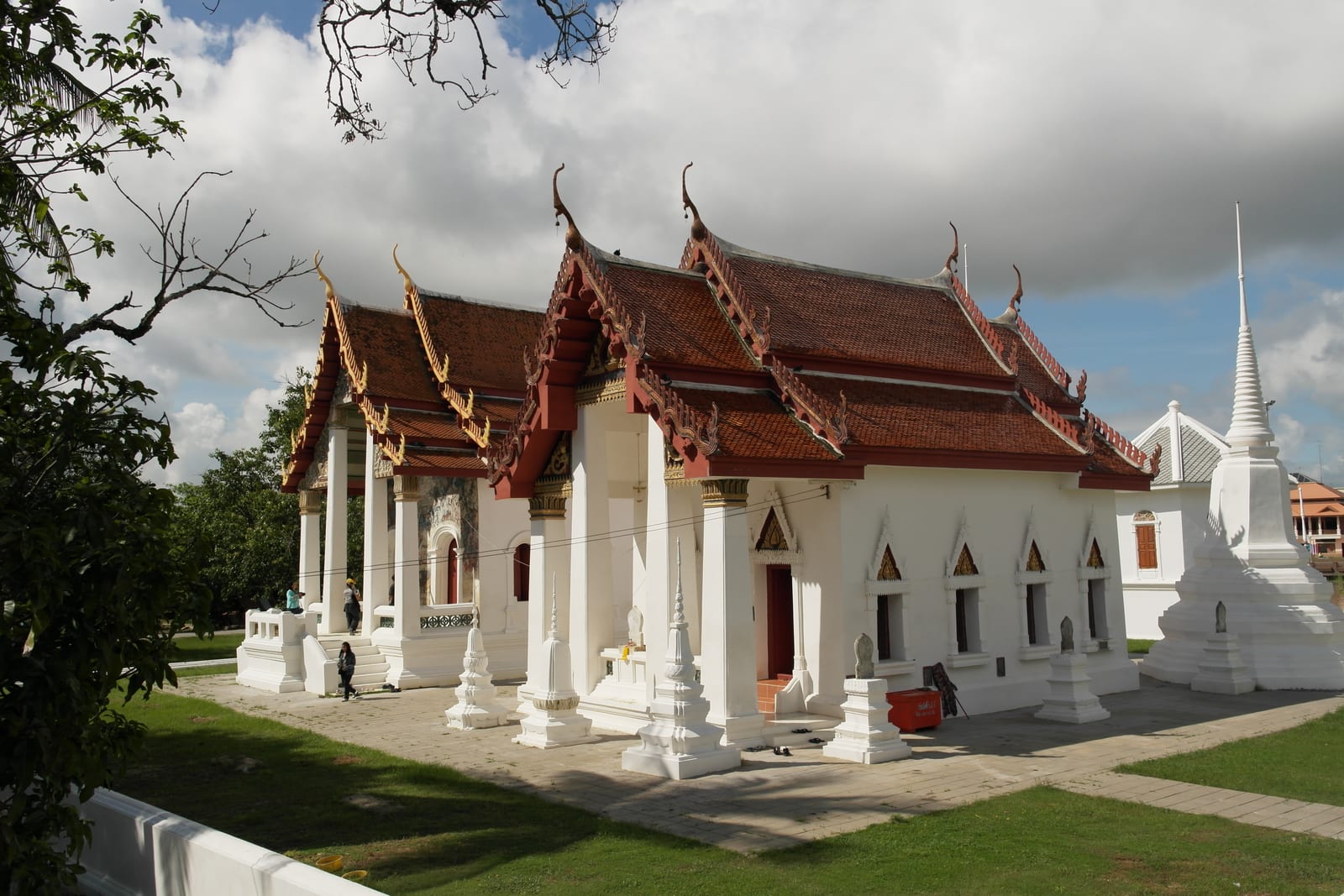
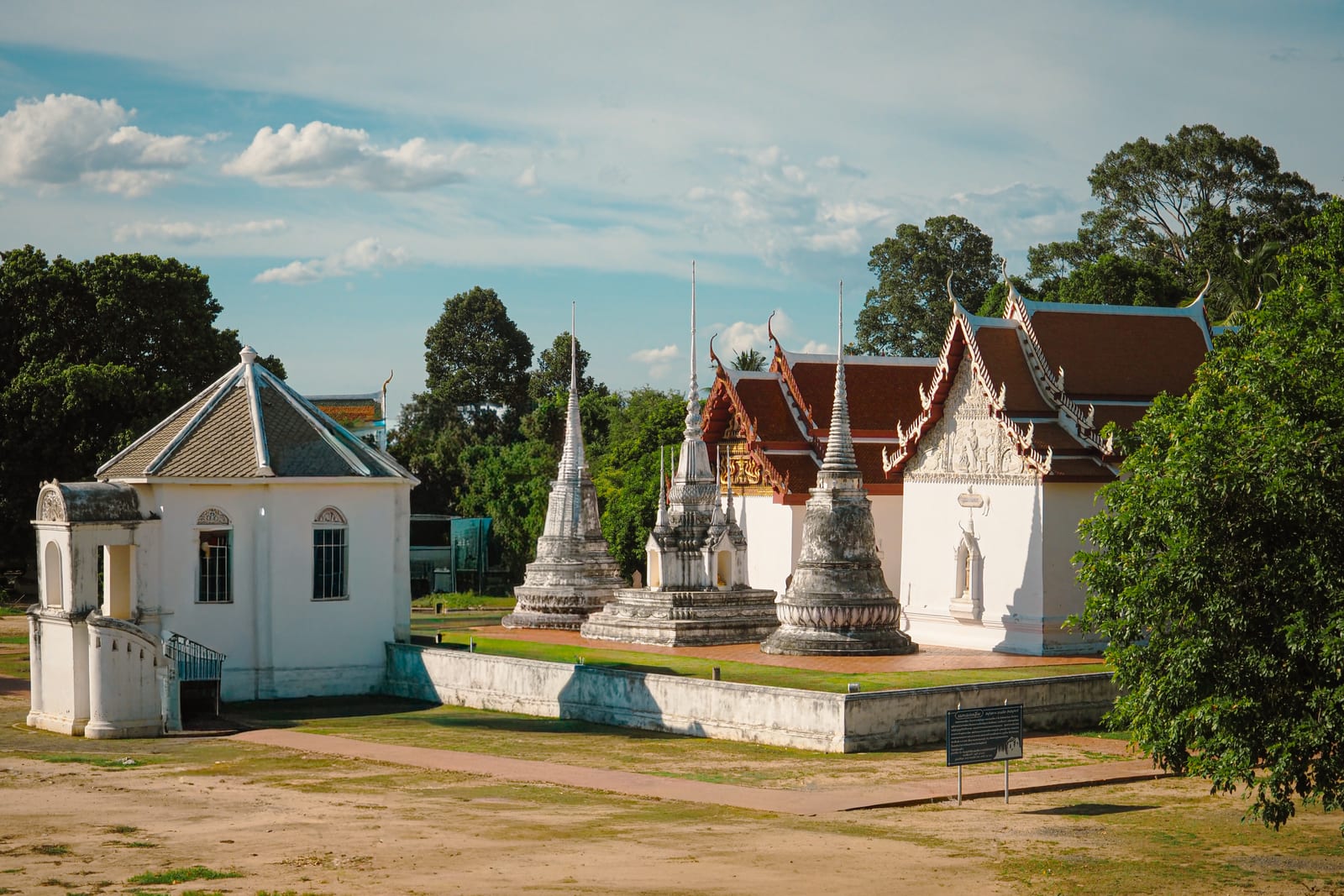
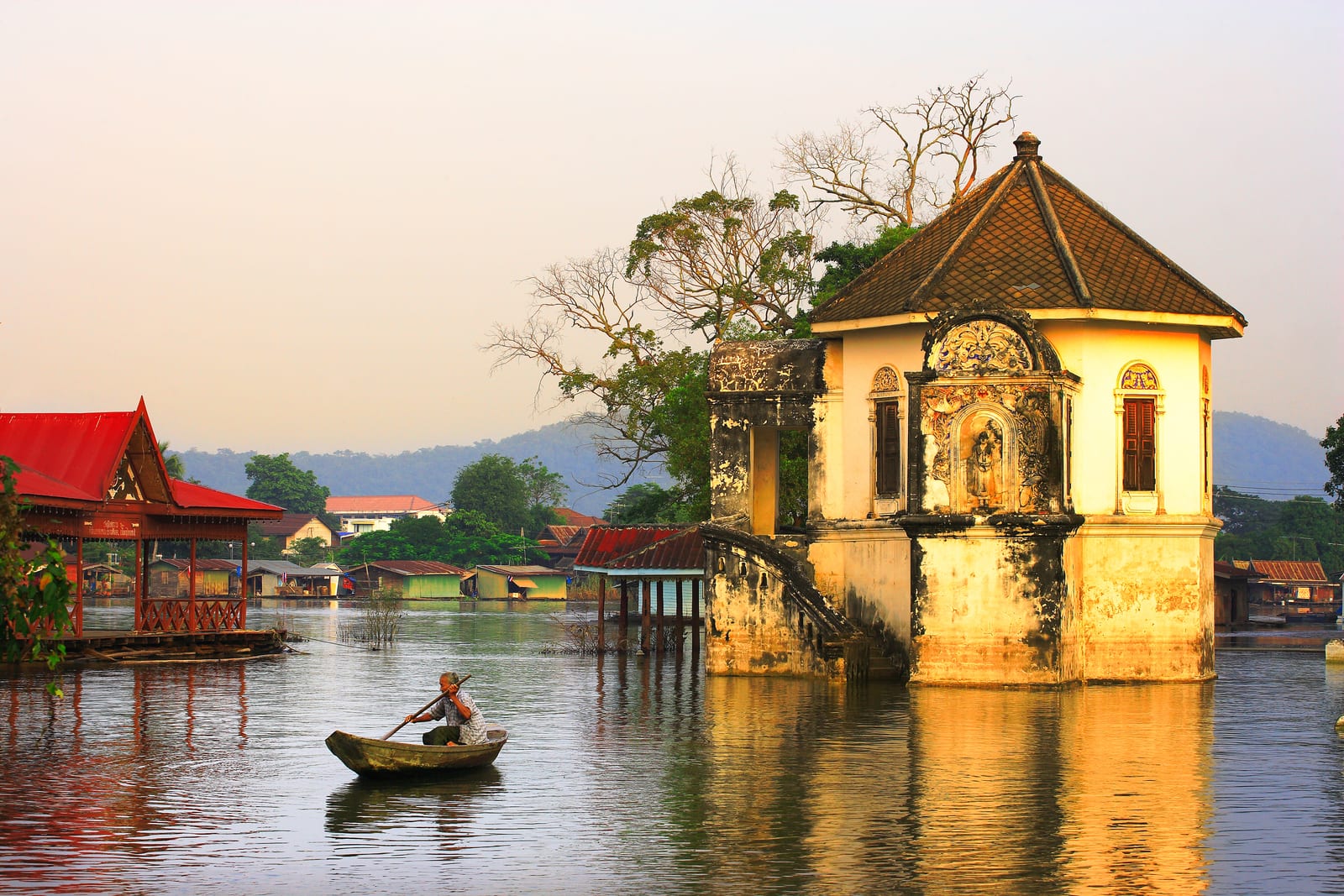
Wat Uposatharam, which Uthai locals casually call "Wat Bot," is an old temple on the Sakae Krang River on Ko Thepho, across from the municipal fresh market — a short walk over the bridge. The two white ubosot and viharn stand paired by the river, and they look beautiful from the far bank. It's ideal for anyone who loves old temples and architecture and wants a quiet riverside atmosphere, without the crowds of more famous temples elsewhere.
The highlight many people talk about is the murals inside the ubosot, painted by early-Rattanakosin-era artisans, telling the life of the Buddha from birth to parinirvana. The lines are exquisite and remarkably well preserved. Another unmissable spot is the two-tiered octagonal mondop, built in 1899, with Western-arched window frames combined with Thai and Chinese motifs — a rare blend of styles. There's also the timber scripture library in the middle of the water, built on a pond to keep termites and insects from the Tripitaka scriptures — considered one of the most complete and beautiful water-set scripture libraries in Thailand.
Entry is free, and it's open every day. Many reviews recommend the late afternoon, when the light softens and the golden glow on the white riverside ubosot makes for beautiful photos, with a peaceful atmosphere and few people. You can walk around it in under an hour. This temple once served as a resting place for King Rama V and King Rama VI during their royal tours of the northern circuit, so it has genuine historical value and has been registered as a heritage site.
Things to know: it's a working temple, so dress modestly and keep your voice down in the ubosot and viharn area. If the ubosot is closed, try asking a monk or staff member to view the murals inside. After visiting this temple, walk back over the bridge to the market side and continue to Trok Rong Ya, the old riverside quarter — a full walking tour of Uthai town in one loop.
My Merchain — Hup Pa Tat Café
If you drive toward Hup Pa Tat in Lan Sak and spot a plain white box-shaped building sitting in the middle of a grassy field with limestone mountains as a backdrop, that's My Merchain, the café people call "Thailand's Switzerland." The real draw is the big glass walls that bring the mountain view right in — you sip your coffee in a cool, air-conditioned room but feel like you're sitting in the middle of the valley. It's perfect for people visiting Hup Pa Tat or Ban Chai Khao who want a relaxed spot to rest and take some nice photos.
The unmissable feature is the white square frame out front, set up so the mountain lands perfectly inside it — the shot looks like a picture hanging on a wall — and the mezzanine/rooftop, a popular photo spot with an even wider view. Genuine reviews agree: "beautiful view, tasty drinks, lots of photo spots," and the owner is very friendly. The menu ranges from coffee, iced Thai tea, and espresso to bingsu, homemade bakery, and light pizza and pasta. Drinks run roughly 60–100 THB, easy on the wallet for a view like this.
The café itself is fairly small, focused more on atmosphere and photos than on being a long working spot. On a rainy-season morning you get the mountains wrapped in a thin mist, which is especially lovely. Beyond the café, there's pool-villa lodging — every unit with its own private pool — and a campground all in the same place, so it suits both people stopping briefly for photos and those who want to stay the night in the cool air. It's also pet-friendly (with an extra charge for dogs and cats).
It's located at 369 Moo 3, Tambon Thung Na Ngam, Lan Sak, just a few hundred metres to a couple of kilometres from Hup Pa Tat and the Ban Chai Khao viewpoint. It's open daily around 07:00–19:00. It's popular because it combines a limestone-mountain view, a minimalist café, and lodging all in one place. Things to know: it's a café out in nature, so signal and nearby shops are scarce — and if you plan to continue on, check Hup Pa Tat's opening hours (last entry around 16:30).
Ko Thepho
 Photo by Danai Chidsin (Joephotostudio) via Wikimedia Commons, licensed CC BY-SA 3.0🔍 Tap to zoom
Ko Thepho is a large freshwater island in the middle of Uthai Thani town, on the side opposite the town centre, flanked by two rivers — the Chao Phraya and the Sakae Krang. If you enjoy a relaxed bike ride to see rural life without going far, this place is ideal. Many people call it an oasis in the middle of town, because just over the bridge you immediately find rice paddies, cornfields, vegetable plots, and bamboo groves. The popular way in is to walk across the "Wat Bot Bridge" linking the municipal fresh market with Wat Uposatharam, then start cycling from there.
The highlight is the choice of cycling routes to suit your energy, from an 8-kilometre loop to 15 and 33 kilometres, running along the paddy dikes past villagers' homes where people smile and greet cyclists. There are stops like the Ko Thepho suspension bridge, a pretty riverside photo spot, and if you want to ride further you can continue to Bueng Phra Chanok. Along the way, local goods are sold at fair prices — reed mats, basketry, and fish products — since the island is named after the thepho catfish that once thrived in this area.
The atmosphere is the real selling point: quiet and shaded, especially in the rainy season when the paddies are green as far as the eye can see. Most visitor reviews agree that you should come in the morning or evening, when it's not hot and the light is beautiful. The island is free to enter, and if you didn't bring your own bike you can rent one near the cycling club in town. Online review scores sit around 4.0 from a modest number of reviews, because it's a community-style attraction better known among cyclists than tour-goers.
Things to know: this is an open community area, not a fully equipped public park — shops and rest stops are scattered along the way, so bring water, a hat, and sunscreen. Ride carefully, since you share the road with the villagers. If you want the leisurely slow-life feel of Uthai Thani, Ko Thepho pairs perfectly with visiting the temples and markets in town.
Trok Rong Ya Walking Street
Trok Rong Ya is a narrow lane about 150 metres long in the middle of Uthai Thani town, lined on both sides with timber shophouses and Chinese-style buildings decades old — some over a hundred years. Walk in and time seems to slow down. Locals call this quarter by its Chinese name, "Sek Kiao Kang," tied to the story of the Chinese community that once settled densely here along the Sakae Krang River.
The name "Rong Ya" isn't there by accident: in the past this lane was the site of a legally licensed opium den, where people came to lie down and smoke and to buy and sell opium. When the state declared opium illegal around 1957, the quarter fell quiet for a long time — until the community came together to bring the lane back to life as a walking street around 2010. A spot many people stop to see is the replica opium-den room, with figures and a set of an old shophouse recreating how people once lay smoking opium — a corner of history you can't easily find elsewhere.
On weekday afternoons, you can still stroll the lane and take photos at leisure — old timber houses, vintage shop signs, and small coffee shops in the original shophouses give it a quiet, calm mood. But if you want it at its liveliest, come on a Saturday evening, when the lane turns into a walking street with local food, sweets, crafts, and antiques laid out all along the way.
Food people love to grab includes hot khao tom kui with old-style Chinese dishes, steamed kui chai dumplings with various fillings, and Thai sweets along the way — pleasant to eat as you walk and admire the timber houses. Genuine reviews on Google give it around 4.5 from nearly a thousand reviewers, most appreciating the chance to stroll an old town that isn't overly crowded. It suits anyone who wants to see Uthai Thani in a way that still holds onto every bit of its old-world feel.
🎟️ Tickets and Tours for Uthai Thani — book ahead, skip the queue
Covering several Uthai Thani spots in one day runs much smoother if you plan ahead, especially on the Lan Sak–Ban Rai side, where the attractions are spread out and public transport is scarce. Booking entry tickets, workshop courses, or a car-and-guide tour that runs you around Wat Tha Sung, Hup Pa Tat, and Khao Sakae Krang through Klook or GetYourGuide saves you from queuing on the spot and the worry of driving unfamiliar roads yourself. It's perfect for anyone short on time or travelling in a group. Compare times and prices before you book.
💡 Know Before You Go: Uthai Thani
The attractions are spread across two zones — the riverside town and Lan Sak–Ban Rai, which are a fair distance apart. Grab is hard to find outside town, so renting a car or hiring one with a driver is the smoothest option. The riverside quarter in town is easy to explore on foot.
The Sakae Krang riverside morning market, Sawhai Market, and most local shops take cash or PromptPay. Dishes are just a few tens of baht each, so it's easier to carry small bills. Credit cards work only at some cafés and hotels.
The riverside morning market is busiest at dawn, with alms-giving to boat-paddling monks around seven. Khao Sakae Krang and Hup Pa Tat are best in the morning or late afternoon to avoid the midday sun. Sawhai Market opens only Saturday–Sunday, so plan your trip for the right day.
Wat Tha Sung, Khao Sakae Krang, and Wat Uposatharam are temples where people come to worship seriously. Dress modestly, cover shoulders and knees, remove your shoes when entering buildings, and walk gently in the heritage areas.
Most signs and menus are in Thai. Foreign visitors will find it easier to have a translation app or photos of dishes to point at. Locals are friendly and helpful — try pointing to popular items like khanom chin with snakehead-fish curry or giant gourami.
Most restaurants and cafés don't add a service charge and don't require tipping, but if you're pleased with the service or a guide, a small tip as you see fit is a kindness locals are happy to receive.
Plan Your Uthai Thani Trip to Make the Most of It
Uthai Thani is easy to travel because its highlights split clearly into two zones. The neatest way to plan is to give the morning to the riverside town zone, then move to Lan Sak in the afternoon. Start at dawn at the Sakae Krang riverside morning market — around seven you'll catch the boat-paddling monks receiving alms and can taste khanom chin with snakehead-fish curry and old-style khanom bueang. Then walk on to Wat Uposatharam in the same riverside quarter, and climb Khao Sakae Krang (Wat Sangkat Rattana Khiri) in the late morning while the sun isn't yet fierce, for the 360-degree view of the town and river.
From late morning into the afternoon, drive out to Wat Tha Sung just outside town, and take your time with the hundred-metre Crystal Viharn and the Golden Castle (there's a tram for 10 THB). If you have the whole day, then take on the Lan Sak side — Hup Pa Tat, Ban Chai Khao, and a stop at the My Merchain café, all just about 2 kilometres apart. Sawhai Market in Ban Rai opens only Saturday–Sunday, around 08:30–16:00, so anyone who wants to go needs to plan it for a weekend. Finish the trip at Trok Rong Ya and the riverside cafés in town in the evening, with a lovely view across to Wat Uposatharam on the far bank.
To get the most out of Uthai Thani, try staying a night — you'll wake up to walk the riverside morning market and give alms to the boat-paddling monks while the crowds are still thin, and pay respects and enjoy the view on Khao Sakae Krang in the cool morning air. The most popular places cluster in town along the Sakae Krang River, an easy walk to the morning market and old temples. Nature lovers can pick a stay or pool villa around Lan Sak–Hup Pa Tat. Choosing a location near where you want to be first thing in the morning is the best value. Compare prices and reviews before you book.
🔍 Check Uthai Thani Hotel Prices (Agoda)