🔄 Updated 21 Jun 2026
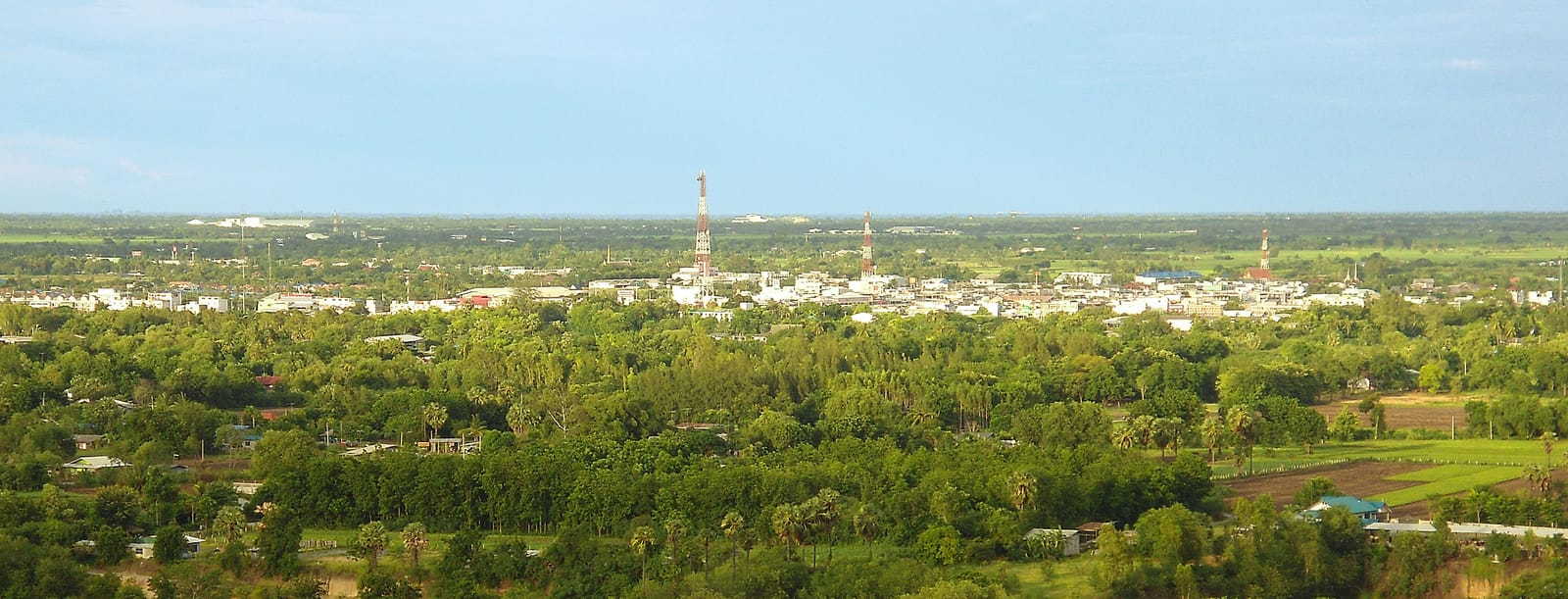
U Thong sits about 33 kilometres west of Suphan Buri town, a small district that plenty of people drive straight through without realising that an ancient city roughly 1,000–1,400 years old lies beneath the ground here. The old town has an oval-shaped plan, roughly 1,850 metres long and 820 metres wide, ringed by an earthen moat, with no fewer than 20 ruins scattered inside and around it. If you're into the story of Thailand before Ayutthaya, this is one of the clearest pieces of Dvaravati evidence in the central region.
What was U Thong, and why does it matter
U Thong was a town within the Dvaravati culture, around the 7th to 11th centuries CE. Archaeologists believe it was once a trading port in contact with India and lands around the Mediterranean. The finds dug up here include beads, gold ornaments, and the discovery that got everyone excited: ancient Roman coins, which tell us the town sat on a maritime trade route reaching further than you'd expect. Buddhism also took root here early on, leaving behind plenty of traces in the form of stupas and religious sites.
Another name you'll often hear alongside it is "Suvarnabhumi", with several scholars suggesting U Thong may have been one of the centres of the old land of Suvarnabhumi. That point is still an academic debate rather than a settled conclusion, but it gives you a sense of how much weight U Thong carries on the map of Thai history.
Want more out of Suphan Buri? Book tours & activities
Booking online ahead on Klook or GetYourGuide is usually cheaper than the gate and skips the queue. Pick only the experiences you actually want — prices and availability are shown live on each site.
U Thong National Museum
If you're short on time, start here, because it gathers the real artefacts excavated from the ancient city. It sits on Malaiman Road in U Thong sub-district. The museum has been a permanent fixture since 1966 and is laid out across its main buildings in zones, opening with an exhibition on Dvaravati culture, moving on to the maritime trade routes and U Thong's role as a centre of Buddhism, and including a reconstructed Lao Song (Thai Song Dam) house, an ethnic group local to the area.
- Stone Wheel of the Law with pillar and base — the museum's standout piece, one of the most complete and beautiful Dvaravati-era Dharma wheels in Thailand, representing the spread of the teaching in those early days.
- Terracotta plaque of a monk holding an alms bowl — evidence of Thailand's early Buddhist art; look closely and you'll catch the detail in the robes and the pose.
- Ancient Roman coins and an inscribed copper plate — traces of trade with the outside world that you can see with your own eyes.
- Dvaravati-era Buddha images and gold ornaments — early craftsmanship that went on to influence later Thai art.
Opening hours are Wednesday to Sunday, 9:00–16:00, closed Monday and Tuesday. Entry is 30 THB for Thais and 150 THB for foreign visitors; students in uniform, monks, and seniors aged 60 and over get in free. There's parking available, plus a ramp for wheelchairs.
Timing your visit
The museum is closed Monday and Tuesday, so if you're coming to U Thong specifically for it, avoid those two days. Come in the morning for an easier walk before the sun gets harsh, since many of the ruins are out in the open.
Ruins you can walk around the city
Once you leave the museum there are still several spots to track down. Some are just brick foundations, others low earthen mounds, so you'll need to fill in the picture with a little imagination, but knowing the backstory makes the walk a lot more fun.
Khok Chang Din
A horseshoe-shaped earthwork outside the city, thought to have been a water reservoir and a Brahmin-Hindu religious site. It's a clear window into how ancient people managed their water.
Stupas No. 2 and No. 13
The ruined stupas that draw the most visitor interest, with the bases and structure still showing the Dvaravati-era form.
Pu Hang Nak
A cluster of ruins on Khao Rang Kapit on the western side of the city. It's a bit of a climb, but you get both the traces of a religious site and a view from up high.
Wat Khao Tham Thiam
At the foot of the hill on the western side of the old town, this is Suphan Buri's provincial Buddhist park, a good stop for paying respects after walking the ruins.
Before you go
Many of the ruins are out in the open and some involve walking on bare ground, so wear comfortable shoes and bring water and a hat. In the rainy season the ground can get slippery, so take care on the climb up Pu Hang Nak.
Seeing all of U Thong in one day
Get your bearings at the museum
Up the hill and a temple visit
Getting to U Thong
- Driving yourself — from Highway 340 (the Bang Bua Thong–Suphan Buri route), before reaching Suphan Buri town, turn onto Highway 357 for about 10 km, then turn onto Malaiman Road for another 21 km or so heading toward U Thong district. The museum is on your right.
- From Bangkok — the drive takes about two and a half hours, making it a good fit for a day trip or paired with an overnight stay in Suphan Buri.
- Public transport — take a bus to Suphan Buri town first, then connect with a local ride or rent a car/motorbike out to U Thong, since the sites are spread out and you can't walk between all of them.
Want to see all of Suphan Buri? Check out the full guide
See the Suphan Buri guide →