🔄 Updated 21 Jun 2026
When people think of Saraburi's most important temple, Wat Phra Phutthabat Rajavoramahavihar is the first name that comes up. It sits in Phra Phutthabat District, about 28–30 km from Saraburi city — roughly a 30-minute drive. The temple holds royal monastery (First Class) status, and houses a Buddha footprint that Thais revere as one of five sacred footprints according to legend. Most visitors come specifically to pay respects, not just to take photos.
A Brief History — Why It's Called Saraburi's Heart
The temple dates to the Ayutthaya period, around 1625 CE, during the reign of King Song Tham. The founding story goes like this: a hunter tracked a deer up the hill and discovered a large footprint-shaped impression on the rock. Word reached the king, who ordered a mondop built over it and elevated the site to a royal monastery. Ever since, the footprint has been a destination for pilgrims across every reign up to the present day — which is exactly why many Thais call it Saraburi's true guardian temple.
Want more out of Saraburi? Book tours & activities
Booking online ahead on Klook or GetYourGuide is usually cheaper than the gate and skips the queue. Pick only the experiences you actually want — prices and availability are shown live on each site.
Highlights You Should Not Miss
The Buddha Footprint
A rock impression roughly 21 inches wide, 60 inches long, and 11 inches deep, enshrined inside the hilltop mondop. This is the main reason everyone makes the climb — visitors apply gold leaf and offer flowers and incense.
Golden Mondop Spire
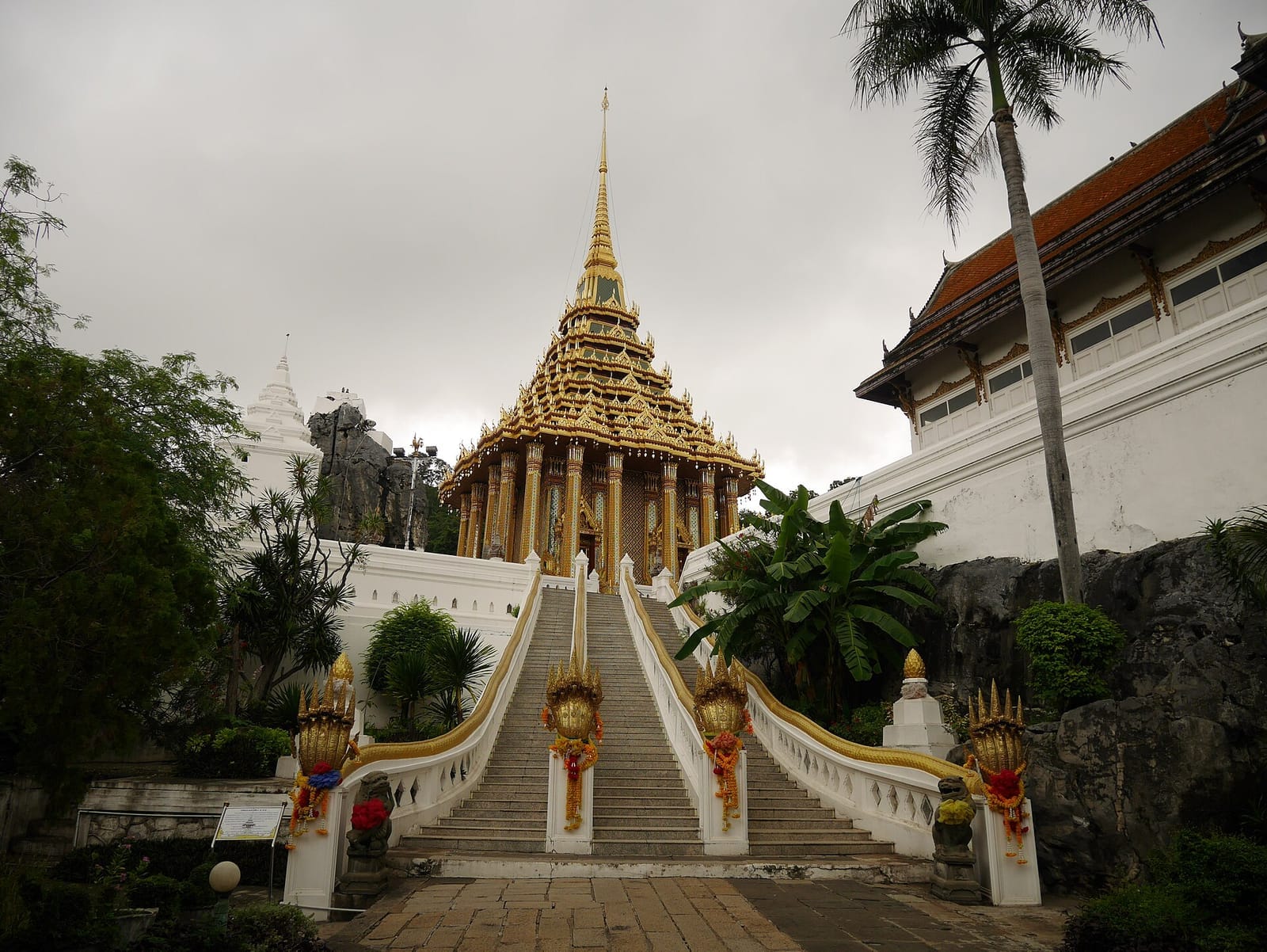
A multi-tiered prasat-style pavilion covered in intricate gold-leaf ornamentation and glazed roof tiles — the temple's most recognisable silhouette, visible from a distance.
Triple Naga Staircase
The long naga-flanked staircase leading up to the mondop symbolises a bridge to the heavens. The climb is not too steep but has a fair number of steps.
Ordination Hall & Chinese Shrine
Around the temple grounds you'll find the ubosot, viharn, and a Chinese shrine reflecting multiple artistic eras. Worth a slow walk around after paying respects.
How Worship Works — What to Do When You Arrive
Once you climb the stairs to the mondop terrace, remove your shoes before entering the footprint sanctuary. Inside you'll find stations for offering flowers, incense, candles, and gold leaf sheets. Most people kneel in prayer in front of the footprint, then apply gold leaf and drop a coin in the merit box. A long row of bells runs around the perimeter — it's tradition to ring them for good fortune after praying. There's no rush; walk the full mondop and surrounding shrines at your own pace.
- Offering sets — flowers, incense, candles, and gold leaf are sold at shops in front of the temple; sets start at around ฿20–50
- Gold leaf on the footprint — the centrepiece of the visit; do it calmly, there's no need to rush
- Ringing the bells — the row of bells around the courtyard is rung as a blessing after worship
- Making merit — donation boxes and merit-making points are scattered throughout; give whatever you feel comfortable with, nothing is required
Admission Fees & Opening Hours
Thai nationals enter free of charge. Foreign visitors may be asked for a small site-maintenance fee of around 30 THB during certain periods. General opening hours are approximately 07:30–17:00 daily, though some sources note the gates open slightly earlier. If you're planning a very early or late visit, it's worth calling the temple directly at 036-626-658 to confirm.
Festival Season
During the Ngan Nommassakan Roi Phra Phutthabat festival — which falls on the waxing and waning moons of the third and fourth Thai lunar months, roughly February–March — the temple stays open 24 hours. It gets very busy, with markets and food stalls filling the grounds. If you enjoy a lively atmosphere, this is a great time to visit. If you prefer a quieter moment of worship, aim for a weekday outside festival season.
Dress Code & Temple Etiquette
- Dress modestly — shoulders and knees must be covered; no sleeveless tops, shorts, or short skirts
- Remove your shoes before entering the footprint sanctuary; carrying a small bag for your shoes makes things easier
- Keep your voice down and avoid loud noise; do not point your feet toward the principal Buddha image or the sacred footprint
- Photography is generally permitted around the grounds; check signs in restricted sacred areas where it may not be
Museum & Additional Spots to Explore
Within the temple grounds is the Phra Phutthabat National Museum, displaying ancient artefacts, ceremonial objects, and historical weapons connected to the temple's past. Originally open only during festivals, it now also opens on weekends. If you're interested in the history, budget an extra 20–30 minutes to look around — it gives the whole site a lot more context.
Getting There
- From Bangkok — about 112 km by road; take Phahon Yothin Road through Saraburi, roughly 1.5 hours by car
- From Saraburi city centre — about 28–30 km, roughly 30–35 minutes by car
- Public transport — take a Bangkok–Saraburi/Phra Phutthabat bus or minivan, then connect by songthaew or motorbike taxi to the temple
- Parking — there is a large car park in front of the temple; easy to find a space on weekdays, arrive early on festival days
Planning more of Saraburi? See hotels and attractions across the province.
Saraburi Travel Guide →