🔄 Updated 21 Jun 2026
Wat Saman Rattanaram is in Bang Kaeo subdistrict, Mueang Chachoengsao district, right by the Bang Pakong River. It's only about a 10–15 minute drive from Chachoengsao town and roughly an hour and a half from Bangkok, which makes it an easy day trip for city folk. The temple grounds are wide and walkable, with several statues and shrines to pay respects to all in one place. Add the shady riverside setting and the food and souvenir market inside the temple, and a single visit gives you merit, snacks, and good photos all at once.
The highlight: the giant pink reclining Ganesha
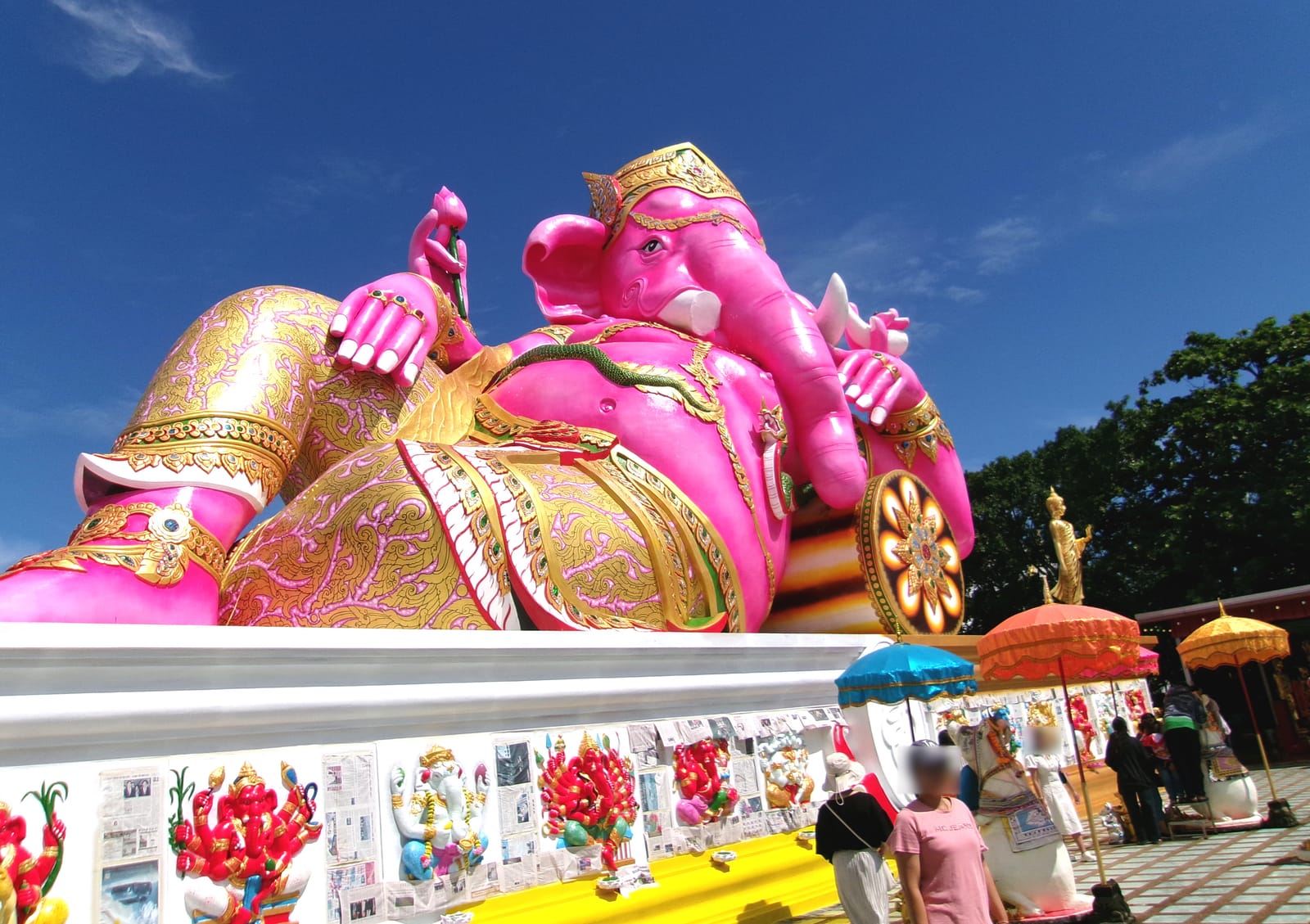
The star of the temple is a reclining Ganesha in a relaxed, blissful pose, painted bright pink from head to toe. It stands around 16 metres tall and 14 metres wide, making it the largest reclining Ganesha in Thailand. Set out in the open on a big base, it's visible from far away. The reclining pose represents ease, comfort, and abundance, which is why people come to ask for blessings around work, money, and a smooth life without obstacles.
- Pink from head to toe — this is what makes the temple so easy to remember and so photogenic, especially when the light is good and the sky is clear, the colour really pops.
- The reclining blissful pose — half-lying on its side as if resting, it represents happiness, comfort, and prosperity, different from the standing or seated Ganesha you usually see.
- The mouse at the base — there's a figure of the mouse, Ganesha's mount, at the base. People like to whisper their wish into the mouse's ear, believing it will carry the request up to Ganesha.
The local way to make a wish
Most people pay their respects to Ganesha first, then go and whisper their wish into the mouse's ear at the base, stating their name and exactly what they want clearly in their mind. You can buy flowers, incense, candles, and offerings at the shops inside the temple, so there's no need to bring your own.
Want more out of Chachoengsao? Book tours & activities
Booking online ahead on Klook or GetYourGuide is usually cheaper than the gate and skips the queue. Pick only the experiences you actually want — prices and availability are shown live on each site.
Other shrines at the temple
Beyond Ganesha, Wat Saman brings together several sacred figures in one place, so it suits anyone who wants to ask for blessings on a few different fronts in a single trip. You can walk from shrine to shrine and pay respects at each one easily.
Guan Yin (Goddess of Mercy)
A large statue. People come to ask for blessings around having children, compassion, and good fortune. It's another popular stop right after Ganesha.
The Four-Faced Brahma
For blessings around work and success. Following tradition, people pay respects to all four faces.
Rahu
Those who follow astrology by their zodiac sign come here to ask for protection and a turn in their luck, making offerings in black as tradition holds.
Revered monks & old Buddha images
Inside the temple there are old Buddha images and statues of revered monks to bow to for blessings around health and good fortune.
The atmosphere and photo spots
The temple sits right on the bank of the Bang Pakong River, so it's open and breezy. The most popular photo spot is, of course, the angle that captures the full pink Ganesha. Try shooting in the late morning or late afternoon when the sun isn't too harsh, the colour comes out nicely and you avoid backlighting. There are also riverside angles, the plazas around the other statues, and decorated arches that make good photos.
What to wear and when to go
This is a temple, so dress modestly, skip the spaghetti straps or very short shorts. Before 10 a.m. the crowds are still thin and you can take photos with plenty of space, while from late morning to afternoon on weekends it gets busy and the car park fills up fast.
Getting there and opening hours
There are a few ways to reach Wat Saman. A private car is the most flexible, but taking the train is an option a lot of people love because it's cheap and has its own charm.
- By car — from Bangkok it's about an hour and a half depending on where you start and the traffic, and just 10–15 minutes from Chachoengsao town. There's parking at the temple, but it fills up fast on holidays.
- By train — take the Eastern Line and get off at a station near the temple. Third-class tickets are very cheap, just a few tens of baht, which makes it a favourite for budget travellers and train fans, but check the outbound and return train times carefully.
- Opening hours — open daily, roughly 8 a.m. to 5 p.m. Entry is free; you only spend on offerings and any food or souvenirs you choose to buy.
Leave time for the temple market
There's a zone inside the temple selling food, souvenirs, and offerings where it's easy to lose track of time grazing and shopping. Set aside half an hour to an hour so you're not rushed, and you'll head home with a few souvenirs in hand too.
More to see nearby
Wat Saman is quick to see, around 1–2 hours is plenty, so it pairs well with other spots in Chachoengsao to fill out the day. The usual next stops are Wat Sothon Wararam in town to bow to the revered Luang Pho Sothon Buddha, and the century-old Ban Mai Market on the Bang Pakong River for a stroll and some good eats. Both are in town and not far to drive from Wat Saman.
Plan a full day in Chachoengsao, with places to stay and eat
See the Chachoengsao guide →