🔄 Updated 21 Jun 2026
Samut Sakhon isn't a flashy tourist town, but it's a great fit for anyone who wants to escape Bangkok without spending much time or money. It's known for fresh seafood straight off the fishing boats, salt fields worked for generations, and the mangroves at the mouth of the Tha Chin River — an internationally recognised rest stop for migratory birds. Plan it well and a single trip covers eating, bird-watching and temple visits all at once.
When is the best time to visit Samut Sakhon?
The short version: Samut Sakhon works year-round, because the main draws — eating seafood and visiting temples — don't depend on the season. But if you want the special stuff, like migratory birds or salt fields in full production, you'll need to pick the right window.
- November–February (cool season) — the best time. The weather is pleasant, there's little rain, and this is when shorebirds migrating from Siberia drop in along the mudflats and salt fields around Khok Kham and Phanthai Norasing. The star is the Spoon-billed Sandpiper, a rare bird with only around 800 left in the world.
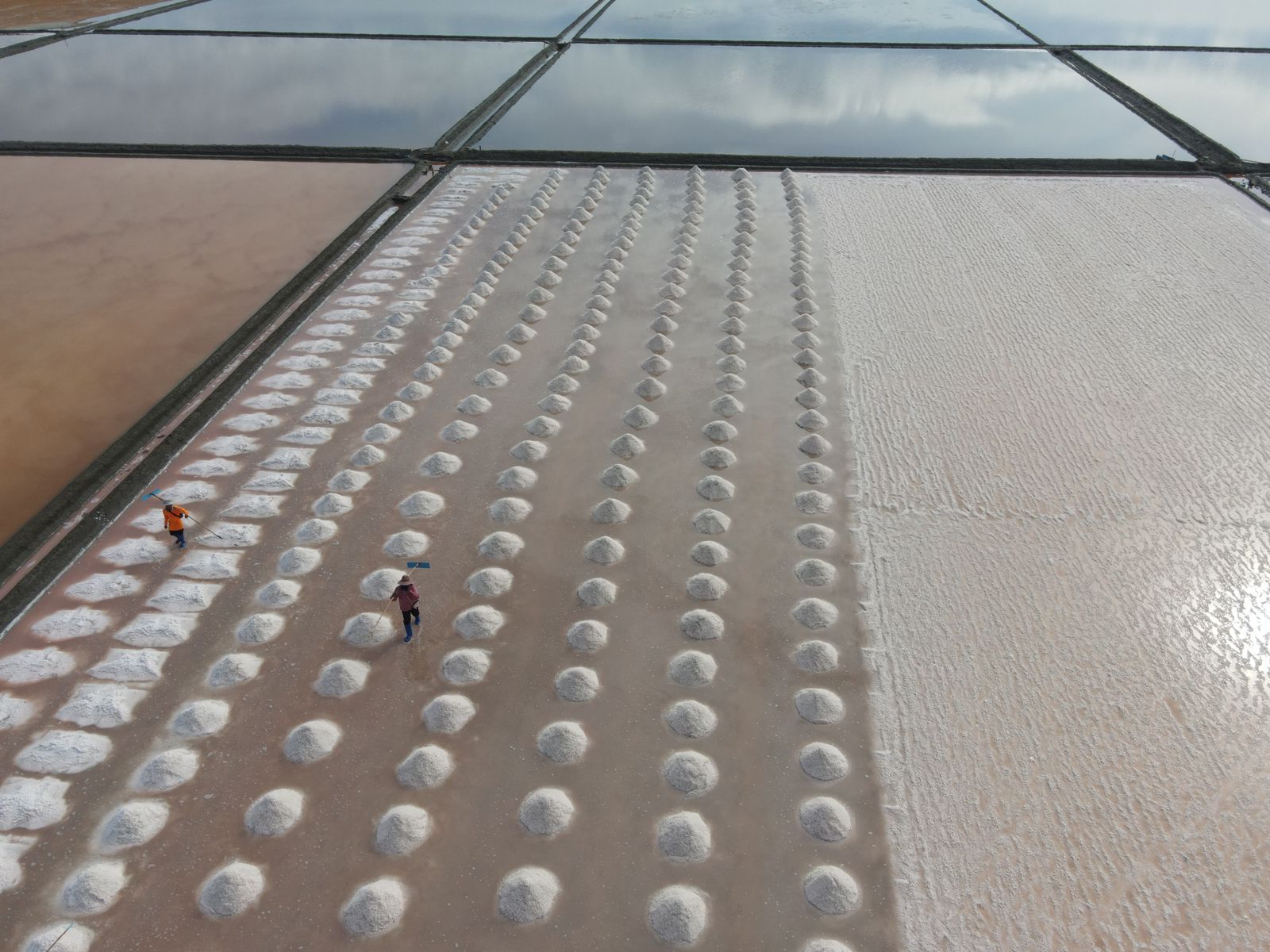
- February–May (dry season) — for the salt fields. The rains haven't arrived, salt farmers are working at full tilt, and you'll see rows of white salt mounds and the harvesting in action. It makes for great photos in the softer late-afternoon light.
- June–October (rainy season). Salt production pauses because of the rain and the migratory birds haven't arrived yet, but the seafood, markets and temples are all open as usual. Just pack an umbrella or rain jacket and you'll be fine.
A timing tip
If you're coming specifically to see the birds, aim for low tide in the morning or late afternoon, when the most birds come down to feed on the mudflats. Check the tide tables in advance, and bring binoculars or a zoom lens, because the birds are far off and small.
How to get to Samut Sakhon from Bangkok
Samut Sakhon is about 30–35 kilometres from Bangkok and there are several ways to get there — pick whichever suits your style.
The Maha Chai railway (Wongwian Yai–Maha Chai)
This classic commuter train leaves from Wongwian Yai station on the Thonburi side, running past communities and orchards into Maha Chai station right in the middle of the market. For a lot of people, riding this line is the whole point of the trip. It takes about an hour, with several services running from morning to evening.
Private car (Rama 2 Road)
The easiest option if you're heading to the salt fields, the Phanthai Norasing shrine, or bird-watching spots that public transport can't reach. Take Rama 2 out of Bangkok — about 40–50 minutes if traffic is light. There's enough parking at the temples and markets.
Minivan / coach
Bangkok–Maha Chai minivans run frequently from city departure points. They drop you in central Maha Chai, where you can pick up a motorbike taxi or songthaew to get elsewhere. Good if you'd rather not drive and don't mind skipping the train experience.
Continuing to Tha Chalom and Mae Klong
Get off the train at Maha Chai, walk to the pier, and take the ferry across the Tha Chin River to Tha Chalom (the fare is just a few baht). The other side is Ban Laem station, where you can catch the Mae Klong railway to Samut Songkhram and the Maeklong umbrella-folding market all in one day. It's a popular three-town train route.
Rough daily budget
Samut Sakhon is a light-budget trip, since transport is cheap and most attractions don't charge admission. The biggest expense is usually the seafood meals — keep that in check and the whole day costs just a few hundred baht.
- Budget day trip (around ฿400–700 per person). Round-trip by train, a single-plate seafood dish or à la carte meal in the market, plus temples and free walking spots.
- Relaxed day trip (around ฿800–1,500 per person). Drive yourself, share a few seafood dishes at a riverside restaurant, plus fuel, tolls and snacks to take home.
- One overnight stay (add ฿700–1,500 for the room). Hotels in central Maha Chai are easy on the wallet — handy if you want to bird-watch at dawn or carry on to Samut Songkhram the next day.
Saving on the seafood meal
The cheapest, freshest seafood is in the Talay Thai market and Maha Chai market, where you can buy shrimp, shellfish, crab and fresh mackerel at wholesale prices. Some market stalls will weigh it and cook it for you to eat on the spot — far better value than sitting down at a restaurant.
What to wear and pack
The main areas of Samut Sakhon are open-air salt fields, mudflats and fairly hot, humid markets. Dressing comfortably and being ready for the sun is the key.
- Breathable clothes, thin long sleeves. They protect you from the sun while walking the salt fields, which have no shade at all. A wide-brimmed hat and sunglasses help a lot.
- Shoes that can get wet and muddy. Around the salt fields and the mangrove boardwalks the ground is muddy — strap-back sandals or old sneakers work better than nice shoes.
- Sunscreen and insect repellent. The sun is strong from late morning into the afternoon, and the mangroves have plenty of mosquitoes in the evening, so put some on beforehand to be safe.
- A light jacket in the cool season. At dawn the coast is windy and cooler than in town, especially if you head out early for the birds.
- A camera or phone that zooms. For shooting the birds and salt mounds — plus a power bank, since the photo spots are far from any outlet.
What can you do in a single day?
If you've only got one day, picking a clear theme makes for a better trip than trying to cram everything in. Here are the province's main activity groups.
Salt fields & Khok Kham birding
Take in the salt fields, photograph the salt mounds in the evening, and watch shorebirds along the mudflats in the cool season. Easiest to reach with your own car.
Talay Thai & Maha Chai markets
The largest seafood markets in the area — browse the fresh catch, sample the seafood, and pick up things to take home.
Wat Chong Lom & Tha Chalom
Make merit at an old temple by the bay mouth, then take the ferry across to wander the old Tha Chalom community — home to the first paved road in provincial Thailand.
Phanthai Norasing Shrine
A shrine and historical park honouring Phanthai Norasing, who accepted his punishment to uphold the law. It's in the Khok Kham area near the bird-watching spots.
An easy day trip for first-timers
Here's an unhurried one-day plan you can adjust depending on whether you come by train or drive yourself.
Maha Chai: seafood and birds, all in one day
Adding on for overnighters (optional)
Good to know before you go
- Many bird-watching spots are on community land and private salt fields. Stick to the paths that are open for access, and don't step on the salt beds or disturb the birds.
- Seafood spoils easily. If you're buying some to take home, bring a foam box or a bag of ice — most market stalls will pack it with ice for you.
- Markets and popular spots get crowded on long weekends. Come a bit early and you'll have more room to walk and the best of the stock.
- Cash is still essential. Many places take bank transfers, but market stalls and the ferry fare are easier with cash.
Plan a full Samut Sakhon trip
See the Samut Sakhon guide →