🔄 Updated 21 Jun 2026
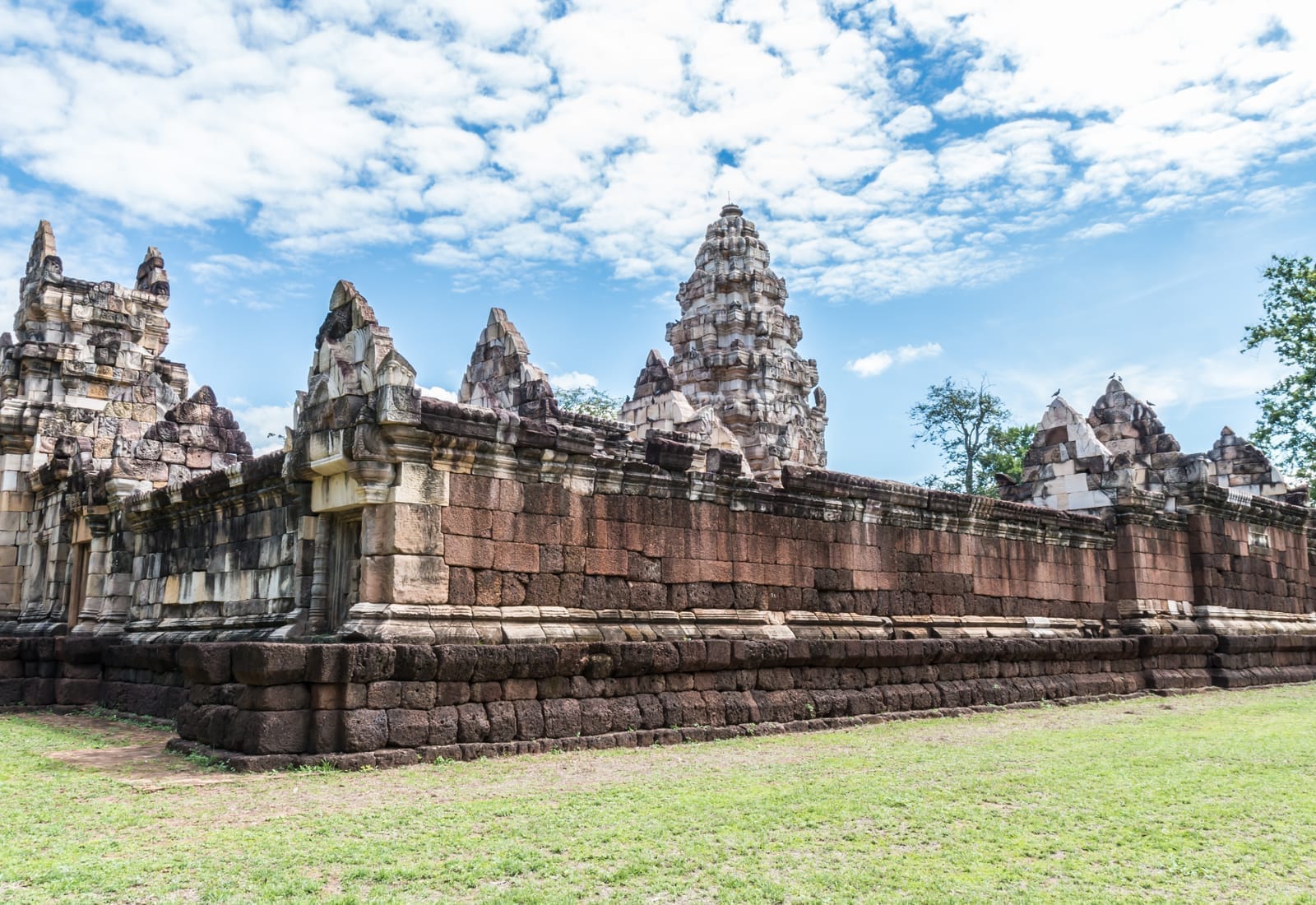
Sdok Kok Thom stands at Ban Nong Ya Kaeo, Khok Sung sub-district, Khok Sung district, Sa Kaeo province, only about 1 kilometer from the Thai–Cambodian border. The name "Sdok Kok Thom" comes from Khmer and roughly means "the large reed marsh," which fits the original landscape well. The temple was built around the 11th century CE during the reign of King Udayadityavarman II. It started life as a Hindu sanctuary before later shifting to Buddhist worship.
What makes this temple matter to historians isn't just its size, it's the Sdok Kok Thom inscription, which scholars rank among the single most important documents the Khmer empire left for later generations. It records a line of 12 Khmer kings going back more than 250 years, all the way to Jayavarman II, the empire's founder, and it describes the devaraja rite (the cult that elevated the king to a god-king) that underpinned the entire foundation of Khmer royal power.
Why Sdok Kok Thom is worth the trip
The main draw is that it's the largest Khmer temple in eastern Thailand, and it went through an anastylosis restoration (dismantling and rebuilding every stone back in its original position) from 1993 through the 2010s. The result is that today you see the temple standing almost fully intact, not the pile of collapsed rubble a lot of people fear.
- Central sanctuary — a sandstone prang facing east, built from sandstone and laterite, standing prominently in the middle of the temple courtyard.
- Two libraries — sandstone buildings flanking either side, once used to store sacred texts, with handsome arched windows that photograph well.
- Gallery and enclosure wall — a roughly 42 x 36 meter rectangular courtyard ringed by galleries and stone walls.
- Eastern gopura (gateway) — carved with naga motifs and a sculpted lintel you can walk up close to inspect.
- Baray and moat — a sacred reservoir lies about 200 meters east of the temple.
For the best photos
Morning light around 8–10 am hits the east-facing temple front head-on, with crisp shadows and warm stone tones, which is when it shoots best. By late afternoon the sun swings around to the back, so you can shoot into the light for a different mood.
Want more out of Sa Kaeo? Book tours & activities
Booking online ahead on Klook or GetYourGuide is usually cheaper than the gate and skips the queue. Pick only the experiences you actually want — prices and availability are shown live on each site.
The Khmer civilization center
Before you walk into the temple itself, it's worth stopping at the historical park's information center first. It lays the groundwork on Khmer civilization, the line of kings, how the temple was built, and the contents of the Sdok Kok Thom inscription in easy-to-digest form. There are models and illustrations that show you what the temple originally looked like. Once you understand the backstory, walking the real thing hits a lot harder.
The actual inscription (the main stele K. 235, inscribed in 1053 CE) was moved to the Bangkok National Museum back in the 1920s to protect it from damage. So the temple itself displays information and a replica instead, but the story it tells is still complete.
Getting to Sdok Kok Thom
The temple sits fairly far out and no public transport runs straight there. The easiest options are to drive yourself or charter a vehicle from Sa Kaeo town or Aranyaprathet.
- Self-drive — from Sa Kaeo town take Highway 33 toward Aranyaprathet, then in Aranyaprathet turn left onto Highway 348 heading for Khok Sung district, then turn right onto rural road Sor Kor 3018 at the Ban Suk Samran archway and follow the historical park signs. It takes about 45 minutes to 1 hour from town.
- From Aranyaprathet — closer, around 30–40 km, and convenient if you're staying near Aranyaprathet or hitting Rong Kluea Market first, then driving on to the temple in the late morning.
- From Bangkok — driving via the motorway and Highway 33 takes about 3.5–4 hours to Sa Kaeo, then on to Khok Sung. It works better as an overnight trip than a same-day there-and-back.
- No private vehicle — take a coach or van from Ekkamai or Mo Chit to Sa Kaeo–Aranyaprathet, then charter a local car or motorcycle taxi the rest of the way to the temple. Agree on the price and arrange a pickup time clearly upfront, because rides are hard to flag down out there.
Check the border situation first
The temple is only about 1 kilometer from the Thai–Cambodian border, an area that has seen border disputes in the past and was once cleared of landmines. It's open to visitors as normal now, but before you actually go, check the latest border situation and the park's announcements via the Sdok Kok Thom Historical Park Facebook page, and stick to the designated walking areas rather than wandering off the marked paths.
Opening hours, fees and facilities
- Opening hours — open daily, roughly 8:00 am–5:00 pm (go in the morning to early afternoon to avoid the harsh sun).
- Entry fee — the fee is reported at around 50 THB, though at times entry is free. Fees can change, so carry some cash just in case.
- Parking — there's a large free lot in front of the park.
- Restrooms/shops — restrooms are on site, but food and drink options are limited, so it's best to bring your own water and snacks.
- Time needed — an easy walkthrough takes about 1–1.5 hours; allow 2 hours if you include the information center and serious photography.
Where to go next nearby
Rong Kluea Market (Aranyaprathet)
The largest Thai–Cambodian border market, packed with secondhand goods, clothes, bags and Khmer snacks. Stop by before or after the temple — it's a short drive away.
NatureLalu
Oddly shaped earthen pillars carved out by erosion, like a miniature Phae Mueang Phi. It's in Ta Phraya district and pairs well for a nature-leaning trip.
Khmer templePrasat Khao Noi Si Chomphu
Another Khmer temple in Sa Kaeo, older and set on a hill, perfect for a Khmer-temple trip all within one province.
If you're building a Khmer-history trip, you can easily pair Sdok Kok Thom with Prasat Khao Noi Si Chomphu in a single day, then cap it off with some shopping at Rong Kluea Market before heading home. It makes for a well-balanced Sa Kaeo trip that never feels rushed.
Plan a full Sa Kaeo trip — temples, nature and local food all in one province
See the Sa Kaeo travel guide →