Thailandaddict
Home › Thailand › Sisaket › Sisaket–Ubon Ratchathani A Southern Isan Border Road Trip
🛣️ Sisaket trip plan

Sisaket–Ubon Ratchathani
A Southern Isan Border Road Trip

These two provinces sit right next to each other and you can drive between them in just over an hour, yet most people pick one or the other when there's no reason you can't combine them. So this trip is built as a 3-day, 2-night cross-province plan: start in Sisaket for the Khmer sanctuaries and four-ethnic temples, then cross into Ubon for the glowing temple, Sam Phan Bok, Pha Taem and the Mekong-side town of Khong Chiam. You get history, nature and the food of two cities in a single trip — with times, entry fees and real prices we've checked, plus a straight answer on which border spots you still can't visit right now.

🏯 Thousand-year Khmer temples✨ Glowing Phu Prao temple🪨 Sam Phan Bok–Pha Taem
Sisaket–Ubon Ratchathani A Southern Isan Border Road Trip

🔄 Updated 21 Jun 2026

The charm of this route is that the two provinces tell completely different stories that still flow together. Sisaket is a city of Khmer sanctuaries and a culture of four ethnic groups — Lao, Khmer, Suay (Kuy) and Yer — while Ubon is a Mekong-side city with beautiful temples, naturally sculpted rock and a Vietnamese–Isan food scene you can eat through for days without repeating. This plan starts in Sisaket on day one, with one night in town, then eases across to Ubon on day two, catching the glowing temple at dusk before a second night in Ubon. The last day takes on Sam Phan Bok and Pha Taem before heading home — no rushing and no backtracking.

How to get there, and how much you'll need a car

A cross-province trip like this pretty much requires your own car or a rental, because the sights are spread across several districts and public transport between them is limited. The smoothest option is to fly into Ubon airport, rent a car there, then drive over to start in Sisaket (about an hour and a half), looping back to finish in Ubon right when you return the car. If you take the southern Isan train line, you can get off at either Sisaket or Ubon and rent a car in town from there.

Day 1

Sisaket — Khmer temples + four-ethnic culture

09:00
Arrive in Sisaket, drop your bags at a hotel in town, then drive out to Prasat Sa Kamphaeng Yai in Uthumphon Phisai districtIt's about 25–30 km from town. Go in the morning to dodge the midday sun, since the sanctuary doesn't have much shade. Bring a hat and water.
09:45
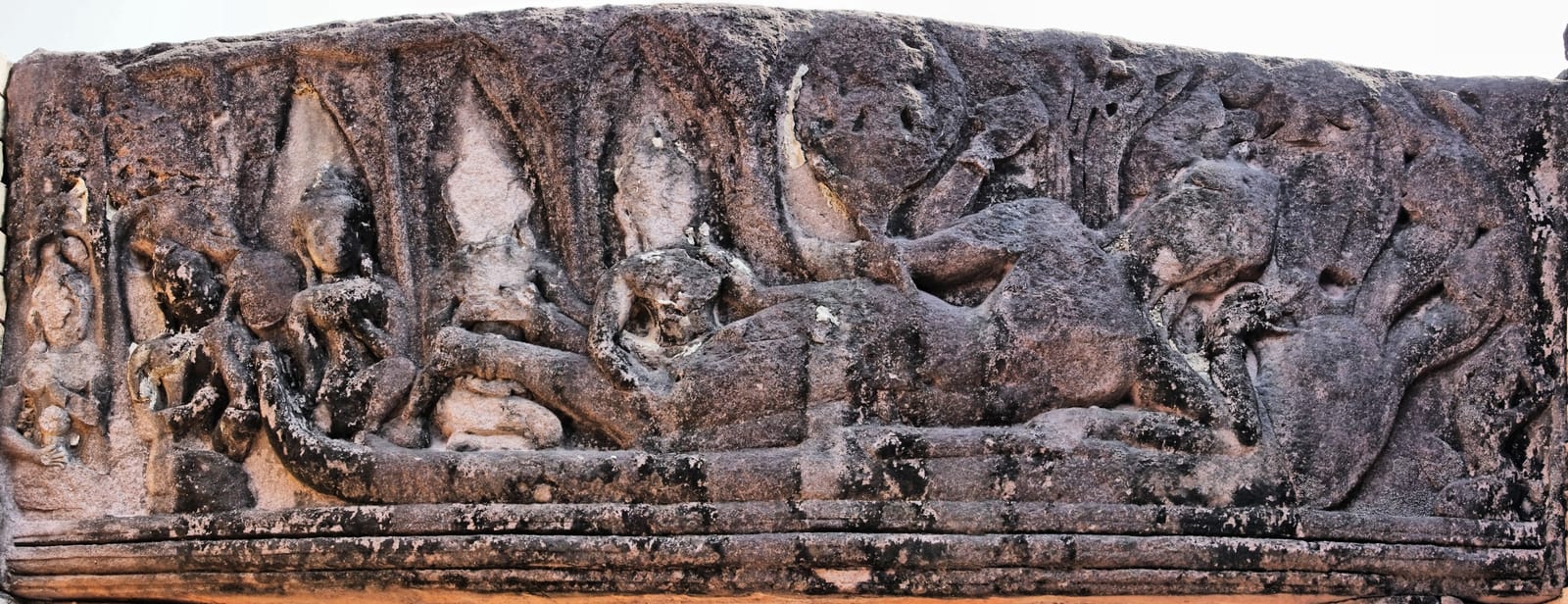
Walk around Prasat Sa Kamphaeng Yai, the largest and best-preserved Khmer sanctuary in the provinceBuilt around the 11th century in the Baphuon style, it was originally a shrine to Shiva and now sits inside Wat Sa Kamphaeng Yai. The lintels and main tower are still in good shape. Free entry — read up on the stories carved into the lintels and it's far more interesting than just standing there for photos.
11:30
Head back into town and break for lunch at a local restaurantTry regional dishes like tilapia with sweet fish sauce and neem, or Sisaket-style som tam. There are plenty of laap-koi joints and Isan restaurants in town, with plates running from a few tens to just over a hundred baht.
13:30
Wat Phra That Rueang Rong, a chedi blending the four ethnic stylesClose to town, the chedi has six levels inside; the ground floor is a folk museum on the Lao, Khmer, Suay and Yer ways of life, and the upper floors give a view over the city. Free entry, and a good way to ground your understanding of the four groups before the rest of the trip.
15:00
Stroll the Huai Nam Kham island park + Sisaket AquariumAn island in the town's reservoir, with a freshwater aquarium for fish of the Mekong–Chi–Mun basins and an underwater glass tunnel. A good spot to escape the afternoon heat — check the closing time first, as the aquarium shuts in the evening.
18:00
Have dinner in Sisaket town, then rest up and save your energy for crossing provinces the next dayThe evening market and restaurants in town have plenty of regional food — try som tam, laap and grilled dishes with sticky rice.
Day 2

Crossing to Ubon — the city + the glowing temple at dusk

08:30
Leave Sisaket and drive toward Ubon Ratchathani cityIt's about 60–70 km and takes around an hour. The highway is good and the drive is easy, with gas stations along the way.
10:30
Arrive in Ubon, drop your bags, then walk Thung Si Mueang and Wat Thung Si Mueang for the murals and the scripture hall over the waterWat Thung Si Mueang has an old wooden scripture hall set over a pond and wall paintings inside the ordination hall. Free entry, and it's right in the center of town so you can walk straight on to lunch.
12:00
Lunch on Ubon's signature dishes — Vietnamese-style kuay jab or naem nueangUbon's kuay jab nuan uses round noodles in a clear, well-balanced broth, packed with toppings — it's the city's signature, and several spots in town have earned a Michelin Bib Gourmand. Usually under 100 baht a head. Pick up some moo yor (pork sausage) as a souvenir while you're at it.
14:00
Ubon Ratchathani National Museum, or sit out the heat at a café in townThe museum covers the city's history and southern Isan antiquities, with entry in the low hundreds. If you'd rather not walk much, pick a café in the old-town quarter instead.
16:30
Drive to Wat Sirindhorn Wararam Phu Prao (the glowing temple) in Sirindhorn district, near the Chong Mek borderIt's about an hour and a half from town, so time your drive to arrive before dark. The whole point is to see the glowing Kalpaphruek tree mural behind the ordination hall at dusk.
18:00
See the glowing Kalpaphruek tree mural behind the ordination hall, Ubon's standout sightThe glow is clearest from about 18:00–20:00, once the sky is fully dark — it's a photoluminescent paint that absorbs daylight. Free entry, donate as you wish, dress modestly. It gets crowded on weekends, so arrive a bit early for an easy photo angle.
20:00
Drive back into Ubon, find dinner and turn inThe drive back is about an hour and a half. If you're tired, you could stay near Sirindhorn–Phibun Mangsahan tonight and hit Sam Phan Bok in the morning, which shortens your last day.
Day 3

Along the Mekong — Sam Phan Bok + Pha Taem + Khong Chiam

08:00
Set out early for Sam Phan Bok in Pho Sai district, the Grand Canyon of the MekongThese rapids have been carved into thousands of potholes by the water, and they only surface in the dry season, roughly December to May, when the Mekong drops; in the rainy season they're underwater. Come early to beat the heat, since the rock reflects a lot of it.
09:00
Walk around Sam Phan Bok — take a boat or walk the rock rapids wherever it's openIn some stretches there are boats that take you around the rapids and the riverside sandbars; boat fees are charged per boat, so ask on site. In the dry season you can just walk the rocks — watch your step, as some spots are slippery.
11:30
Drive down toward Khong Chiam for a riverside lunchKhong Chiam is where two rivers of different colors meet — the Mekong and the Mun. The riverside restaurants have fresh river fish; try grilled fish or tom yam fish, priced by the size of the fish.
13:30
Pha Taem National Park — prehistoric rock paintings + clifftop viewpointsRock paintings over 3,000 years old line a cliff above the Mekong, with views across to Laos. There's a park entry fee, a few tens of baht for Thais, and you can walk down the stairs to the paintings. Afternoon sun is strong, so bring water.
15:30
Catch Sao Chaliang (the mushroom-shaped rocks) near Pha Taem, then start the drive backThese natural stone pillars have an odd, mushroom-like shape and sit just before Pha Taem — a quick photo stop. From there, head back to Ubon to return the car or reach the airport.
17:30
Arrive in Ubon and pick up souvenirs before heading homeMoo yor, Ubon sausage, miniature Buddhist Lent candles and kab bua woven cloth are the well-known souvenirs. Leave time to return the car and double-check your flight or train times in advance.

Why Pha Mo I Daeng and Preah Vihear aren't in this plan

A lot of people planning the Sisaket–Ubon border route think of Pha Mo I Daeng and the climb up to the Preah Vihear sanctuary first. This plan deliberately leaves them out, because Pha Mo I Daeng in Khao Phra Wihan National Park has been temporarily closed to tourism since 29 May 2025 due to tension along the Thai–Cambodian border, with no firm reopening date — it depends on conditions along the frontier. So this plan sticks to routes that are in safe zones and operating normally instead, both the Khmer sanctuaries in Sisaket and the Mekong-side run through Ubon.

Before you think about any border stop

Pha Mo I Daeng, Preah Vihear and the Chong Mek crossing are all right on the border, so you have to check the latest notices from Khao Phra Wihan National Park and the border situation every time before you set out. Don't rely on old information. If it's still closed on the day you go, stick to the route in this plan, which already avoids the risky spots — you'll get a full trip without the guessing.

🎟️

Book the activities in your Sisaket trip ahead

Booking online ahead on Klook or GetYourGuide is usually cheaper than the gate and skips the queue. Pick only the experiences you actually want — prices and availability are shown live on each site.

🎟️ See all Sisaket tours & activities (Klook)

Food in two cities — what to eat along the way

Food is a big part of what makes this cross-province trip fun, because Sisaket is a four-ethnic city with a menu that mixes Lao, Khmer and Kuy, while Ubon has a clear Vietnamese streak from its old Vietnamese community. Below are the things we ate that made it obvious why people get hooked, ordered roughly to fit the route. A few of Sisaket's regional dishes need to be ordered ahead, or are easiest to find during festival season.

1

Kuay jab nuan (Ubon)

Vietnamese–Ubon · usually under ฿100 a head

Ubon's most famous dish — chewy round noodles in a clear, well-balanced broth with moo yor, soft cartilage, egg and fried shallots. Several spots in town have earned a Michelin Bib Gourmand. Easy to eat and genuinely good.

famousVietnamese
2

Naem nueang & Ubon's Vietnamese food

Vietnamese · old shops in Ubon

The old Vietnamese community gives Ubon a deep bench of Vietnamese dishes — naem nueang wrapped in herbs and greens, Vietnamese steamed cups and fresh spring rolls. Several long-running shops in town have been open for decades.

Vietnamesesnacks
3

Ubon moo yor (souvenir)

Souvenir · snack

Dense pork sausage made without flour, the souvenir most tied to Ubon. Eat it on its own or drop it in your kuay jab. Well-known shops like Tong Nueng carry moo yor, Isan sausage and moo sawan you can take home.

souvenirUbon
4

Mekong river fish at Khong Chiam

Riverside · priced by size

The riverside spots around Khong Chiam have fresh river fish — grilled fish, tom yam fish and laap fish — eaten with a view of where the two-colored rivers meet. Priced by the size of the fish.

riversideriver fish
5

Tilapia with sweet fish sauce & neem (Sisaket)

Main dish · Sisaket local spots

Sisaket is known for farmed tilapia, fried crisp and topped with sweet fish sauce, eaten with blanched neem — a little bitter, a little sweet. Plenty of local spots do it well.

tilapiaSisaket
6

La-wae ka-tam (Kuy field-crab aom curry)

Kuy food · main course

A regional dish of the Kuy people in Sisaket — an aom curry made with field crabs pounded with herbs, rich and savory from the crab and wild vegetables. An old recipe that nearly disappeared and was brought back; easiest to find around festival time.

hard to findKuy
7

Bo ka-tat (Sisaket-style som tam)

Spicy · snack/side

A bold local-style som tam that's a Sisaket signature, with different ingredients and a different kind of heat from the usual Thai version. Found at local restaurants around town.

bold flavorSisaket
8

Volcanic-soil durian (seasonal only)

Seasonal fruit · 180–250 THB/kg

A Sisaket standout, grown on volcanic soil around Khun Han and Kantharalak — sweet and creamy with a milder smell, thick flesh and small seeds. Tree-fresh from June to August; a real shame to miss if you're here in season.

seasonalSisaket
9

Thung Kula jasmine rice & khao hang

Souvenir · ingredient

Sisaket sits in the Thung Kula Rong Hai zone, a source of top-grade jasmine rice. Khao hang is steamed paddy that's then milled — fragrant and high in nutrients, a good souvenir to take home.

Thung Kulasouvenir
10

Laap-koi & home-style aom

Home-style side · all day

Lao-Isan cooking you'll find at laap-koi shops across both cities — aom with offal and seasonal vegetables, savory from the herbs and lemon basil, eaten with hot sticky rice.

home-styleLao

How to track down the regional food

Old Sisaket dishes like la-wae ka-tam aren't on every menu; the easiest time to find them is during the Dok Lamduan Festival in March, which has a zone of four-ethnic regional food all in one place. Ubon staples like kuay jab nuan and naem nueang are available every day in town — many shops open early and sell out before afternoon, so going for breakfast or lunch is the safer bet.

When is the best time for this route?

The main variable is Sam Phan Bok, because the rock rapids only surface in the dry season, roughly December to May, when the Mekong drops; in the rainy season they're fully underwater. If you're set on seeing Sam Phan Bok, go in the dry season. The glowing temple, the sanctuaries and the in-town temples are fine year-round. Southern Isan is hot almost all the time, so outdoor sightseeing is most comfortable in the morning or late afternoon — avoid 12:00–15:00 if you can. If you want tree-fresh volcanic-soil durian, come from mid-June to August, and if you're into culture, around 11–15 March is the Dok Lamduan Festival in Sisaket, while early July brings the Candle Festival in Ubon, which the whole country rates as one of the big events of the year.

Rough budget per person

  • Accommodation, 2 nights — guesthouses in Sisaket/Ubon town from around 400–700 THB/night, mid-range hotels 800–1,500 THB/night
  • Entry fees — most Khmer sanctuaries and temples are free; Pha Taem has a park fee of a few tens of baht for Thais, museums run in the low hundreds, and Sam Phan Bok boats are charged per boat
  • Car — a self-drive rental runs about 1,000–1,500 THB a day, split it if you're a group, plus fuel for the cross-province distances
  • Food, 3 days — regional dishes, kuay jab nuan and Mekong river fish, around 700–1,000 THB for the whole trip
  • Souvenirs — Ubon moo yor, Thung Kula jasmine rice, kab bua cloth and seasonal volcanic-soil durian, as you like

How to adjust the plan

This 3-day, 2-night plan stretches and shrinks. If you only have 2 days, trim Sisaket's first day down to Prasat Sa Kamphaeng Yai and Wat Phra That Rueang Rong, then cross to Ubon and do the glowing temple and Sam Phan Bok as half-days each — you'll get the highlights of both cities, just at a quicker pace. If you have 4 days, add Sisaket's Khukhan–Prang Ku line of Khmer sanctuaries, or Ubon's Khemarat on the Mekong, to fill out the southern Isan route without much backtracking.

Want a well-placed hotel in Sisaket town before crossing to Ubon? See the options real reviewers rate.

See the Top 10 Sisaket hotels →

FAQ

Can you visit Sisaket and Ubon Ratchathani in one trip?

Easily. The two provinces are next to each other, and Sisaket town and Ubon town are about an hour and a half apart by car. The plan that works well is 3 days, 2 nights: day one for the Khmer sanctuaries and four-ethnic temples in Sisaket, day two crossing to Ubon to see the city and the glowing temple at dusk, and the last day for Sam Phan Bok, Pha Taem and Khong Chiam. You'll want your own car or a rental, since the sights are spread across several districts.

Can you visit Sam Phan Bok in any season?

No. Sam Phan Bok is a set of rock rapids in the middle of the Mekong that only surface in the dry season, roughly December to May, when the river drops. In the rainy season the water rises until the rapids are completely submerged. If you're set on seeing Sam Phan Bok, go in the dry season; Pha Taem and the glowing temple are fine year-round.

What's the best time to see the glowing Phu Prao temple?

Wat Sirindhorn Wararam Phu Prao in Sirindhorn district is known for the glowing Kalpaphruek tree mural behind the ordination hall, which is clearest from about 18:00–20:00 once the sky is fully dark, because it uses a photoluminescent paint that absorbs daylight and glows at night. Arrive before dark to find a photo angle. Entry is free, dress modestly, and it gets crowded on weekends.

Can you visit Pha Mo I Daeng right now, and why isn't it in the plan?

Not yet. Pha Mo I Daeng in Khao Phra Wihan National Park has been temporarily closed to tourism since 29 May 2025 due to the Thai–Cambodian border situation, with no firm reopening date. So this plan chooses routes in safe zones instead — both the Khmer sanctuaries of Sisaket and the Mekong-side run through Ubon. If you do intend to stop at a border spot, always check the park's latest notices and the border situation first.

Do you need your own car for this route?

Almost certainly, because the sights are spread across several districts and two provinces, and public transport between them is limited. The smoothest option is to fly into Ubon airport, rent a car and drive over to start in Sisaket before looping back to finish in Ubon, or take the southern Isan train line and rent a car in town once you arrive. If you genuinely have no car, focus mainly on the in-town sights of each province.

Copyright & Image Takedown Policy

Thailandaddict is created to review and share travel experiences. Where an image is sourced from elsewhere, we credit the source. If you are the copyright owner and prefer that your image not appear on this site, please contact us and we will gladly remove the image or correct the information.

Display


Saved Near me
ไทย English

Search

View my trip →