🔄 Last checked 27 Jun 2026 · details and hours can change — check the venue before you go
📍 All restaurants on the map
Tap a pin for the spot + nearby stays
Uttaradit's charm is that it's a "pass-through town that hooks you once you actually stop." The town centre clusters around the provincial hall, with the Phraya Phichai Dap Hak Monument standing proudly as the first pin everyone visits. About ten-plus kilometres to the west is Laplae, a town in a valley with a widow legend and a "no-lying zone." A city gate arches over the road, old timber houses and ancient temples hide along the foot of the hills. Once you head out of town towards Tha Pla and Nam Pat, you're into full-on nature — the crest of Sirikit Dam looking over mountains layered behind a wide reservoir, and forest that shelters a thousand-year-old giant teak tree. You can travel in several styles here: temple pilgrimages, old-town wandering, nature, and easygoing café stops.
This list has the pins you shouldn't miss in Uttaradit — like the Phraya Phichai Dap Hak Monument, the town's hero, with a Nam Phi iron sword museum behind it to walk through; Wat Phra Thaen Sila At, a royal temple on Khao Tao hill with a sacred laterite dais revered across the northern towns; Sirikit Dam, the largest earthfill dam in Thailand, whose sunset view is beautiful enough that people come specifically to wait for it; Ton Sak Yai National Park, which shelters the world's largest teak tree, over a thousand years old; and Bo Lek Nam Phi, the origin of the Nam Phi iron-sword legend, where you can fish up iron ore to keep for good fortune. For old-town and shopping types, there's the Laplae City Museum, Wat Don Sak with one of the province's most beautiful pairs of carved wooden doors, the Uttaradit Walking Street along the irrigation canal, and a garden café on the Phichai side, CAFE' De FIELD. Scroll through the details spot by spot and plan your own route.
Phraya Phichai Dap Hak Monument

If you come to Uttaradit and don't know where to start, this is the answer. The Phraya Phichai Dap Hak Monument stands proudly in front of the provincial hall, the face of the town that everyone stops to photograph as their first pin. The statue is cast in his image, seated as the ruler of Phichai, his right hand holding a sword broken into two pieces — a reference to his heroism fighting the Burmese in 1773, when his sword broke but he fought on to victory. It suits history lovers, families bringing children to learn, and anyone wanting to capture the province's signature landmark.
What makes this more than just a statue stop is that behind the monument there are two museums to walk through: the Phraya Phichai Dap Hak Museum, which tells his story with displays of weapons, battle dioramas, and commemorative coins, and the Nam Phi iron sword museum, which exhibits a giant sword. Nam Phi steel is Uttaradit's renowned hard steel, used to forge weapons since ancient times. Some foreign visitors even say it's one of the best-curated museums they've come across in Thailand — and both are free to enter.
Costs are easy, because the monument plaza is open for paying respects at all times with no entry fee, and the museums behind open roughly 09:00–16:00 daily, also free. There's plenty of parking on both the sports-stadium side and the provincial administration side. The location is central and easy to reach, near the provincial hall and the government district.
A small tip from people who've been: the plaza is an open area in full sun, midday gets very hot, and there's little shade to sit in. It's better to come in the morning or late afternoon, then walk into the air-conditioned museums. With good planning, about an hour here gives you both good photos and a solid grasp of the town's history to take home.
Laplae City Gate (Laplae Widow Monument)

If you drive from Uttaradit town towards Laplae District, about 8 kilometres in you'll come to the "Laplae City Gate" — a large golden-yellow archway spanning Highway 1041, standing as the official welcome gate into Laplae. The gate is an applied Sukhothai-style work, 10 metres wide and 41 metres long, designed by the Fine Arts Department; you know you've arrived the moment you spot it from a distance. It's a spot almost everyone stops to photograph before entering town. Anyone who likes collecting a town's signature landmark, or road-tripping the north, shouldn't drive past this first pin.
The highlight everyone talks about is the widow monument beside the gate — a statue of a young woman cradling a small child with a sorrowful expression, her husband standing beside her, head bowed, holding a shoulder bag of turmeric. At the base is inscribed "Just keep your word," referring to the Laplae legend that this is a town where lying is forbidden. As the story goes, a young Laplae woman could marry an outside man on the condition that he never lied; the moment her husband slipped and lied once, he had to leave the town, leaving her a widow — the origin of the nickname "Laplae, town of widows." This small statue carries a hidden story that makes many people stand and read for a while.
Costs are easy, because entry is free, no charge. You can park along the road, and the gate is open for photos 24 hours a day. Some reviews say there are pretty decorative lights from evening into the night, while if you come in the middle of the day the sun is harsh, so allow for strong light and roadside parking with traffic passing constantly. Opposite the gate is the Laplae City Museum, also free to enter, open 09:00–16:00 — you can walk straight over if you want to learn more about Laplae in depth.
It's popular because it's both a must-do check-in for Laplae visitors and a symbol that tells the town's identity in one place. Just know that it's more of a short photo stop than a place for a long stroll — allow about 15–20 minutes, then drive on to explore Laplae town itself: the market, the Chao Fa Ham Kuman monument, and the district's famous durian orchards.
Wat Phra Thaen Sila At (Royal Temple)

Wat Phra Thaen Sila At, a royal temple, is an ancient temple synonymous with Uttaradit, set on Khao Tao hill in Thung Yang sub-district, Laplae District. Formerly called Wat Mahathat, it is believed to date back to the Sukhothai era; today it is elevated to a third-class royal temple under the Dhammayuttika order. It's well suited to merit-makers, people who love temples with an ancient legend, and families who want to bring elders on an easy visit with little walking.
The unmissable highlight is the "Phra Thaen Sila At," a rectangular laterite slab with a lotus-petal-patterned base, enshrined in the viharn on the hill. It has been believed since ancient times that all five Buddhas of this Bhadrakalpa came to sit here in meditation, making it revered and sacred across the northern towns. Another favourite to photograph is the old carved wooden doors of the viharn, and the temple's local museum, which keeps antique everyday objects. Nearby on the same hill is Wat Phra Yuen Phutthabat Yukhon, an easy walk away.
Genuine reviews agree that the temple is shady, full of trees, well-organised, and calm and cool as befits an old temple. Entry is free, no charge, open daily around 08:00–17:00. It's about 5–6 kilometres from Uttaradit town, under ten minutes by car, with easy parking.
What makes it popular is the annual Phra Thaen Sila At veneration festival held around Makha Bucha (the full moon of the third lunar month), which draws crowds from within the province and beyond. Just know that it's a hilltop temple, so dress modestly, remove your shoes before entering the viharn, and if you want to avoid the crowds, come on a weekday for the fullest sense of calm.
Sirikit Dam
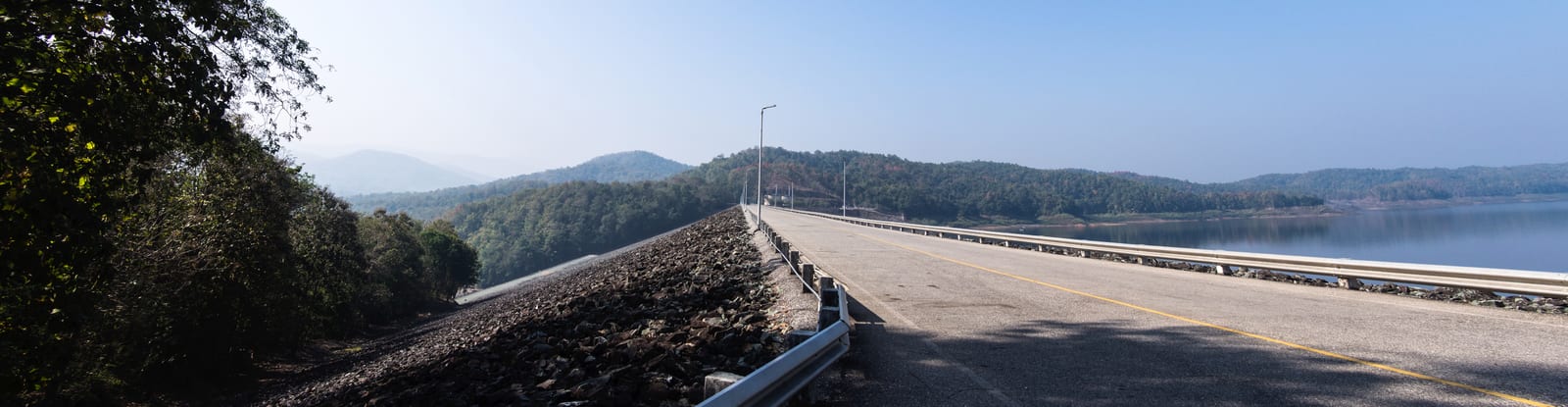
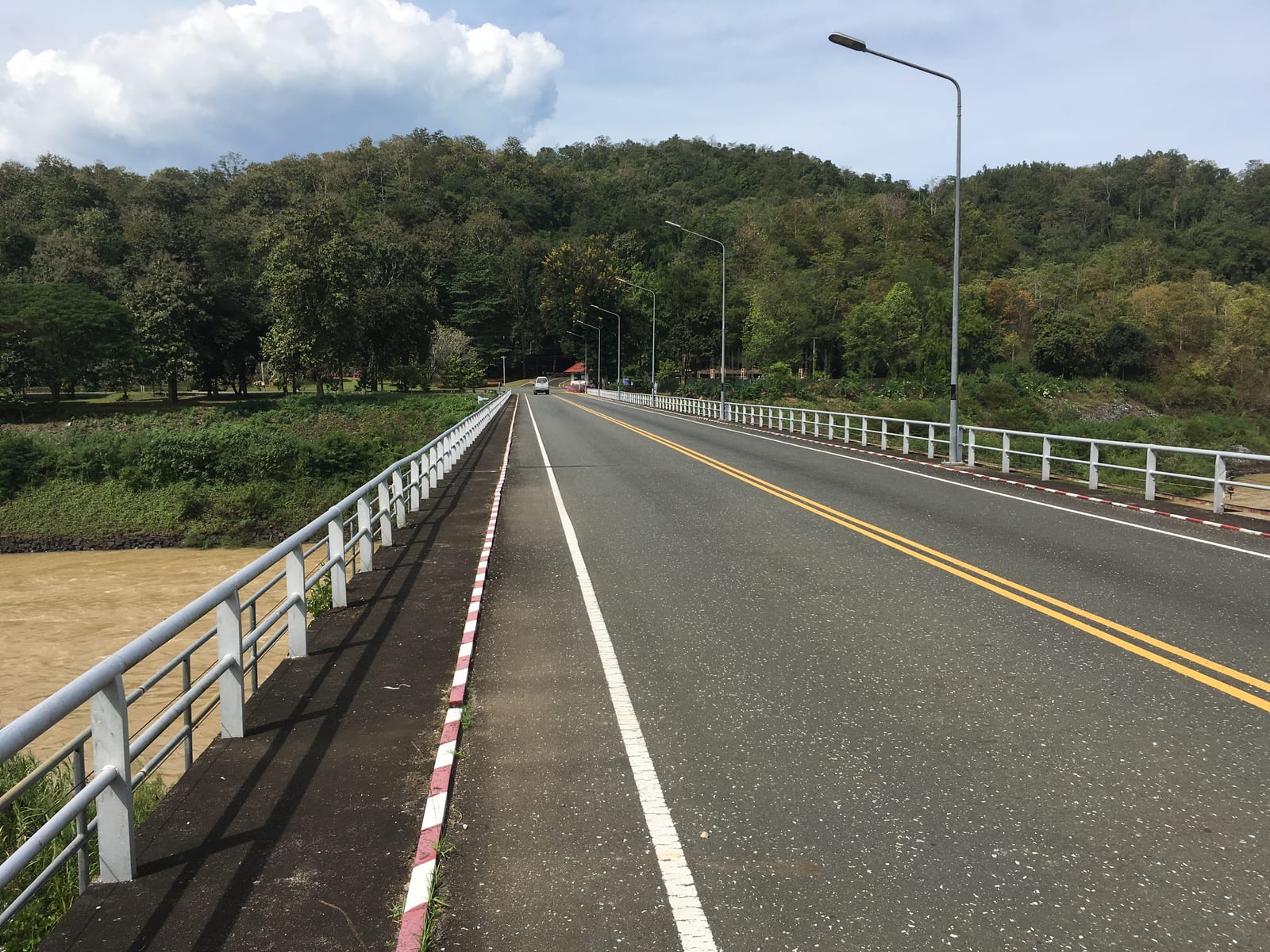
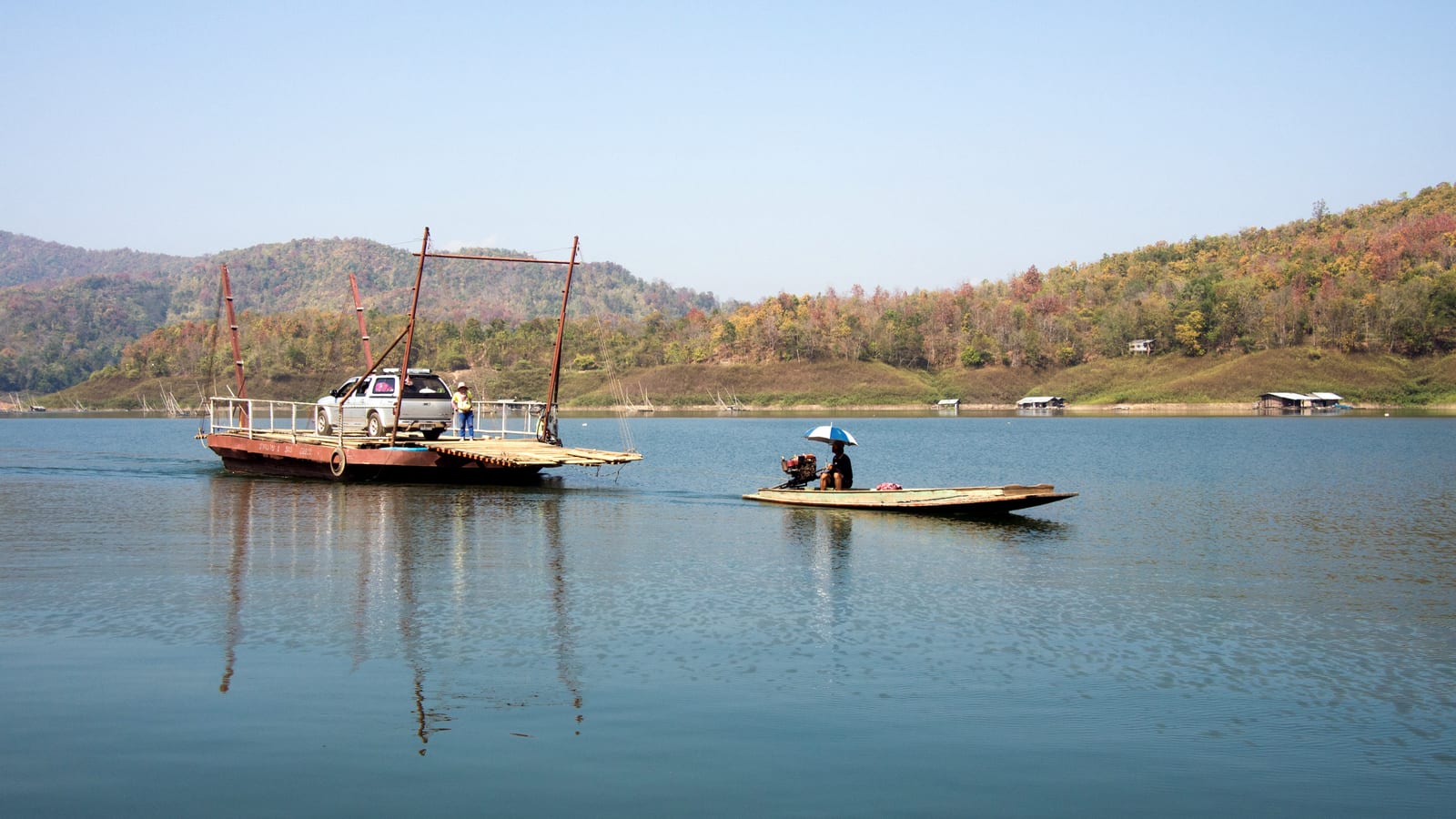
Sirikit Dam is the largest earthfill dam in Thailand, damming the Nan River at Pha Lueat, Tha Pla District, about 60 kilometres from Uttaradit town. If you love quiet nature — mountain views and a wide reservoir stretching to the horizon — this is a great fit. Drive up onto the crest and you'll see views on both sides: one a still lake with layered mountains as a backdrop, the other a valley below. Most reviews agree the atmosphere is peaceful, the air cool and comfortable, and the area clean and well-kept — more of a family retreat than a busy tourist spot.
The one thing not to miss is standing on the crest to take in the view, especially in the evening as the sun sets behind the ridge; many say it's the most beautiful photo angle in Uttaradit. There's also a bicycle rental point for riding across the crest (about 20 baht per hour), a suspension bridge across the stream, view pavilions, and a Buddha image to pay respects to. Near the dam are cafés and riverside restaurants known for grilled fish and dishes made with fresh fish from the reservoir, easy to sit and eat while enjoying the view.
Another plus is that entry is free, no charge. Your real budget is just fuel, bike rental, and food. It's open daily during daytime hours; come in the morning or evening to avoid the harsh midday sun. Just note that there's no public transport here — you'll need your own or a rented vehicle — and the area is fairly large, so allow a half-day to wander without rushing. It's a worthwhile stop if you want to see another side of Uttaradit beyond the town.
Laplae City Museum
If you want to enjoy Laplae to the fullest, locals will tell you to stop at the "Laplae City Museum" first — because this is where the town's legend gets told in full before you go out and explore for real. It's right beside the Laplae City Gate on Inchai Mi Road in Si Phanom Mat sub-district, only about 5–8 kilometres out of Uttaradit town, under twenty minutes by car. It's ideal for first-time Laplae visitors, families bringing children to learn, and anyone who likes capturing old-town scenes.
The highlight is the raised timber houses recreating old Laplae life; step up and it feels like going back in time, with a cotton spinner, a teen-jok weaving loom, and a kitchen house showing local foods like mi phan. Many reviewers love the "legend cave" recreating the Laplae story — cool and air-conditioned to walk into — where you can read about the widow town and the "no-lying" rule that defines this place. At the entrance there's a statue of a widow cradling her child alongside her husband holding a bag of turmeric, about to leave the town — a signature photo landmark that everyone captures.
On atmosphere, reviewers agree the museum isn't very big, an easy stroll of about an hour, with wide shady lawns and plumeria (frangipani) arches for plenty of photos. The best-liked point is that entry is free, no charge, with parking, and shops selling traditional sweets and local goods to take home usually right beside it. Open daily around 09:00–16:00 (during festival periods sometimes until evening).
A small note: it's a community learning centre, so most information signs are in Thai, and foreign visitors may have to rely on the images to help. Some reviews note the restrooms could be kept cleaner. But overall it's a very worthwhile start to a Laplae trip, giving you the legend, the way of life, and pretty photo angles without spending a single baht.
🛏️ Uttaradit hotels — stay in town for easy access to both Laplae and the dam
To make the most of Uttaradit, stay a night so you can split the trip into two unhurried days. Day one covers the town and Laplae; day two drives up to Sirikit Dam and the giant teak tree. Popular hotels cluster in Uttaradit town, near the Phraya Phichai Dap Hak Monument, the walking street, and the road out to Laplae, with both in-town hotels and small, friendly-priced places. Picking a location close to your first morning spot pays off the most. Compare prices and reviews across several sites before booking.
🔍 Check Uttaradit Hotel Prices (Agoda)Bo Lek Nam Phi (Nam Phi Iron Mine Museum)

If you like attractions with a legend attached, Bo Lek Nam Phi (the Nam Phi Iron Mine Museum) in Nam Phi sub-district, Thong Saen Khan District, is a one-of-a-kind spot — this is a natural hard-steel ore source, told since ancient times to be the raw material for royal-court swords. Nam Phi steel is renowned for being strong, tough, and slow to rust, and those into spiritual belief consider it sacred in itself. It suits anyone who wants both historical knowledge and good fortune in one trip — come as a family or as a blessing-seeker.
The highlight visitors don't miss is the Phra Saeng and Phra Khan pools, two pools reserved in the past for kings. The fun here is that staff prepare bamboo rods tied with magnets so you can try to fish iron ore up from the pool; once you've got some, take it with you for good fortune — children especially love it. Nearby is the Chao Pho Bo Lek Nam Phi shrine to pay respects to. Inside the museum building are dioramas explaining the process from mining and smelting to forging the iron into a sword, giving a clear picture of how a lump of iron becomes a weapon.
The budget is very easy, because entry is free, with charges only for amulets if you want to buy. Out front is a community-enterprise shop selling Nam Phi iron ingots, amulets, swords, and Nam Phi iron souvenirs at a range of prices. The museum is open daily 08:00–17:00. It's about 56 kilometres from Uttaradit town, driving along Highway 11 then 1245, with easy parking.
It's popular because it's the "one and only Bo Lek Nam Phi," tied to the Nam Phi iron-sword legend and beliefs about luck and protection, drawing both the spiritual crowd and history lovers. Just know it's a small local museum focused specifically on iron and legend, not a large one. If you're in the area, it's a worthwhile stop — you get knowledge, lucky items, and an iron-fishing experience you won't find anywhere else.
Ton Sak Yai National Park
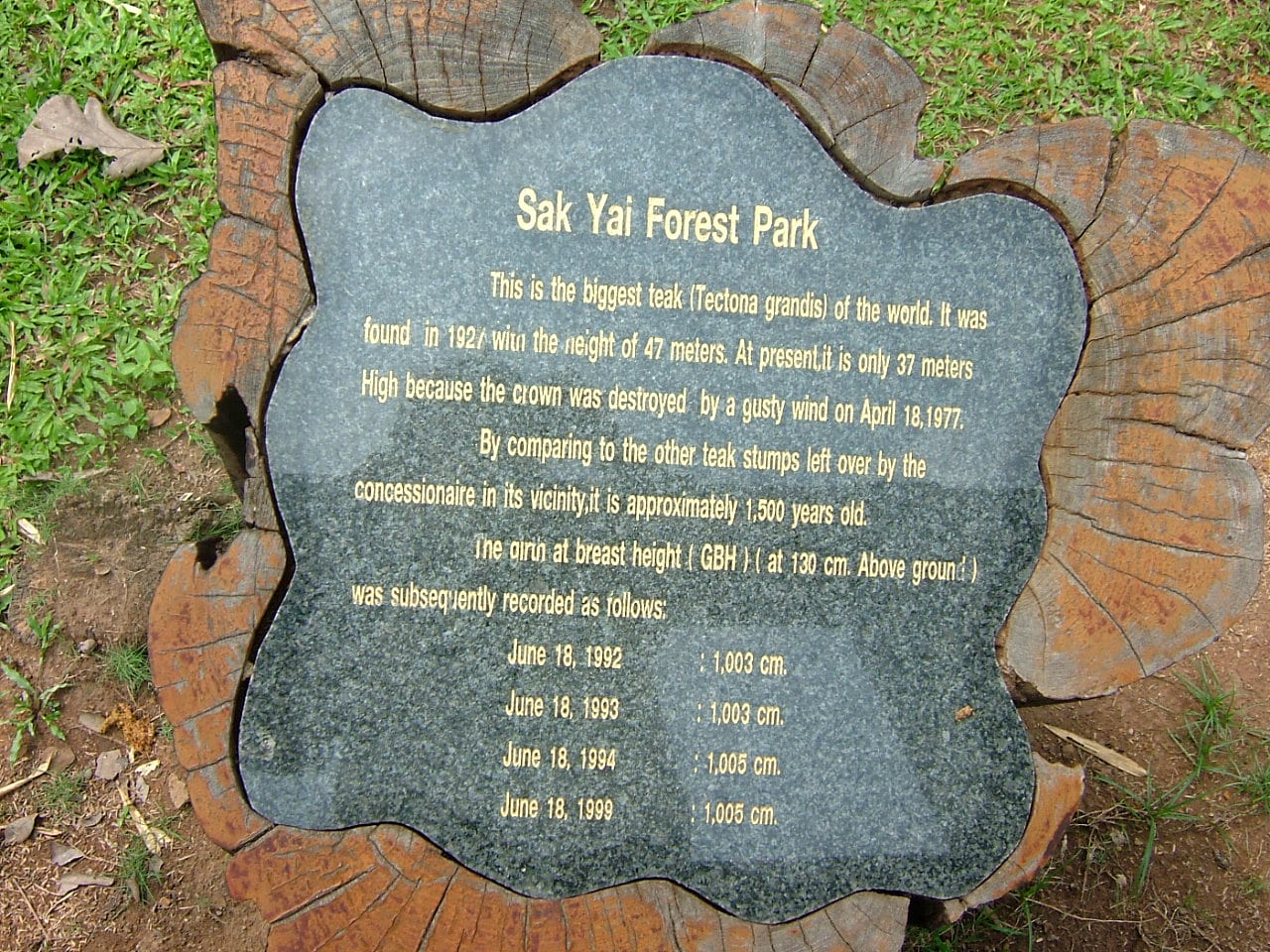
If you love quiet nature and want to see something real that you can't find anywhere else, "Ton Sak Yai National Park" in Nam Pat District, Uttaradit, is a pin worth stopping at. Its selling point is right in the name: it's home to the largest living teak tree in the world, which locals call the Mahesak teak. Its trunk is nearly ten metres around (measured at about 9.85 metres — several people to embrace) and it stands roughly 40–47 metres tall, with an estimated age of at least a thousand years, up to around 1,500 years, standing tall in the middle of the forest and counted among Thailand's marvellous trees.
Once you're here, the main highlight is walking in to see the giant teak. There's a shady nature trail with cool tree cover overhead and pavilions to rest and photograph the teak at ease. Most reviews agree the atmosphere is quiet, not crowded, ideal for an easy stroll and fresh air. If you have more time, the park also has Huai Niam Waterfall, Mon Kaeo Waterfall, and caves like Chan Cave and Chedi Cave to explore, plus the summit of Doi Phu Miang for serious hikers.
Costs are very wallet-friendly. Many sources say entry is free; at some times a park fee is charged — 20 baht for adults, 10 baht for children. There's a large car park, and it opens around 08:30–18:00. It's located at Ban Pang Kluea, Nam Khrai sub-district, reached via Highway 1047. A key draw is that you can combine it with Sirikit Dam in a single trip, since they're on the same route.
A small note: it's deep in Nam Pat District, and the final stretch is a winding mountain road, so check your vehicle and fill up on fuel first. Phone signal may be poor in places. Come from morning to afternoon so you have time to walk around and see the park's other spots. Wear comfortable walking shoes and bring insect repellent for a more enjoyable visit.
Wat Don Sak

If you love old things with a story, Wat Don Sak at Ban Fai Luang, Laplae District, is a pin that ancient-art lovers pass along as a don't-drive-past. The temple is about 9 kilometres from Uttaradit town towards Laplae, an old temple thought to date to the late Ayutthaya period. The name "Don Sak" comes from a story that the original viharn was built from a large teak tree that grew naturally on a raised mound (don). It suits anyone who wants to explore Laplae with substance, rather than just a photo check-in.
The highlight everyone talks about is the pair of carved wooden viharn doors — master-level work regarded as one of the three most beautiful pairs of Buddhist-building doors in the province. The whole leaves are carved in a scrolling-kanok pattern with Himmaphan creatures woven gracefully into the design, and the door posts are carved in an alternating kanok-bai-thet and kanok-kam-pu pattern. What amazes viewers is that the left and right leaves are carved with entirely different designs — yet when the doors close together, the patterns line up perfectly, reflecting the skill of Ayutthaya-era craftsmen beautifully. Anyone who loves carved woodwork should stand up close and take it in slowly.
The overall atmosphere is quiet and calm, a countryside temple without crowds. Visitor reviews agree you come away with a sense of peace, an easy stroll that doesn't take long. Entry is free, with parking, open around 08:00–17:30 daily. Come from late morning to afternoon for enough light to see the door details, since the actual doors are quite old and some angles are dim.
A small note: this is a cultural attraction that still has few reviews on travel platforms. Most who come are art enthusiasts or people who've read up on Laplae's history beforehand, so don't expect many shops or facilities. Treat it as a stop within a Laplae trip — pair it with the Laplae City Museum or the old-town monuments, for example — and the drive is worth it. Dress modestly and observe temple etiquette.
Uttaradit Walking Street
If you happen to be in Uttaradit on a Saturday evening, don't miss the Uttaradit Walking Street. This is the townspeople's weekend strolling market, running along the road beside the irrigation canal next to Uttaradit Rajabhat University, stretching roughly from the Inchai Mi junction side down to the 100-Year Bridge. It's ideal for anyone who wants an easy food-walk without much planning — just wander along, and stop wherever something looks good. It's a free outing that families, couples, or solo visitors can all enjoy.
The highlight here is the local food that rotates from shop to shop — savoury dishes, sweets, fried snacks, grilled items, blended drinks, milk tea, plus desserts and nibbles lining both sides of the road. Beyond food there's a zone for handmade and homemade goods, crafts, accessories, and local creators' products. Some weeks there are special activities like "one district, one creative plaza" or small performances to enjoy while you stroll. People who've been agree the atmosphere is lively, the stalls packed, plenty of people, an easy stroll with plenty to eat.
What sets it apart from ordinary walking streets is the canalside view. Walking during the evening light with a cool breeze, the atmosphere is just right. Those in the know recommend coming around 17:00–19:00, when the stalls are all open, the crowds are building, and the light is still nice enough for photos. Food prices are friendly — a real food-walk budget of about 100–200 THB fills you up comfortably. Free entry, no charge.
A small note: the walking street runs only on Saturday evenings, roughly 16:00–21:00 (there used to be a Sunday session in the past, but it's now anchored to Saturday per the official page). Check the page a little before going in case it's cancelled or shifted for a festival. Parking is available along the road near the university; when it's busy you may have to walk in a bit, but in exchange for the canalside evening market atmosphere with genuine locals, it's well worth it.
CAFE' De FIELD
If you're on the Phichai side and want a relaxed photo café to sit and unwind, locals often mention "CAFE' De FIELD," which many casually call Café de View. It's a large white house set among lawns and landscaped gardens all around — front, sides, and back — right by the road just before the traffic light at the entrance to Phichai District, easy to find with easy parking. It suits café-goers who love green corners, Phichai visitors wanting a coffee break, and families bringing children to run around in the garden.
It isn't just coffee here — there are one-plate dishes, spaghetti, steak, salad, desserts like crêpes, cake, and bingsu, and a variety of drinks including coffee, tea, Italian soda, smoothies, and homemade bakery. The thing not to miss is walking around the garden to collect photo angles with the white house, ordering a large coffee to sip, and trying a one-plate dish or spaghetti with a dessert. Many genuine reviews praise the good atmosphere, pretty décor, and shady setting, ideal for a relaxed day off, with both an air-conditioned indoor zone and an outdoor zone in the garden.
The budget isn't heavy, around 101–250 baht per person, with no entry fee — you only pay for food and drinks. There's free Wi-Fi, parking, and credit cards accepted. Open daily around 07:30–18:00. Come in the morning or late afternoon when the sun isn't harsh for prettier garden photos and more comfortable outdoor seating.
A note from genuine reviews: opinions on the flavours are fairly mixed — some praise the food, some say they'd like the coffee stronger and find the bakery quality inconsistent, and service can be slow when it's busy. But the main draw that keeps people coming back is the garden-house atmosphere and photo corners, which aren't common on the Phichai side. If you like a garden café without driving into Uttaradit town, this fits the bill well.
🎟️ Tickets, Tours, and Activities Around Uttaradit
Uttaradit's spots are scattered across several districts — Laplae town, Sirikit Dam, and Ton Sak Yai park. If you'd rather not drive or plan the route yourself, booking a guided tour or transfer makes it easier to cover several stops in a single day, and booking attraction tickets ahead through Klook or GetYourGuide helps cut queue time on site. Compare lower-northern-region tour packages and nearby activities before you set off.
💡 Know Before You Go: Uttaradit
The attractions are spread across several districts and Grab is very scarce outside town, so renting a car or hiring one with a driver is the most comfortable way. In the town area you can walk or use songthaews to some extent, but you need a car to reach Sirikit Dam and the giant teak tree.
The walking street, markets, and most shops selling local textiles and food are mainly cash-only. Even though some shops and cafés have PromptPay QR, carry small bills, especially when walking the evening market.
Open-air spots like Sao Din, the temples, and the dam crest are sunny with little shade — coming in the morning or late afternoon is more comfortable and better for photos. Wat Phra Thaen Sila At is crowded during the Makha Bucha festival, so allow time to find parking.
Uttaradit is a destination for Thai travellers more than foreigners. Most signs and menus are in Thai and few people speak English. Bring a translation app and save place names in Thai to show your driver.
Wat Phra Thaen Sila At, Wat Don Sak, and the temples in Laplae are sacred places where people genuinely come to worship. Dress modestly, cover shoulders and knees, remove shoes when entering buildings, and handle the old wooden doors gently.
Ordinary restaurants and cafés don't require tips; rounding up or leaving a little change is fine. If you hire a car or a guide for the whole day, a small tip at the end of the trip is a kind gesture that locals appreciate.
Plan Your Uttaradit Trip to Make the Most of Each Day
The neatest route is to split it into two zones. Day one covers the town and Laplae: start early at the Phraya Phichai Dap Hak Monument in front of the provincial hall and walk through the museums behind it, then drive towards Laplae to photograph the Laplae City Gate and widow monument, visit the Laplae City Museum (free entry), and pay respects at Wat Phra Thaen Sila At in Thung Yang, finishing at Wat Don Sak to see the Ayutthaya-era carved wooden doors. If it falls on a weekend evening, you can walk the Uttaradit Walking Street along the irrigation canal to round things off.
Day two takes in nature: drive up to Sirikit Dam at Tha Pla, walk the crest or rent a bicycle to enjoy the view, then continue to Ton Sak Yai National Park at Nam Pat to see the world's largest teak tree. If you have time, stop at Bo Lek Nam Phi at Thong Saen Khan to try fishing up iron ore for good fortune. And if you want an easygoing finish on the Phichai side, CAFE' De FIELD is a garden café to sip coffee and take photos before heading home. The natural spots are sunny with little shade, so go in the morning or late afternoon and bring water and a hat.
To make the most of Uttaradit, stay a night so you can pay respects at Wat Phra Thaen Sila At in the morning while it's still quiet, then drive up to Sirikit Dam and wait for the sunset without rushing back. Popular hotels cluster in Uttaradit town, near the Phraya Phichai Dap Hak Monument and the walking street. Picking a location close to your first morning spot pays off the most. Compare prices and reviews before booking.
🔍 Check Uttaradit Hotel Prices (Agoda)